Manufacturing Materials: Turnkey Metal & Plastic
Your single source for casting, CNC machining, forging, stamping, extrusion, and molding.
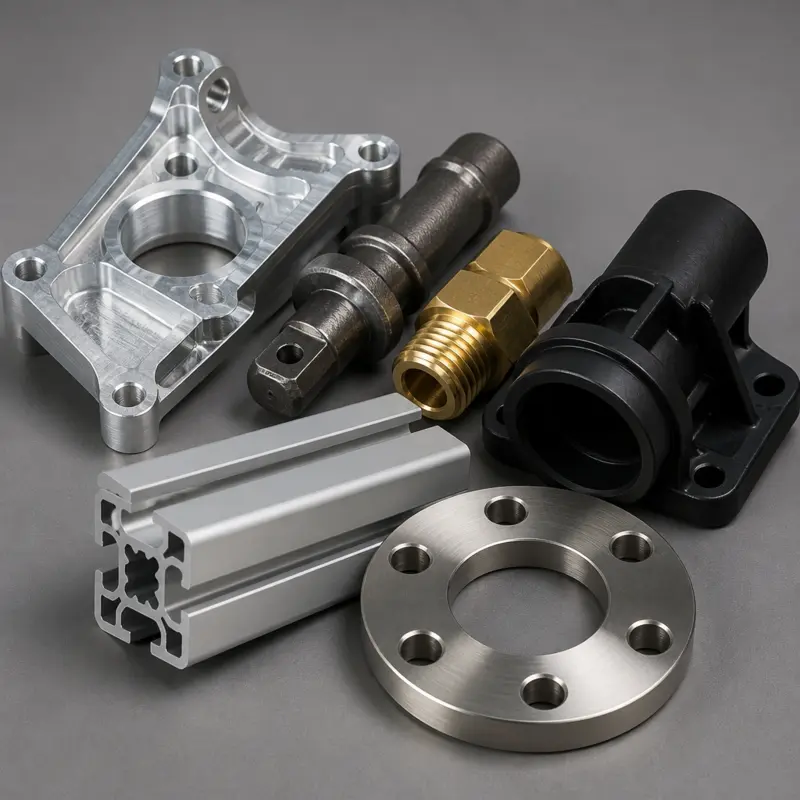
Meco Manufacturing Materials
Meco runs eleven metal families and more than fifty plastics entirely in house. Our engineers can review your project and recommend the material that meets the requirement at the lowest cost.
The material you pick decides whether the part works, and grades and tolerances shift from one process to the next. The seven guides below cover what you need for each route. To see the full workflow behind them, visit our capabilities page.
Aluminum
15 Alloys
Cast and wrought grades, ADC12 through 7075.
Plastics
50+ Resins
Commodity through engineering grade, including PEEK, POM and TPU.
Tolerance
±0.01 mm
Machined features, verified on CMM to ±0.002 mm.
Documentation
EN 10204 3.1
Mill certificates, CoA, RoHS and REACH on request.
Swipe for all four
Comprehensive Material Selection Across Capabilities
Each guide outlines available grades, process cost factors, tolerances, and standard lead times.
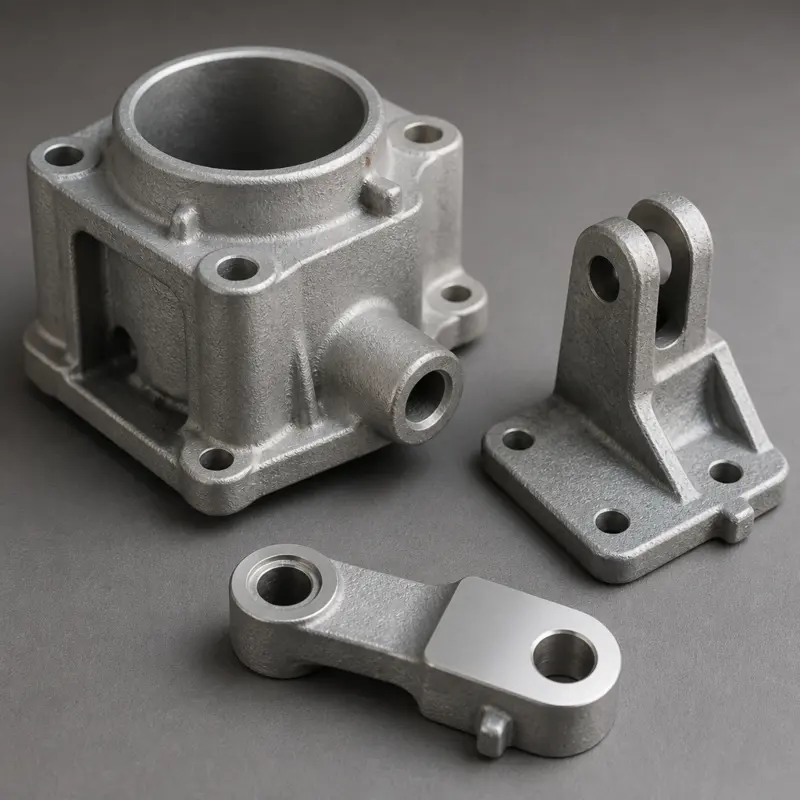
Casting
Casting Materials: Aluminum, Zinc, Magnesium and Steel Alloys
Compare casting alloys across die, gravity, low pressure, sand and investment casting by wall thickness, tolerance class and tooling cost.
View casting materials →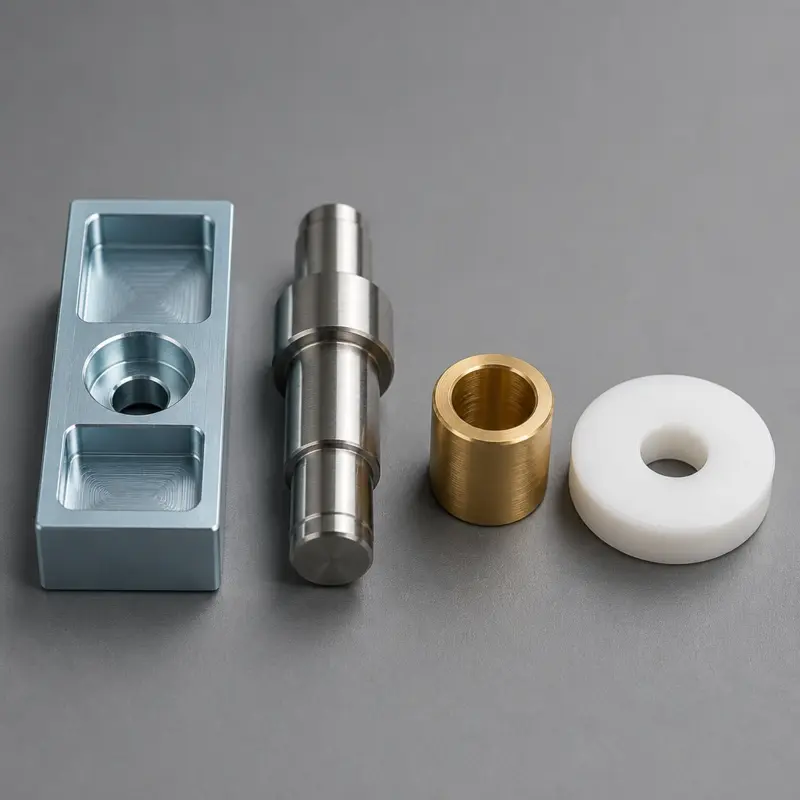
CNC Machining
CNC Machining Materials: Metals, Grades and Selection
Aluminum, steel, stainless, brass, titanium and engineering plastics, with machinability, achievable tolerance and finish data for each grade.
View machining materials →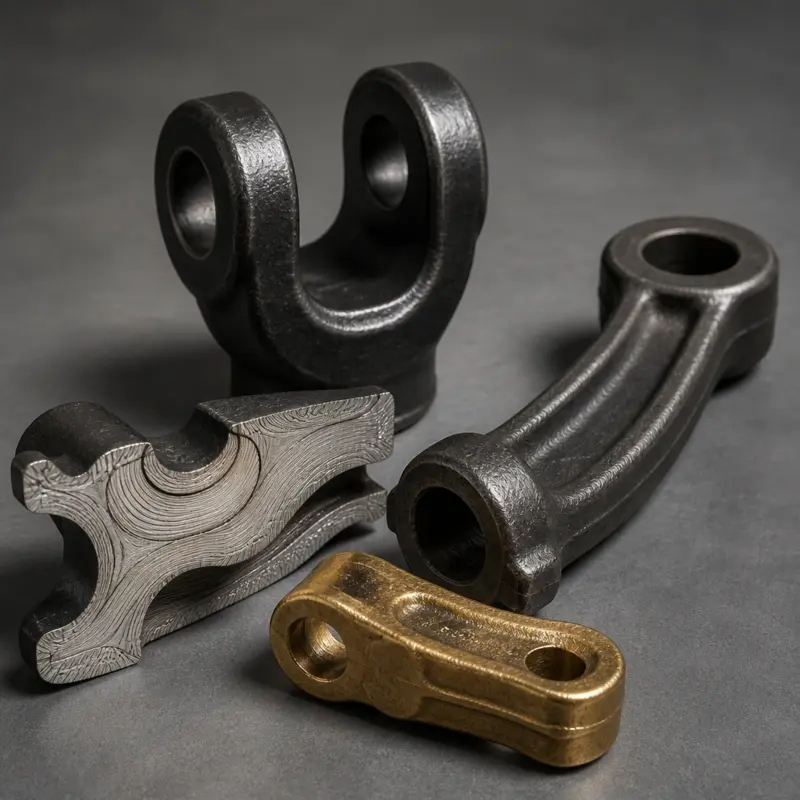
Forging
Forging Materials: Steel, Stainless, Brass and Bronze
Which grades forge well and why. Hot and cold forging selection, grain flow, die life and how material choice moves the part price.
View forging materials →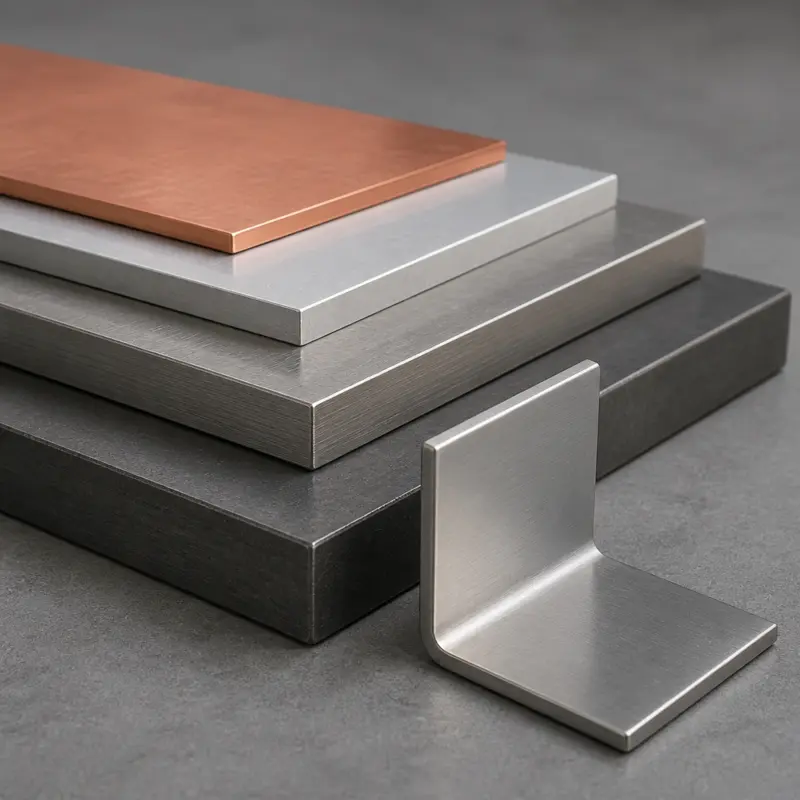
Stamping and Fabrication
Sheet Metal and Stamping Materials
Steel, stainless, aluminum, brass and copper for stamping and fabrication, with gauge ranges, minimum bend radii and finish options.
View sheet metal materials →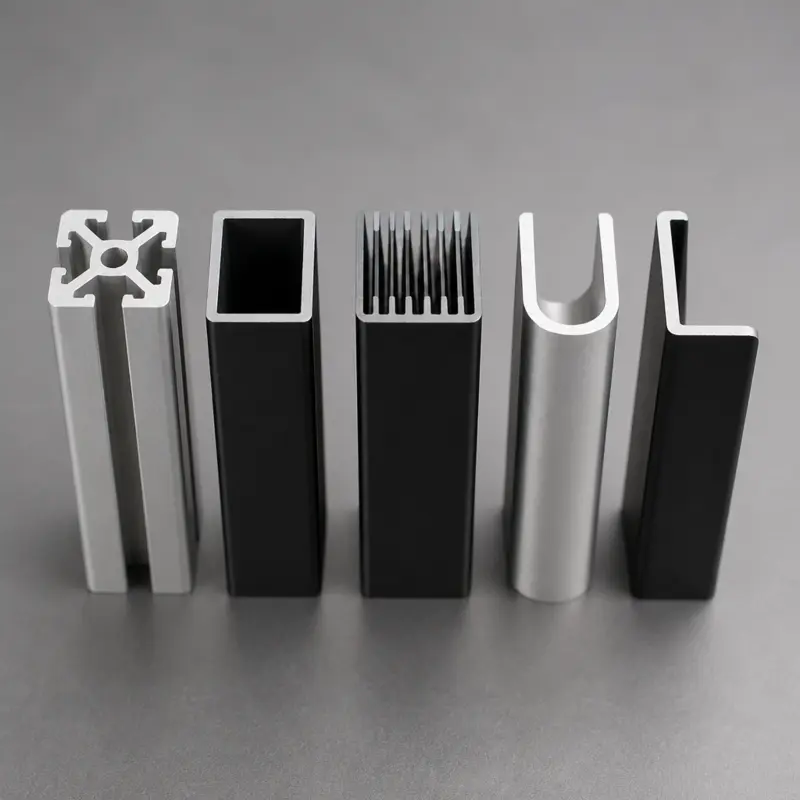
Extrusion
Aluminum Extrusion Alloys and Tempers
1050 through 7075 compared on strength, anodizing response and extrudability, with temper selection for custom profiles.
View extrusion alloys →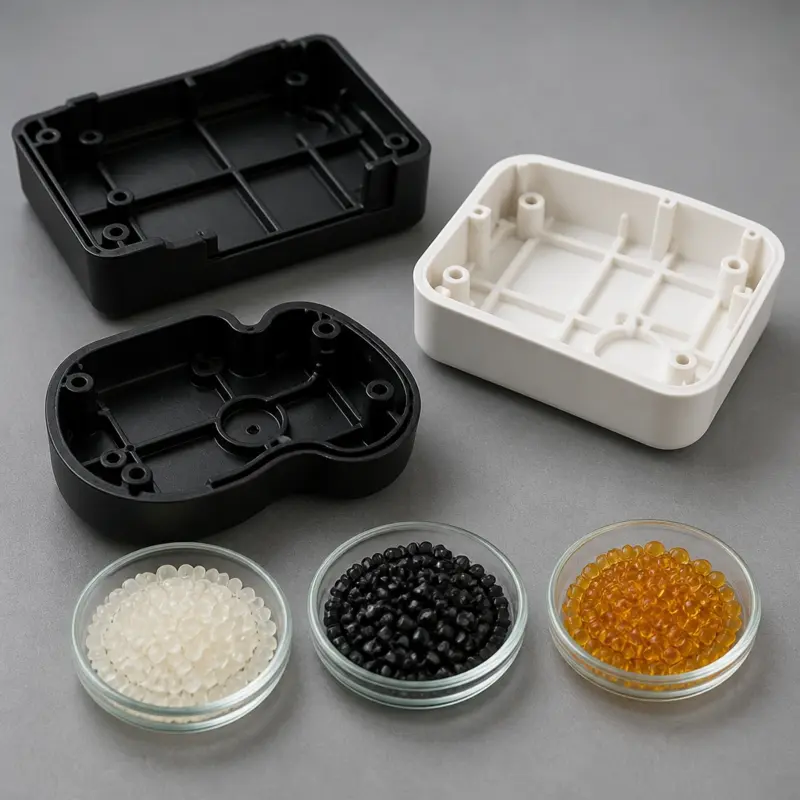
Injection Molding
Injection Molding Materials: Resins for Production Parts
ABS, PC, PA, POM, PEEK, TPU and 50 plus resins, with shrinkage, wall thickness guidance, temperature limits and cost per part.
View molding resins →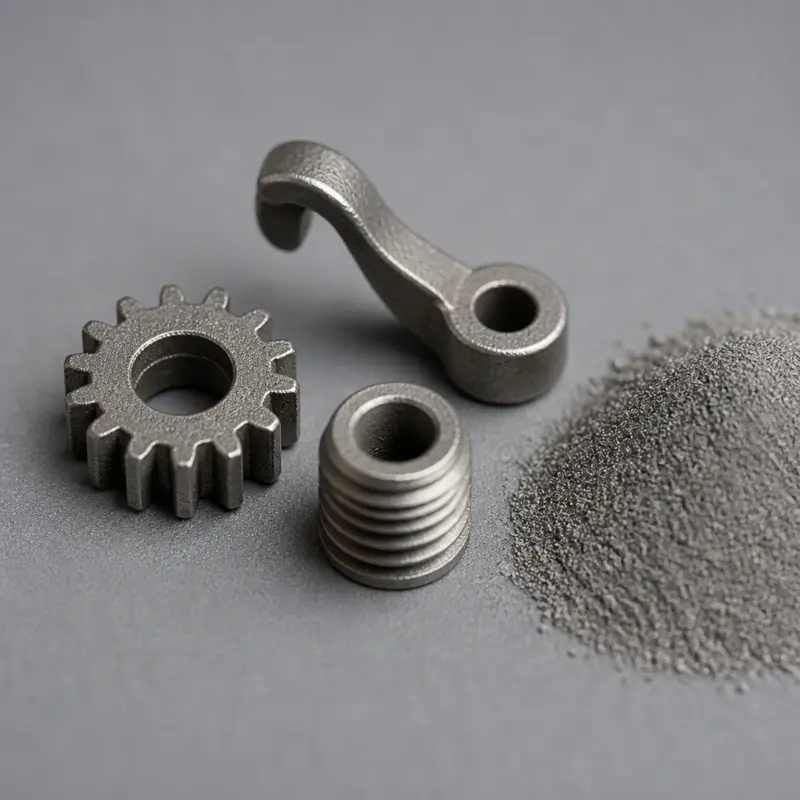
MIM and Powder Metallurgy
Metal Injection Molding and Sintered Materials
MIM and powder metallurgy feedstocks in stainless, low alloy steel, titanium and tungsten carbide, with density, tolerance and volume thresholds.
View MIM materials →Not Sure Which Material Fits?
Send the drawing and the application. We come back inside 24 hours with a material and process recommendation, plus one costed alternative where a cheaper grade would do the same job.
Ask an EngineerSwipe for all seven material guides
Meco Metals and Plastics Materials
These grades represent our routine, in house production capabilities across metals and plastics. We are not limited to this selection. Please contact our team to source custom materials.
Metals We Run
| Metal | Grades We Run | Processes | Typical Parts |
|---|---|---|---|
| Aluminum | Cast: ADC12, A380, A356, ZL101, 319. Wrought: 1050, 3003, 5052, 6005, 6060, 6061, 6063, 6082, 7075, 2024 | Cast grades: die, gravity, low pressure and sand casting. Wrought grades: extrusion, forging, CNC, stamping | Housings, brackets, heat sinks, structural fittings |
| Carbon Steel | 1020, 1035, 1045, Q235, SPCC | Forging, stamping, CNC, sand casting, welding | Shafts, pins, levers, frames |
| Alloy Steel | 4140, 4340, 42CrMo | Hot and cold forging, CNC, heat treatment | Knuckles, arms, gear blanks |
| Stainless Steel | 303, 304, 316, 17-4PH, 420 | CNC, forging, investment casting, stamping, MIM | Valve bodies, flanges, fittings, medical parts |
| Brass | C360, C377, C464 | Forging, CNC, stamping, investment casting | Plumbing fittings, valve stems, terminals |
| Bronze | Cast and wrought bronze grades | Sand and investment casting, forging, CNC, welding | Bushings, bearings, marine hardware |
| Copper | C101, C110 | Stamping, CNC | Busbars, lugs, connectors, contacts |
| Zinc | Zamak 2, 3 and 5, plus ZA-27 | High pressure die casting | Small precision housings, gears, decorative hardware |
| Magnesium | AZ91D, AM50, AS41 | High pressure die casting | Lightweight housings and covers |
| Titanium | Commercially pure and alloyed grades | Investment casting, CNC, MIM | Aerospace fittings, medical components |
| Tungsten Carbide | Sintered and MIM feedstock grades | Metal injection molding, powder metallurgy | Wear parts, nozzles, small high hardness components |
Scroll inside the table to see all rows and columns
Plastics We Run
| Resin | Chosen For | Main Processes | Watch For |
|---|---|---|---|
| ABS | Low cost, good stiffness, paints and plates well | Injection molding | Poor outdoor UV resistance without additives |
| PC | Impact strength and optical clarity | Injection molding | Notch sensitive, needs drying before molding |
| PA (Nylon) | Wear resistance and toughness | Injection molding, CNC | Absorbs moisture, dimensions move with humidity |
| POM (Acetal) | Low friction, dimensional stability | Injection molding, CNC | Difficult to bond or paint |
| PP | Chemical resistance, living hinges, low cost | Injection molding | High shrinkage, low stiffness |
| PE | Toughness and chemical resistance | Injection molding | Low temperature limit, poor creep resistance |
| PEEK | High temperature and chemical service | Injection molding, CNC | Highest material cost by a wide margin |
| TPU | Flexibility, abrasion resistance, overmolding | Injection molding | Needs careful bond design when overmolded |
Scroll inside the table to see all rows and columns
How to Choose a Manufacturing Material
Start with the design requirement you cannot trade away, then let annual volume pick the process. Six requirements cover most of what we quote, and each one points to a different material and route.
| If Your Priority Is | Look At | Route |
|---|---|---|
| Lowest weight | Aluminum 6061 for wrought parts, A356 for cast parts, magnesium, glass filled nylon | Casting or extrusion |
| Fatigue and impact strength | 4140, 4340, 42CrMo, forged stainless | Forging |
| Corrosion resistance | 316 stainless, brass C360, anodized 6063 | CNC machining or extrusion |
| Thin walls and complex cavities | ADC12 and A380 aluminum, zinc, ABS and PC | Die casting or injection molding |
| Flat parts at high volume | SPCC, 304 stainless, 5052 aluminum, C110 copper | Stamping |
| Small, complex, very high volume metal | MIM stainless, low alloy steel, titanium, tungsten carbide | Metal injection molding |
Swipe the table sideways to see every column
Materials, Tolerance and Lead Time by Process
The same alloy behaves differently depending on how it is formed. This table sets expectations before you commit to a route. Each process name links to the capability page for that route.
| Process | Materials | Typical Tolerance | Ideal Volume | Lead Time |
|---|---|---|---|---|
| Die Casting | Aluminum ADC12 and A380, magnesium, zinc | NADCA standard ±0.010 in | 5,000 to 1,000,000+ | 6 to 14 weeks |
| Gravity Casting | Aluminum A356, ZL101, 319 | ISO 8062 CT7 to CT8 | 500 to 50,000 | 4 to 10 weeks |
| Low Pressure Casting | Aluminum A356 type | ISO 8062 CT7 to CT9 | 500 to 50,000 | 4 to 12 weeks |
| Sand Casting | Aluminum, steel, stainless, brass, bronze | ISO 8062 CT9 to CT10 | 50 to 5,000 | 4 to 8 weeks |
| Investment Casting | Steel, stainless, brass, bronze, titanium | Near net shape per ICI | 500 to 50,000 | 6 to 12 weeks |
| CNC Machining | All metals plus engineering plastics | ±0.01 mm, ISO 2768 | 1 to 10,000 | 1 to 3 weeks |
| Hot Forging | Aluminum, steel, stainless, brass, bronze | ASTM B247 / BS EN 10243 | 1,000 to 500,000+ | 6 to 12 weeks |
| Cold Forging | Steel, stainless steel | 0.05 to 0.2 mm typical | 5,000 to 1,000,000+ | 6 to 10 weeks |
| Metal Stamping | Aluminum, steel, stainless, brass, bronze, copper | DIN 6930 / GB/T 13914 | 5,000 to 10,000,000+ | 4 to 10 weeks |
| Aluminum Extrusion | Nine wrought alloys, 1050 to 7075 | ANSI H35.2, or EN 755-9 | 500 to 1,000,000+ | Dies 4 to 6 weeks |
| Injection Molding | ABS, PC, PA, POM, PEEK and 50+ resins | ±0.05 mm standard | 500 to 1,000,000+ | 4 to 8 weeks |
| Metal Injection Molding | Stainless, low alloy steel, brass, titanium, tungsten carbide | Near net shape | 5,000 to 500,000+ | Tooling 6 to 10 weeks |
Scroll inside the table to see all rows and columns
Proving the Material Is What We Said It Is
Material claims are worth what the paperwork behind them is worth. Every shipment can carry the documentation your incoming inspection or your customer's auditor will ask for.
Mill Certificates
Material certificates to EN 10204 3.1 and certificates of analysis, tied to the lot that made your parts.
Full Lot Traceability
Tracking from incoming raw material through every forming, finishing and assembly step, with a complete audit trail.
REACH and RoHS
Compliance documentation verified at both material and finished part level, plus conflict minerals reporting.
No Material Imposters
We double check all incoming raw material with a spectrometer to ensure that the material matches its certificate.
Swipe for all four
Manufacturing Materials FAQ
What manufacturing materials does Meco work with?
Eleven metal families and more than fifty resins. Metals: aluminum in 15 cast and wrought alloys, carbon steel, alloy steel, stainless steel, brass, bronze, copper, titanium, magnesium, zinc and tungsten carbide. Plastics: ABS, PP, PE, PC, PA, POM, PEEK, TPU and over 50 grades in total. All of it is processed in our own factories in Thailand and China under one IATF 16949:2016 quality system.
How do I choose the right material for my part?
Start with the one requirement that cannot be traded away, whether that is weight, fatigue strength, corrosion resistance, temperature or cost per piece. That narrows the material family. Annual volume then decides the process, and the process narrows the grade again. Material selection guidance is included free with every DFM review, and we will name a cheaper grade if one does the same job.
Which metals can be cast, forged, machined and stamped?
Aluminum is the most flexible, but the grade decides the route: wrought grades such as 6061 and 6063 extrude, forge, machine and stamp, while cast grades such as ADC12 and A356 can only be cast. Steel and stainless forge, machine, stamp and investment cast. Brass and bronze forge, machine and cast. Copper stamps and machines. Zinc and magnesium are die casting alloys only. Tungsten carbide runs through MIM and powder metallurgy.
Does material choice change the tolerance I can hold?
Yes, and usually more than the drawing suggests. Machined metal holds ±0.01 mm. Molded plastic holds around ±0.05 mm and moves with shrinkage that varies by resin. Sand castings run to ISO 8062 CT9 to CT10, and extruded profiles follow ANSI H35.2 or EN 755-9. Where one feature must hold tighter than the forming process allows, we form near net shape and finish that feature on CNC.
Can you supply material certificates?
Yes. Mill test reports, certificates of analysis and material certificates to EN 10204 3.1 are available on request, alongside REACH and RoHS compliance documentation, conflict minerals reporting, PPAP packages, first article inspection reports and CMM results. Lot level traceability runs from incoming material through to the finished part.
Is there a minimum order quantity for a specific alloy or resin?
There is no minimum order quantity at Meco, from 10 pieces to 10 million and more. Some grades carry a mill minimum purchase, which we will tell you at quote stage rather than after you order. Where a mill minimum makes a grade uneconomic at your volume, we will suggest an equivalent that does not.
How to Get a Material Recommendation
STEP or IGES plus a 2D drawing. Tell us the operating environment, load, temperature and annual volume through the quote form.
Our engineers confirm the grade suits the process, flag anything that will not form as drawn, and identify where a cheaper material would perform identically.
An itemised tooling and piece price, the tolerance we will hold in that material, and one costed alternative where the choice is worth comparing.
Guides Behind These Material Choices
Three reads that go deeper into how material choice moves cost, weight and machinability.

Best Materials for CNC Machining
Aluminum, steel, titanium, brass, PEEK and Delrin compared on machinability rating, cost and best use.
Read the guide →
Which Metal Is Best for Die Casting?
Aluminum, zinc or magnesium. Strength, weight, castability, cost and finishing weighed against each other.
Read the guide →
Aluminum vs Brass vs Titanium
Hardness in HV, density, strength, machinability and cost, in grade-specific tables for material selection.
Read the guide →Swipe for all three guides
