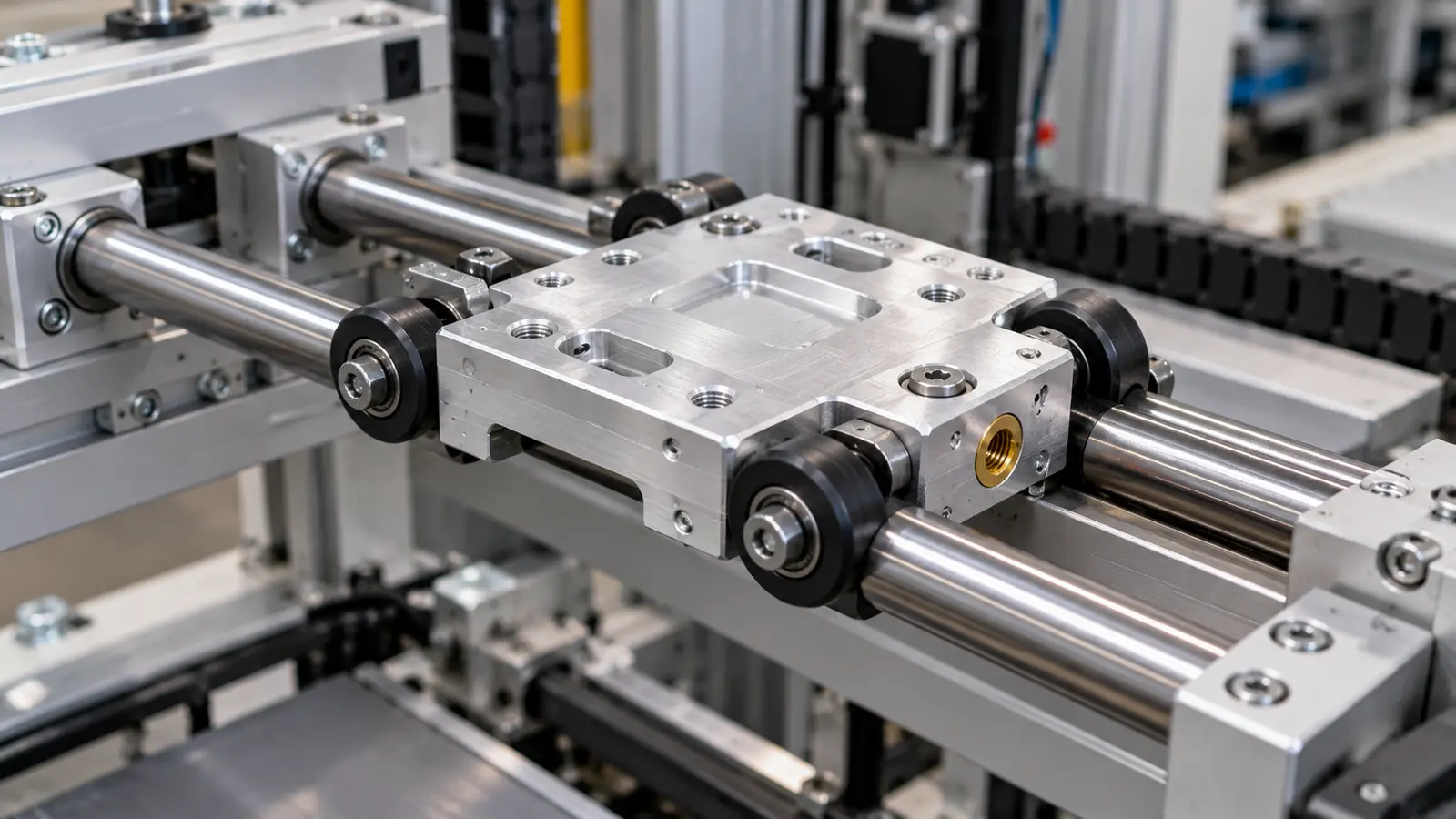
Aluminum 6061 is a practical starting point for many CNC machining projects, but no material is best for every part. Choose a grade by mechanical loads, operating conditions, geometry, quantity, finish and total cost.
6061 and 7075 aluminum, 304 and 316 stainless, C360 brass, titanium, acetal (POM) and PEEK suit different requirements. Machinability ratings are screening tools, not a guaranteed cutting-speed or price multiplier.
CNC machining can make strong metal brackets, corrosion-resistant fittings and low-friction plastic components, but the grade you select changes tool life, cycle time and part performance.
For most general-purpose machined metal designs, aluminum 6061 is a useful reference point. High-strength 7075, corrosion-resistant stainless steel, free-machining brass and titanium solve different problems.
Engineered plastics deserve the same careful review. Acetal, nylon, PEEK and PTFE can be useful when a design calls for low friction, chemical resistance, weight savings or electrical insulation.
This guide retains a comparison of common grades and introduces a decision method built around actual requirements. It covers metals, plastics, machining behavior, finishing cost and common selection traps.
For detailed grade data and achievable tolerances, use Meco's CNC material property matrix ; for production support, see custom CNC machining services .
Key takeaways
- Start with the job. Loads, temperature, corrosion, electrical needs and finish narrow the possible grades.
- Common metals. 6061 is versatile, 7075 offers strength, 316 resists chlorides, C360 turns cleanly and titanium needs carefully planned machining.
- Useful plastics. POM supports low-friction parts, nylon adds toughness, PEEK serves demanding heat and chemical exposures, and PTFE favors low-friction sealing.
- Rating caution. Machinability indexes depend on test conditions; they are not universal speed multipliers.
- Compare finished cost. Include raw stock, scrap, setup, cycle time, finishing, inspection and quantity.
What "Best Material" Actually Means in CNC Machining
The best CNC machining material meets the part's functional requirements at the lowest practical total manufacturing cost.
"Best" isn't one answer. It's a balance between four things: how easy a material is to cut, how strong the finished part needs to be, how much the raw stock costs, and how the part will be used. A material that's perfect for a drone bracket is wrong for a surgical tool.
Machinability is a comparative measure of how a material cuts under a defined test and tooling setup. Many published tables use AISI B1112 free-cutting steel at 100%, but published values can differ with the source, temper and cutting conditions.
A note on machinability ratings
Do not treat a machinability percentage as a guaranteed production-speed multiplier. A single baseline helps organize a comparison, but indexes from different suppliers are not always interchangeable. For underlying property and grade data, review Meco's CNC machining materials matrix .
Here's the quick-pick view if you're in a hurry:
| If You Need… | Start With | Cost Tier |
|---|---|---|
| A light, cheap prototype | Aluminum 6061 | $ |
| Maximum strength, low weight | Aluminum 7075 or Titanium Grade 5 | $$$ to $$$$$ |
| Corrosion resistance | Stainless steel 316 or Titanium | $$$ to $$$$ |
| High-volume, fast-machining parts | Brass C360 | $$ |
| Electrical conductivity | Copper C110 | $$$ |
| Lightweight gears or bushings | Delrin (POM) | $ |
| High-heat plastic parts | PEEK | $$$$ |
The 5 Questions That Decide Your CNC Material
Start with function, environment, quantity, finished cost and surface finish before choosing a grade.
These five questions turn a long grade list into a manageable selection process. They are useful before an engineer performs a drawing-specific design-for-manufacturability (DFM) review.
1. What does the part need to do?
Is it a load-bearing bracket? A bushing that slides? A heat sink? An enclosure that just needs to look good? The part's job sets the floor for strength, stiffness, and wear resistance.
2. Where will it live?
Check humidity, salt, chemicals, UV exposure, temperature and cleaning methods. Unprotected carbon steel can corrode outdoors, whereas a suitable stainless alloy, compatible aluminum grade or applied protective coating may be appropriate.
3. How many do you need?
CNC machining is often economical for prototypes and lower-volume production because it avoids expensive dedicated molds. At larger volumes, compare total costs with casting, stamping or molding rather than assuming a universal crossover. For a price breakdown, see CNC machining costs .
4. What's your budget per part?
The stock price and cutting time must be quoted together. Brass C360 can cut cleanly and reduce secondary finishing in some turned-component jobs, even when its stock costs more than common aluminum.
5. What finish do you want?
Specify the required appearance and function before choosing the metal. Anodizing is used on compatible aluminum and titanium alloys, while stainless steel needs other treatments. The surface finishing services page explains available finishing routes.
Example: one bracket, three candidate materials
Consider an outdoor instrument bracket that must be lightweight, moderately stiff and corrosion-resistant. Start with 6061 aluminum if weldability and routine CNC machining matter; examine 7075 if higher strength justifies added cost and reduced weldability; compare 316 stainless if the exposure and cleaning requirements justify more weight and slower machining.
Do not rank these options by raw stock price alone. Check the load case, deflection, joints, corrosion exposure, finish and annual quantity first. This is an illustrative design scenario, not a Meco customer result.
Best Metals for CNC Machining
Common machining metals trade off density, strength, corrosion behavior, conductivity and chip formation.
The following metal grades cover common CNC applications. Evaluate each for strength, corrosion behavior, thermal performance, workholding, finish and cost rather than assuming one material suits every shop.
Aluminum: The Default Choice
Aluminum is a practical starting point for many machined components because it combines low density, good corrosion behavior and generally efficient cutting. The best temper and alloy still depend on the part.
Aluminum 6061 is the workhorse. It's the best aluminum for CNC machining when you want a balance of strength, cost, and machinability. You'll find it in housings, brackets, fixtures, drone frames, and prototypes. It also welds well and takes anodising beautifully.
Aluminum 7075 is the high-strength cousin. It's used in aerospace structures, performance bike parts, and military gear. Strength rivals some steels at a third of the weight. Downside: it costs more and isn't as weldable as 6061.
Aluminum 5052 offers excellent formability and useful marine corrosion resistance. It is especially common in formed sheet products; confirm stock form and availability before selecting it for a heavily machined billet part.
Engineer's Tip: When to Compare 6061 and 7075
Chip control varies with tooling, temper, coating, feeds and coolant. Some 7075 jobs produce convenient chips and clean finishes, but switching from 6061 to 7075 solely to improve cutting is not automatically economical. Compare mechanical requirements and a real shop quote first.
Stainless Steel: When You Need It to Last
Stainless steel provides useful corrosion resistance, but no stainless grade is immune to all corrosion. Grade selection must match chlorides, temperature, cleaning chemicals and the required surface condition. Its relatively poor machinability versus aluminum adds tool and cycle cost.
304 is the default grade. Machinability rating around 45% (on the B1112 scale). Good corrosion resistance, weldable, affordable. Used in food equipment, kitchen hardware, and general industrial parts.
The added molybdenum in 316 improves resistance to many chloride environments. Its purchase premium and CNC cycle time vary by supplier and part geometry; do not assume a fixed cost penalty.
303 adds sulfur for better stainless steel CNC machining speed (machinability around 78%). Use it for high-volume parts like fasteners and bushings where you can sacrifice a little corrosion resistance.
17-4 PH is the heavy hitter. It can be heat-treated to very high strength while staying corrosion-resistant. You'll see it in turbine blades, valve bodies, and aerospace fittings.
Mild and Alloy Steel: The Workhorses
Steel is the cheapest way to get serious strength. Most unprotected carbon steels can rust in a corrosive environment. That's why we usually pair steel parts with a surface finish like zinc plating or powder coat.
1018 mild steel is general-purpose, weldable, and easy to machine (around 78% machinability). Great for jigs, shafts, and machinery parts.
1045 is a step up in strength and is often used for shafts and gears that need to take real load.
4140 alloy steel is the toughness upgrade. It machines well (around 65%), heat-treats well, and handles fatigue. You'll find it in axles, drivetrain parts, and tooling.
4340 is chosen for high-strength shafts, loaded aircraft and industrial components when a specified heat treatment and inspection route is appropriate. Not every machined steel part requires subsequent heat treatment; read about available metal heat treatment options when strength or hardness demands it.
Brass: The Most Machinable Metal on the Bench
Brass C360 is a well-known free-machining copper alloy that makes short chips and often holds good surface finish. Meco's published material matrix lists a 300% comparative machinability index, but that number does not mean every C360 part runs three times faster than another metal.
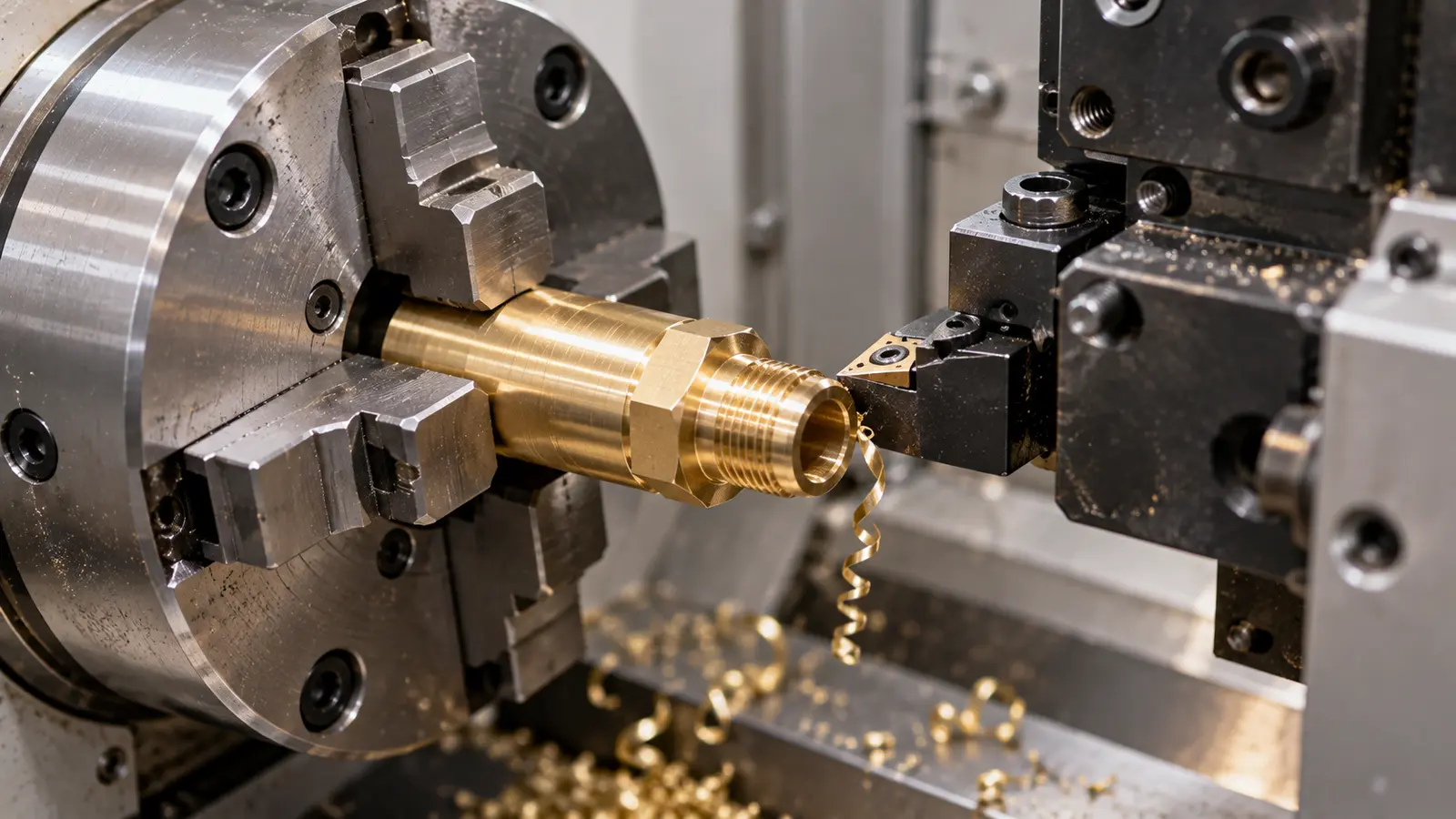
Brass machining is the right answer for plumbing fittings, electrical connectors, decorative hardware, and any high-volume part where cycle time matters. The downside is that brass is heavy and not strong enough for structural work.
For a turned C360 fitting, good chip formation and fine surface finish can reduce tool changes and finishing effort. Compare that benefit against density, corrosion exposure, lead content and stock price; machining speed alone is not a material specification.
Copper: When Conductivity Wins
Copper conducts heat and electricity better than almost any other commercial metal. C110 (electrolytic tough pitch copper) is the workhorse, with about 101% IACS electrical conductivity. You'll see it in bus bars, heat exchangers, electrical contacts, and high-power electronics.
Copper can form continuous, sticky chips and may generate burrs, so the cutting strategy and part design matter. Price varies significantly with commodity markets and stock form; quote the actual electrical or thermal performance grade.
Titanium: Premium Performance, Premium Price
Titanium alloys offer high specific strength and corrosion resistance, making them useful in demanding aerospace, industrial and certain medical-device applications. Their machining cost is driven by heat at the cutting zone, tool life, cutting parameters and part geometry.
Grade 2 is commercially pure titanium. Softer, more formable, used in chemical and marine work.
Titanium Grade 5 (Ti-6Al-4V) has high specific strength and is widely used for aerospace and other high-performance parts. Medical applications require the correct material specification and qualified processing; a generic grade name alone does not establish implant suitability. Its comparative machinability index is roughly 22% in Meco's published material guide.
Titanium is difficult to machine because heat concentrates near the cutting edge, the metal remains strong at temperature, and chip-tool interactions can accelerate wear. Speeds vary with alloy, cutter, coolant and operation, so use a process-specific quote rather than a fixed fraction of steel cutting speed.
Best Plastics for CNC Machining
Engineering plastics can replace metal in selected low-friction, insulating, corrosion-exposed or weight-sensitive applications.
Plastic isn't just for prototypes anymore. Engineering plastics deliver real performance (wear resistance, chemical resistance, electrical insulation) at a fraction of the weight of metal. Here are the CNC plastic materials worth knowing, in the order you should think about them.
Acetal (POM / Delrin): Low-Friction Parts and Clean Machining
Acetal (POM), including Delrin-branded grades, deserves consideration when a metal design does not actually need metal-level stiffness, temperature resistance or load capacity. It can reduce weight and friction in gears, bushings, slides and other moving parts.
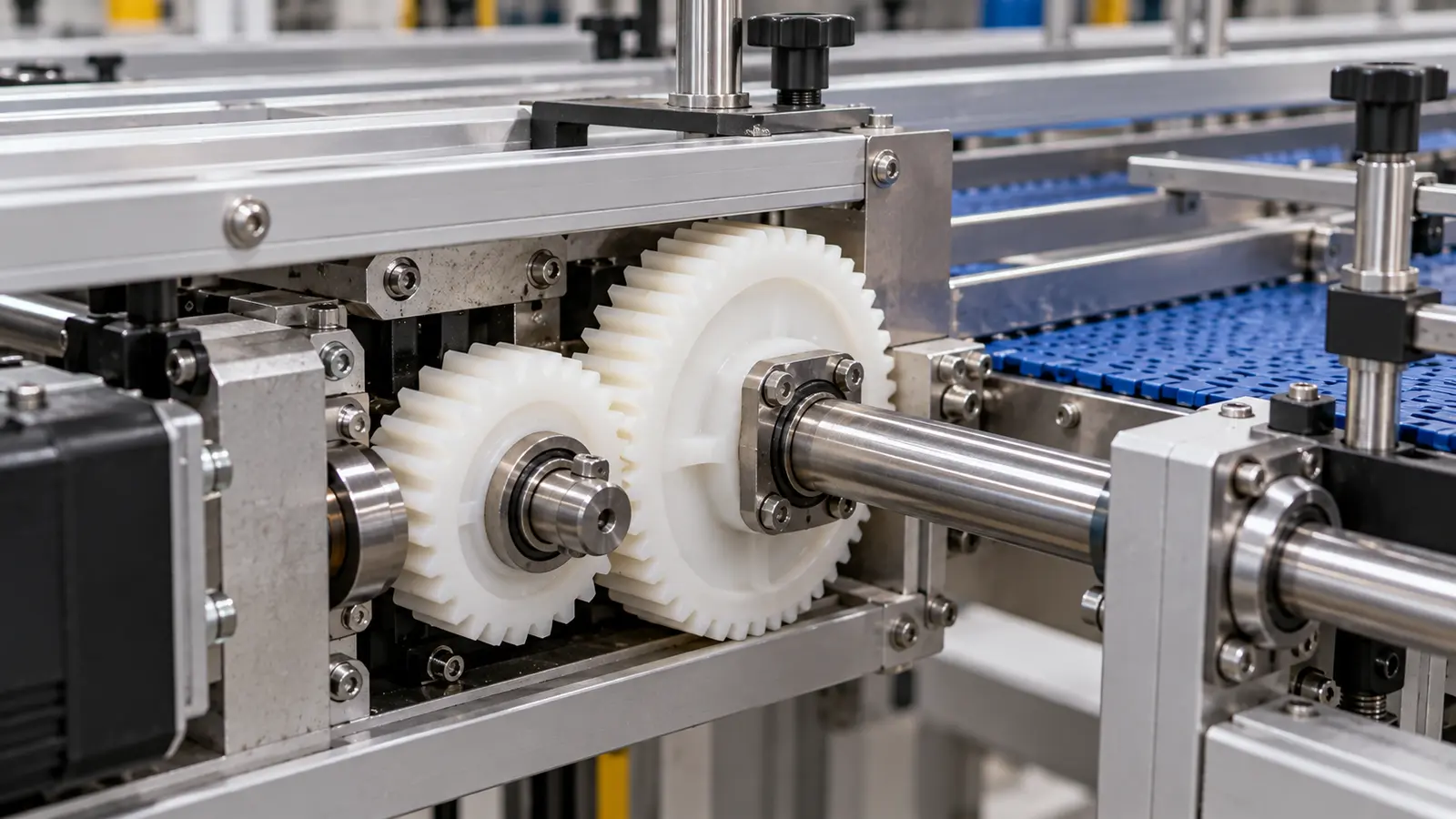
POM produces clean chips and a useful as-machined surface, but temperature and geometry can affect plastic dimensions. Set inspection conditions and tolerances appropriate to a polymer rather than copying a metal drawing automatically.
Illustrative design check: For an assembly originally drawn entirely in 6061 aluminum, evaluate whether low-load sliding spacers or guide bushings could use POM while the load-bearing frame remains metal. Compare creep, stiffness, thermal expansion, fastening and cost before approving any substitution. This is a hypothetical example, not a Meco customer case or verified cost saving.
Use Delrin for gears, bushings, cams, sliding parts, snap-fits, and small mechanical components where you don't need ultimate strength or high-temperature performance.
Nylon (PA6, PA66): Tough and Wear-Resistant
Nylon (PA6 or PA66) can offer strong toughness and wear resistance, depending on grade and conditioning. Moisture absorption changes dimensions and mechanical properties, so humidity exposure and part fit require attention.
Glass-filled nylon can increase stiffness but can also increase tool abrasion; confirm filler fraction and conditioning.
PEEK: When Plastic Needs to Behave Like Metal
PEEK grades can offer high continuous-use temperatures, chemical resistance and mechanical performance. Medical uses require a specific biocompatibility-qualified grade and application-level validation; generic PEEK stock alone is not evidence of implant suitability.
PEEK stock is much more expensive than commodity polymers, and material waste can be significant when machining thick billets. Use it where its thermal, chemical or performance requirements justify the quoted stock and cycle cost.
One more note: PEEK comes in unfilled, glass-filled, and carbon-filled grades. The filled grades add stiffness and wear resistance but reduce machinability and can cost more.
PTFE (Teflon): Slippery, Chemical-Proof, Heat-Tolerant
PTFE has exceptionally low friction and broad chemical resistance. Common uses include seals, valve seats, electrical insulators and chemically exposed components. The exact maximum working temperature depends on the specified grade and use conditions.
The trade-offs: PTFE is soft (don't expect it to hold heavy loads), creeps under sustained pressure, and is harder to machine to tight tolerances than Delrin because it deflects under cutting force. Plan on slightly looser tolerances for PTFE than you'd target on POM or PEEK.
ABS, Polycarbonate and PMMA: The Prototyping Trio
These three are the everyday plastics. ABS is cheap and impact-resistant, perfect for enclosure prototypes that will eventually be injection moulded. Polycarbonate is tougher, clearer, and handles higher temperatures. PMMA (acrylic) is optically clear and used for light pipes, display covers, and lenses where you need transparency at a low cost.
One word of caution: PMMA may chip or crack when machined. It needs sharp tools, light cuts, and an experienced operator to come off the spindle without micro-fractures.
Need help screening materials? Share your CAD model, drawing, finish and expected volume. Meco can review material suitability and manufacturing trade-offs before you commit to a production route.
Talk to an EngineerCNC Machining Material Comparison Table
A comparison table is most useful for narrowing choices, not approving a material without design review.
The matrix below brings common materials into one quick screening view. The numeric metal indexes follow the comparison values published on Meco's material data page and are approximate, source-dependent guidance, not universal machining-speed guarantees. Costs are relative tiers, not quotations.
| Material | Machinability (B1112=100) | Strength | Cost Tier | Best For |
|---|---|---|---|---|
| Aluminum 6061 | ~190% | Medium | $ | General purpose, prototypes, housings |
| Aluminum 7075 | ~190% | High | $$$ | Aerospace, performance parts |
| Stainless 304 | ~45% | High | $$$ | Food, medical, general industrial |
| Stainless 316 | ~36% | High | $$$$ | Marine, chemical, surgical |
| Stainless 303 | ~78% | High | $$$ | High-volume fasteners, bushings |
| Mild Steel 1018 | ~78% | Medium | $$ | Jigs, shafts, machinery |
| Alloy Steel 4140 | ~65% | High | $$$ | Drivetrain, tooling |
| Brass C360 | ~300% | Medium | $$ | Fittings, connectors, high-volume |
| Copper C110 | ~20% | Low-Medium | $$$ | Bus bars, heat sinks |
| Titanium Grade 5 | ~22% | Very High | $$$$$ | Aerospace, medical implants |
| Delrin (POM) | Excellent | Medium | $ | Gears, bushings, precision plastics |
| Nylon (PA66) | Very Good | High | $$ | Wear parts, housings |
| PEEK | Good | High | $$$$$ | Medical, aerospace, high-heat |
| PTFE (Teflon) | Fair | Low | $$ | Seals, insulators, chemical parts |
Don't Forget the Hidden Cost: Secondary Operations
Machining cost is only one part of the finished, inspected and delivered component price.
Raw stock price is only one component of the finished part cost. Setup, machining, scrap allowance, secondary finishing, inspection, packaging and logistics can reverse the apparent price advantage of a material.
Typical secondary operations to include in a quote are:
- Anodizing 6061 aluminum: Specify Type II or Type III, the appearance and thickness target, masking, threaded-hole treatment and batch quantity. Coating requirements add processing and inspection cost.
- Zinc-plating carbon steel: Confirm corrosion exposure, thickness, passivation, hydrogen-embrittlement controls where applicable and packaging. Allow for an additional supplier step and inspection.
- Heat treating 4140 steel: State the required mechanical properties and hardness rather than assuming a standard post-machining heat treatment. Heat-treatment distortion may require finish machining or inspection.
- Polishing stainless 316: A demanding cosmetic or hygienic finish can require additional labor, surface-finish measurement and cleaning. Its cost depends on geometry and required Ra, not a fixed multiplier.
Compare total finished and delivered cost at the same volume, quality and lead-time requirements. The metal part cost guide gives broader process context.
For a standard low-volume part, machining often avoids new tool costs; for large repeat volumes, review other manufacturing capabilities alongside the CNC route.
Material Choices to Reconsider During DFM
Reconsider material specifications that are costly or incompatible with the required environment or function.
The examples below are warning signs, not automatic bans. They should prompt a DFM check of the functional requirement before material release.
Common Material Choices Worth Challenging
- Cast iron for a one-off prototype: Consider standard steel or aluminum stock when cast tooling is not yet justified. Cast iron itself can machine well in many grades; the choice depends on damping, stiffness, wear, graphite dust and material availability.
- PTFE for highly loaded structures: Creep and low stiffness can be limiting. Consider POM, reinforced nylon or metal after checking loading, temperature and chemical exposure.
- Unprotected mild steel outdoors: Specify a protective coating or an appropriate corrosion-resistant alloy, with exposure and durability criteria.
- 316 stainless without a chloride requirement: Check whether 304 offers sufficient corrosion resistance and lower total cost. Keep 316 where chloride, chemical or customer specifications require it.
- Titanium without a clear performance need: Compare aluminum, stainless steel and other alloys where mass, chemical resistance and mechanical loads permit. Titanium can impose higher stock and cutting costs.
- PEEK for early fit-only prototypes: A lower-cost material may be suitable for a geometric mock-up, but use the intended grade when validating actual temperature, chemical or structural performance.
Matching Materials to Your Industry
Industry examples suggest candidate alloys, but they never override specific product standards.
These are sensible material candidates by application, not universal industry approvals. OEM specifications, regulatory requirements, material certificates and service conditions take priority.
| Industry | Most-Used Materials | Why |
|---|---|---|
| Automotive | Aluminum 6061, 4140 steel, brass | Mix of light weight and high strength |
| Aerospace | Aluminum 7075, Titanium Grade 5, 17-4 PH stainless | Strength-to-weight is king |
| Medical | Stainless 316, Titanium, PEEK, Delrin | Biocompatibility and sterilisation |
| Consumer Electronics | Aluminum 6061, copper, ABS, polycarbonate | Cost, conductivity, cosmetics |
| Heavy Equipment | 4140 steel, 304 stainless, cast iron | Strength and durability over weight |
| Food & Beverage | Stainless 304/316, Delrin, PTFE | Hygiene and washdown resistance |
Use these examples to shortlist materials, then check your drawing, the precise material grade and finishing requirements. For dimension control, see CNC machining tolerances .
How Meco Helps You Pick the Right Material
A material decision should include the available machining, finishing, inspection and assembly route.
A material that looks right on a data sheet must still be feasible to machine, inspect and finish at the desired quantity. Supplier equipment, workholding and quality systems are part of the decision.
Different shops have different material experience and production equipment. For a difficult grade, ask about stock source, fixturing, machining route, inspection method, finishing and lead time, not only a generic material list.
When to bring in a turnkey partner
When a program combines machining, surface finishing and assembly, coordinating the steps through one partner can reduce handoffs. Meco provides custom CNC machining alongside other manufacturing processes and IATF 16949:2016 certified quality management.
Meco publishes material data and offers CNC machining, DFM input and downstream processes. Confirm the specific grade, certifications, available stock, production route and inspection needs when submitting a drawing; do not assume every listed grade is always stocked.
For supplier questions, read how to choose a CNC machining partner . For equipment economics, review CNC machine costs .
Choose a CNC Material with Engineering Confidence
Meco can review a shortlisted grade against your part design, process plan and total finished cost.
- Material screening. Compare alloy and polymer properties against part requirements.
- Process planning. CNC turning, milling and downstream manufacturing routes.
- Quality documentation. IATF 16949:2016 quality management and inspection planning.
- Scale. Prototype and repeat production planning with finishing and assembly.
References and sources
- Protolabs. A Guide to CNC Machining Materials Selection . Design function, grades and secondary processes.
- Protolabs Network. Selecting the Right CNC Material . Common material trade-offs and service-temperature considerations.
- Xometry. CNC Machining Materials Selection . Material-selection priorities and representative applications.
