A CNC machine costs anywhere from $2,000 for a hobby-grade desktop router to over $500,000 for a production 5-axis machining center. The most common industrial CNC machines, 3-axis vertical mills and mid-size CNC lathes, fall between $50,000 and $200,000 new. Operating costs add another $40 to $120 per spindle hour depending on axis count, material hardness, and inspection requirements.
Those ranges are wide because "CNC machine" covers everything from a garage-shop router cutting plywood to a simultaneous 5-axis cell machining titanium turbine blades. The real question is never just "how much does a CNC machine cost." It is "how much does the right CNC machine cost for my application, and does owning it make more financial sense than outsourcing?" According to The Business Research Company, the global CNC machine tools market grew from USD 29.07 billion in 2025 to USD 30.38 billion in 2026, reflecting sustained demand across automotive, aerospace, and general industrial manufacturing.
This guide breaks down CNC machine pricing from a process-engineering perspective. It covers capital cost by machine type with real brand examples, hourly operating rates, the hidden costs that inflate total cost of ownership, new versus used pricing, 2026 tax incentives, and the buy-versus-outsource decision framework. Whether you are specifying equipment for a new facility or benchmarking outsourced CNC machining services against in-house alternatives, the numbers here are grounded in current market data.
Note that this guide covers the cost of buying and owning the machine itself. If your actual question is what it costs to have parts machined by a shop, see our CNC machining cost per part guide. And for the full picture across every metal manufacturing process, including casting, forging, stamping, and MIM, see our complete guide on how much it costs to get a metal part made.
CNC Machine Prices at a Glance: 2026 Cost Summary
The following table provides a quick reference for current CNC machine purchase prices across every major category. These figures represent new equipment at list pricing. Used machines typically sell for 30 to 60% of new cost depending on age and condition.
| Machine Type | New Price Range (USD) | Typical Accuracy | Common Applications |
|---|---|---|---|
| Desktop CNC Router (Hobby) | $2,000 to $8,000 | ±0.1 mm | Wood, plastic, soft metal prototyping |
| Benchtop CNC Mill | $8,000 to $25,000 | ±0.05 mm | Small metal parts, R&D, education |
| 3-Axis Vertical Mill (VMC) | $50,000 to $150,000 | ±0.01 mm | General prismatic parts, aluminum and steel |
| 4-Axis Machining Center | $80,000 to $250,000 | ±0.01 mm | Multi-face parts, indexing, cylindrical features |
| 5-Axis Machining Center | $200,000 to $500,000+ | ±0.005 mm | Aerospace, medical, complex geometries |
| CNC Lathe (2-Axis) | $40,000 to $120,000 | ±0.01 mm | Shafts, pins, bushings, turned parts |
| CNC Lathe (Multi-Axis / Mill-Turn) | $120,000 to $350,000 | ±0.005 mm | Complex rotational parts, one-setup operations |
| Swiss-Type CNC Lathe | $150,000 to $400,000 | ±0.005 mm | Small-diameter precision (medical, connectors) |
| CNC Router (Industrial) | $30,000 to $150,000 | ±0.05 mm | Large-format wood, composites, plastics |
| Wire EDM | $80,000 to $300,000 | ±0.002 mm | Hardened tool steel, dies, intricate profiles |
| CNC Plasma Cutter | $15,000 to $120,000 | ±0.5 mm | Thick steel plate cutting, structural work |
| CNC Fiber Laser Cutter | $100,000 to $500,000+ | ±0.05 mm | Sheet metal, high-speed precision cutting |
What Does "CNC Machine Cost" Actually Mean?
The phrase "CNC machine cost" conflates two fundamentally different financial questions. The first is the capital expenditure (CapEx) required to purchase and install the machine in your own facility. The second is the operating expenditure (OpEx) you pay when outsourcing parts to a contract manufacturer at an hourly machining rate. Understanding which cost model applies is essential before comparing any numbers.
For companies considering in-house equipment, the purchase price is only the starting point. Total installed cost includes the machine itself, shipping and rigging (typically $2,000 to $10,000), foundation and facility prep, operator training, tooling and fixturing ($10,000 to $30,000 for a first setup), CAM software licenses ($3,000 to $15,000 per seat), and coolant, probing, and chip management systems. A realistic rule of thumb is that total first-year cost runs 120 to 140% of the machine sticker price.
For companies outsourcing, the supplier's hourly rate absorbs all of those line items into a single billable figure. Understanding this distinction prevents the common mistake of comparing a $60,000 machine purchase to a $75/hour shop rate and concluding that buying is cheaper. The full-cost comparison requires modeling utilization, maintenance, and lifecycle costs over 7 to 10 years, which is covered in detail later in this guide.
CNC Machine Cost by Type: Detailed Breakdown
Capital cost is primarily a function of axis count, structural rigidity, spindle technology, and control system sophistication. Below is a detailed breakdown of each major machine category with representative brand pricing.
3-Axis Vertical Machining Centers (VMCs)
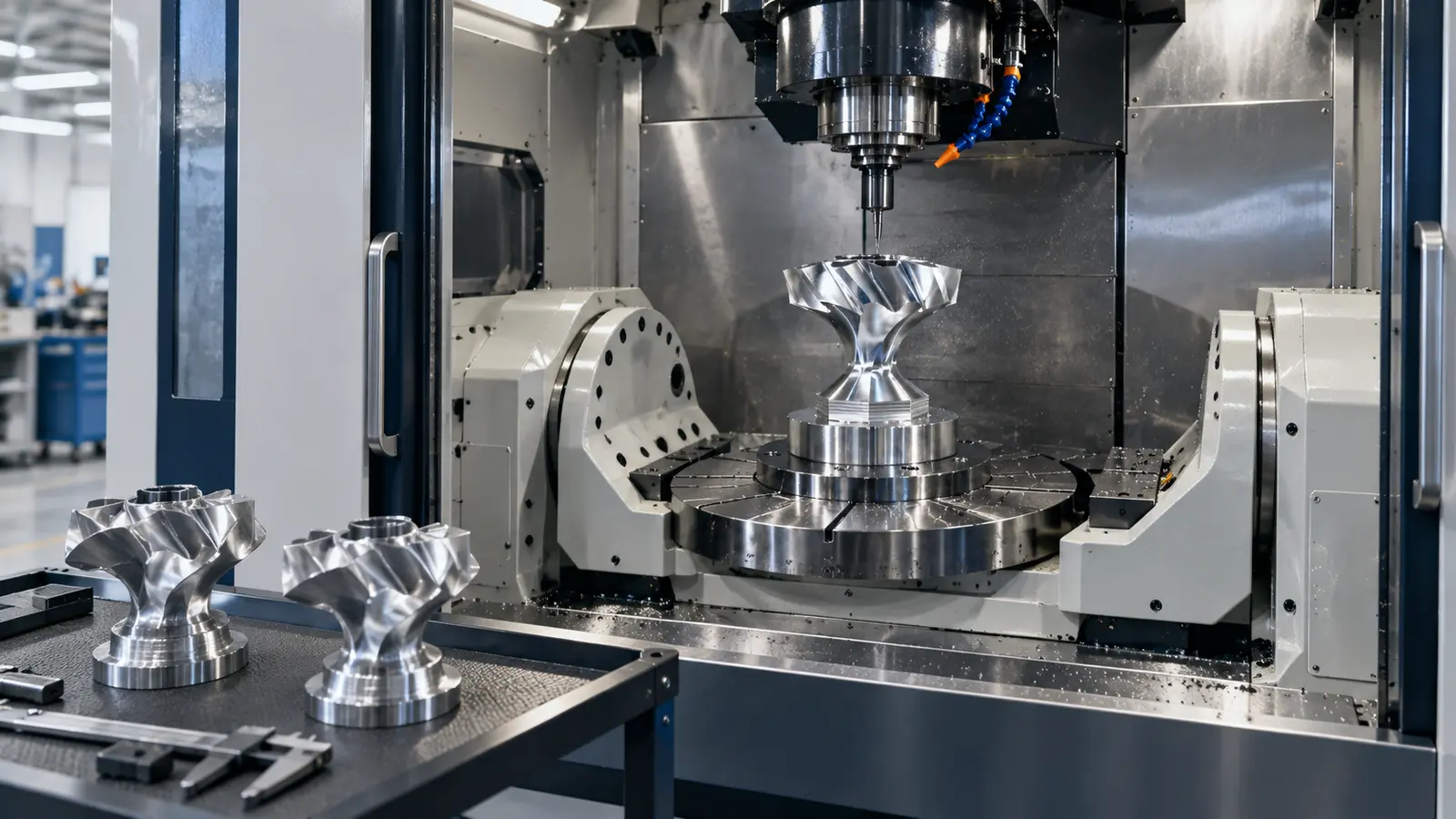
A 3-axis VMC is the workhorse of most machine shops and contract manufacturers. It moves a cutting tool along three linear axes (X, Y, Z) and handles the majority of prismatic parts in aluminum, steel, and brass. Entry-level models from brands like Haas (VF-1 and VF-2 series) start around $55,000 to $75,000. Mid-range VMCs with 12,000 rpm spindles, 30-tool changers, and through-spindle coolant push into $80,000 to $150,000. The 3-axis CNC machining process remains the most cost-effective option for flat surfaces, shallow pockets, and standard drilling patterns.
4-Axis Machining Centers
Adding a single rotary axis (typically an indexing table or trunnion) to a 3-axis platform enables multi-face machining without re-fixturing. This reduces setup time and improves positional accuracy on parts with features on multiple sides. Pricing ranges from $80,000 for a 3-axis VMC retrofitted with a rotary table to $250,000+ for purpose-built 4-axis CNC machining centers. The cost premium over 3-axis is typically 40 to 80%, justified by the elimination of multiple setups on complex parts.
5-Axis Machining Centers
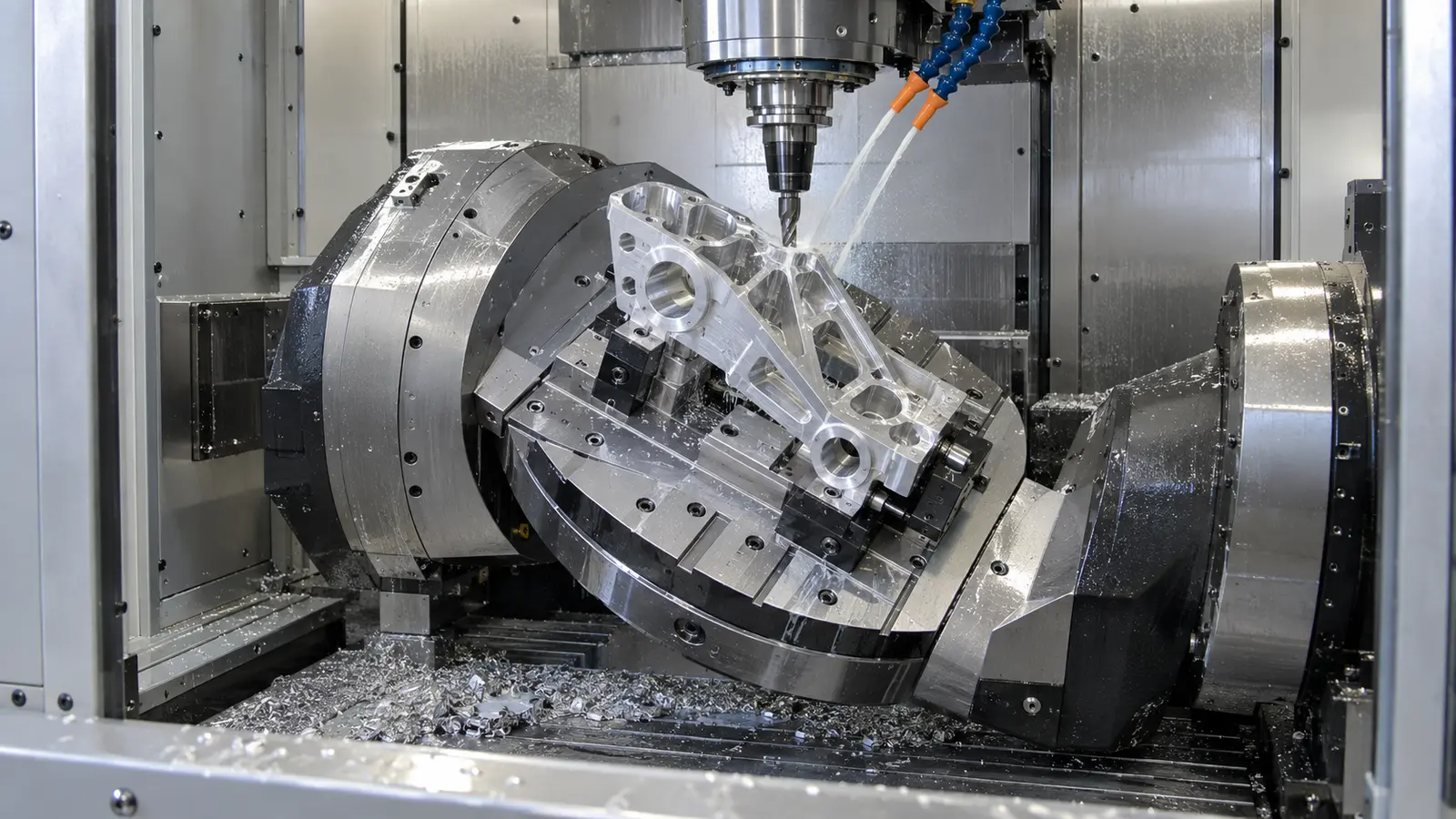
Simultaneous 5-axis machines move the cutting tool and workpiece along five axes simultaneously, enabling complex organic contours, deep undercuts, and compound-angle features in a single setup. Entry-level 5-axis systems like the Haas UMC-500 series start around $110,000 to $130,000. Mid-tier production machines from DMG MORI (DMU 50/60 series) and Mazak (VARIAXIS series) range from $250,000 to $400,000. High-end systems with pallet changers and automation exceed $500,000. The 5-axis CNC machining process is standard for aerospace, medical implant, and defense applications where geometric complexity demands it.
CNC Lathes and Turning Centers
CNC lathes rotate the workpiece against a stationary cutting tool to produce cylindrical parts. Basic 2-axis slant-bed lathes for bar stock start around $40,000 to $70,000. Adding live tooling (driven tools on the turret for milling, drilling, and tapping without a second machine) pushes pricing to $80,000 to $150,000. Twin-spindle, twin-turret mill-turn centers capable of complete part machining in one cycle range from $150,000 to $350,000. Swiss-type lathes for small-diameter precision components (medical bone screws, electrical connector pins) run $150,000 to $400,000. Meco provides CNC turning services with max capacity of ⌀360 x 1000 mm and accuracy to 0.01 mm.
CNC Routers
CNC routers use a gantry-style frame to move a spindle across large work envelopes, typically 4x8 feet or larger. They sacrifice the structural rigidity of a VMC for bed size and are optimized for wood, plastics, composites, and soft metals like aluminum. Hobby-grade routers start around $2,000 to $8,000. Professional units for sign shops and cabinetry run $15,000 to $60,000. Industrial routers with automatic tool changers and vacuum tables range from $60,000 to $150,000.
Wire EDM and Sinker EDM
Electrical Discharge Machining (EDM) uses electrical sparks rather than cutting tools to erode material. Wire EDM machines cut intricate profiles in hardened tool steel, carbide, and exotic alloys with accuracy to ±0.002 mm. Pricing runs $80,000 to $300,000 for wire EDM and $60,000 to $200,000 for sinker EDM. These machines serve toolrooms, mold shops, and any application requiring ultra-fine features in materials that resist conventional cutting.
How Much Does It Cost to Run a CNC Machine Per Hour?
The hourly operating cost of a CNC machine determines what shops charge and what procurement teams pay when outsourcing. This figure blends depreciation, labor, tooling, energy, and overhead into a single rate. According to Gardner Intelligence, which tracks U.S. machine tool consumption and capacity utilization, shop rates in North America have risen 8 to 12% since 2023 driven by skilled labor shortages and energy costs. The following table shows typical 2026 hourly benchmarks across machine categories.
| Machine Type | Hourly Operating Cost (USD) | Typical Shop Rate Charged (USD) | Key Cost Drivers |
|---|---|---|---|
| 3-Axis VMC (aluminum) | $35 to $55 | $50 to $85 | Lower tooling wear, fast cycle times |
| 3-Axis VMC (steel/stainless) | $45 to $70 | $65 to $100 | Higher tool wear, slower feeds |
| 4-Axis Machining Center | $55 to $85 | $75 to $120 | Rotary axis programming, complex setups |
| 5-Axis Machining Center | $75 to $120 | $100 to $200 | Higher depreciation, skilled programming |
| CNC Lathe (standard) | $35 to $60 | $50 to $90 | Simpler toolpath, fast chip removal |
| Swiss-Type Lathe | $60 to $100 | $85 to $150 | Specialized tooling, guide bushing wear |
| Wire EDM | $50 to $80 | $75 to $130 | Wire consumption, slow material removal |
Hourly Cost Calculation Formula
Shop owners and procurement managers can calculate the true hourly cost of any CNC machine using this standard formula:
CNC Machine Hourly Cost Formula
Hourly Cost = (Annual Depreciation + Maintenance + Tooling + Labor + Energy + Overhead) / Annual Productive Hours
For example, a $200,000 5-axis machine depreciated over 8 years, running 3,000 productive hours per year: Depreciation = $25,000/year / 3,000 hrs = $8.33/hr. Add maintenance ($3/hr), tooling ($15/hr), labor ($35/hr), energy ($5/hr), and overhead ($5/hr), and the true operating cost is approximately $71/hr. A shop quoting $95 to $110/hr on this machine is pricing in profit, certification costs, and risk coverage, numbers consistent with industry norms.
What Factors Influence CNC Machine Pricing?
Two machines with identical work envelopes can differ by $100,000+ in price. The difference is never random. It traces to measurable mechanical and control characteristics that the Association for Manufacturing Technology (AMT) tracks across hundreds of builder brands. Understanding these factors helps engineers specify equipment accurately and interpret supplier quotes.
Axis Count and Motion Control
Each additional axis adds servo drives, feedback encoders, kinematic calibration routines, and software coordination. The jump from 3-axis to 5-axis doubles the electronics count and increases accuracy-validation time. This explains why a 5-axis system costs 2 to 3x more than a comparable 3-axis VMC while enabling single-setup production of parts that would otherwise require three or four fixtures.
Precision and Tolerance Grade
A machine built to hold ±0.005 mm across its full travel requires hand-scraped guideways, thermally stable castings, laser volumetric calibration per ISO 230-1, and high-resolution linear encoders. Each incremental improvement in achievable tolerance raises cost through spindle bearing quality, structural dampening, and environmental control. The difference between a standard and high-accuracy edition of the same model can be 10 to 20% of base price.
Spindle Power and Speed
Spindles are among the costliest subsystems. General-purpose spindles (7 to 10 kW, 8,000 rpm) handle most steel and aluminum work. High-speed spindles (15 to 25 kW, 12,000 to 20,000 rpm) for aerospace aluminum, mold-making, and micro-features require ceramic bearings, active cooling, and dynamic balancing, adding 15 to 25% to the machine base price.
Control System
The CNC controller (Fanuc, Siemens, Heidenhain, Mitsubishi) represents proprietary software licensing and processing capability. High-tier controllers with advanced look-ahead algorithms, collision avoidance, and adaptive feed control add $10,000 to $30,000 over entry-level options. For manufacturers serving automotive or aerospace, these features directly enable tighter tolerances and faster cycle times.
Structural Rigidity and Mass
Heavy cast-iron or polymer-granite beds minimize vibration, improving tool life and surface finish, check out our surface finish chart. Machine stiffness is measured in N/µm of tool-center deflection, a specification directly tied to capital cost. A machine with superior damping delivers better finishes at higher feed rates, effectively reducing cost per part over its service life.
Automation and Handling
Pallet changers ($30,000 to $80,000), robotic loading cells ($50,000 to $150,000), and expanded tool magazines (60+ stations, $10,000 to $25,000) increase initial cost but transform operating economics by enabling unattended operation. For high-volume programs, upfront automation investment typically pays back within 12 to 18 months through improved spindle utilization.
| Pricing Factor | Impact on Cost | Typical Premium |
|---|---|---|
| Additional axis (3 to 4 or 4 to 5) | More servo drives, calibration, software | +40 to 100% per axis added |
| High-speed spindle (12K+ rpm) | Ceramic bearings, active cooling, balancing | +15 to 25% |
| Premium controller (Siemens 840D, Heidenhain) | Faster processing, adaptive feed, diagnostics | +$10,000 to $30,000 |
| High-accuracy grade (±0.005 mm) | Scraped ways, thermal compensation, laser calibration | +10 to 20% |
| Pallet changer or robotic loading | Automation hardware and integration | +$30,000 to $150,000 |
| Through-spindle coolant | High-pressure pump, filtration, sealed spindle | +$5,000 to $15,000 |
| In-machine probing system | Touch probe, software, calibration sphere | +$5,000 to $12,000 |
Hidden and Recurring Costs Over the Machine Lifecycle
The purchase price is only the first chapter of CNC machine economics. According to CNC Optimization's TCO calculator, total cost of ownership over a machine's lifespan is typically 2.5 to 3.5x the initial purchase price. These recurring costs rarely appear in sales quotations but steadily erode ROI if not modeled during the buying decision.
Preventive Maintenance and Calibration
Every precision machine drifts over time. Annual laser calibration and ball-bar testing per ISO 230-2 cost $1,000 to $2,500 per visit plus a full day of idle capacity. A preventive maintenance program runs approximately 5 to 8% of machine value per year ($5,000 to $16,000 on a $200,000 machine). Skipping these procedures risks geometric errors that compound into scrap and rework.
Tooling and Consumable Renewal
Cutting tools, inserts, holders, collets, and fixtures are consumables. Annual tooling budgets typically run 15 to 20% of machine operating cost. For a machine running 3,000 hours per year on steel, that translates to $15,000 to $25,000 in tool replacement. Coolant concentrate, filtration, and disposal add another $2,000 to $5,000 annually.
Spindle Rebuilds
High-speed spindle bearings are rated for approximately 10,000 operating hours. A rebuild costs $5,000 to $15,000, and the machine is offline for 3 to 10 days. This cost is predictable and should be budgeted from day one.
Software Licenses
CAM software increasingly follows subscription models. Annual renewals for platforms like Mastercam, Fusion 360, or SolidCAM run $3,000 to $10,000 per seat. Post-processor updates, simulation modules, and DNC connectivity software add further recurring costs.
Operator Labor
CNC operators in the United States earn a median of $23 to $28 per hour according to ZipRecruiter 2026 data. Skilled CNC programmers command $30 to $45/hr. The U.S. Bureau of Labor Statistics projects 3% growth in machinist employment through 2032, which means labor costs are unlikely to decline. Even with automation, every machine needs human oversight for setup, first-article verification, and quality monitoring.
Total Cost of Ownership Example
A $200,000 5-axis VMC over 8 years at 3,000 productive hours/year: Purchase price $200,000 + tooling/fixtures $160,000 + maintenance/calibration $80,000 + labor $840,000 + energy $36,000 + software $48,000 = approximately $1,364,000 total, or roughly $57/productive hour. That is 6.8x the purchase price, illustrating why procurement teams who compare only sticker prices make flawed sourcing decisions.
New vs. Used vs. Refurbished CNC Machines
Buying used is the most common strategy for reducing CNC machine acquisition cost. Used machines typically sell for 30 to 60% of new price depending on age, hours, condition, and brand. A 5-year-old Haas VF-2 that listed at $65,000 new might sell for $28,000 to $40,000 on the used market. A 10-year-old DMG MORI 5-axis that cost $350,000 new might trade at $120,000 to $175,000.
Where to Find Used CNC Machines
Major marketplaces include CNCMachines.com, Machinio, Bid on Equipment, and manufacturer-direct certified pre-owned programs. Auctions from plant closures can offer deep discounts (50 to 70% off) but typically sell as-is with no warranty or verification.
Risks of Buying Used
Geometric accuracy degrades with age. A used machine may hold ±0.025 mm instead of ±0.005 mm without a full recalibration. Spindle hours, ballscrew backlash, and way condition are the three critical inspection points. Request the machine's maintenance log, stored alarm history, and a recent ball-bar or laser interferometer report before purchasing. A pre-purchase inspection by a qualified technician costs $1,500 to $3,000 and can save tens of thousands in surprise repairs.
Refurbished Machines
Refurbished or remanufactured machines have been stripped, rebuilt with new bearings and ballscrews, recalibrated, and often upgraded with current-generation controls. They typically cost 50 to 70% of new price but deliver near-new accuracy with a warranty. For budget-conscious shops that need certified precision, refurbished machines offer the best cost-to-capability ratio.
Section 179 Tax Deductions for CNC Machines in 2026
The U.S. Internal Revenue Code Section 179 allows businesses to deduct the full purchase price of qualifying equipment in the year it is placed in service, rather than depreciating it over multiple years. For 2026, the Section 179 deduction limit is $2,560,000, with a phase-out threshold beginning at $6,400,000 in total equipment purchases, according to Section179.org.
CNC machines, including mills, lathes, routers, EDM systems, and associated tooling, qualify as Section 179 property. A shop purchasing a $200,000 5-axis machining center can deduct the entire amount from taxable income in the first year, potentially saving $40,000 to $70,000 in federal and state taxes depending on bracket. This significantly accelerates payback and should be factored into every buy-versus-lease analysis.
Bonus depreciation also remains available in 2026, though the first-year bonus percentage has phased down from 100% to 60% for assets placed in service in 2026 under current legislation. Section 179 and bonus depreciation can be combined, but the specifics depend on total equipment investment and tax circumstances. Consult a CPA familiar with manufacturing CapEx before making a purchasing decision.
Should You Buy a CNC Machine or Outsource?
This is the most consequential financial question in CNC economics, and the answer depends on three variables: annual utilization, process complexity, and quality system requirements. The decision framework is straightforward when the numbers are modeled correctly.
When Buying Makes Sense
In-house CNC ownership is justified when the machine will run more than 4,000 productive hours per year (approximately 2 shifts, 5 days/week with 80%+ utilization), when proprietary IP or security constraints prevent external sourcing, when short-lead prototype iteration speed outweighs hourly efficiency, or when the shop already has trained operators, CAM programming capability, and a quality management system in place.
When Outsourcing Makes Sense
Outsourcing to a contract manufacturer is almost always cheaper when annual demand falls below 5,000 parts or utilization drops below 2,000 hours per year. It is also the better choice when the program requires multiple processes beyond machining (casting, forging, finishing, assembly) that would need separate equipment investments. A turnkey manufacturing partner absorbs all capital, maintenance, quality, and logistics costs into a single hourly or per-part rate.
Break-Even Comparison
| Scenario | In-House Cost (Annual) | Outsourced Cost (Annual) | Verdict |
|---|---|---|---|
| 500 parts/year, simple 3-axis | $85,000 (machine, labor, overhead) | $35,000 ($70/part average) | Outsource |
| 5,000 parts/year, 3-axis aluminum | $95,000 | $90,000 | Break-even |
| 20,000 parts/year, 3-axis production | $120,000 | $240,000 | Buy |
| 500 parts/year, 5-axis complex | $140,000 | $65,000 | Outsource |
| 10,000 parts/year, multi-process (machine + finish + assembly) | $300,000+ (multiple machines) | $180,000 (turnkey partner) | Outsource |
The outsourcing advantage is most pronounced for programs requiring multi-process manufacturing, where parts need machining plus surface finishing, heat treatment, or assembly. Buying a CNC machine solves only one step. A partner like Meco with precision CNC machining, surface finishing, heat treatment, and mechanical assembly under one IATF 16949:2016 certified roof eliminates multi-vendor fragmentation and the hidden coordination costs that erode per-part savings.
How to Reduce CNC Machining Costs
Whether you own a machine or outsource, the same engineering levers control cost per part. Applying these principles at the design stage typically yields 15 to 30% cost reduction without compromising function.
Design for manufacturability (DFM). Add fillets instead of sharp internal corners to allow larger, faster tools. Maintain feature depths below 4x tool diameter. Avoid unnecessarily tight tolerances on non-critical surfaces. Every tenth of a millimeter tighter than required adds cost through slower feeds, more inspection, and higher scrap risk. Meco provides DFM analysis as a standard part of its R&D engineering and quoting workflow.
Choose the right material. Aluminum 6061-T6 machines 3 to 5x faster than stainless steel 316L for the same geometry. If the application permits substitution from stainless to aluminum (weight, corrosion, or thermal requirements allowing), the cost per part drops dramatically. For a deeper breakdown of CNC machining cost per part, Meco's pricing guide covers material, tolerance, and volume economics in detail.
Consolidate suppliers. Managing five vendors for machining, finishing, heat treatment, inspection, and assembly creates coordination overhead, shipping costs, and quality risk at each handoff. A single turnkey partner eliminates those hidden costs. Meco's 40+ processes, from die casting and forging through CNC machining, finishing, and global logistics, consolidate the entire value chain.
Increase batch size where possible. Setup cost is fixed regardless of quantity. A 10-piece order carries the same $200 to $500 setup charge as a 500-piece order. Spreading that fixed cost over more parts drops the per-unit price significantly. Even increasing from 50 to 200 pieces can cut per-part cost by 25 to 40%.
CNC Machine Cost vs. CNC Machining Cost: Understanding the Difference
Search data shows that many users searching "CNC machine cost" are actually trying to understand what it costs to have parts made, not what a machine costs to buy. These are related but distinct questions. The machine cost (this article) covers equipment acquisition and ownership economics. The machining cost covers what you pay per part or per hour when a shop machines your components.
Meco publishes a separate guide covering CNC machining cost per part, including hourly rates by region, material cost multipliers, tolerance-driven pricing, and volume discount structures. If your primary question is "how much will it cost to have my parts CNC machined," that guide is the more relevant resource. If you are comparing the cost of metal parts across every manufacturing process, not just machining, see our complete guide on how much it costs to get a metal part made. And if you are evaluating whether to invest in your own equipment or partner with a certified manufacturer, this page provides the capital and lifecycle framework you need.
About the Author
Meco Engineering Team draws on over 30 years of turnkey manufacturing experience across CNC milling, CNC turning, 5-axis machining, surface finishing, heat treatment, and mechanical assembly. Our engineers work with OEM sourcing managers, product designers, and manufacturing engineers to optimize CNC machining programs for cost, quality, tolerances, and lead time from prototype through mass production.
IATF 16949:2016 Certified · 30+ Years in Turnkey Manufacturing · 40+ In-House Processes · Global Production with North American Support
Frequently Asked Questions About CNC Machine Costs
How much does a CNC machine cost for a small business?
A small business CNC machine typically costs $8,000 to $25,000 for a benchtop mill capable of cutting aluminum and mild steel, or $50,000 to $100,000 for an entry-level 3-axis vertical machining center suitable for production work. Desktop CNC routers for wood and plastic start as low as $2,000 to $5,000. The right choice depends on the materials you need to cut, the tolerances your parts require, and your expected utilization. If annual machining demand is below 2,000 hours, outsourcing to a contract manufacturer is typically more cost-effective than purchasing equipment.
How much does a 5-axis CNC machine cost?
A 5-axis CNC machining center costs $200,000 to $500,000+ new, depending on brand, work envelope, spindle speed, and automation level. Entry-level 5-axis machines like the Haas UMC-500 start around $110,000 to $130,000. Mid-tier production systems from DMG MORI and Mazak range from $250,000 to $400,000. High-end systems with pallet automation exceed $500,000. Used 5-axis machines typically sell for 30 to 50% of new price, making them accessible to shops that cannot justify new equipment but need multi-axis capability.
How much does it cost to run a CNC machine per hour?
The cost to run a CNC machine ranges from $35 to $55 per hour for a 3-axis mill cutting aluminum to $75 to $120 per hour for a 5-axis machining center working on stainless steel or titanium. These figures include depreciation, tooling wear, operator labor, energy, and overhead. When shops charge customers, they add profit margin, yielding typical shop rates of $50 to $200 per hour. The formula is: Hourly Cost = (Depreciation + Maintenance + Tooling + Labor + Energy + Overhead) / Annual Productive Hours.
Is it cheaper to buy a CNC machine or outsource machining?
Outsourcing is almost always cheaper when annual machining volume is below 5,000 parts or machine utilization would fall below 2,000 hours per year. At that utilization level, the fixed costs of ownership (depreciation, maintenance, labor, software) spread over too few parts to compete with a contract manufacturer's pooled economics. Buying makes financial sense when utilization exceeds 4,000 hours per year on a consistent basis. For multi-process programs that need machining plus finishing, heat treatment, or assembly, outsourcing to a turnkey partner is typically 15 to 25% cheaper than managing multiple in-house processes.
How much does a used CNC machine cost?
Used CNC machines typically sell for 30 to 60% of new price. A 5-year-old 3-axis VMC that listed at $70,000 new might sell for $25,000 to $40,000. A 10-year-old 5-axis machine that cost $350,000 new could trade at $120,000 to $175,000. Pricing depends on age, hours, maintenance history, brand reputation, and geometric accuracy. Always request a ball-bar report or laser interferometer test before purchasing used equipment, and budget 5 to 15% of purchase price for any needed recalibration or component replacement.
What is the total cost of ownership for a CNC machine?
Total cost of ownership (TCO) for a CNC machine is typically 2.5 to 3.5x the initial purchase price over its 7 to 10 year service life. A $200,000 machine will cost approximately $500,000 to $700,000 to own and operate when accounting for maintenance ($10,000 to $16,000/year), tooling ($15,000 to $25,000/year), operator labor ($60,000 to $100,000/year), software licenses ($3,000 to $10,000/year), energy, and facility overhead. Understanding TCO is essential for accurate make-versus-buy analysis.
Can I deduct a CNC machine purchase on my taxes?
Yes. Under Section 179 of the U.S. Internal Revenue Code, businesses can deduct up to $2,560,000 in qualifying equipment purchases (including CNC machines) in the tax year the equipment is placed in service. For 2026, bonus depreciation also allows an additional 60% first-year deduction on qualifying assets. Combined, these provisions can significantly reduce the effective cost of a CNC machine. Consult a tax professional familiar with manufacturing capital expenditures for guidance specific to your situation.
What is the difference between CNC machine cost and CNC machining cost?
CNC machine cost refers to the capital expenditure to purchase the equipment itself, the sticker price plus installation, tooling, and software. CNC machining cost refers to what you pay per part or per hour to have components machined, whether in-house or by an external shop. Machine cost is a one-time investment decision. Machining cost is an ongoing per-part expense that factors in depreciation, labor, materials, and overhead. Many searchers use these terms interchangeably, but they require different financial analyses.
How long does it take for a CNC machine to pay for itself?
Payback period depends on utilization and the cost savings versus outsourcing. A $200,000 machine generating $60/hr in savings over contract rates at 3,000 productive hours per year pays back in approximately 1.1 years before maintenance costs. At lower utilization (1,500 hours/year), payback stretches beyond 4 years, often longer than the technology refresh cycle. The key variable is spindle utilization: machines running below 50% capacity rarely achieve acceptable ROI.
Skip the Machine Purchase. Get Precision CNC Parts Delivered.
Buying a CNC machine means absorbing $200,000+ in capital, plus maintenance, tooling, labor, and quality infrastructure. Meco converts all of that into a predictable per-part cost with quotes returned in under 24 hours and DFM feedback included as standard.
With 30+ years of turnkey manufacturing experience and IATF 16949:2016 certified quality, Meco delivers CNC machined parts at the precision, consistency, and documentation level that in-house operations spend years building.
- 40+ In-House Processes: 3-axis, 4-axis, and 5-axis CNC milling, CNC turning, surface finishing, heat treatment, mechanical assembly, and global logistics, all under one roof.
- IATF 16949:2016 Certified: Automotive-grade quality applied across every industry. 99.99% quality rate. 99.8% on-time delivery.
- Accuracy to ±0.005 mm: CMM inspection, SPC monitoring, and full dimensional documentation with every shipment.
- Prototype to Mass Production: From 10 pieces to 10 million+. No minimum order quantities. No MOQ.
- Global Logistics: Warehousing in the U.S. (Ohio and Florida), Canada, Japan (Tokyo and Osaka), and Thailand. JIT and VMI delivery programs available.
Submit your CAD files and let Meco's engineering team show you how outsourced precision machining delivers better economics than machine ownership for most production programs.
Request a Quote Today