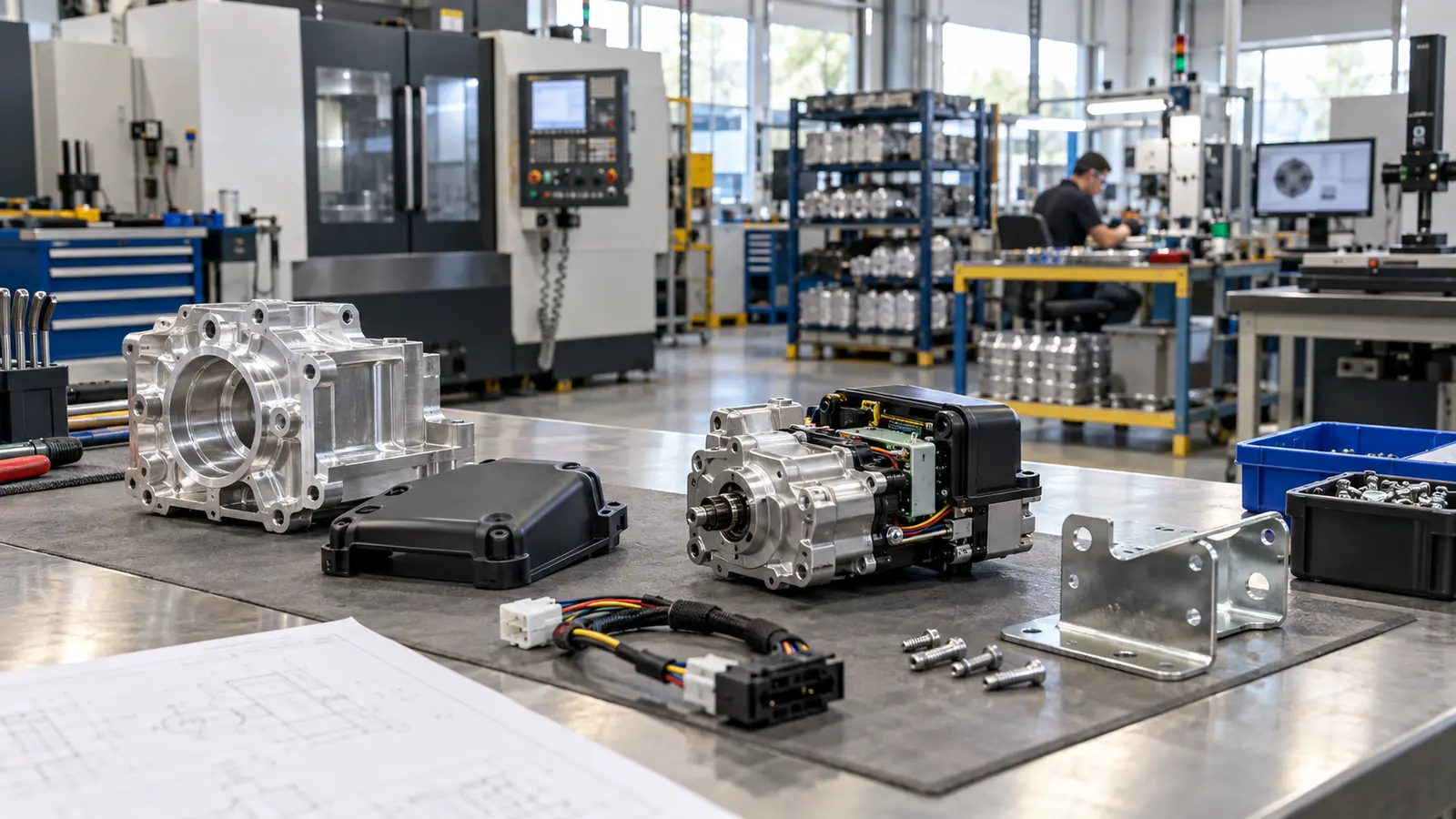
To find a manufacturer for your product idea, first define what the product must do and how many you need. Then shortlist suppliers with the right processes, compare their production plans and quality controls, and approve samples before placing a larger order.
A search for a manufacturer can begin before every detail is fixed. The goal is to move from an idea to a clear brief, then test whether a supplier can deliver the parts or complete product you actually need.
- A sketch can start the discussion; drawings, quantities and quality criteria make quotes comparable.
- Choose suppliers for the complete process and assembly scope, not a broad capability claim.
- Check the facility, inspection plan and responsibility for any subcontracted work.
- Approve samples and revisions before committing to a larger production run.
What should you prepare before contacting a manufacturer?
You can start a conversation with a sketch or reference product. A useful production quote needs clearer requirements, quantities and acceptance criteria.
Write down what the product does, who will use it and where it will operate. Note the expected dimensions, materials, appearance, target price and first-order quantity. Mark the features that affect safety, fit or function.
Drawings and CAD files
A dimensioned drawing or 3D computer-aided design (CAD) model helps a supplier review geometry. STEP files are useful for exchanging solid models; an STL mesh can help with some prototyping tasks but may not provide the solid geometry needed for production engineering.
If you have no CAD model yet, send photographs, a marked-up sketch and an explanation of the mechanism. Ask what design support the supplier can provide and whether it is included in the quote. Meco's invention-to-production guide explains the earlier steps in more detail.
A prototype or reference sample
A prototype can test shape, handling and assembly before production tooling is built. Identify what it proves. A 3D printed enclosure may verify fit but cannot prove that a molded part will perform the same way.
A simple product specification
Gather the bill of materials (BOM), drawings, material choices, colors, finishes, labels and test needs in one controlled file set. List each component by part number and revision where possible. If a detail remains open, mark it as an assumption rather than allowing different bidders to guess.
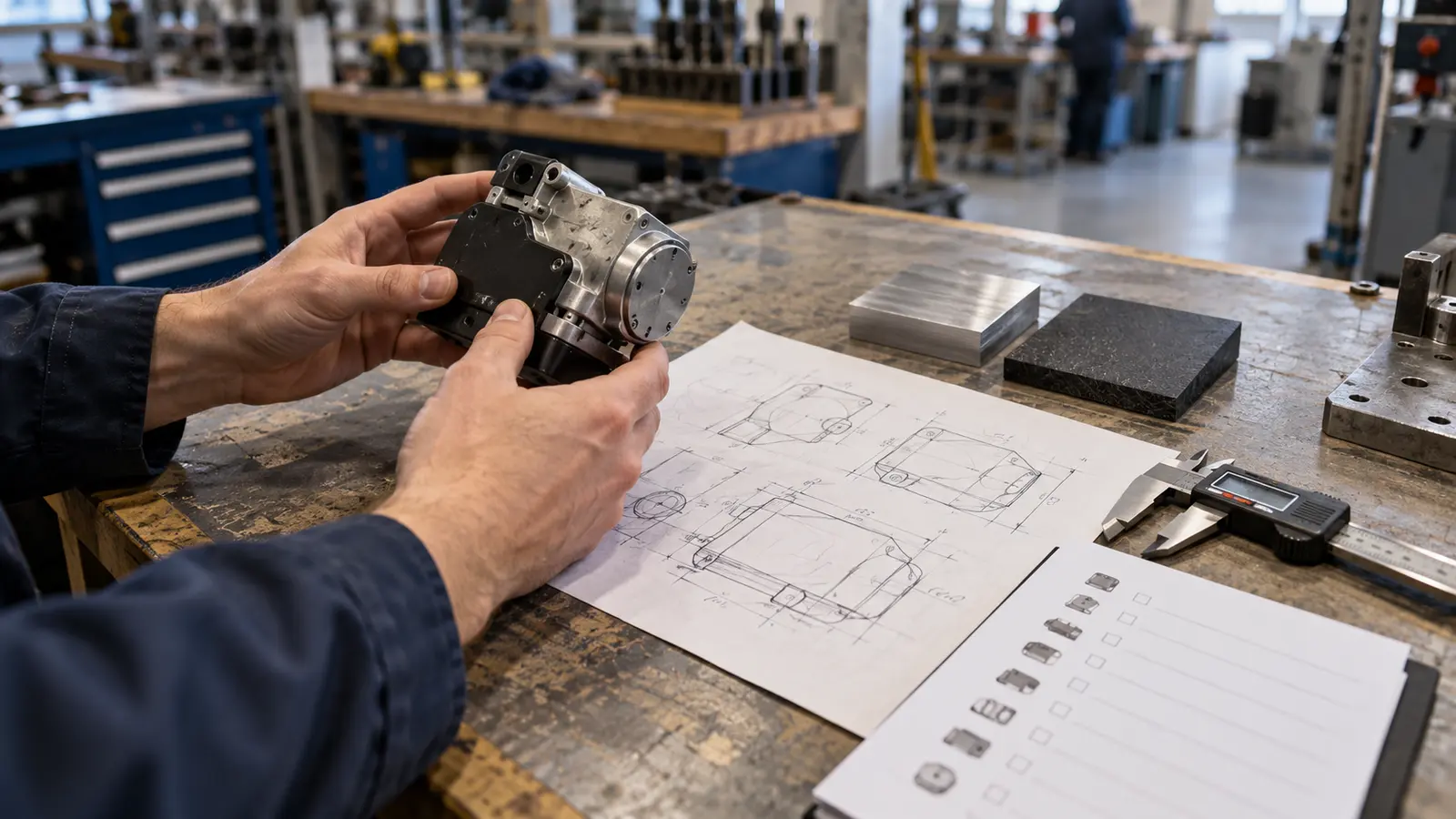
How do you define the manufacturing scope?
Before building a supplier list, decide whether you need one component, a finished assembly or help coordinating the complete product.
Break the product into parts and note the likely processes. A metal bracket may begin with laser cutting and bending, while a complex aluminum housing may use die casting followed by CNC machining. A polymer cover may need injection molding after the design and quantity justify tooling.
Meco's own process-planning ranges illustrate why volume matters: CNC machining can suit runs from one to around 10,000 parts, while die casting is typically considered at about 5,000 parts and above. These are planning ranges, not minimum-order promises. Geometry, tooling and lifetime demand still decide the best route.
Parts still need to fit together. Record who will perform finishing, source bought-in components, assemble the unit, test it and package it. For products with several processes, the cost of managing interfaces can matter as much as the cost of any individual part.
Ask whether the candidate performs each process directly or manages a specialist partner. Outsourcing a process is not automatically a problem; the buyer needs a clear owner for quality, revisions and delivery across the full build. Meco's whole product manufacturing service describes one coordinated route for multi-process products.
Which manufacturing model fits your product?
OEM, ODM, contract manufacturing and turnkey describe different design and delivery roles. The actual responsibilities must be written into the agreement.
Original equipment manufacturer
In many sourcing discussions, an original equipment manufacturer (OEM) is the brand or product owner that defines the product. The brand may hire a manufacturing partner to build it. The term is used differently across industries, so ask each supplier which design and production responsibilities it means.
Original design manufacturer
An original design manufacturer (ODM) offers a design that the customer may adapt or brand under agreed terms. This can reduce early design work, but the available changes and ownership rights vary by contract.
Contract manufacturer
A contract manufacturer makes parts or products to agreed specifications. Some also support design for manufacturability, sourcing and testing. The customer and supplier should state who owns the drawings, tooling, design changes and production files; the label alone does not decide those rights.
Turnkey manufacturing
A turnkey partner coordinates more of the path from sourcing through production, finishing, assembly and delivery. Confirm which steps are included, which suppliers are involved and who approves substitutions. This model is useful when a product crosses several processes, provided one team remains accountable for the handoffs.
Should you source locally or overseas?
Compare manufacturing locations by total project needs, including process capability, communication, freight and the time needed to resolve changes.
A nearby supplier can make visits, sample reviews and short-run replenishment easier. It may also be the best fit when specifications are still changing. Those advantages do not make every local option faster or cheaper.
An overseas supplier may offer access to a concentrated component base or production capacity. Account for shipping, customs, time zones and the cost of monitoring quality. Ask for a realistic landed-cost comparison using the same product specification and order quantity.
For a multi-country supply chain, trace where each critical part is made, assembled and inspected. A North American point of contact may simplify project communication, but the buyer still needs to know which facility does the work. Origin claims for the finished product require separate review of the actual processes and applicable rules.
Import terms, duties and origin rules can change. Confirm the shipment and classification plan with a licensed customs broker. This article is general information, not legal or customs advice.
Where can you find candidate manufacturers?
Start with suppliers that serve your product category and process, then use directories and industry contacts to widen the shortlist.
Search with a specific process and material, such as “aluminum die casting and machining” or “plastic injection molding with assembly.” Check the services page for the equipment, materials, volumes and inspection methods your product requires. A generic “we make anything” claim is not enough.
For North American industrial suppliers, Thomasnet supplier search is one starting point. For broader international discovery, Alibaba and Global Sources list supplier profiles. A listing or verification badge is an initial filter, not proof that a facility can make your specific product.
Industry associations, trade shows and referrals from engineers can uncover specialist shops. If you need electronics as well as a mechanical enclosure, ask how the manufacturer coordinates PCB design and assembly with final fit and test.
Build a short list and note the same fields for every candidate: process fit, location, relevant certification, sample plan, expected capacity and contact person. A structured list makes later quotes easier to compare.
Need a manufacturing plan? Share your idea, drawing or sample and target quantity so our team can review the processes and information needed for a quote.
Talk to an EngineerWhat should your first supplier message include?
A short project brief should explain the product category, materials, quantity, schedule and help you need from the manufacturer.
Give enough detail for the supplier to say whether the work fits its capabilities. State whether the design is a sketch, prototype or released drawing. Include expected first order and annual volume, even if both are estimates.
Ask who will review the design and whether the company can provide a process recommendation. Identify confidentiality needs before sending sensitive files. An agreement may help protect information, but its effect depends on its terms and the relevant jurisdiction; seek qualified advice for important IP decisions.
After an initial fit check, share controlled drawings or a technical packet with the selected candidates. Send the same revision and question list to each one. If a supplier proposes a different material or process, request the reason and ask which product requirements would change.
How do you evaluate a manufacturer?
Look for evidence that the supplier can build, inspect and deliver your product at the expected volume.
Ask the team to walk through the proposed process from incoming material to final shipment. Who owns each step? Which operations are performed at its facility, and which are subcontracted? A useful answer links process choices to your design and quantity.
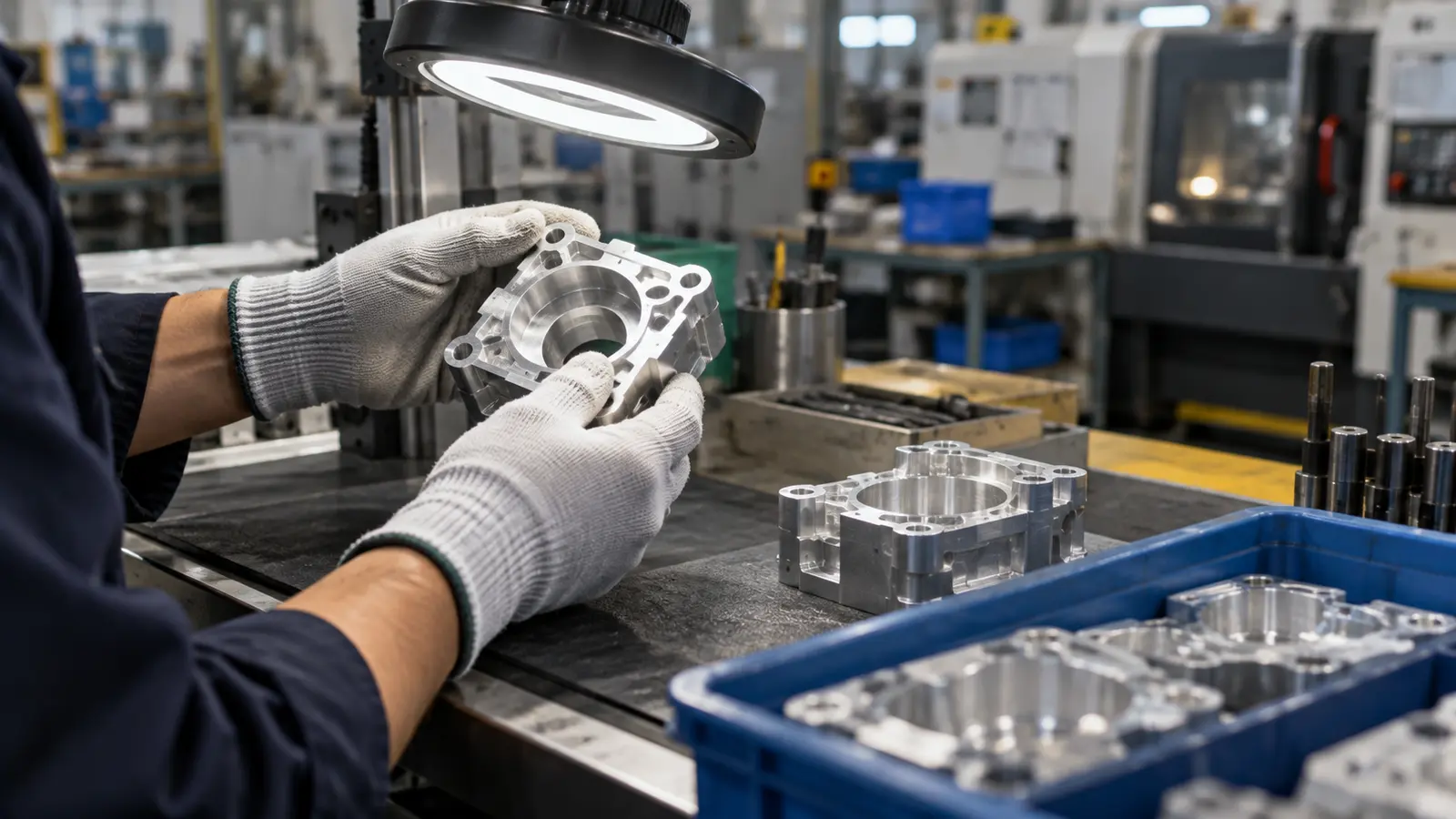
Request the inspection plan for critical features. For example, an enclosure with a sealing face may need a different check from a decorative cover. Ask what measurement records, sample approvals and corrective-action process the supplier can provide.
Review the certificate scope rather than just a logo on a website. Meco's stated formal quality certification is IATF 16949:2016; that does not mean every product is certified or that the company holds medical or aerospace certifications. Ask each candidate for the certificate relevant to the actual facility and process.
If possible, visit the site or arrange a live process review. Look at material identification, work instructions, inspection stations and how the team handles nonconforming parts. A polished presentation cannot substitute for evidence of production control.
How should you compare quotes and minimum orders?
Compare the full scope and assumptions, not only the per-unit price.
Separate recurring unit price from one-time tooling, fixtures, engineering work, samples and test setup. Confirm what is included for material sourcing, finishing, assembly, packaging and quality records. A low piece price can conceal work the buyer must arrange elsewhere.
Minimum order quantity (MOQ) depends on the process, setup time, material purchases and tooling economics. Ask for price breaks at realistic quantities instead of assuming a universal startup MOQ. A pilot order may carry a higher unit price but reduce the risk of committing to too many unproven products.
Ask what changes the quoted lead time: drawing approval, sample sign-off, tooling, bought-in parts or available machine capacity. Lead time begins at an agreed release point, not necessarily when the first inquiry is sent. For an example of how process and volume affect cost, see Meco’s metal part cost guide.
What happens before full production?
Approve a sample and, when the product warrants it, a pilot build using the planned production route.
State what the prototype proves and which risks remain. A one-off machined sample may establish fit while leaving molding shrinkage, tool wear or assembly time untested. The next build should answer those open questions.
Freeze a drawing revision for the pilot, confirm materials and define the inspection method. Check mating parts together, not only in isolation. Record defects and approve any design or process change before it reaches a full run.
The release decision should name the approved sample, product revision, required reports and responsibilities for packaging and delivery. Keep the first production order small enough to learn from where possible, then scale against measured quality and capacity. The prototype to production guide explores this transition further.
What should the final supplier decision include?
Choose the partner that can own the agreed process and show how it will respond when the design or demand changes.
Compare the shortlist against the same criteria: process fit, engineering feedback, sample plan, quality records, capacity, commercial terms and communication. Record the reasons for the choice so a low headline price does not override a major delivery or quality gap.
Before placing the order, agree on drawing control, tooling ownership, material substitutions, inspection acceptance and change approvals. Assign a contact on each side. A manufacturing partnership becomes easier to manage when questions have named owners and a written route to resolution.
If your product combines metal, plastic and electronics, ask one final question: who checks the finished unit after the separate parts pass inspection? The answer reveals whether you have selected a component shop, an assembly partner or a team able to coordinate the complete build.
Discuss your product idea
Send us a sketch, model or sample and your target quantity. Meco can review the processes, assembly needs and next steps for a manufacturing quote.
- Design review. Early DFM questions and process options.
- Production scope. Parts, finishing and assembly.
- Quality planning. Inspection needs before scale-up.
Explore Meco’s manufacturing capabilities or whole product manufacturing.
Talk to an Engineer