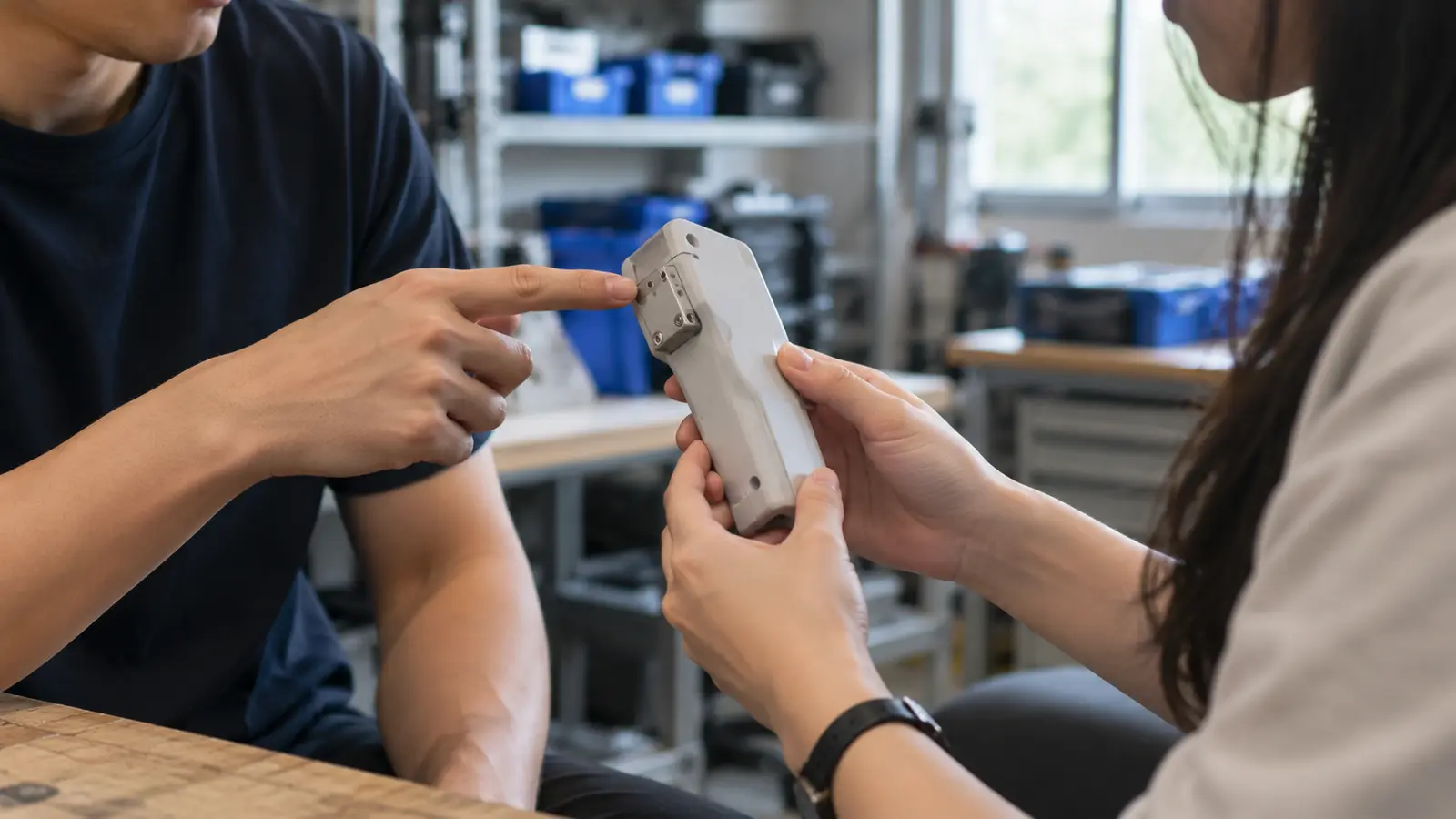
To get your invention made, define the product, test a prototype, review the design with a manufacturer and approve a production sample. Then choose a first batch that fits your budget and market test.
Protect confidential information early. Confirm patent and disclosure decisions with a qualified practitioner before public promotion. Cost and timing depend on the design, process and required tests.
This guide explains the steps from idea to finished product in plain English. It covers prototypes, supplier selection, cost planning and sample approval.
You do not need a completed CAD file to start an engineering conversation. A sketch, photo or clear description can help establish the next step.
The key is to separate what you know from what still needs testing. A prototype can answer questions about fit and function. A production sample checks the agreed material, process and finish.
Use each stage to reduce uncertainty before committing more money. The process below is a planning guide, not a fixed timetable or a substitute for product-specific legal and testing advice.
Key takeaways
- Define. Describe the user, purpose, size and key requirements.
- Search. Check existing products and discuss patent questions with a qualified practitioner.
- Protect. Resolve confidentiality and disclosure before public promotion.
- Test. Choose prototypes that answer specific design questions.
- Review. Obtain a manufacturing quote with DFM feedback.
- Approve. Test and sign off a production sample.
- Scale. Start with an appropriate batch and record what you learn.
What Does It Actually Mean to "Get an Invention Made"?
Getting an invention made means taking your idea and turning it into a real product people can buy, through three connected stages: design, prototyping, and manufacturing. Whether your idea is scribbled on a napkin or fully formed in your head, the path to a finished product runs through those same three stages.
Each stage has its own specialists. The good news? You don't have to manage them all yourself. More on that later.
What is involved in turning an idea into a product?
Three big chunks of work, each one a step closer to a shelf:
- Design. Turning your idea into a 3D digital file (called a CAD file, short for computer-aided design) that a factory can read. This usually means working with a designer or engineer.
- Prototyping. Building a physical version you can hold and test. Most prototypes are 3D-printed in plastic, even when the final product will be metal.
- Manufacturing. Producing real units at quality and at scale, using processes like injection molding, CNC machining, casting, or assembly.
Who is this process for?
Three groups make up almost every conversation we have:
- First-time inventors with a single idea they want to bring to market.
- Small business owners who want to add a custom product to a brand they already run.
- Product creators and small teams who've proven demand, often through crowdfunding, and now need to scale.
If you're in any of these groups, the process below is built for you. You don't need a manufacturing background to follow it.
Why does the order of steps matter?
Because money. Skipping ahead almost always costs more.
Ordering a large batch before testing fit, function and demand can create costly rework. Keep legal planning and engineering validation moving together, and confirm sample acceptance before approving a production order.
A patent alone does not establish demand or prove that a product can be manufactured. Treat engineering validation, market testing and intellectual property planning as related tasks with different specialists.
The one idea to hold onto: your prototype is cheap insurance
A prototype lets you test the product before committing to production tooling. Choose the simplest sample that answers the question at hand. It may test size, assembly, movement or material behavior.
What "turnkey" means in plain English
A turnkey manufacturing partner coordinates the agreed work from design through production and delivery. Check which operations are included, who manages changes and what remains your responsibility.
Seven Stages From Idea to Finished Product
The seven stages below provide a practical checklist: Sketch, Search, Secure, Sample, Source, Sign-off and Scale. Some tasks overlap. In particular, protection and disclosure decisions may need attention before public testing.
Think of it as the product development process boiled down to seven moves you can actually remember.
Stage 1 - Sketch: Write Down and Draw Your Idea
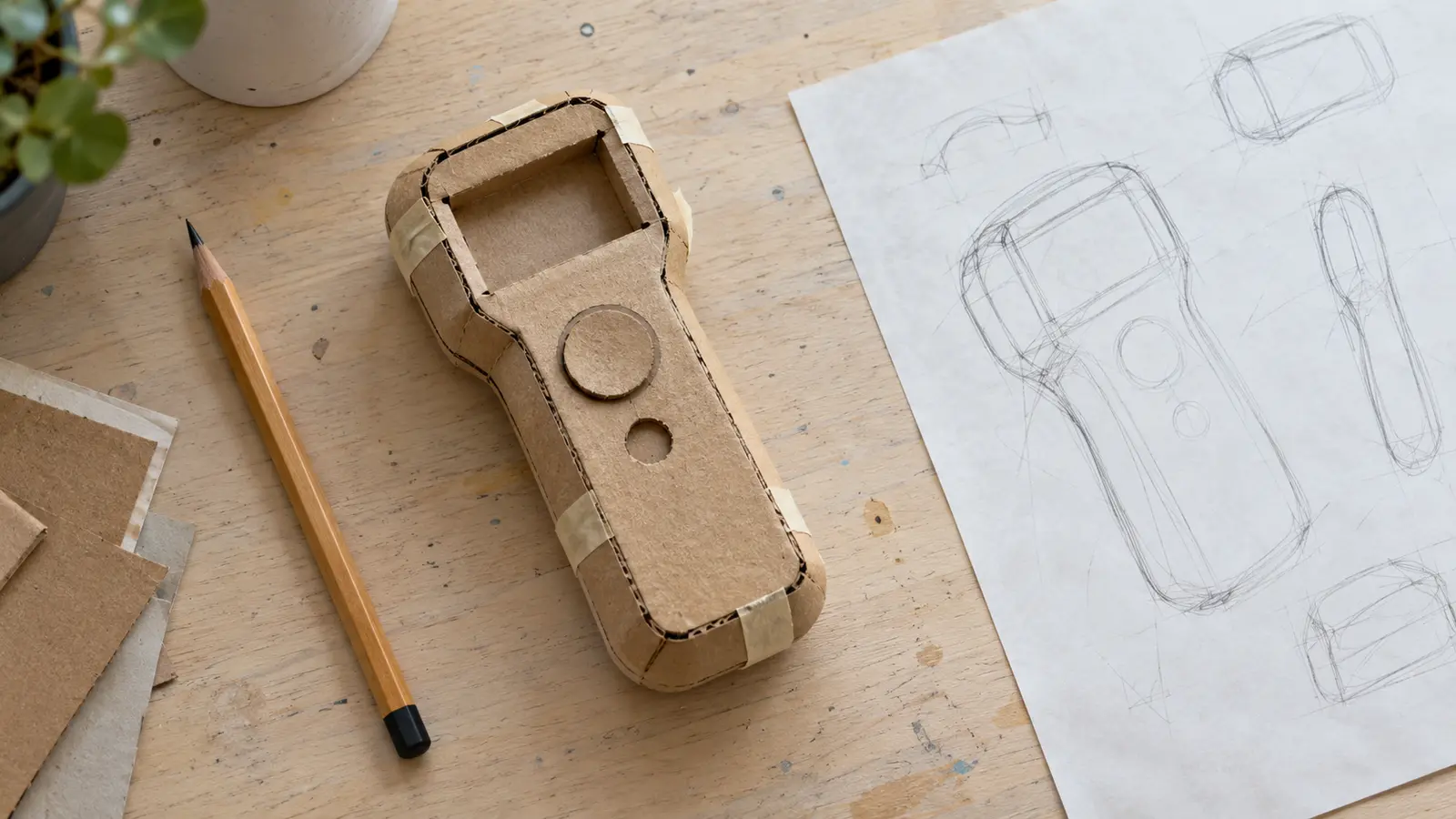
Before you spend a dollar, spend an hour with a notebook. Draw what your invention looks like. Write down what it does, who it's for, and why it beats what's already out there.
Date every page and sign it. That paper trail can matter later if questions ever come up about when you first had the idea.
It doesn't have to be pretty. Stick figures are fine. The point is to get the idea out of your head and onto something you can hand to another human.
Stage 2 - Search: Check if Something Similar Already Exists
Search for both competing products and existing patent publications:
- Web search. Use phrases that describe the problem and product function.
- Product listings. Compare existing solutions, reviews and prices.
- Patent search. Explore Google Patents as a starting point, then obtain specialist advice where needed.
If you find a near match, don't panic. Most successful products aren't 100% new. They're cheaper, easier to use, or better looking than what's on the shelf. Find your edge and lean into it.
Search results help you understand the market. They do not establish patentability or freedom to operate. Ask a qualified practitioner to review those questions where needed.
Stage 3 - Secure: Decide Whether You Need a Patent
Decide how to manage confidential information and whether patent advice is needed. Do this before public disclosure rather than using prototype completion as the trigger. The patent section below explains the distinction.
Stage 4 - Sample: Build a Prototype You Can Hold
A prototype is just a working model. It doesn't have to look like the final product. It only has to prove your idea can actually do the thing you say it does.
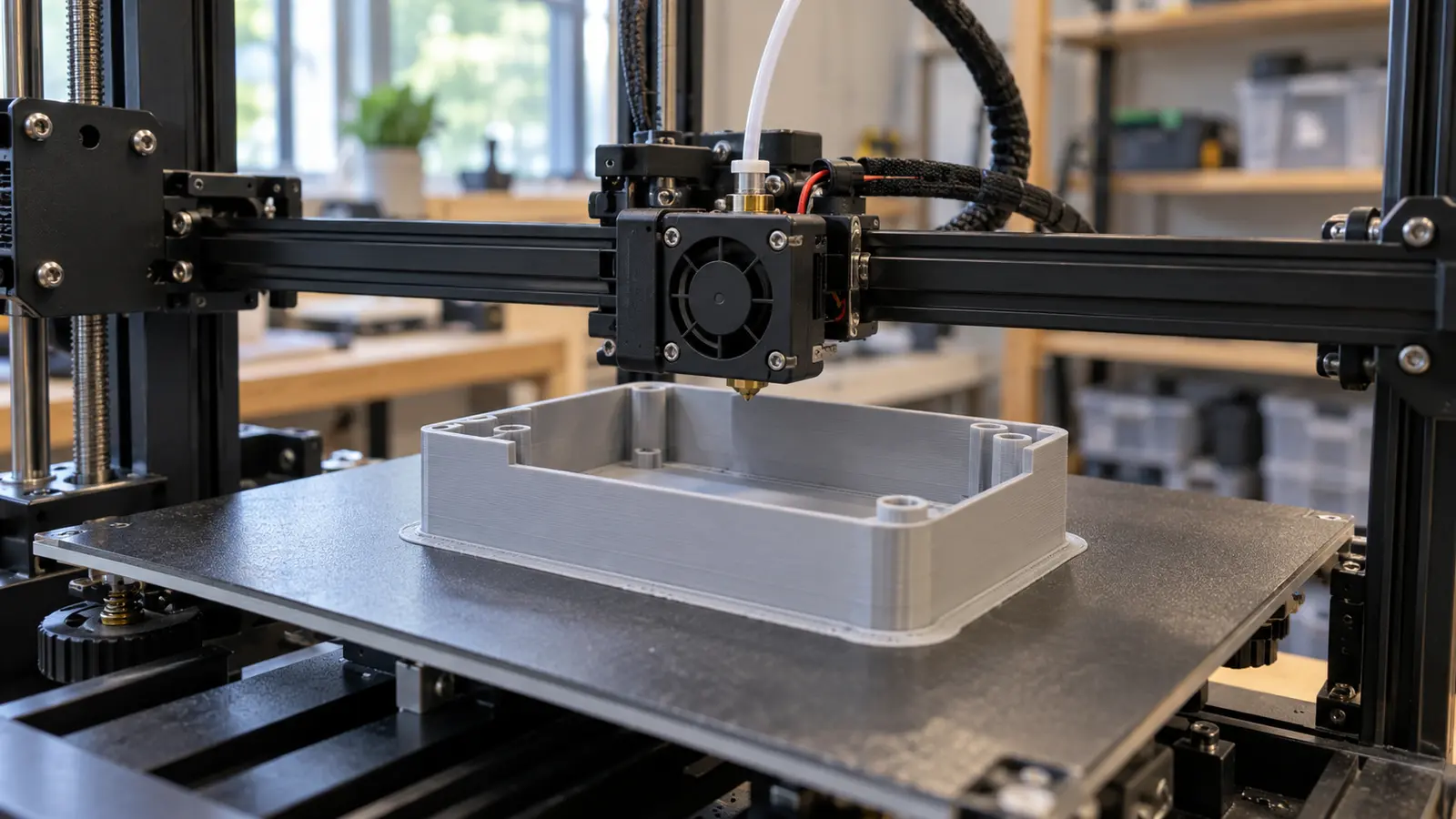
3D printing can help check shape and fit. A designer prepares a digital model, and the printed sample gives you something to examine. Request a quote based on its size, material and purpose.
Expect more than one version. Record what each sample teaches you and change the design for a clear reason. Do not treat a visual model as proof of strength, durability or production readiness.
Stage 5 - Source: Get a Real Manufacturing Quote
Once you have a prototype, or even a solid set of drawings, it's time to talk to a real factory. Send them your files and ask for a quote.
The best quotes explain assumptions and include design for manufacturing (DFM) feedback. This identifies features that affect tooling, cycle time, material use or assembly. Ask how each proposed change affects function.
Look for questions about function, material, quantity and tests alongside the price. Clarify assumptions before comparing quotes.
For the later stages, going from prototype to production covers sourcing, sign-off and scaling.
Stage 6 - Sign-off: Approve a Sample, Then Launch Production
Before a factory makes hundreds or thousands of your product, it makes one or a few production samples. You inspect them. You hold them. You test them.
If something is wrong, resolve it before approving the batch. Confirm the production schedule after sample approval, including material availability, process time, inspection and delivery.
Stage 7 - Scale: Pack, Ship, and Get to Customers
Last stage: packaging, labeling, and shipping. A good turnkey manufacturer handles this too, so finished products land at your warehouse, or your customers' doors, without you wrangling freight forwarders, customs brokers, and label printers.
How to Make a Prototype of Your Invention
Stage 4 deserves its own deep dive, because the prototype is where most first-time inventors either save themselves a fortune or set themselves up for an expensive surprise. Let's break down how to make a prototype of your invention, method by method.
There's no single "right" way to prototype. The best method depends on your budget, how complex the part is, and what you're trying to learn. Here are the four most common paths, from cheapest to most involved.
| Prototype Method | Best For | What It Won't Tell You |
|---|---|---|
| Cardboard / foam / clay mock-up | Checking size, shape, and feel in your hand | Whether moving parts actually work |
| 3D printing (FDM or resin) | Form, fit, basic function, multiple quick rounds | True material strength of the final part |
| CNC machining | Metal parts, tight tolerances, near-final feel | Cost at high volume (machining is slower per part) |
| Bridge tooling / small-batch molding | Testing the real production material before big tooling | Long-term tool life and full-volume process capability |
Start cheap, then climb the ladder
Begin with a simple mock-up to check size. Use a printed model for fit and assembly. Move to CNC machining or production-material samples when the next test requires them.
Do not approve expensive tooling while basic fit or function remains uncertain. Fixing a model is usually simpler than modifying a completed tool.
When 3D printing isn't enough
A printed plastic part may differ from an injection-molded one in strength, surface finish and material behavior. Use it for the questions it can answer.
If strength, finish or flex matters, test a sample that represents the intended material and process. A partner offering injection molding and machining can help plan that next step.
How Much Does It Cost to Get an Invention Made?
There is no reliable single price for turning an idea into a finished product. A simple machined part and a multi-part electronic device need different budgets. Separate development costs from production costs before comparing quotes.
Build the budget in stages
| Stage | What to budget for | Main cost driver |
|---|---|---|
| Design | CAD models, drawings and revisions | Complexity and completeness of the brief |
| Prototyping | Samples and functional tests | Material, process and iteration count |
| Tooling | Molds, dies and fixtures where needed | Geometry, cavities and tool life |
| Production | Parts, assembly and inspection | Order size, cycle time and tolerances |
| Delivery | Packaging, freight and fulfillment | Destination, shipment size and handling |
| Other requirements | Legal work and product-specific testing | Target markets and intended use |
For small to medium parts, Meco's representative CNC machining ranges are $50 to $300 per part at low volume and $15 to $50 at higher volume. Fixtures can range from $0 to $1,000. These are planning ranges, not a quotation for a complete invention.
The metal-part pricing guide explains process costs in more detail. A finished product can also require purchased components, tooling, assembly and tests.
What drives the price up?
- Part count. Each extra component adds sourcing, inspection and assembly work.
- Material. Specify the properties needed before choosing a costly grade.
- Tolerances. Tight limits should support function, fit or inspection needs.
- Quantity. Tooling and setup costs are spread across the number of units ordered.
- Finish and testing. Appearance and product requirements can add separate operations.
Design for manufacturing, or DFM, checks these choices before production. Ask the engineer which features drive cost and what a change would mean for performance.
How to start on a limited budget
Start with a written brief and a simple mock-up. Cardboard or foam can help test size and handling before you pay for CAD or machined samples. Check local makerspace access and fees rather than assuming equipment is free.
Spend on the next question you need to answer. If the problem is fit, a printed sample may help. If it is strength, sealing or heat resistance, choose a test that reflects the real material and use conditions.
Do I Need a Patent Before Manufacturing?
A patent application and a manufacturing plan solve different problems. An engineer checks whether your product can be made. A registered patent practitioner advises on protecting the invention and avoiding disclosure mistakes.
Do not treat prototype completion or first sales as the deadline for legal advice. Public disclosure can affect patent rights, including rights outside the United States. Discuss your intended markets before a public demonstration, crowdfunding campaign or sales launch.
What a US provisional application does
A US provisional application is an application, not a granted patent. It can support an earlier filing date for a later application and allows use of “patent pending.” The usual follow-up window is 12 months.
It does not automatically become a patent. The later application must meet the requirements for claiming its benefit. See the USPTO provisional application guidance for the process.
Questions to ask before sharing your invention
- Disclosure. Have you posted, demonstrated or offered the product for sale?
- Markets. Where do you want protection, and which filing deadlines apply?
- Design changes. Does the application adequately describe the invention as it develops?
- Budget. What work and follow-up filings will be needed?
An NDA helps manage confidential information shared with a supplier. It does not replace a patent strategy or guarantee freedom to operate. This article provides manufacturing guidance, not legal advice. Confirm patent and licensing decisions with a qualified patent practitioner.
Can I Sell or License My Invention Instead of Making It?
Yes. Licensing is a real alternative to manufacturing your invention yourself. You let an existing company manufacture and sell your product, and you collect a one-time payment or ongoing royalties. A lot of inventors prefer it.
Licensing terms vary with the product, rights granted and negotiating position. Compare control, upfront costs, royalty terms and ongoing obligations. A licensing deal does not guarantee a larger or smaller return than manufacturing.
A working prototype, evidence of demand and clear ownership of the relevant rights can strengthen a licensing discussion. Requirements vary by licensee. Obtain legal advice before sharing sensitive details or accepting terms.
License or manufacture: which fits you?
There's no universally right answer. Licensing suits inventors who love the idea part but don't want to run a business: no inventory, no customer service, no shipping headaches.
Manufacturing and selling suits people who want control and a bigger share of the upside, and who are ready to act like a business owner. Many successful inventors do a small self-made run first to prove demand, then use those real sales numbers to negotiate a far better licensing deal than a sketch alone could ever get.
How to Find a Manufacturer for Your Invention
To find a manufacturer for your invention, look for a partner with real engineering support, a verifiable address, customer references, and a willingness to sign an NDA, and avoid any firm that charges large upfront "evaluation" or "submission" fees. Finding a manufacturer is where most inventors get stuck. There are millions of factories worldwide, and picking one can feel like guessing in the dark.
Compare specialist suppliers with a partner that coordinates the whole product. The right choice depends on process needs, available engineering resources and the total cost of coordination.
For more detail on the search itself, our team wrote a separate guide on how to find a manufacturer for your product. It also helps to understand what occurs in contract manufacturing before your first call, so you know what's normal and what's a red flag.
The 5-minute test for a good manufacturing partner
Use the first conversation to check how the supplier handles your project:
- Questions. Do they clarify function, materials, quantity and testing?
- Communication. Can they explain open issues and the next milestone?
- Evidence. Can they provide relevant capabilities and references?
A fast reply helps, but it does not replace verification of capability and scope.
Domestic or overseas: which makes sense?
This question stresses inventors out more than it should. Overseas manufacturing often wins on unit price, especially at volume.
Domestic or North American support often wins on communication, speed of revisions, and easier quality oversight. The sweet spot for many first-time inventors is a partner that combines overseas production with local engineering and account support, so you get competitive pricing without losing the ability to pick up the phone and talk to someone in your time zone.
A word of warning about "submission" companies
Be careful with companies whose entire pitch is "send us your idea and we'll do everything for you, just pay us upfront." If a company makes money before your product gets made, through evaluation fees, "submission packages," or thousand-dollar marketing reports, their incentives aren't aligned with yours. They get paid whether your product ever reaches a shelf.
Legitimate engineering and tooling work can require upfront payment. Ask for defined deliverables, payment milestones and references. The FTC guidance on invention marketing scams explains warning signs in invention-promotion services.
What makes a good invention manufacturing company
Look for invention manufacturing companies that offer real engineering support, not just a price calculator. A partner with in-house R&D and engineering support can catch problems in your design before they become problems in your production run. That's the difference between a vendor and a partner.
Share a sketch, model or sample for an engineering review before committing to tooling. An NDA is available on request before files are shared.
Talk to an EngineerWhy Early Testing Reduces Rework
A prototype helps you find problems before they become tooling changes. Patent drawings, visual renders and manufacturing drawings each serve a different purpose. A convincing image does not prove that parts fit, move or assemble as intended.
An illustrative enclosure example
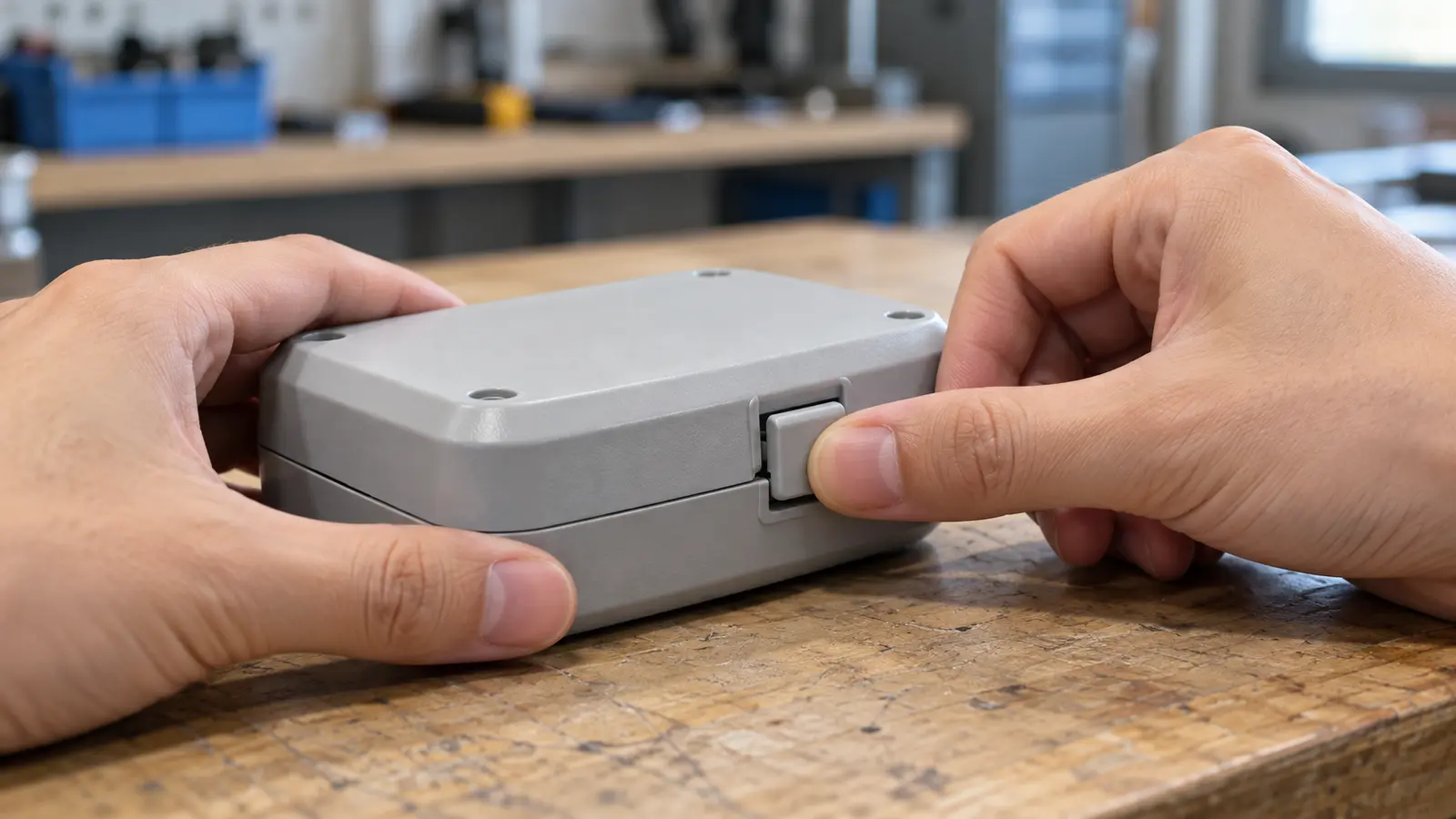
Consider a small two-piece plastic enclosure with a sliding latch. The first model looks correct on screen. A physical sample reveals that the latch catches when the two halves are tightened.
The next step is to identify the cause. The designer checks clearance, alignment and the way the housing is held during assembly. A revised prototype tests the change before a production mold is approved.
This is an illustrative design scenario, not a Meco customer case or a measured savings claim. The point is to spend on the next useful test rather than commit to tooling while basic fit remains uncertain.
What to record after each test
- Problem. Describe the failure and the conditions that caused it.
- Change. Identify the drawing revision and the feature altered.
- Result. Record whether the new sample solved the problem.
- Next decision. Decide whether to test again, obtain DFM feedback or approve a production sample.
Keep the approved sample, drawings and acceptance criteria together. If the design changes later, review the affected tests again. A small change to a wall, fastener or material can affect more than appearance.
How to Prepare for Crowdfunding
Crowdfunding can help test interest and fund a first order. It also creates commitments before the products ship. Treat the campaign as a delivery plan as well as a marketing plan.
A working prototype is a useful start. Before setting a reward price, obtain manufacturing feedback and account for tooling, packaging, testing and transport. Include funds and time for revisions.
Check the plan before launching
- Product. Show what has been tested and explain what remains unfinished.
- Cost. Include assembly, packaging, platform fees, fulfillment and returns in the budget.
- Schedule. Confirm tooling, sample approval and production milestones with the manufacturer.
- Legal review. Resolve disclosure and filing questions before publishing the campaign.
- Communication. Plan how to explain design changes and delays to backers.
Discuss the manufacturing plan with your contract manufacturer before announcing a delivery date. Funding does not remove the need for sample approval and quality checks.
What to Bring to Your First Conversation With a Manufacturer
You don't need engineering drawings and a business plan to start. But you do need to know what you want. Here's a checklist of what helps:
- A clear description of what your invention does. One paragraph is plenty.
- Sketches, photos, or a 3D file. Anything visual beats words alone.
- Rough size and material preferences. "About the size of a phone, mostly plastic with one metal piece" works fine.
- An idea of how many units you'd want to start with. 100? 1,000? It's okay to say "I don't know, what do you recommend?"
- Your budget range. Be honest. A good factory will tell you if it's realistic and help you adjust.
- Your timeline. Do you need this in 3 months for a trade show, or in a year? Timeline drives a lot of decisions.
- A signed NDA, if you want one. Most reputable manufacturers will sign one before you share details. Just ask.
Should You Use One Partner or Several Suppliers?
A turnkey partner can coordinate parts, assembly and packaging through one project team. Specialist suppliers may suit a project with a narrow process need or strong internal engineering resources.
Compare responsibility and communication as well as unit price. If a plastic housing does not fit its metal bracket, the project needs someone to investigate the interface and coordinate the revision.
| Question | Several suppliers | Coordinated partner |
|---|---|---|
| Who manages changes? | Your team coordinates revisions | A project contact coordinates the agreed scope |
| Who checks interfaces? | Assign responsibility across suppliers | Include whole-product review in the scope |
| How are quotes compared? | Combine parts, transport and coordination | Check the included and excluded operations |
| How is quality managed? | Align separate inspection plans | Agree a coordinated inspection and acceptance plan |
Meco combines over 30 years of turnkey manufacturing experience with 40+ in-house processes. Relevant capabilities include injection molding, CNC machining and product assembly.
Confirm ownership and confidentiality
- NDA. Meco can provide and sign an NDA on request before drawings or files are shared.
- Ownership. Your design and tooling stay yours.
- Exclusivity. Meco does not produce your product for anyone else.
- Transfer. You may move your design and tooling to another supplier at your own expense and arrangement.
Common Mistakes First-Time Inventors Make
Most avoidable setbacks come from making a commitment before the underlying question is answered. Use the following checks before approving tooling or a first order.
- Delaying disclosure advice. Review protection before publishing the design. Do not assume that a later patent filing will solve an earlier disclosure.
- Waiting too long for engineering input. Discuss the concept while changes are still easy. Ask which details are needed for a reliable quotation.
- Ordering too much. Agree a first batch that tests demand and production quality without using the entire budget.
- Comparing only unit price. Include setup, tooling, inspection, assembly, packaging and delivery.
- Skipping sample approval. Test the agreed material, finish, fit and function before releasing production.
- Losing revision control. Make sure the purchase order, drawings and approved sample refer to the same design version.
- Confusing ownership with production readiness. A protected idea still needs engineering, testing and customers.
Discuss Your Invention Project
Send your idea, sketch, photo or early concept. An engineer will review your information and advise on the next step.
- Engineering. DFM feedback before tooling.
- Quality. IATF 16949:2016 certified manufacturing.
- Confidentiality. NDA available before sharing files.
References and sources
Patent and invention-promotion guidance reviewed on 2 October, 2026.
- United States Patent and Trademark Office. Provisional Application for Patent. Official guidance.
- Federal Trade Commission. Invention Marketing Scams. Consumer guidance.
Cost figures are representative planning ranges, not quotations. This article is general manufacturing information, not legal advice. Consult a qualified patent practitioner about filing, disclosure and licensing.
