
Die cast parts can take a wide range of surface finishes, and the most common ones are anodizing, powder coating, chrome plating, e-coating, and paint. Each finish does one of two jobs: make the part look better, or protect it from rust, scratches, and wear. The right die casting surface finish depends on your alloy (aluminum, zinc, or magnesium), where the part will be used, and your budget.
That's the short answer. Now let's break down every option, what it costs, and how to pick the right one without wasting money.

What is a die casting surface finish?
A surface finish is any coating or treatment added to a cast metal part after it comes out of the mold. It can be a thin protective layer, a coat of color, or a polished shine. The goal is always the same: better looks, better protection, or both.
Do Die Cast Parts Even Need a Surface Finish?
Not always. This is the question most guides skip, and it can save you real money.
A part that lives inside a sealed housing, never gets touched, and never sees moisture might be fine raw, straight out of the mold. Modern alloys have gotten good enough that some parts skip finishing entirely.
But most parts do need help. Here's why.
Raw die-cast metal can corrode over time, especially in damp or salty air. It can also look dull, show tool marks, or feel rough. A finish fixes all of that.
In our experience, the parts that almost always need finishing are anything a customer sees, anything used outdoors, and anything that rubs against another part. If your part checks none of those boxes, ask your die caster whether you can skip it.
The Two Jobs a Finish Does: Looks vs Protection
Every finish falls into one of two buckets. We call it the "Looks vs Protection" rule, and it's the fastest way to narrow your choices.
Decorative finishes are about looks: color, shine, and feel. Think chrome on a faucet handle or a glossy painted housing.
Functional finishes are about protection: stopping rust, resisting scratches, or handling heat. Think e-coat under the hood of a car.
Some finishes do both. Powder coating, for example, looks great and protects well. But starting with this simple split tells you which half of the list to focus on before you get lost in the details.
What Surface Finishes Are Available for Die Cast Parts?
The main surface finishes for die cast parts are anodizing, powder coating, chrome plating, e-coating, painting, polishing, chem film (also called Alodine), and PVD coating. Anodizing and chem film work best on aluminum. Chrome plating shines on zinc. Powder coat, e-coat, and paint work on almost any alloy.
Here's a quick overview of the most common options. Use it as a starting die casting surface finish chart, then read the deeper sections below.
| Finish | Main Job | Best For | Relative Cost |
|---|---|---|---|
| Anodizing | Protection + color | Aluminum parts that need wear and corrosion resistance | Low to medium |
| Powder Coating | Both | Tough, colorful, scratch-resistant parts | Low to medium |
| Chrome Plating | Looks | Shiny zinc hardware and trim | High |
| E-Coating | Protection | Even corrosion protection on complex shapes | Medium |
| Painting | Both | Custom colors on a budget | Low |
| Chem Film (Alodine) | Protection | Aluminum that needs to stay electrically conductive | Low |
| Polishing | Looks | Bright, mirror-like surfaces | Medium to high |
| PVD Coating | Both | Hard, premium decorative finishes | High |
Want the full ranked reference across dozens of finishes and roughness values? See our surface finish chart.
Anodizing Die Cast Aluminum: Why It's Tricky
Anodizing is one of the most popular finishes for aluminum, but here's something most blogs won't tell you. Anodizing die cast aluminum is harder than anodizing regular aluminum, and the result often looks blotchy or gray.
How does anodizing work?
Anodizing uses electricity and acid to grow a thin, hard oxide layer right out of the aluminum itself. That layer is part of the metal, not a coating sitting on top, so it won't peel or chip. It also takes dye well, which is how you get black, red, blue, and other colors.
Most anodizing follows the MIL-A-8625 specification, the U.S. standard that defines anodizing types and thicknesses.
Why does die cast aluminum anodize gray?
Die cast aluminum alloys like A380 contain a lot of silicon, often around 8 to 9 percent. Silicon doesn't anodize the way aluminum does, so it leaves dark specks and a cloudy, uneven color.
Bottom line: if you need a bright, even anodized color, talk to your caster about a lower-silicon alloy first. If a slightly industrial gray look is fine, standard die cast anodizing works just fine for protection. Not sure whether a part is already anodized? Here's how to tell if aluminum is anodized.
Pro tip from our shop floor
For a die cast aluminum surface finish that needs both even color and toughness, we often recommend powder coat over anodizing. It hides the silicon speckle, comes in any color, and resists scratches better. We'll suggest the cheaper, better-looking path when the part allows it.

Powder Coating Die Cast Parts
If we had to pick one all-around finish for die cast parts, it would often be powder coat. It's tough, it comes in any color, and it costs less than plating.
The process is simple to picture. A dry, colored powder is sprayed onto the part with a static charge, like a balloon sticking to a wall. Then the part goes in an oven, and the powder melts into a smooth, hard shell.
That baked shell resists scratches, chips, and weather far better than regular paint. For more on standards and quality, the Powder Coating Institute is the go-to industry source.
How tough is powder coat?
Very. Powder coating die cast parts gives you a thick, even layer that handles outdoor use, knocks, and daily wear. It comes in matte, gloss, and textured options, in almost any color.
Chrome Plating and Zinc Die Castings
When you want a bright, mirror shine, chrome is the classic choice. And here's the thing: chrome plating zinc die cast parts is a perfect match.
Zinc takes plating beautifully. The process builds up layers of copper, then nickel, then chrome, giving that deep, reflective look you see on faucet handles, door hardware, and car trim.
Zinc plating often follows the ASTM B633 standard, which sets the rules for coating thickness and corrosion resistance.
Decorative chrome vs hard chrome
There are two kinds. Decorative chrome is thin and all about looks. Hard chrome is thicker and built for wear resistance on tools and machine parts.
How tough is chrome on the outside?
Quality decorative chrome can survive 1,000 or more salt spray hours, which is a lab test that mimics years of harsh, salty weather. That's why it holds up so well on outdoor and automotive parts.
The trade-off is cost. Chrome plating takes many steps and a lot of labor, so it's one of the pricier finishes on the list.
E-Coating and Painting Die Castings
These two finishes are about color and corrosion protection without the cost of plating.
What is e-coating?
E-coating (short for electrocoating) dips the whole part in a paint bath and uses an electric charge to pull an even coat into every nook and corner. That's its superpower: it covers deep recesses and sharp edges that a spray gun would miss.
E-coat is mostly a functional finish. It's often used as a strong base layer under powder coat or paint for extra rust protection.
Can you paint die cast metal?
Yes. Painting die castings is the most flexible and budget-friendly way to add color. With the right primer, paint sticks well to aluminum, zinc, and magnesium.
The downside is durability. Standard paint scratches and chips more easily than powder coat or anodizing, so it's best for parts that won't take a beating.
Chem Film, PVD, and Other Specialty Finishes
A few finishes solve specific problems. Here's when each one earns its place.
What is chem film (Alodine)?
Chem film die casting, also called Alodine or a conversion coating, is a thin protective layer for aluminum. Unlike anodizing, it stays electrically conductive, which matters for grounding parts and electronics enclosures. It's cheap, fast, and often used as a primer base.
What about PVD coating?
Quick clarification, because this trips people up. The term PVD die casting usually shows up in two very different places.
Most often, PVD (physical vapor deposition) is used to coat the steel molds and tooling, not the finished parts, to make the dies last longer. But PVD can also be applied to finished parts as a hard, premium decorative finish, the kind you see on high-end watches and faucets. It's beautiful and durable, but it's expensive and usually saved for premium products.
Polishing
Polishing uses abrasives to smooth the surface to a bright, mirror-like shine. It's often a first step before chrome plating, or a finish on its own for decorative zinc parts.
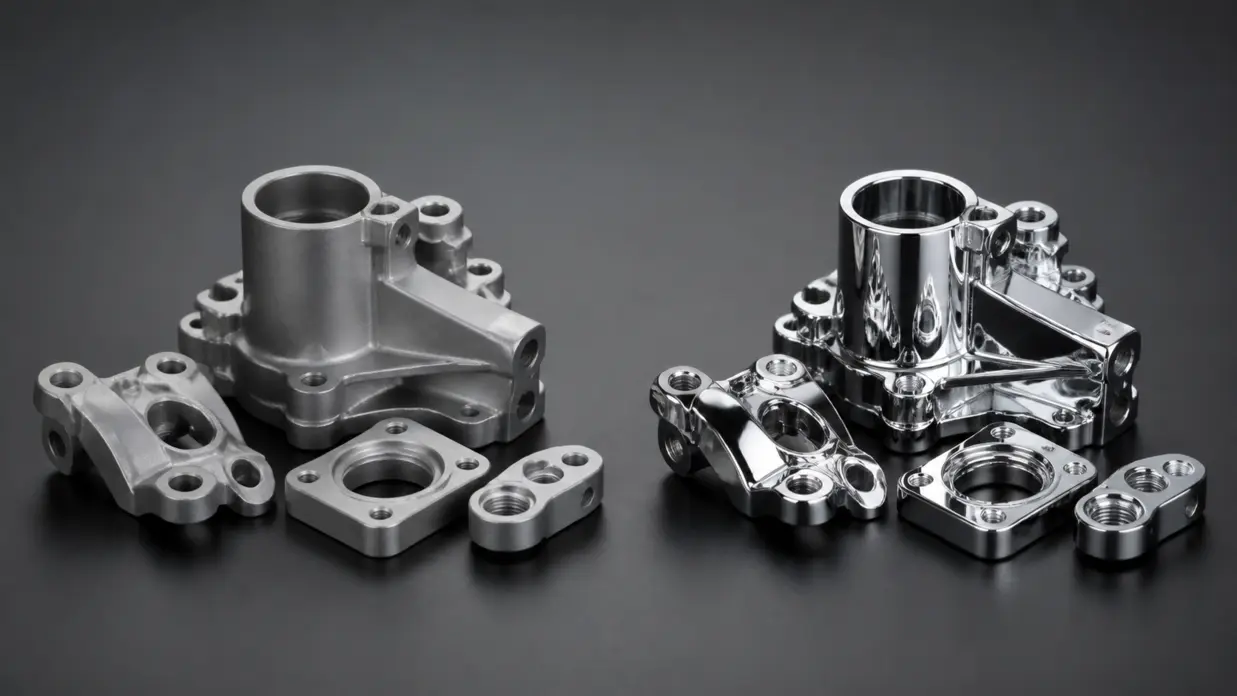
Which Finish Works on Which Alloy?
Not every finish works on every metal. This is where a lot of projects go sideways, so here's a clear compatibility guide for the three main die cast alloys.
| Finish | Aluminum | Zinc | Magnesium |
|---|---|---|---|
| Anodizing | Yes (can look gray) | Limited | Special process only |
| Powder Coating | Yes | Yes | Yes |
| Chrome Plating | Possible | Excellent | Rare |
| E-Coating | Yes | Yes | Yes |
| Painting | Yes | Yes | Yes |
| Chem Film (Alodine) | Yes | No | Yes (different chemistry) |
| Polishing | Yes | Excellent | Yes |
One note on magnesium. It's light and strong, but it corrodes fast if left bare, so it almost always needs a protective finish like e-coat or a special conversion coating. For magnesium, protection isn't optional.
How Much Does It Cost to Finish a Die Cast Part?
Finishing cost depends on the finish type, part size, color, and how many you order. Here's a rough guide to help you plan, from cheapest to priciest.
| Finish | Relative Cost | Main Cost Driver |
|---|---|---|
| Painting | $ | Color count and prep work |
| Chem Film (Alodine) | $ | Simple dip process, low labor |
| Powder Coating | $ to $$ | Part size, color, masking |
| Anodizing | $ to $$ | Rack time and dye color |
| E-Coating | $$ | Racking and bath setup |
| Polishing | $$ to $$$ | Hand labor for mirror shine |
| Chrome Plating | $$$ | Many plating steps and labor |
| PVD Coating | $$$ | Specialized vacuum equipment |
For a bigger-picture view of what a finished metal part costs end to end, see our guide on how much it costs to get a metal part made.
How to Choose the Right Finish for Your Die Cast Part
Let's pull it all together into a simple decision path. Ask yourself these questions in order.
1. Does anyone see the part? If yes, you need a decorative finish (chrome, powder coat, paint, PVD). If no, focus on protection.
2. Where does it live? Outdoors or near moisture means you need strong corrosion protection like e-coat, powder coat, or chrome.
3. What's the alloy? Aluminum loves anodizing and chem film. Zinc loves chrome and polishing. Magnesium needs protection above all.
4. What's the budget? Paint and chem film are cheapest. Powder coat is the value pick. Chrome and PVD cost the most.
We've finished thousands of die-cast parts across automotive, electronics, and lighting, and the most common mistake we see is over-specifying. People ask for chrome when a powder coat would look great and cost half as much. The best finish is the cheapest one that still does the job.
At Meco, casting and finishing happen under one roof, so we can cast your aluminum, zinc, or magnesium part and apply the finish in-house without shipping it to a separate vendor. That means fewer handoffs, faster lead times, and one team accountable for quality. Learn more about our surface finishing services and our full die casting services.
Frequently Asked Questions
Do all die cast parts need a surface finish?
No. Parts that stay sealed inside a housing and never see moisture or wear can sometimes ship raw. But most parts need a finish for corrosion protection, better looks, or scratch resistance. Magnesium parts almost always need a protective finish because they corrode quickly when bare.
What is the best surface finish for aluminum die casting?
It depends on the goal. For toughness and corrosion resistance, anodizing or powder coating work well. For even color, powder coating usually beats anodizing because die cast aluminum can anodize a blotchy gray due to its high silicon content. For conductive parts, chem film (Alodine) is the common choice.
Can you anodize die cast aluminum?
Yes, but the result is often less even than anodizing wrought aluminum. Die cast alloys like A380 contain around 8 to 9 percent silicon, which does not anodize the same way as aluminum and leaves a gray, speckled look. It still protects the part well, so it is fine when appearance is not critical.
Can you chrome plate zinc die castings?
Yes, and zinc is one of the best metals for chrome plating. The process layers copper, nickel, and chrome to create a bright, mirror-like finish. It is widely used on faucet handles, door hardware, and automotive trim. Zinc plating often follows the ASTM B633 standard.
How much does it cost to powder coat die cast parts?
Powder coating is one of the more affordable finishes, especially at high volume. Small parts can cost well under a dollar each in large batches, while bigger parts or parts that need masking cost more. Cost depends on part size, color, and quantity.
What is e-coating on die castings?
E-coating, or electrocoating, dips the whole part in a paint bath and uses an electric charge to draw an even coat into every corner and recess. It gives excellent, uniform corrosion protection and is often used as a base layer under powder coat or paint.
What is the difference between chem film and anodizing?
Both protect aluminum, but anodizing grows a hard, thick oxide layer that is electrically insulating, while chem film (Alodine) is a thin conversion coating that stays electrically conductive. Choose chem film when the part needs grounding or electrical contact, and anodizing when you need a harder, more wear-resistant surface.
Which finish gives the best corrosion resistance?
For top corrosion protection, e-coating and quality chrome plating perform very well, with good chrome surviving 1,000 or more salt spray hours. Powder coating also provides strong protection at a lower cost. The best choice depends on the alloy and where the part will be used.
Can you finish magnesium die castings?
Yes, and you usually should. Magnesium corrodes quickly when bare, so it needs a protective finish like e-coating, powder coating, or a special magnesium conversion coating. Painting and powder coating both adhere well once the surface is properly prepared.
Get Die Cast Parts Cast, Finished, and Shipped From One Partner
Skip the vendor juggling. We cast your part, finish it in-house, and ship it ready to use.
- Aluminum, zinc, and magnesium die casting plus anodizing, powder coat, plating, e-coat, and paint, all under one roof
- IATF 16949:2016 certified quality with full traceability and CMM inspection
- 30+ years of experience and 99.8% on-time delivery
- Free design review and a detailed quote in under 24 hours
