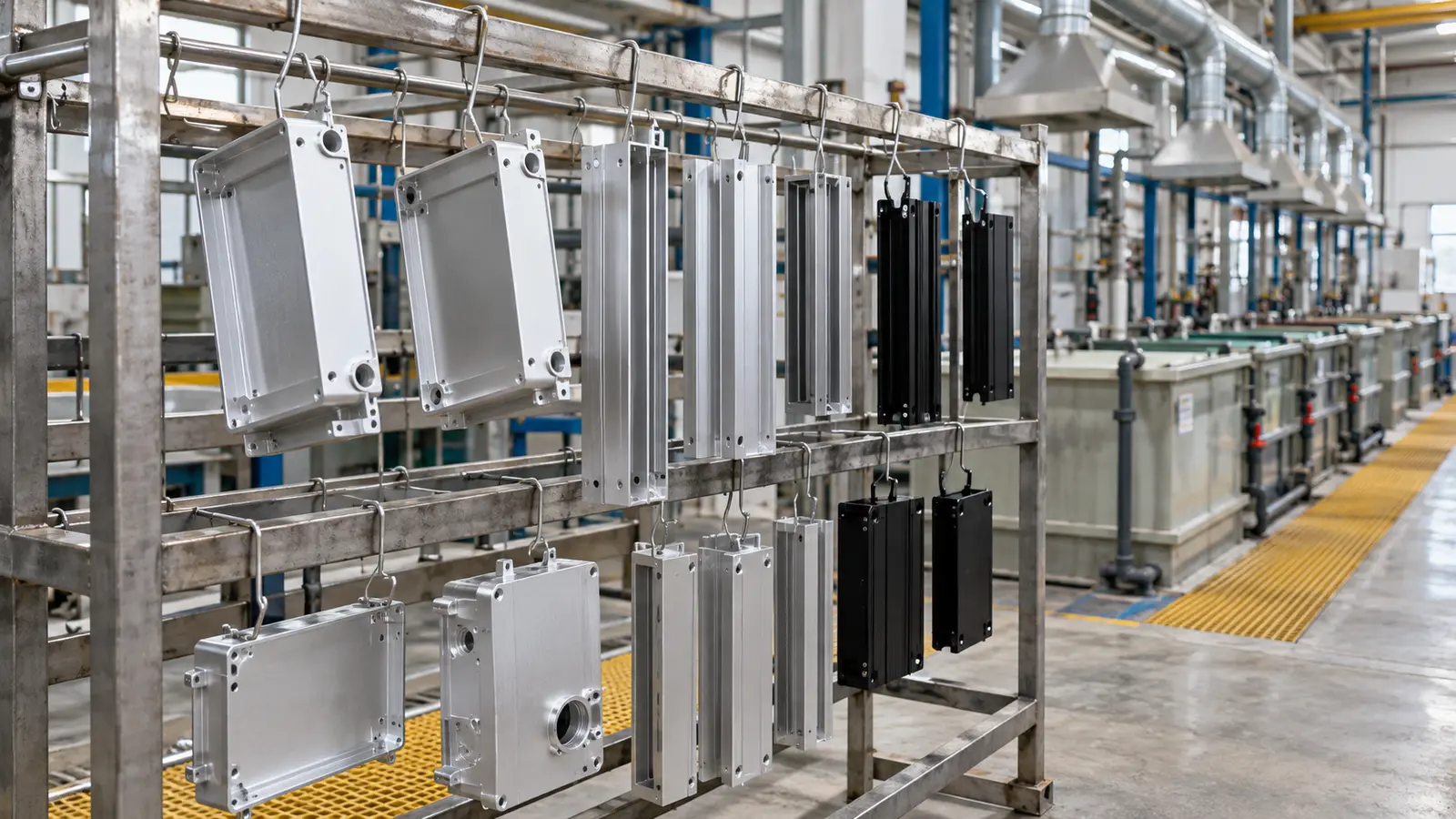
To tell if aluminum is anodized, combine appearance, conductivity screening and coating measurement with the specified finish and supplier records. No single field check reliably identifies every coating.
A multimeter can suggest an insulating surface. A thickness gauge measures a layer, but neither test alone proves that layer is anodize.
A silver aluminum housing arrives from a supplier, but its clear finish looks almost identical to bare metal. Before accepting it or changing the assembly plan, check the drawing, inspect the surface and use conductivity testing as a screening step. Confirm the specified finish with supplier records and suitable coating tests when the result matters for production.
The challenge is that clear anodized aluminum can look very similar to untreated aluminum at first glance. Dyed anodized parts are easier to spot, but clear anodize, painted aluminum, powder-coated aluminum, and polished mill finish can all be confused if you rely on appearance alone. The best approach is to use a simple decision process: visual inspection first, then a conductivity check, then a coating measurement if the answer still matters for production, assembly, or QA.
Key Takeaways
- Anodized aluminum is not painted aluminum. Anodizing converts the surface of the aluminum into a controlled oxide layer instead of applying a film on top.
- Clear anodized aluminum is the hardest to identify visually. It often looks similar to bare aluminum, so visual inspection alone is not enough.
- A multimeter test is one of the most useful practical checks. Anodized aluminum has an electrically insulating surface, while bare aluminum remains conductive.
- Eddy current thickness measurement is the best non-destructive verification method. It is widely used to confirm anodic coating thickness on aluminum parts.
- Correct identification matters in OEM manufacturing. It affects grounding, adhesive bonding, wear performance, incoming inspection, and supplier quality verification.
What Is Anodized Aluminum?
Anodized aluminum is aluminum that has gone through an electrochemical process to thicken and control its natural oxide layer. Instead of applying a coating on top like paint, anodizing converts the outer surface of the aluminum itself into a durable anodic oxide layer.
According to the Aluminum Anodizers Council, anodizing converts the aluminum surface into a decorative, durable, corrosion-resistant anodic oxide finish. That distinction matters because anodize behaves differently from paint or powder coat in wear, adhesion, conductivity, and appearance.
In practical terms, anodizing is used to improve:
- corrosion resistance
- wear resistance
- surface hardness
- cosmetic appearance
- dyeability
- paint and adhesive bonding
For industrial parts, the most common anodize types are Type II sulfuric anodize and Type III hard anodize under MIL-PRF-8625, which covers anodic coatings on aluminum and aluminum alloys.
How Can You Tell If Aluminum Is Anodized?
You can screen for anodized aluminum by combining surface appearance, conductivity and coating measurement. None of these checks alone proves the coating is anodize, especially on clear finishes. Supplier process records and the specified acceptance tests provide stronger confirmation.
Here is the fastest decision process:
- Check the appearance. Look for a uniform metallic finish, often matte to satin, without the film-like look of paint.
- Test conductivity. Anodized aluminum has an insulating oxide surface. Bare aluminum remains conductive.
- Check scratch and wear behavior. Anodized surfaces usually resist light scratching better than bare aluminum.
- Measure coating thickness if needed. Eddy current gauges are commonly used to confirm anodic coating thickness.
- Use lab or cross-section verification for critical parts. If the part is quality-critical, visual checks are not enough.
For OEM programs, the real question is not just whether a part looks anodized. It is whether the finish can be verified confidently enough to support design, assembly, grounding, and supplier acceptance decisions.
For the wider relationship between texture and manufacturing processes, use the surface finish chart. For material properties and coating compatibility, compare anodized aluminum and bare aluminum.
What Does Anodized Aluminum Look Like?
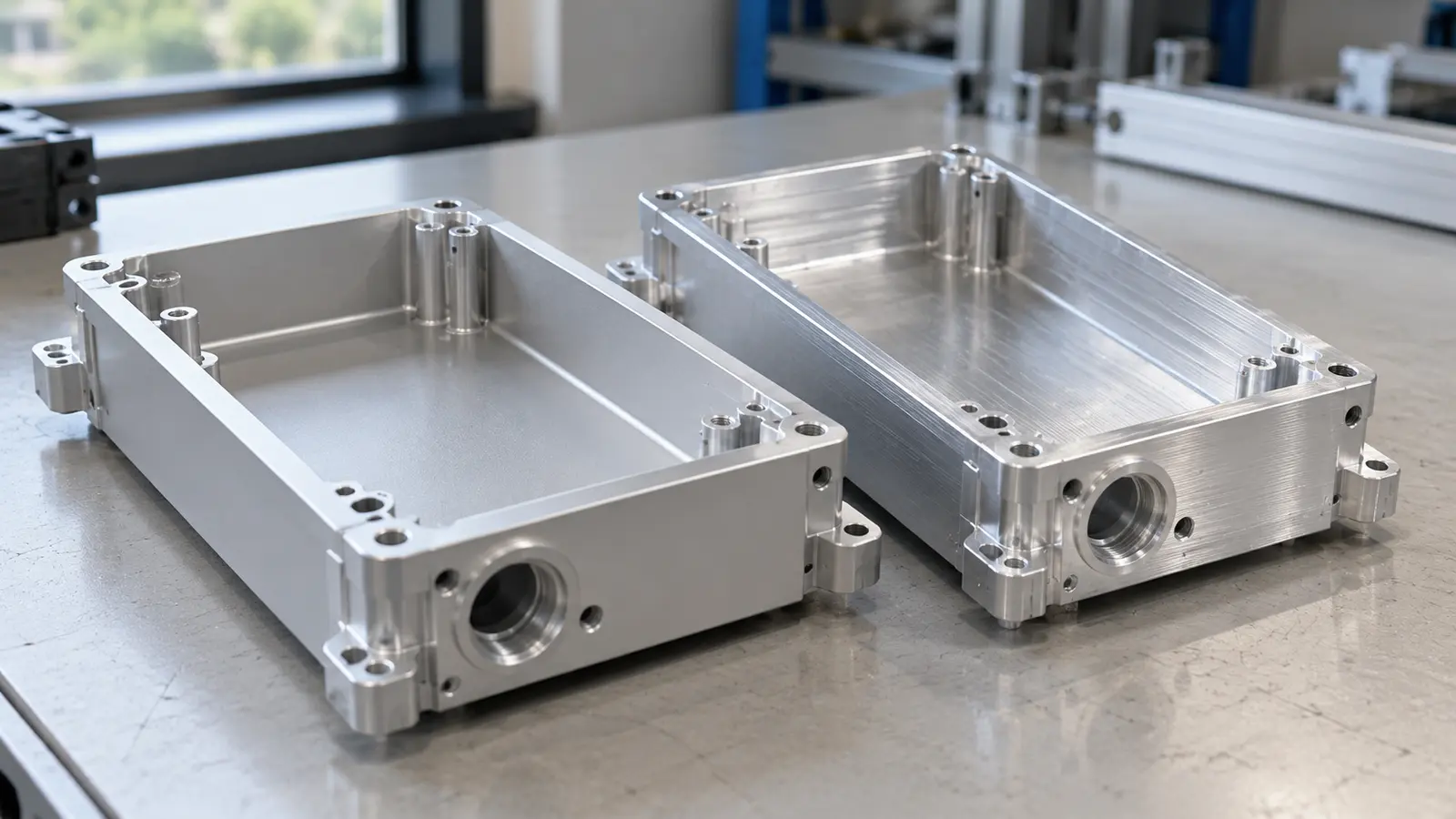
Anodized aluminum usually looks more uniform, refined, and controlled than bare aluminum. Clear anodize keeps a metallic look, but the surface often appears more even and less raw than mill finish aluminum.
Typical visual signs include:
- a consistent satin or matte metallic appearance
- less raw-metal glare than bare aluminum
- color that looks integrated into the metal rather than sitting on top
- better cosmetic uniformity across the visible surface
- better resistance to fingerprints and handling marks than bare aluminum
Clear anodized finishes are transparent and allow the silver-gray metallic properties of aluminum to remain visible. See AAC guidance on clear anodic finishes.
Visual inspection is useful, but not conclusive on its own. A metallic-looking part is not automatically anodized. Clear anodize, polished aluminum, and some other surface treatments can appear similar under shop lighting.
How to Tell Clear Anodized Aluminum from Bare Aluminum
Clear anodized aluminum is the hardest version of this identification problem because it does not rely on obvious color. The finish usually keeps the natural aluminum look, which is why many people mistake it for untreated metal.
The best practical difference is this:
- bare aluminum is conductive, softer at the surface, and more prone to quick surface scratching and oxidation variability
- clear anodized aluminum has an insulating oxide layer, improved surface hardness, and a more controlled engineered finish
If the part is a cosmetic or architectural piece, clear anodize also tends to look more uniform across the visible face. Bare aluminum often looks more variable, especially around machining lines, fingerprints, surface oxidation, or handling marks.
Appearance can still vary by alloy, pretreatment, thickness, and seal quality, so clear anodized parts will not always look identical from one production batch to another.
Can You Test Anodized Aluminum with a Multimeter?
Yes. A conductivity check is one of the most practical ways to test whether aluminum is anodized. Anodized aluminum has an aluminum oxide surface, and that oxide layer is electrically insulating, while bare aluminum remains conductive.
Check the meter and leads against a known conductive reference before touching the part. Use light, repeatable probe contact on an approved test area. Sharp probes can penetrate the coating, and masked holes or worn edges may expose conductive aluminum even when the main surface is anodized.
Use this as a screening check, not a finish certificate. A no-continuity result can also come from paint, powder coating, contamination or poor probe contact.
How to do a basic multimeter check
- Set the multimeter to continuity or low resistance.
- Place probes on two nearby points on the surface.
- Compare the reading to a known bare aluminum area if one is available.
What the result means
- Bare aluminum: often gives continuity with sound contact, although natural oxide or contamination can affect the reading.Bare aluminum: usually conductive at the surface
- Anodized aluminum: often shows little to no continuity across the anodized surface
- Painted or powder-coated aluminum: may also appear non-conductive
That last point is important. A multimeter test is very useful, but it does not automatically distinguish anodize from every other non-conductive finish. It tells you there is likely an insulating surface layer. That is why it should be combined with appearance and surface behavior clues.
The Aluminum Anodizers Council also provides technical guidance on the electrical effects of anodizing, including applications where anodizing is used for insulation. See AAC electrical properties bulletin.
Need machined aluminum parts with verified anodized, plated, or painted finishes? Meco supports turnkey manufacturing and integrated surface finishing under one accountable workflow.
Get a Quote from Meco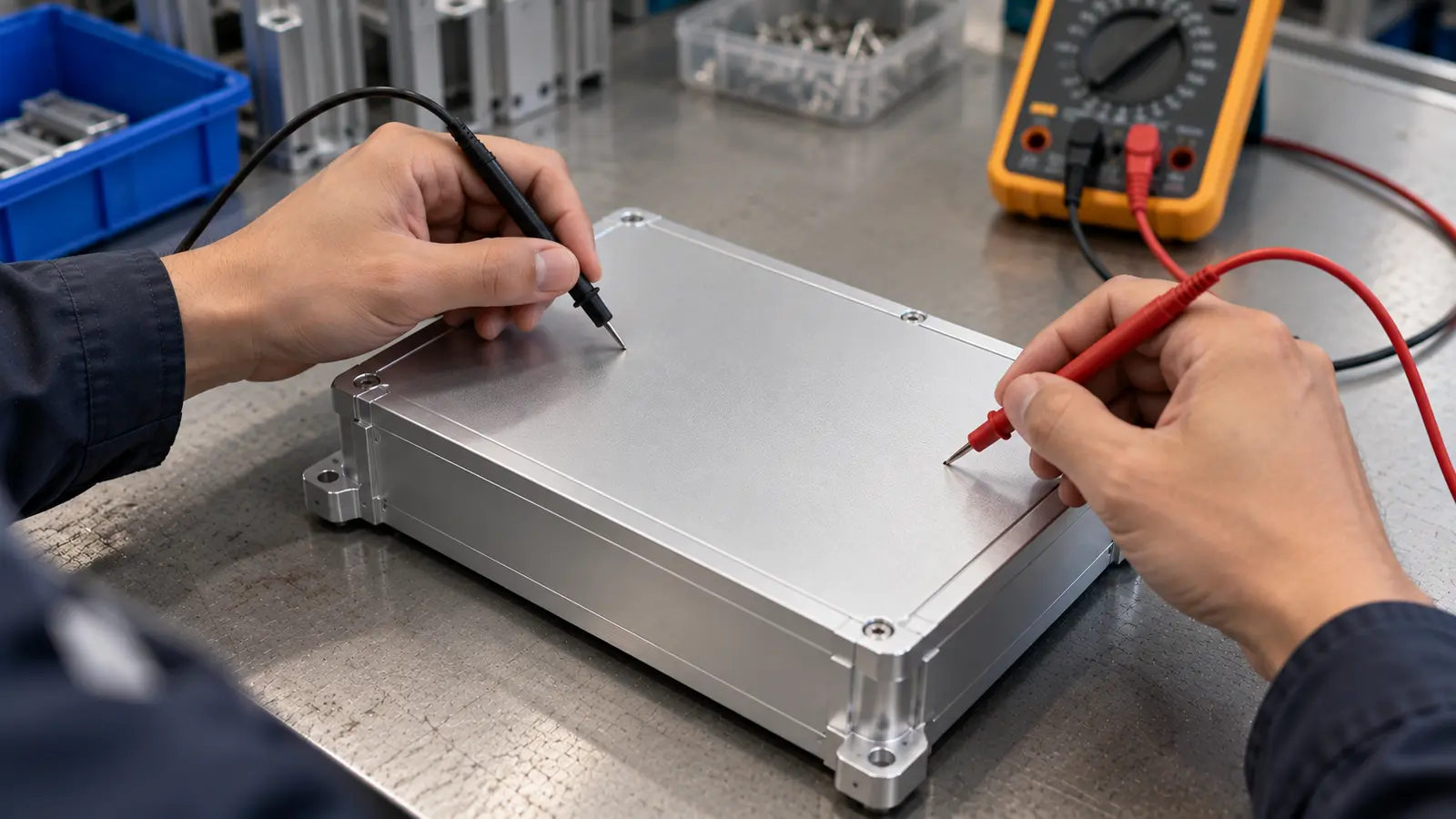
Does Anodized Aluminum Scratch Differently?
Yes. Anodized aluminum usually resists light scratching and surface wear better than bare aluminum because the anodic oxide is harder than the base metal. However, a scratch test should be used carefully because it can damage cosmetic surfaces.
A light rub or scratch test can still provide clues:
- Anodized aluminum: surface often feels harder and resists minor abrasion better
- Bare aluminum: marks more easily and may show a brighter, softer exposed surface
- Painted aluminum: coating may chip, flake, or reveal a film edge
- Powder-coated aluminum: behaves like a thicker polymer coating rather than a converted metallic surface
AAC guidance notes that anodizing does not hide scratches. If you can feel a scratch before anodizing, you will typically still be able to see it after anodizing. See the AAC anodized aluminum FAQ.
That is also useful in reverse. If a part shows a durable metallic finish but no obvious paint-film edge when worn, that behavior is more consistent with anodize than paint.
How to Measure Anodized Coating Thickness
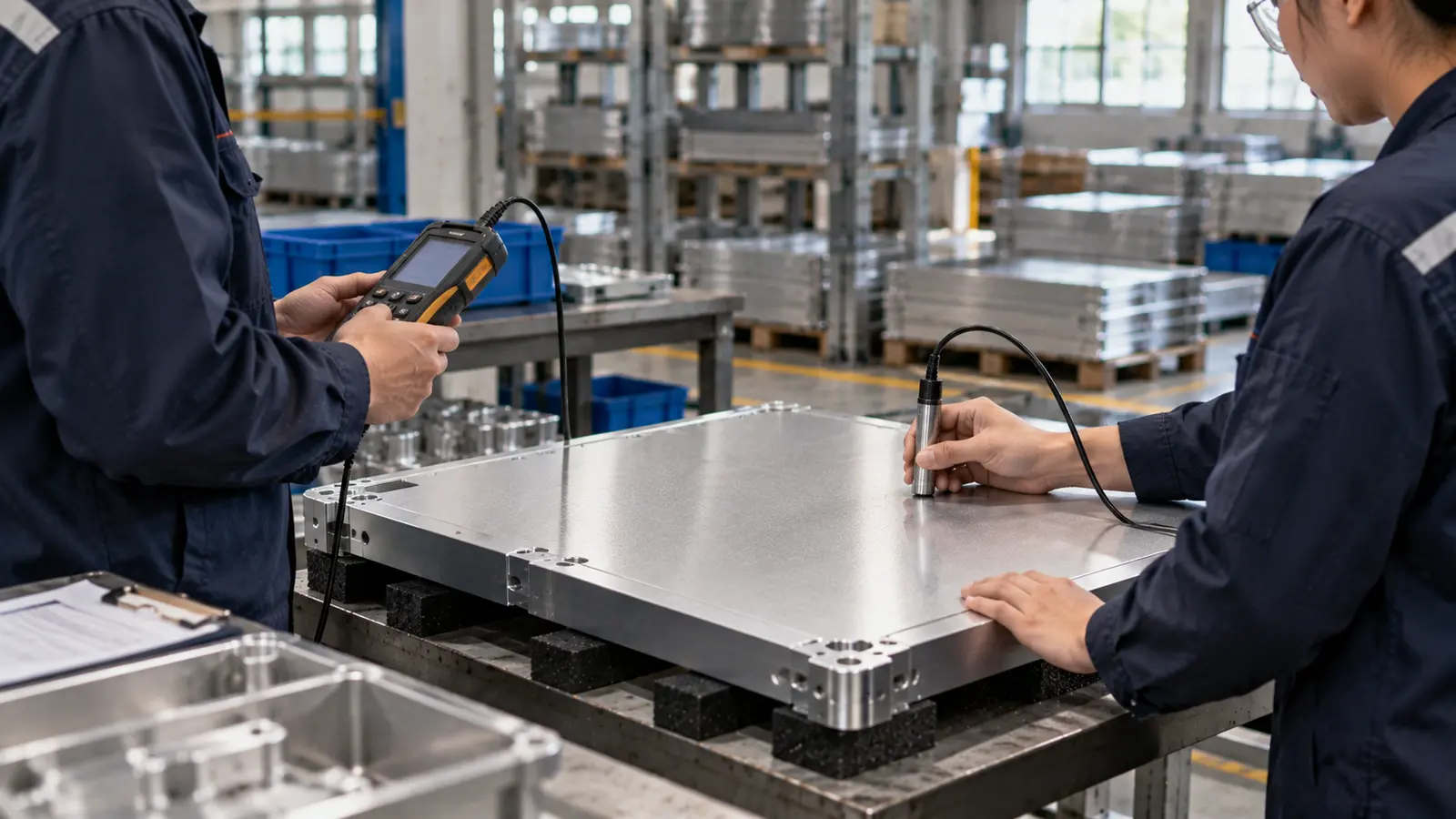
If finish identification matters for QA or supplier acceptance, coating measurement is more reliable than guesswork. The most common non-destructive method is the eddy current method.
ASTM B244 covers the eddy-current method for measuring thickness of anodic coatings on aluminum. It is specifically suited to non-conductive coatings on nonmagnetic base metals.
Set up the instrument using suitable reference standards and a representative uncoated substrate. Keep readings away from edges where possible, and account for curvature, roughness, base-metal thickness and probe placement.
Why thickness measurement matters
A thickness reading helps check whether a non-conductive layer is present and whether its measured thickness meets the drawing. It does not identify the layer chemistry on its own.
- is a measurable non-conductive coating present?
- does the measured thickness meet the specified limit at the required locations?
Typical reference ranges
Thickness depends on the process, alloy and drawing. The following broad reference ranges from the original article are screening context, not acceptance limits or proof of the anodize type.
- Type II sulfuric anodize: roughly 1.8 to 25.4 microns
- Type III hard anodize: roughly 12.7 to 115 microns
Use the purchase order and approved finish specification for acceptance. The Aluminum Anodizers Council explains that coating thickness must be specified on the drawing or purchase documents. AAC specification guidance
For critical inspection work, cross-sectional microscopy can also be used. ASTM B487 covers microscopical measurement of coating thickness and is particularly useful for anodic coatings on aluminum.
Unsure about the finish? Send the drawing, finish callout and inspection concern to Meco to discuss machining, finishing and assembly requirements.
Talk to an EngineerAnodized Aluminum vs Painted vs Powder-Coated vs Bare Aluminum
These finishes can look similar from a distance, but they behave very differently in inspection and use.
| Finish Type | Appearance | Conductivity | Scratch / Wear Behavior | Best Identification Clue |
|---|---|---|---|---|
| Anodized aluminum | Metallic, uniform, often satin or matte | Surface is insulating | Better surface hardness than bare aluminum | Multimeter + metallic look + thickness check |
| Painted aluminum | Color sits on top like a film | Usually insulating | Can chip or peel like paint | Film-like finish and edge behavior |
| Powder-coated aluminum | Thicker, more coated look than anodize | Usually insulating | Polymer coating can chip at edges | Thicker coating look and edge buildup |
| Bare aluminum | Raw metallic look, more variable | Conductive | Scratches more easily | Conductivity and softer surface response |
This distinction matters in real manufacturing because anodize is a conversion finish. Paint and powder coat are applied coatings. That affects grounding, adhesive prep, wear resistance, cosmetic durability, repair options, and dimensional impact.
If your team is comparing finish strategies for OEM parts, Meco’s surface finishing services support anodizing alongside painting, plating, powder coating, and other finishing options under one workflow.
What Other Tests Can Be Used for Anodized Aluminum?
Beyond visual inspection and a multimeter, several more advanced methods can be used when the part is high value, quality-critical, or disputed.
Eddy current thickness testing
Best for non-destructive shop-floor confirmation of anodic coating thickness.
Cross-sectional microscopy
Useful when exact thickness matters and destructive testing is acceptable.
Seal quality testing
If you need to evaluate not just whether the part is anodized, but whether it is properly sealed, ASTM B680 covers seal quality of porous anodic coatings by acid dissolution.
Stain resistance and coating mass tests
Standards such as ASTM B136 and ASTM B137 are also used in anodize evaluation programs, especially for higher-specification work.
For most original equipment manufacturer (OEM) buyers and engineers, start with the drawing and supplier records, then use visual and conductivity checks for screening. Add calibrated thickness measurement or laboratory verification when acceptance requires it.
When Visual Inspection Is Not Enough
Visual inspection is not enough when the finish affects performance, compliance, or downstream manufacturing. If the part needs electrical grounding, adhesive bonding, sealing, wear resistance, or incoming quality verification, relying on appearance alone is risky.
This matters especially in these cases:
- electrical contact points where anodized surfaces can interfere with grounding
- bonding and sealing where anodized and sealed surfaces behave differently from bare aluminum
- cosmetic product programs where finish consistency across batches matters
- incoming supplier quality where the drawing calls for anodize and the finish must be verified
- rework or refinishing where anodized parts respond differently to polishing, blasting, repainting, or re-anodizing
This is one reason OEMs often prefer integrated suppliers that control machining, finishing, assembly, and final inspection rather than splitting those processes across unrelated vendors. If you are managing parts from prototype through production, Meco’s whole product manufacturing model reduces those gaps.
Keep dimensional and finish acceptance separate
Meco’s published CNC machining reference lists ±0.01 mm typical tolerance and 1 to 3 weeks typical machining lead time. These figures describe machining, not an anodize thickness limit or a guaranteed finished-part delivery date.
For a precision housing, define which dimensions apply after finishing and which contact areas must remain conductive. Review machining, masking, coating thickness and final assembly together. A dimensionally correct part can still have the wrong finish, and the right finish can still leave a fit or grounding issue.
Why Finish Identification Matters for OEMs
For OEMs, identifying anodized aluminum correctly is not just a technical exercise. It affects design intent, product performance, and supply chain control.
- It affects grounding and conductivity. Anodized surfaces are insulating, which can create issues in electromechanical products if contact areas are not planned properly.
- It affects assembly and bonding. Different finishes change how adhesives, sealants, and coatings interact with the surface.
- It affects wear and service life. Type II and Type III anodize perform differently from bare aluminum or painted finishes in wear-critical areas.
- It affects rework decisions. An anodized part may need different stripping, masking, or re-finishing treatment than painted aluminum.
- It affects supplier verification. If your print calls for anodize, you need a repeatable way to verify what you received.
This is where combining custom CNC machining, finishing, and assembly under one partner can reduce uncertainty and improve accountability.
Common Mistakes When Trying to Identify Anodized Aluminum
Several shortcuts can lead to wrong conclusions.
- Assuming colored aluminum is always anodized. Paint and powder coat can create similar colors.
- Assuming metallic appearance proves anodize. Clear anodize, bare aluminum, and polished finishes can all look metallic.
- Using only one test. A multimeter test alone may confuse anodize with paint. A visual check alone may confuse clear anodize with bare metal.
- Ignoring alloy and process variation. Different aluminum alloys respond differently to anodizing, and appearance can vary accordingly.
- Using destructive scratch tests on cosmetic parts. If the finish matters, start non-destructively.
What should you do next?
To identify anodized aluminum, begin with the specified finish and supplier records, then combine appearance, conductivity screening and coating measurement. An insulating surface supports the presence of a coating, but does not establish its chemistry. Escalate uncertain results before accepting a batch for a critical application.
For OEM teams, finish identification matters because it affects grounding, bonding, wear performance, quality control, and supplier acceptance. That is especially true when clear anodize is involved, since it can look deceptively similar to untreated metal.
Review your aluminum finish requirements
Share your drawing and finish specification with Meco. Discuss how machining, finishing and assembly requirements should be checked together.
- DFM feedback. With every quote
- Quality documentation. FAI, PPAP and CMM reports available
- Confidentiality. NDA available before file sharing
References and sources
- Aluminum Anodizers Council. Aluminum Anodizers Council website.
- U.S. Department of Defense. MIL-PRF-8625: Anodic Coatings for Aluminum and Aluminum Alloys.
- Aluminum Anodizers Council. Aluminum anodic finishes.
- Aluminum Anodizers Council. Electrical properties of anodic coatings.
- Aluminum Anodizers Council. Anodized aluminum FAQ.
- ASTM International. ASTM B244: Eddy-current measurement of anodic coating thickness.
- Aluminum Anodizers Council. Military specification MIL-A-8625 guidance.
- ASTM International. ASTM B487: Coating thickness measurement by cross-section microscopy.
- ASTM International. ASTM B680: Seal quality testing of anodic coatings.
