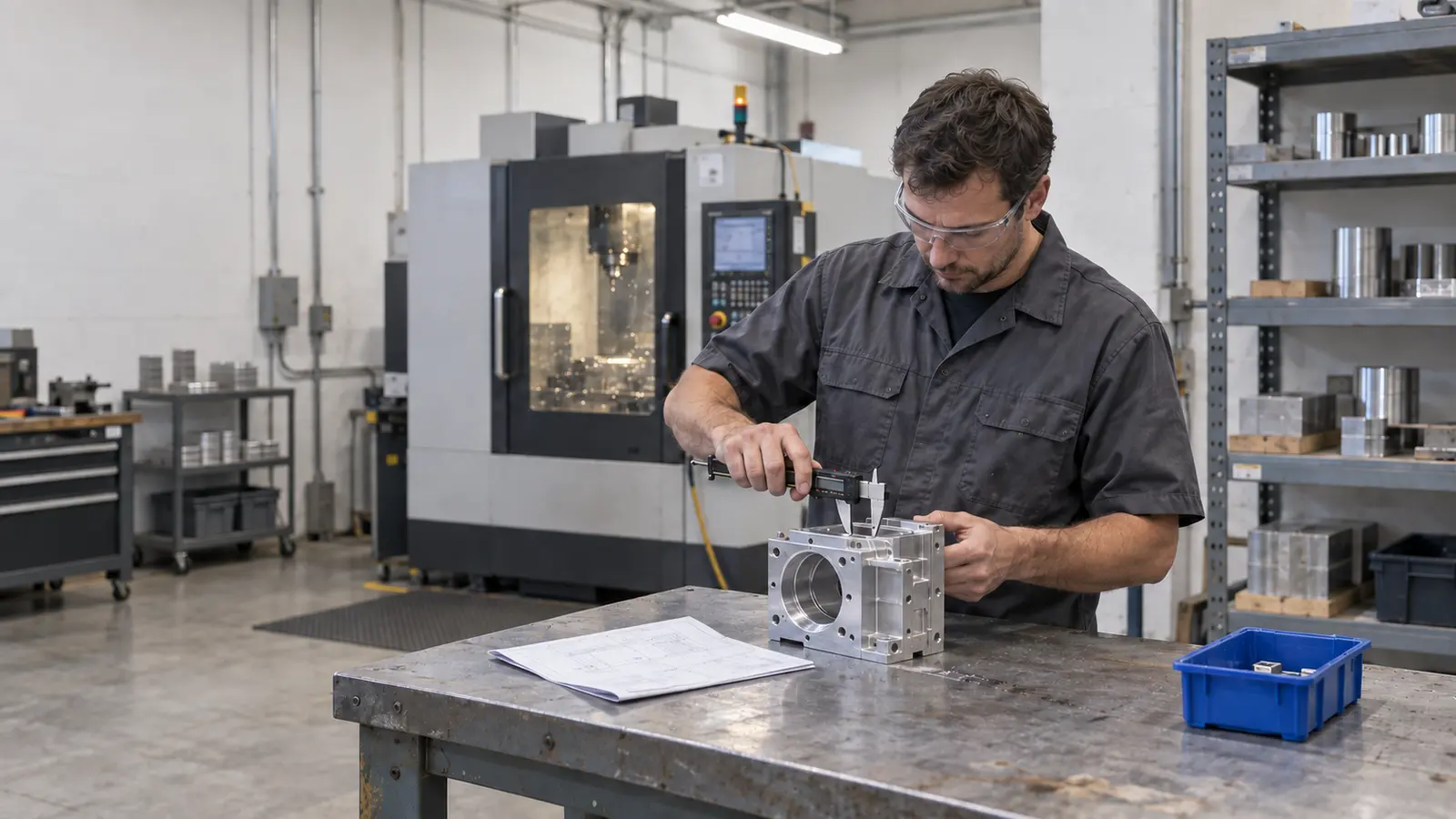
Industrial manufacturing converts raw materials into components, equipment and finished products through controlled, repeatable production processes. It commonly combines machining, casting, forging, stamping, molding, welding, finishing, inspection and assembly.
For OEM programs, the right process depends on material, geometry, tolerance, volume, documentation and supply-chain requirements. A turnkey partner can coordinate several of these steps under one point of accountability.
What Is the Difference Between Industrial and Consumer Manufacturing?
Industrial manufacturing produces goods that are used by other businesses as inputs for their own production, operations, or infrastructure. Consumer manufacturing produces goods sold directly to end users for personal use. The distinction matters because it determines design priorities, quality requirements, regulatory frameworks, and supply chain structure.
Industrial products include CNC machines, hydraulic presses, turbine components, power distribution equipment, construction machinery, and precision components that become part of larger assemblies. Consumer products include appliances, clothing, packaged food, and personal electronics. Some manufacturers produce both: an aluminum die casting can become a transmission housing (industrial) or a kitchen appliance handle (consumer), depending on the end application.
| Attribute | Industrial Manufacturing | Consumer Manufacturing |
|---|---|---|
| End User | Businesses, OEMs, government, infrastructure | Individual consumers |
| Product Examples | Machinery, turbine blades, structural forgings, tooling, enclosures | Appliances, clothing, electronics, packaged food |
| Design Priority | Durability, precision, fatigue resistance, serviceability | Aesthetics, ergonomics, cost, ease of use |
| Quality Systems | IATF 16949, PPAP, FAIR, CMM inspection, SPC | ISO 9001, UL/CE compliance, consumer safety standards |
| Order Volumes | 10 pieces to millions; long-term program contracts | Typically high volume, seasonal demand cycles |
| Tolerances | Often ±0.01 mm or tighter on critical features | Generally wider; cosmetic standards more prominent |
| Regulatory Environment | Industry-specific (automotive, aerospace, medical, energy) | Consumer protection laws, safety certifications |
Understanding this distinction helps sourcing teams select the right manufacturing partner. Industrial programs typically require deeper engineering support, tighter process control, more rigorous documentation, and supply chain models (such as JIT delivery and VMI) that consumer-oriented manufacturers may not support.
What Are the Types of Industrial Manufacturing?
Industrial manufacturing is organized by production model, which describes how products flow through the factory. The right model depends on product complexity, volume, customization requirements, and demand predictability. There are five primary types.
Discrete manufacturing produces distinct, countable items that can be individually identified, inspected, and traced. Each unit moves through defined workstations in sequence. Automotive components, aerospace brackets, electronic enclosures, and machined housings are typical discrete manufacturing outputs. This is the dominant model in precision CNC machining, die casting, and mechanical assembly.
Process manufacturing produces goods through chemical or physical transformation where the output cannot be easily disassembled back into its raw inputs. Examples include steel smelting, chemical refining, cement production, and food processing. Process manufacturing is typically continuous or batch-based and governed by formula rather than bill of materials.
Batch manufacturing produces a defined quantity of identical products before the production line is reconfigured for the next product variant. It offers a balance between customization and efficiency and is common in pharmaceutical, specialty chemical, and short-run component production.
Continuous manufacturing runs production 24/7 without interruption. Shutdowns are costly and complex, making this model viable only for high-demand, low-variation products such as sheet steel, petrochemicals, and paper. Equipment utilization is maximized, but flexibility is minimal.
Job shop (custom) manufacturing handles low-volume, high-mix production where each order may require unique tooling, programming, or setup. This model supports prototyping, short-run production, and highly customized components. Manufacturers like Meco operate across both discrete and job shop models, scaling from on-demand, low-volume runs to multi-million-unit production programs without minimum order quantities.
| Production Model | Volume | Flexibility | Typical Products |
|---|---|---|---|
| Discrete | Low to high | Moderate | Machined parts, castings, assemblies, electronics |
| Process | High | Low | Chemicals, refined metals, food ingredients |
| Batch | Medium | High | Pharmaceuticals, specialty materials, short-run parts |
| Continuous | Very high | Very low | Sheet steel, petrochemicals, paper, glass |
| Job Shop | Very low | Very high | Prototypes, custom tooling, one-off components |
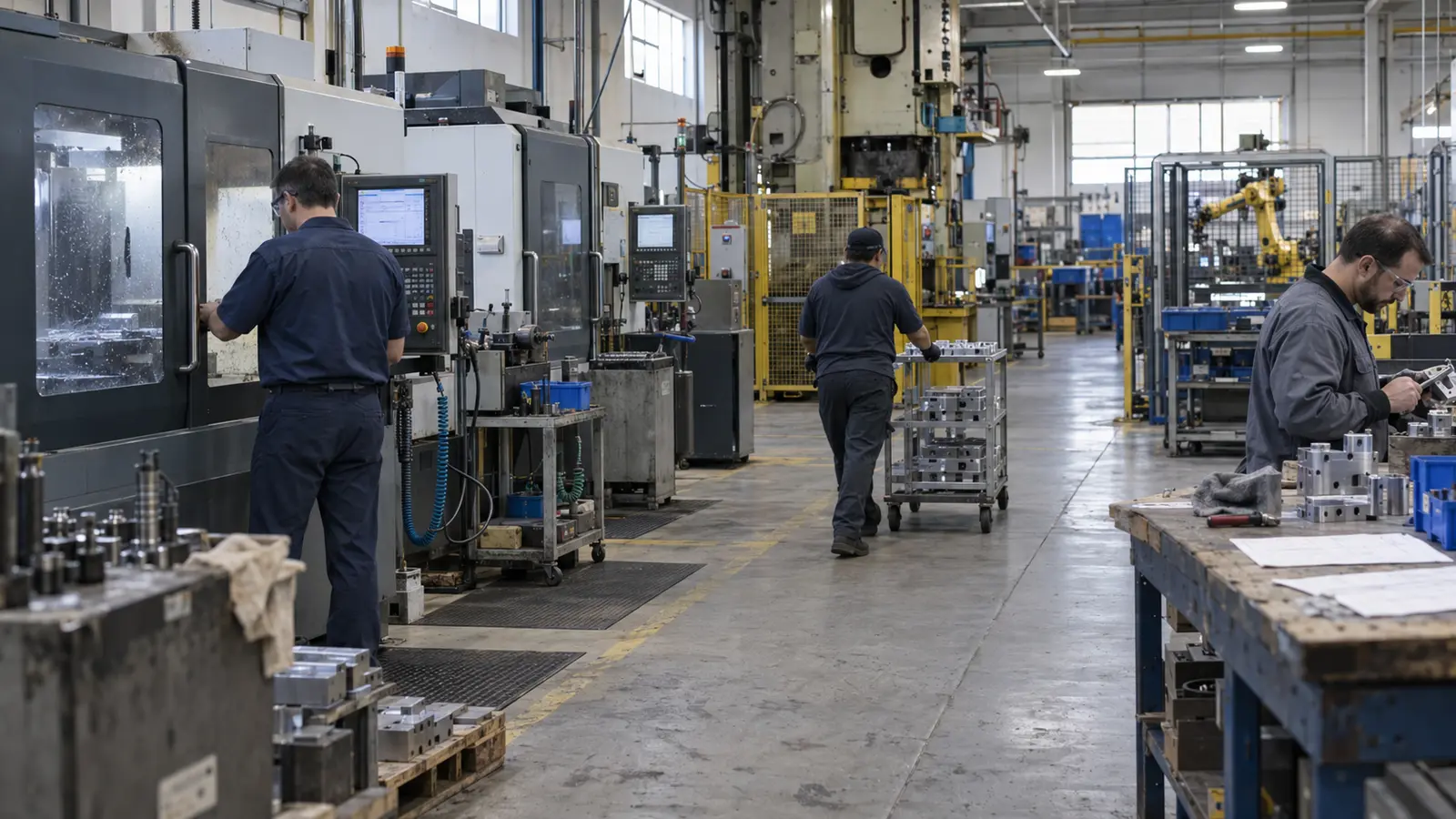
What Are the Core Processes in Industrial Manufacturing?
Industrial manufacturing relies on a defined set of physical processes to convert raw materials into finished components and assemblies. Each process has distinct capabilities in terms of materials, tolerances, geometries, and production volumes. Selecting the right process, or combination of processes, is one of the most consequential engineering decisions in any product program.
Casting
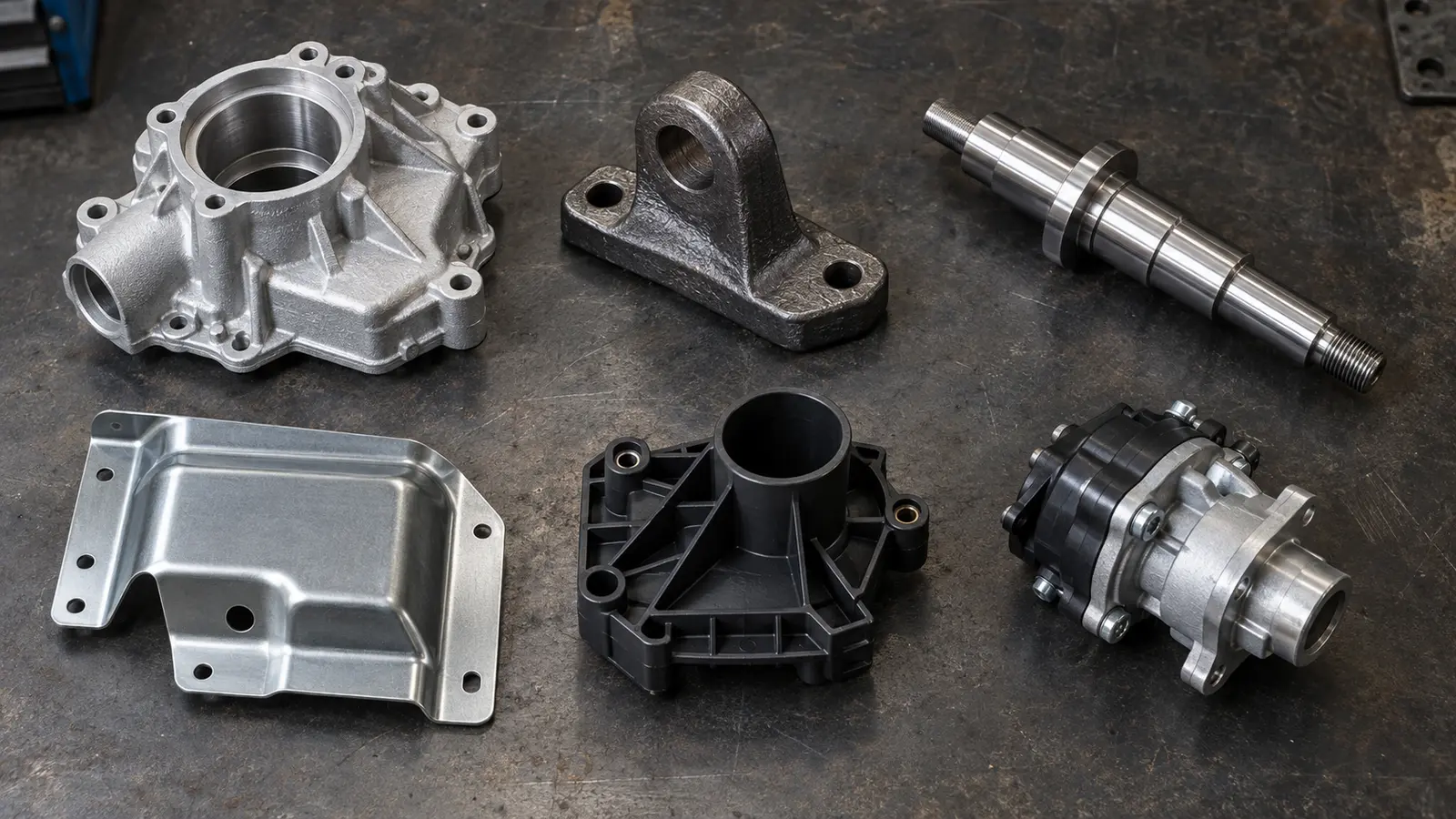
Casting produces near-net-shape parts by pouring or injecting molten metal into a mold cavity. It is the most efficient method for producing complex geometries with internal features, thin walls, and integrated structural ribs. Major casting methods include high-pressure die casting (aluminum, magnesium, zinc; tolerances per NADCA standards), gravity casting (aluminum permanent mold; ISO 8062 CT7-CT8), sand casting (aluminum, steel, brass, bronze; parts up to 100+ kg), investment casting (steel, stainless, titanium; excellent geometric complexity with near-net-shape accuracy), and low-pressure casting (safety-critical parts such as wheels and suspension components with metal yield above 90%).
Forging
Forging shapes metal through compressive force, producing parts with superior grain structure, fatigue resistance, and mechanical strength compared to casting or machining from billet. Hot forging is performed above the recrystallization temperature and is ideal for large, complex parts in aluminum, steel, stainless steel, brass, and bronze. Cold forging operates near room temperature and produces small, high-volume components (fasteners, pins, gears) with excellent dimensional accuracy and work-hardened surfaces. Standards include ASTM B247 for aluminum and magnesium forgings and BS EN 10243-1 for steel.
CNC Machining
CNC machining removes material from a solid workpiece using computer-controlled cutting tools to achieve precise geometries and tight tolerances. It is the most versatile process in industrial manufacturing and often serves as a secondary operation after casting or forging. Meco's custom CNC machining capabilities span turning (max diameter 360 x 1000 mm), milling (3-axis, 4-axis, and 5-axis simultaneous), drilling, and tapping, with accuracy to 0.01 mm and surface finishes from Ra 0.4 to 3.2 micrometers per ISO 2768. For a detailed breakdown of machining economics, see Meco's guide to CNC machine costs.
Metal Stamping
Metal stamping uses dies and presses to cut, bend, draw, and form sheet metal into finished parts at high speed. Progressive stamping feeds a coil strip through a series of stations in a single die, producing complex parts with each press stroke. Stamping is the most cost-effective forming process for high-volume flat and formed sheet metal components in aluminum, steel, stainless steel, brass, bronze, and copper.
Welding
Welding permanently joins metal components through localized fusion. Industrial welding methods include TIG (GTAW) for precision and cosmetic welds on thin-gauge stainless and aluminum, gas shielded (MIG/GMAW) for high-speed structural joining, laser welding for minimal distortion on delicate parts, and resistance (spot) welding for high-volume sheet metal assembly. Structural welding follows AWS D1.1.
Plastic Molding and Forming
Plastic injection molding produces complex polymer parts at high volume with standard tolerances of ±0.05 mm. Related processes include blow molding for hollow parts, plastic extrusion for continuous profiles, and thermoforming for packaging trays and enclosures. Materials range from commodity resins (ABS, PP, PE) to engineering-grade polymers (PEEK, PA66, POM).
Surface Finishing and Heat Treatment
Surface finishing enhances corrosion resistance, wear resistance, and cosmetic appearance through processes such as anodizing (per MIL-A-8625), powder coating, chrome plating, zinc plating, PVD, e-coating, and galvanizing. Heat treatment modifies the mechanical properties of metals through controlled thermal cycles, including T6 tempering for aluminum and quenching/tempering for carbon and alloy steels per ISO 683-1.
Additive Manufacturing
Metal 3D printing (DMLS) and plastic 3D printing (FDM) build parts layer by layer from digital models. Additive manufacturing excels at complex internal geometries, rapid prototyping, and low-volume customization where traditional tooling is not justified.
Mechanical Assembly
Mechanical assembly integrates individually manufactured components into functional products or subassemblies through riveting, fastening, welding, adhesive bonding, press-fitting, and automated screwdriving. For a comprehensive overview of assembly methods and trends, see Meco's guide to what mechanical assembly involves.
IMAGE 2: Collage or split image showing casting, CNC machining, and assembly processesIndustrial Manufacturing Process Comparison
Choosing the right manufacturing process requires balancing material compatibility, achievable tolerances, production volume, geometric complexity, and per-part cost. The following table provides a direct comparison across the major process categories used in industrial manufacturing.
| Process | Materials | Typical Tolerance | Best Volume Range | Key Advantage |
|---|---|---|---|---|
| Die Casting | Aluminum, magnesium, zinc | ±0.002" to ±0.010" (NADCA) | 1,000 to millions | Complex thin-wall geometry at speed |
| Sand Casting | Aluminum, steel, stainless, brass, bronze | ISO 8062 CT9-CT10 | 1 to 10,000 | Large parts (100+ kg), low tooling cost |
| Investment Casting | Steel, stainless, titanium, brass, bronze | Near-net-shape | 100 to 100,000 | Complex geometry, minimal machining needed |
| Hot Forging | Aluminum, steel, stainless, brass, bronze | ASTM B247/BS EN 10243-1 | 500 to millions | Superior grain structure and fatigue life |
| CNC Machining | All metals and engineering plastics | ±0.01 mm (ISO 2768) | 1 to 100,000 | Tightest tolerances, broadest material range |
| Metal Stamping | Aluminum, steel, stainless, brass, copper | ±0.05 to ±0.15 mm (DIN 6930) | 10,000 to millions | Lowest per-part cost at high volume |
| Injection Molding | ABS, PP, PE, PC, PA, POM, PEEK, TPU | ±0.05 mm standard | 1,000 to millions | Complex plastic parts at high speed |
| Metal 3D Printing | Aluminum, stainless, titanium | ±0.1 to ±0.2 mm | 1 to 50 | No tooling, complex internal channels |
Many industrial products require multiple processes in sequence. A die-cast aluminum housing, for example, may be cast, CNC machined to final tolerance on critical mating surfaces, heat treated to T6, anodized, and then assembled with pressed-in hardware and electronic components. A manufacturer that handles all of these steps under one roof, known as a turnkey manufacturing partner, eliminates handoff risk between separate vendors and compresses lead times.
Need a multi-process production plan? Send your drawings, target volume and material requirements. Meco can review manufacturability and recommend a practical process route for quotation.
Request a QuoteWhich Industries Depend on Industrial Manufacturing?
Industrial manufacturing serves virtually every sector that produces, assembles, or maintains physical products. The processes described above are applied across different industries with varying requirements for precision, documentation, materials, and regulatory compliance.
Automotive: Powertrain components, chassis brackets, body structures, EV battery enclosures, and interior trim. Automotive manufacturing demands IATF 16949:2016 certified quality systems, PPAP documentation, tolerances to ±0.01 mm, and materials including aluminum, advanced high-strength steel, magnesium, and engineering plastics.
Aerospace: Structural components, turbine engine parts, avionics enclosures, landing gear assemblies, and satellite housings. Aerospace manufacturing requires full material traceability, NDT (ultrasonic, dye penetrant, X-ray), FAIR/PPAP documentation, and CMM-verified dimensional accuracy.
Heavy Equipment: Structural weldments, hydraulic manifolds, gearbox housings, and wear-resistant components for construction, mining, agriculture, and energy. Heavy equipment manufacturing combines thick-section fabrication with high-integrity forging and casting.
Medical Devices: Surgical instrument housings, diagnostic equipment enclosures, implant components, and sterilization-compatible assemblies. Medical manufacturing requires full documentation, lot traceability, and clean cosmetic finishes.
Consumer Electronics and Telecommunications: Server rack enclosures, RF filter housings, antenna brackets, PCB assemblies, and EMI/RFI shielding. Custom electronics manufacturing and telecom manufacturing combine precision metal fabrication with electromechanical assembly in ESD-safe environments.
Industrial and Energy: Pump housings, valve bodies, control panels, motor housings, and power distribution components. Industrial manufacturing serves the machinery and systems that enable other manufacturers to operate.
What Technologies Are Shaping Industrial Manufacturing in 2026?
Industrial manufacturing has entered a technology-driven era often referred to as Industry 4.0, where digital systems, automation, and data analytics are integrated directly into production workflows. According to Grand View Research, the global smart manufacturing market was valued at USD 410.68 billion in 2025 and is projected to reach USD 1,063.15 billion by 2033, growing at a CAGR of 12.1%. PwC's 2026 Global Industrial Manufacturing Sector Outlook reports that the share of industrial manufacturers expecting to highly automate key processes by 2030 will more than double, from 18% to 50%.
The key technologies driving this transformation include multi-axis CNC systems (5-axis simultaneous machining enabling single-setup "done-in-one" production of complex geometries), industrial robotics and automated welding cells (reducing cycle times and improving weld consistency), IoT and IIoT sensor networks (enabling real-time machine monitoring, predictive maintenance, and throughput optimization), digital twin modeling (simulating production scenarios and identifying failure points before physical manufacturing begins), and AI-powered quality inspection systems (using machine vision and statistical process control to detect defects at production speed).
For manufacturers, the practical impact is measurable. Deloitte's 2026 Manufacturing Industry Outlook identifies agentic AI, tariff-driven supply chain reconfiguration, and workforce upskilling as the three forces most likely to reshape the competitive landscape this year. Manufacturers that integrate these technologies into their production systems gain advantages in precision, speed, cost efficiency, and responsiveness to demand changes.
Industry 4.0 by the Numbers
Smart manufacturing market: USD 410.68 billion in 2025, projected USD 1,063.15 billion by 2033 (Grand View Research). Automation expectations: manufacturers expecting high automation by 2030 will more than double from 18% to 50% (PwC 2026). The global industrial manufacturing industry is valued at US$16 trillion (PwC). These figures reflect a sector undergoing fundamental technological transformation.
Industrial Manufacturing in North America: Reshoring and Workforce Trends
North America is experiencing a structural shift in industrial manufacturing driven by reshoring, supply chain regionalization, and federal policy incentives. According to the Reshoring Initiative's 2025 Annual Report, reshoring and foreign direct investment announcements have surged from 11,000 jobs per year in 2010 to 244,000 jobs per year in 2025, representing a 25% compound annual growth rate over 15 years.
The economic weight of U.S. manufacturing is substantial. NAM reports that manufacturers contribute $3.0 trillion in value-added output annually, accounting for 9.5% of GDP. For every $1.00 spent in manufacturing, there is a total impact of $2.64 to the overall economy, one of the highest multiplier effects of any sector. Manufacturers also perform 52.9% of all private-sector R&D, spending a record $404.8 billion in 2023.
The workforce challenge is equally significant. According to Deloitte and the Manufacturing Institute, 3.8 million manufacturing jobs will likely be needed by 2033, and 1.9 million of those are expected to go unfilled. Of the projected openings, 2.8 million will come from retirements and 760,000 from industry growth. This gap is accelerating adoption of automation, robotics, and AI-assisted production to maintain output with constrained labor pools.
For OEMs evaluating their supply chain, these trends point toward partners with established production infrastructure, scalable capacity, and global logistics networks. Meco operates manufacturing facilities in Thailand (20,000 m²) and China (16,000 m²), with warehousing across North America (U.S., Canada) and Asia (Japan, Thailand), U.S. engineering support, and integrated supply chain management that bridges overseas production with regional delivery through JIT and VMI fulfillment programs.
How Do Quality Systems Support Industrial Manufacturing?
Quality management systems are the framework that ensures every part meets specification across every production run. In industrial manufacturing, where components become part of safety-critical assemblies in automotive, aerospace, medical, and energy applications, quality is not optional. It is engineered into the process.
Meco holds IATF 16949:2016 certification. Quality control combines documented process controls, inspection, traceability, and project-specific reporting requirements.
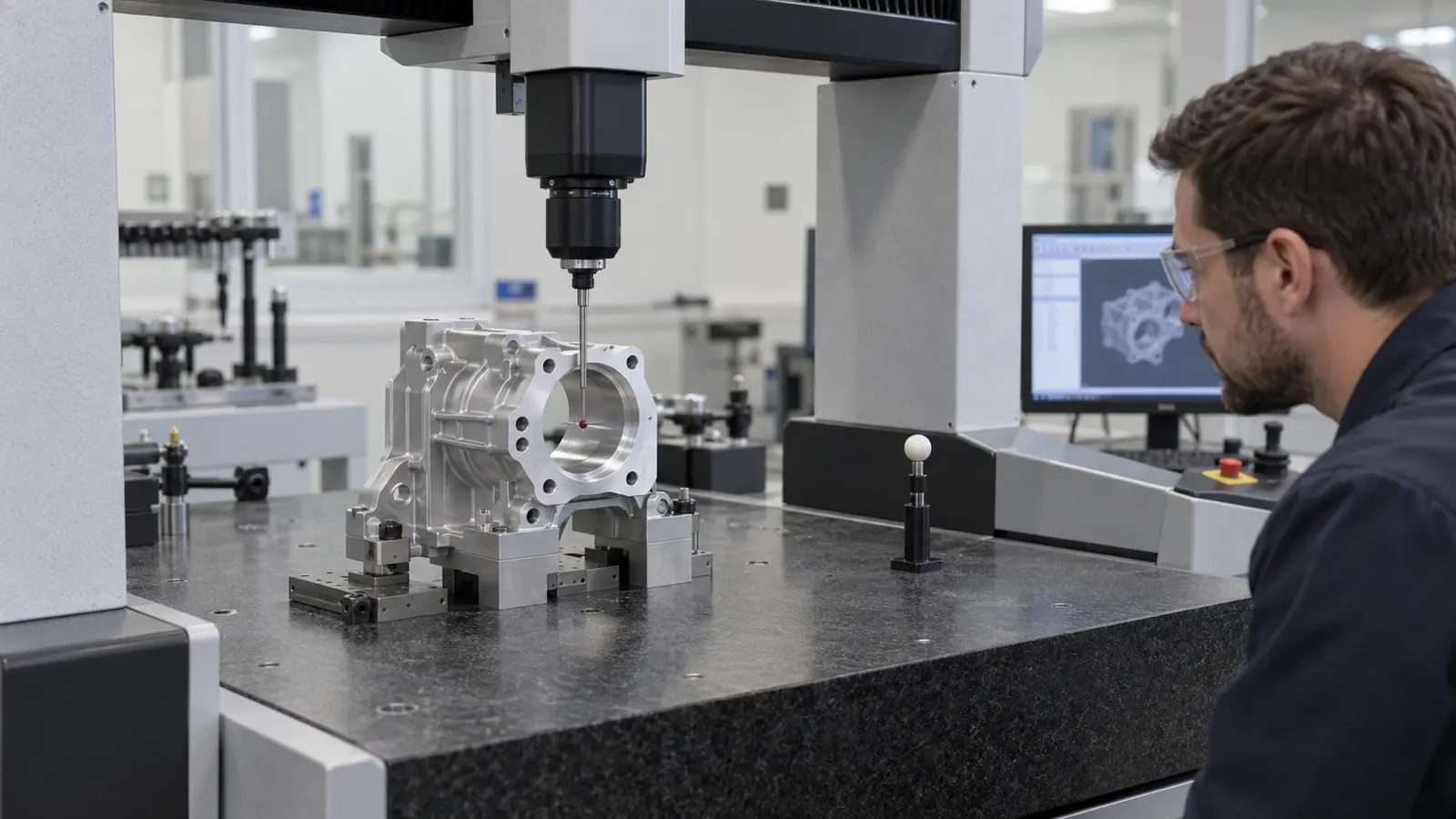
Beyond certification, quality in industrial manufacturing depends on inspection infrastructure and traceability. CMM (coordinate measuring machine) inspection with ±0.002 mm precision, NDT methods (ultrasonic, dye penetrant, X-ray), full lot and serial number traceability, material certificates and certificates of analysis, REACH and RoHS compliance, and conflict minerals reporting all form part of a complete quality ecosystem. These tools and processes ensure that every component is documented, traceable, and auditable from raw material receipt through final delivery.
What Role Do Turnkey Manufacturing Partners Play?
A turnkey manufacturing partner manages every stage of the production lifecycle, from design and prototyping through tooling, multi-process fabrication, surface finishing, assembly, packaging, and global delivery, under a single point of accountability. This model directly addresses the fragmentation, lead time risk, and quality handoff gaps that result from managing separate vendors for each process stage.
The value of turnkey integration becomes clear when you consider a typical industrial component program. A forged steel gear housing may require hot forging, CNC machining to ±0.01 mm, heat treatment (quench and temper), surface finishing (zinc plating per ASTM B633), and assembly with pressed-in bearings and hardware. If each step is handled by a different supplier, the OEM must coordinate five separate purchase orders, five quality approvals, five shipping events, and five potential points of failure. A turnkey partner collapses that complexity into a single workflow.
Meco provides end-to-end turnkey manufacturing with over 30 years of experience and 40+ in-house processes spanning casting (five types), forging, CNC machining, stamping, welding, molding, extrusion, additive manufacturing, surface finishing, heat treatment, and mechanical assembly. R&D engineering support includes DFM analysis, FEA simulation, digital twin modeling, and rapid prototyping, with feedback delivered alongside every quote in under 24 hours. For organizations exploring outsourced production models, Meco's guide to what contract manufacturing is provides a detailed framework for evaluating options.
Simplify Your Manufacturing Program
Meco can coordinate multi-process manufacturing from prototype through scaled production, with engineering support and global production resources.
- Engineering review. DFM-focused feedback for manufacturability.
- 40+ processes. Multiple production routes under one partner.
- Flexible scale. 10 pieces to 10 million+ with no MOQ.
- Quality system. IATF 16949:2016 certified.
- Global footprint. Production in Thailand and China with regional warehousing.
Browse all 40+ processes or go straight to a quote.
Request a QuoteReferences and sources
Third-party market and standards claims in this article should be rechecked before publication.
- National Association of Manufacturers. Facts About Manufacturing.
- World Trade Organization. WTO Statistics.
- Grand View Research. Smart Manufacturing Market.
- PwC. 2026 Global Industrial Manufacturing Sector Outlook.
- International Automotive Task Force. IATF Global Oversight.
