
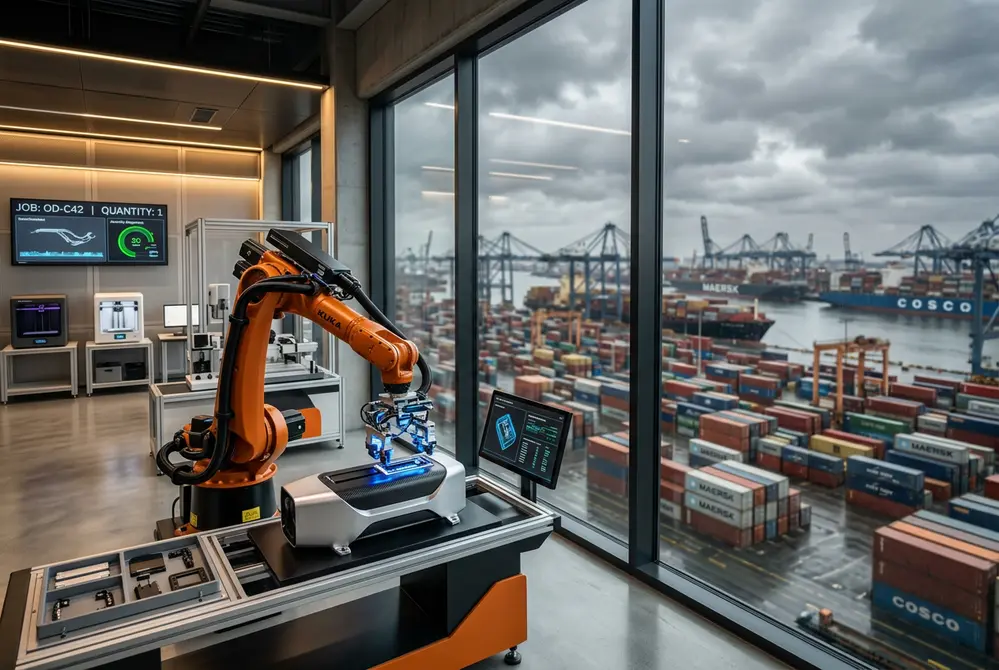
There's a quiet revolution happening on factory floors and in the cloud platforms that connect them. It doesn't look like the assembly lines of the twentieth century. There's no mountain of unsold inventory gathering dust in a warehouse somewhere. No six-figure minimum order quantities holding small businesses hostage. Instead, a customer uploads a CAD file at 9am, gets a quote by 9:01, and holds a finished part in their hands within days.
That's on demand manufacturing. And if you're running a product business in 2026 and you haven't seriously explored it, you're already behind.

What On Demand Manufacturing Actually Means (Without the Jargon)
Let's cut through the marketing fluff. On demand manufacturing is a production system in which products are only manufactured when needed and in the quantities required. That's it. No speculation about what might sell. No gambling on demand forecasts. You make what's been ordered, when it's been ordered.
Also known as manufacturing on demand, custom manufacturing, or cloud manufacturing, the concept is straightforward even if the execution requires some serious technological muscle. This approach allows manufacturers to align production processes with actual demand, not forecasted needs, which eliminates excess inventory and enables greater customisation.
Think about the traditional model for a second. A company designs a product, forecasts demand (often inaccurately), orders tens of thousands of units from a factory overseas, ships them across an ocean, stores them in a distribution centre, and then prays they sell before the season ends or the design becomes obsolete. Overproduction of inventory results in excess stock at the end of the season, markdowns, and a negative impact on the manufacturer's margin. Not to mention the environmental toll of manufacturing things nobody asked for.
On demand manufacturing flips that entire model. Production starts when an order lands. The run size might be one prototype, fifty custom parts, or ten thousand units whatever the customer actually needs.
Why Now? The Forces Making On Demand Manufacturing Inevitable
This isn't a new concept. Made-to-order production has existed in some form for centuries. So why is 2026 the tipping point? Several forces are converging at once.
The Technology Finally Caught Up
On demand manufacturing is closely associated with just-in-time manufacturing and often leverages innovative technologies such as 3D printing, CNC machining, and cloud-based software to create and deliver customised products quickly. What used to take weeks of tooling setup can now be done in days, sometimes hours. Modern additive manufacturing machines produce end-use parts with engineering-grade materials, not the brittle prototypes of a decade ago. CNC machining centres run lights-out shifts with minimal human supervision. And digital platforms tie it all together with instant quoting, automated design-for-manufacturing checks, and real-time order tracking.
Supply Chains Proved Fragile
The events of the last few years, including global supply chain constraints due to the COVID-19 pandemic and geopolitical conflicts, have underlined the importance of economic self-reliance and decentralised manufacturing. When container ships were stuck at ports and factories in Asia went dark during lockdowns, companies with long, brittle supply chains got hammered. On demand production, especially when sourced regionally, shortens that chain dramatically.
The Market Is Moving at Blistering Speed
Product life cycles are getting shorter. Consumer expectations are getting more specific. Manufacturers around the world are struggling to keep up. Their main roadblock lies in traditional mass production models, designed for bulk orders and long lead times, which are quickly becoming outdated.
The Numbers Confirm the Momentum
The global market for on demand manufacturing services was estimated to be worth approximately $5.97 billion in 2024 and is forecast to reach $16.68 billion by 2031 with a CAGR of 15.2%. This isn't a fringe market anymore. It's a sector that's nearly tripling in under a decade.
How On Demand Manufacturing Actually Works
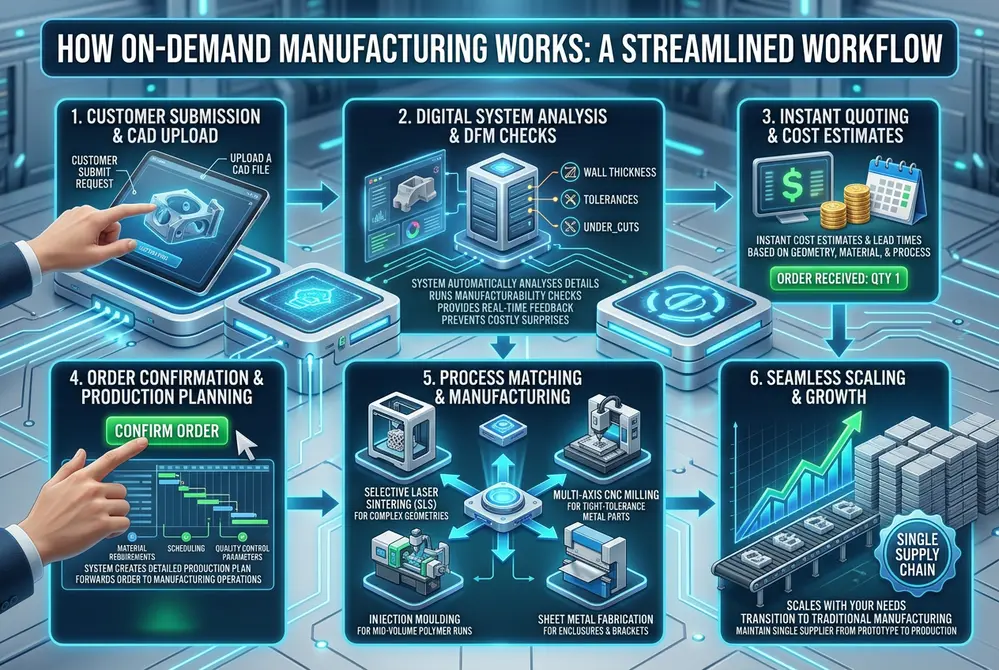
The workflow is more streamlined than most people expect. On demand manufacturing processes tend to follow a distinct workflow that begins when a customer submits a request. After the customer provides specifications, digital systems automatically analyse the details and generate a price quote. As soon as the customer confirms the order, the system creates a detailed production plan that contains material requirements, scheduling, and quality control parameters, then forwards the order to the appropriate manufacturing operations.
It usually starts with digital design and automated DFM analysis. Once you upload a CAD file, the system runs manufacturability checks wall thickness, tolerances, undercuts and provides real-time feedback. You get instant cost estimates and lead times based on the geometry, material, and process requirements. This upfront clarity prevents costly surprises later.
From there, the platform matches your project to the right manufacturing process whether that's selective laser sintering for complex geometries, multi-axis CNC milling for tight-tolerance metal parts, injection moulding for mid-volume polymer runs, or sheet metal fabrication for enclosures and brackets.
The best part? If demand grows, you can transition to traditional injection moulding, sheet metal fabrication, or hybrid manufacturing solutions without moving to a different supplier. The same platform scales with your needs, so you maintain a single supply chain from prototype to full production.
The Real Benefits (and Why They Matter More Than You Think)
Every article on this topic lists "reduced inventory" and "faster time to market." Those are real benefits, but they barely scratch the surface. Here's what actually changes when you adopt on demand production:
You Stop Bleeding Cash on Inventory
On demand production eliminates the headache of overflowing warehouses by making products only when orders come in. Instead of filling shelves with items that might never sell, companies keep their storage lean and costs down. Warehousing expenses shrink because there is no need for massive spaces to hold unused materials or finished goods. For growing businesses especially, the freed-up capital is often the difference between scaling and stalling.
Your Product Development Cycle Accelerates Dramatically
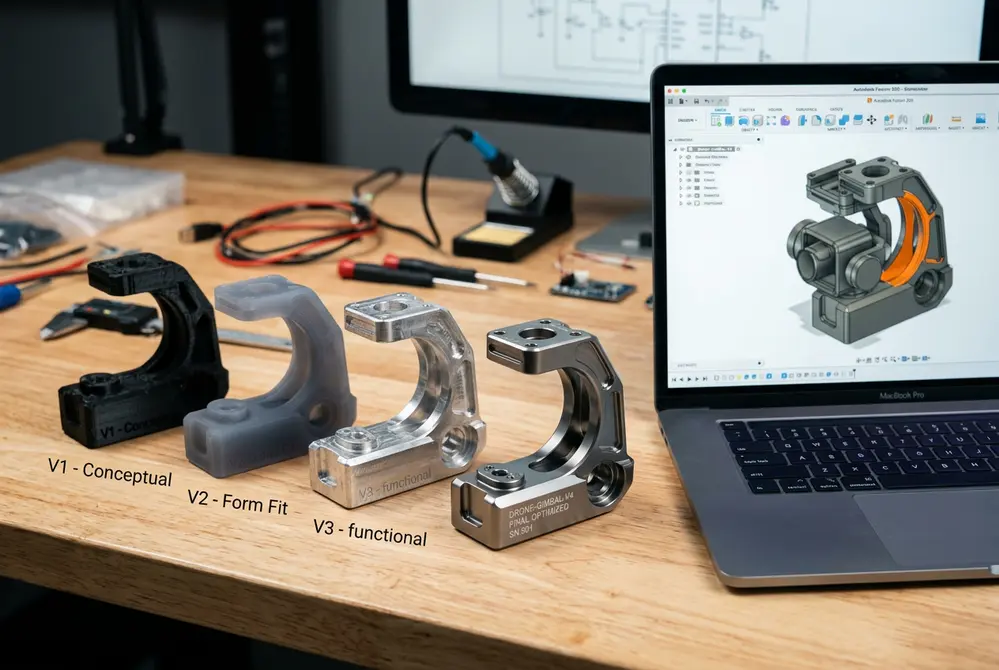
Instead of waiting six or eight weeks for tooling before you can test a single part, you can get functional prototypes in a matter of days. That speed compounds. Faster prototyping means more design iterations. More iterations mean better products. Better products mean fewer returns, higher customer satisfaction, and stronger margins.
You Gain Genuine Design Flexibility
On demand production gives you design flexibility that high-volume manufacturing can't match. If you discover a design flaw after shipping your first batch, you don't have to scrap expensive tooling. You adjust the CAD model, upload the new file, and the next production run reflects the change immediately. In regulated industries like medical devices and aerospace, where design revisions are constant, this flexibility isn't just convenient it's essential.
Sustainability Becomes Built In, Not Bolted On
On demand production solves waste by making only what customers need, eliminating leftover materials and unsold inventory. Instead of producing in bulk and risking surplus, manufacturers create products based on real-time orders, ensuring resources get used efficiently. This approach not only cuts down on raw material waste but also reduces energy consumption since machines run only when necessary. In an era where environmental accountability is moving from "nice to have" to regulatory requirement, producing only what's needed isn't just smart it's responsible.
Small Businesses Can Finally Compete
On demand manufacturing is especially advantageous for smaller companies, as it minimises the initial investment required for tooling and setup, allowing for low-volume production at cost-effective prices. Low minimum order quantities make inventory management more sustainable for retailers and small businesses. A two-person hardware startup can access the same manufacturing processes as a Fortune 500 company. That's a level playing field that didn't exist fifteen years ago.
The Industries Where On Demand Manufacturing Is Already Transforming Production
While the model applies broadly, certain sectors are seeing particularly dramatic results.
Consumer Electronics
Consumer electronics commands approximately 30% of the on demand manufacturing service market, due to high product turnover and demand for precision-engineered parts. When you're releasing a new product iteration every twelve to eighteen months, the ability to produce short runs without committing to expensive tooling is a competitive weapon.
Medical Equipment
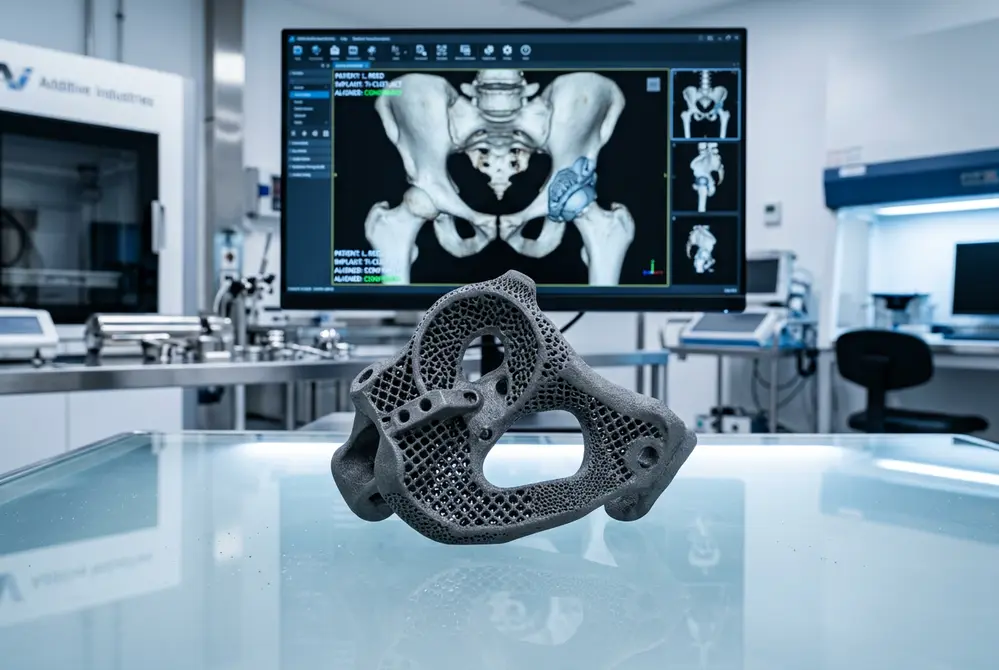
Medical equipment represents about 20% of the market, including custom implants, prosthetics, and medical devices, and is gaining momentum with the rise of patient-specific manufacturing and biocompatible materials. This is perhaps the most compelling use case every patient's anatomy is different, which makes mass production inherently inefficient for many medical applications.
Aerospace
Aerospace accounts for roughly 12% of the market, using on demand production for lightweight and repair parts, and is gaining momentum as additive manufacturing becomes vital for performance efficiency and part consolidation. When a single aircraft component can be 3D printed as one piece instead of assembled from seventeen separate parts, you don't just save weight you reduce failure points.
Retail
In retail, on demand manufacturing is less of a "trend" and more of a practical response to modern retail realities: shorter product cycles, tighter cash flow, nearshoring and regional production strategies, and digital manufacturing tools that make small-batch and made-to-order production more viable than ever.
The Reshoring Connection Most People Miss
Here's something the typical explainer articles don't talk about enough: on demand manufacturing and the reshoring movement are deeply intertwined.
The reshoring wave has triggered staggering levels of investment, and with new tariffs reshaping production costs, manufacturers are reassessing whether reshoring can deliver not only resilience but measurable sustainability gains. On demand manufacturing makes domestic and regional production economically viable in ways that traditional mass production often can't. When you don't need a 50,000-unit minimum run to hit your unit cost target, suddenly producing closer to your customer base makes more financial sense.
On demand manufacturing is often used as an alternative to offshore production, improving agility and responsiveness to market demands. Combined with the fact that much of the reshoring movement is driven by trade policy uncertainty and the imperative for more resilient supply chains, the synergy between these two trends is hard to ignore.
For companies that have been burned by container shipping delays, tariff whiplash, or quality issues with distant suppliers, on demand production from a domestic or nearshore network represents a fundamentally different approach to managing risk.
The Honest Challenges (Because Nothing Is Perfect)
I'd be doing you a disservice if I pretended on demand manufacturing was all upside. It's not. And the companies that succeed with it are the ones that go in with their eyes open.
Higher Per-Unit Costs at Low Volumes
Small batch manufacturing often leads to higher costs in two major areas: procurement and production. Without the benefit of buying supplies in bulk, on demand manufacturers often pay higher per-unit material costs. If you're producing a million identical widgets, traditional mass production will almost always win on unit price. On demand manufacturing isn't trying to compete there.
Supply Chain Responsiveness Is Non-Negotiable
On demand manufacturing requires a highly responsive supply chain, capable of delivering materials as and when they are needed. Delays can disrupt the entire production process. Your supply chain needs to be tight, really tight. A two-week delay on raw materials kills the entire value proposition when your customer expects parts in five days.
Quality Control Gets More Complex
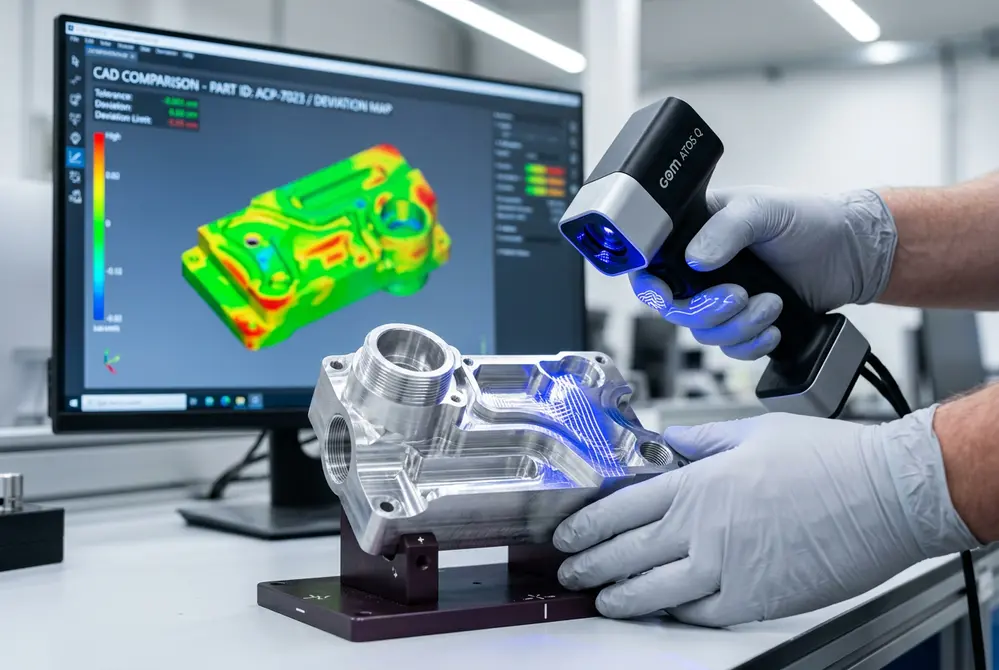
Ensuring consistent quality can be challenging when each product is made to order and may be different from the last. Quality control becomes more involved, not less, because you can't just dial in a process and let it run for a hundred thousand cycles. Every batch may be different, and your inspection and QC processes need to be agile enough to handle that.
Transparency and Trust Matter
Taking advantage of the efficiency and flexibility of on demand manufacturing means surrendering some control of the production process. You may not know the exact techniques, level of skill or technology used to fulfil your order. Choosing a platform with rigorous supplier vetting and transparent quality standards is non-negotiable.
AI and the Next Wave of On Demand Manufacturing
The convergence of artificial intelligence with on demand production is where things get genuinely exciting. The rise of AI and machine learning is playing an influential role in the on demand manufacturing service market, as companies adopt these technologies to optimise material usage and resource allocation to meet customer requirements.
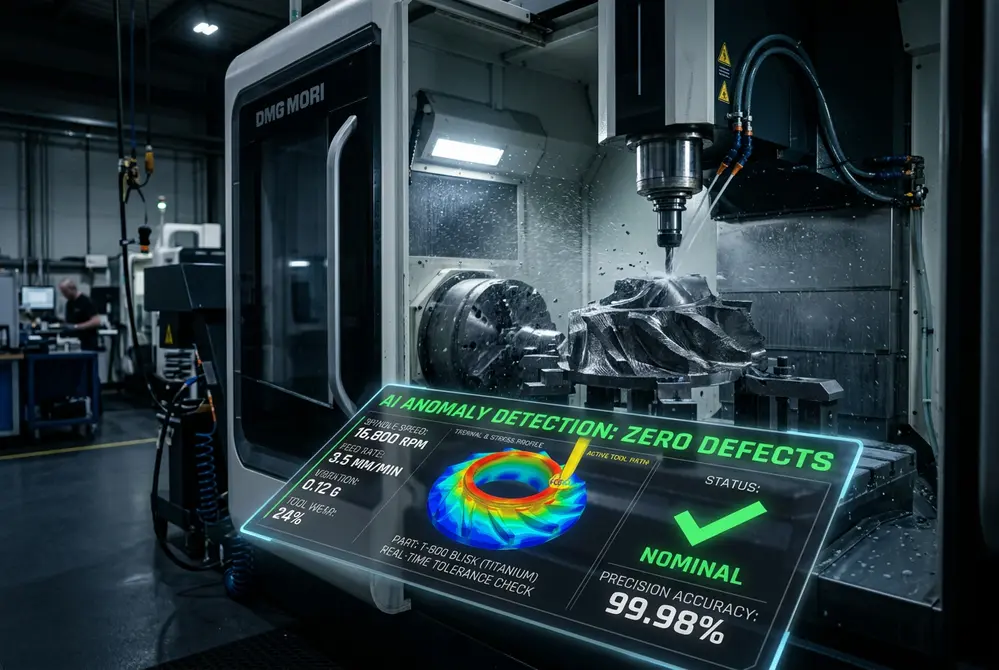
Manufacturers have begun leveraging agentic AI, which can autonomously reason and make decisions without human input, to mitigate supply chain challenges. Many are already using large language models and agents to navigate trade risks and identify potential cost savings. Imagine a system that not only quotes your part instantly but automatically selects the optimal manufacturing process, material, and supplier based on your budget, timeline, and quality requirements then monitors production in real time and flags anomalies before they become defects.
That's not science fiction. It's being built right now. And it will make on demand manufacturing faster, cheaper, and more reliable than it's ever been.
Is On Demand Manufacturing Right for Your Business?
Not every product or every business model will benefit equally. On demand manufacturing tends to be a strong fit when you're dealing with highly customised products where each unit may differ, when you're in the prototyping and product validation stage and need speed above all else, when your demand is unpredictable or seasonal and you can't afford to stockpile inventory, when you serve a niche market where volumes are naturally low but margins are healthy, or when you're launching a new product line and want to test demand before committing to expensive tooling.
It's less ideal when you're producing extremely high volumes of identical, standardised components where the economies of scale from traditional manufacturing are insurmountable, or when your product requires proprietary processes that can't easily be outsourced.
For most businesses in 2026, the answer isn't on demand or traditional manufacturing it's a hybrid approach. Use on demand production for prototyping, bridge production, custom orders, and spare parts. Use traditional manufacturing for your high-volume, stable-demand product lines. And let the two models complement each other.
The Bottom Line
On demand manufacturing isn't a buzzword or a passing trend. It's a structural shift in how products get made driven by real technology, real economics, and real changes in what customers expect. As digital manufacturing technologies continue to advance, companies that embrace this model will gain a competitive edge by being more agile, cost-efficient, and sustainable.
The businesses that thrive over the next decade won't be the ones with the biggest factories. They'll be the ones with the smartest, most responsive production strategies. And on demand manufacturing will be at the heart of that strategy.
The question isn't whether you can afford to adopt it. It's whether you can afford not to.
Frequently Asked Questions about On Demand Manufacturing
What is on demand manufacturing?
On demand manufacturing is a production model where goods are only manufactured when a customer order is placed, and in the exact quantities required. It eliminates the need for large upfront inventory investments and leverages technologies like CNC machining, 3D printing, and injection moulding to produce parts quickly and efficiently.
What manufacturing processes are used in on demand production?
The most common processes include CNC machining (milling and turning), additive manufacturing (3D printing such as SLS, SLA, and FDM), plastic injection moulding, sheet metal fabrication, and urethane casting. The right process depends on your material, geometry, tolerances, and volume requirements.
Is on demand manufacturing only for prototypes?
No. While on demand manufacturing is excellent for rapid prototyping, it is equally effective for bridge production, low-to-mid volume end-use parts, spare parts, and custom or personalised products. Many companies use it as a permanent production strategy for product lines with variable demand.
How does on demand manufacturing reduce costs?
It reduces costs by eliminating warehousing and excess inventory expenses, removing the need for expensive upfront tooling on small runs, minimising material waste, and freeing up working capital that would otherwise be tied up in unsold stock. While per-unit costs may be higher at very low volumes, the total cost of ownership is often significantly lower.
What industries benefit most from on demand manufacturing?
Consumer electronics, medical devices, aerospace, automotive, industrial equipment, and retail are among the sectors seeing the greatest impact. Any industry that deals with custom parts, frequent design changes, unpredictable demand, or the need for rapid product iteration stands to benefit significantly.
How quickly can on demand parts be delivered?
Lead times vary by process and complexity, but many on demand manufacturers can deliver CNC machined or 3D printed parts within 1 to 5 business days. Injection moulded parts typically take longer due to tooling, but even these timelines have shortened dramatically with modern rapid tooling techniques.
Partner with Meco for Your On Demand Manufacturing Needs
At Meco, we specialise in delivering comprehensive turnkey contract manufacturing and whole product manufacturing solutions, making us your ideal partner for responsive, on demand production. With over 30 years of global expertise, factories in Thailand and China, and North American headquarters, we handle the full spectrum from rapid prototyping and PCB assembly (PCBA) to precision CNC machining, injection moulding, sheet metal fabrication, and final systems integration.
Our on demand manufacturing capabilities include:
- Low-to-mid volume production with no prohibitive minimum order quantities, ideal for startups and scaling businesses
- Design for Manufacturability (DFM) analysis to optimise your designs for cost, quality, and speed
- Flexible, responsive supply chain management that adapts to your demand without warehousing overhead
- Multi-process capability under one roof, from additive manufacturing and CNC machining to moulding, fabrication, and full box build assembly
- Rigorous quality control, functional testing, and global fulfilment ensuring your product ships ready for the end customer
Whether you need rapid prototypes to validate a concept, bridge production while tooling is finalised, or a reliable on demand production partner for ongoing custom orders, Meco eliminates vendor coordination headaches and delivers traceable, certified quality every time. Send us your 2D/3D files, BOM, and requirements, and let's build your product together.
Get a Free Quote Today