
The global contract manufacturing market reached an estimated $780 billion in 2025 and is projected to surpass $1.25 trillion by 2032. Behind that staggering figure is a simple idea: companies that design and sell products don't always need to build them. Instead, they hire a specialist — a contract manufacturer — to handle production while they focus on what they do best: innovation, marketing, and growth.
If you're an OEM sourcing manager evaluating outsourcing options, an engineering director scaling a product from prototype to mass production, or a hardware founder looking to bring your first physical product to market, understanding contract manufacturing isn't optional in 2026. It's foundational. And if you're at the very start with nothing but a concept, our step-by-step guide on how to get your invention made walks you through every stage before you reach the contract manufacturing decision.

Key Takeaways
- Contract manufacturing is a business arrangement where an OEM outsources production of parts, components, or finished products to a third-party manufacturer while retaining design ownership and intellectual property.
- The model spans over 40 manufacturing processes — from CNC machining and die casting to injection molding and full electromechanical assembly.
- Benefits include reduced capital expenditure, faster time-to-market, access to specialized expertise, and scalability from 10 pieces to 10 million+.
- Risks can be mitigated through certified quality management systems (such as IATF 16949:2016), strong NDAs, pilot builds, and choosing a vertically integrated partner.
- The 2026 landscape is being reshaped by tariff-driven reshoring, AI-powered quality inspection, and the rise of vertically integrated turnkey manufacturing partners.
What Is Contract Manufacturing?
Contract manufacturing is a business arrangement in which a company — typically an Original Equipment Manufacturer (OEM) — outsources the production of parts, components, or complete products to a third-party manufacturer. The hiring company retains ownership of the product design and intellectual property, while the contract manufacturer provides the facilities, labour, equipment, raw materials, and production expertise needed to build the goods.
The relationship is governed by a Manufacturing Services Agreement (MSA) that defines specifications, quality standards, pricing, delivery schedules, IP protections, and liability terms. When the contract manufacturer handles the entire production lifecycle — from raw material sourcing through assembly, finishing, packaging, and delivery — the arrangement is often called turnkey manufacturing.
The concept is not new. Textile companies began outsourcing production to lower-cost regions in the mid-twentieth century. What has changed dramatically is the sophistication of the model. Today's contract manufacturers operate IATF 16949-certified quality management systems, run lights-out CNC cells, manage global supply chains through MRP/MES platforms, and offer design-for-manufacturability (DFM) engineering that can cut a client's production costs by 15–30% before a single part is made.
It's worth distinguishing several related terms that are often confused. An OEM (Original Equipment Manufacturer) designs, brands, and sells the product but may outsource production. An ODM (Original Design Manufacturer) offers pre-designed products that the hiring company rebrands. A contract manufacturer (CM) builds to the OEM's specifications. An EMS provider (Electronic Manufacturing Services) specialises in circuit board assembly and electronic systems. And a CMO/CDMO (Contract Manufacturing Organisation / Contract Development and Manufacturing Organisation) is the pharmaceutical industry's equivalent, handling drug production and sometimes formulation development.

How the Contract Manufacturing Process Works
The contract manufacturing process follows a structured workflow that takes a product from initial inquiry to volume production and delivery, typically in six stages. Understanding each stage helps OEMs set realistic timelines and identify where the greatest cost and quality leverage points exist.
| Stage | What Happens | Typical Timeline |
|---|---|---|
| 1. Quote & DFM Review | The OEM submits CAD files (STEP/IGES), material requirements, volumes, finish and testing specifications. The CM responds with an itemised quote and design-for-manufacturability feedback that identifies opportunities to reduce cost, simplify tooling, or improve part performance. | Under 24 hours for quote; DFM feedback within 48 hours |
| 2. Contract & Tooling | Once terms are agreed, the MSA is signed and tooling begins. This includes mold, die, and fixture fabrication with a clear T0/T1 sampling plan shared upfront. | 3–6 weeks for tooling |
| 3. Sampling & FAI | First-off parts are produced and subjected to First Article Inspection (FAI) — a comprehensive dimensional and functional verification against the engineering drawing. Full inspection reports, COAs, and PPAP documentation are delivered for approval. | 1–2 weeks after tooling |
| 4. Production | Upon sample approval, the purchase order is placed, raw materials are secured, the production schedule is locked, and manufacturing runs begin. In-process inspections using CMM, SPC, and gauge R&R ensure consistency. | Varies by volume and complexity |
| 5. Finishing & Assembly | Parts receive surface finishing (anodizing, plating, powder coating, painting) and are routed to mechanical or electromechanical assembly lines. Functional testing validates the finished product. | Integrated into production schedule |
| 6. Packaging & Delivery | Custom packaging, labeling, and kitting to the OEM's specifications. Global shipping via JIT/VMI programs with landed cost invoicing that includes freight, customs, and duties. | 2–8 weeks overall lead time from order to delivery |
The DFM stage is where experienced contract manufacturers deliver disproportionate value. At Meco, DFM-driven design adjustments routinely cut clients' production costs by 15–30% — by suggesting wall-thickness modifications that reduce cycle time, material substitutions that lower BOM cost without sacrificing performance, or feature consolidations that eliminate secondary operations entirely. These aren't theoretical recommendations. They come from three decades of running over 40 manufacturing processes across casting, machining, forging, stamping, molding, welding, and assembly.
Meco Benchmark: Quote to Production
Meco responds to RFQs in under 24 hours with itemised pricing and DFM notes. Prototype parts ship in 1–2 weeks. Tooling typically completes in 3–6 weeks. Overall lead time from initial contact to volume production: 2–8 weeks depending on complexity. These timelines are possible because Meco owns its production facilities in Thailand and China — eliminating the coordination delays inherent in broker or marketplace models.

Types of Contract Manufacturing
Contract manufacturing is not a monolithic service — it spans a spectrum from producing a single component to delivering a fully assembled, packaged, shelf-ready product. Understanding the types helps you match the model to your specific production needs.
Component Manufacturing
The contract manufacturer produces individual parts — a die-cast aluminum housing, a CNC-machined bracket, or a stamped steel chassis — to the OEM's specifications. The OEM handles assembly and integration internally. This is the most common entry point for companies beginning to outsource.
Whole-Product Manufacturing
The CM produces the complete finished product, integrating multiple components, sub-assemblies, and processes into a single deliverable. This requires a manufacturer with breadth across metal and plastic processes, surface finishing, and assembly — which is why whole-product manufacturing is a core strength of vertically integrated partners like Meco.
Turnkey Manufacturing
The most comprehensive model. The turnkey manufacturer manages the entire product lifecycle: from R&D and DFM through material sourcing, multi-process production, quality inspection, assembly, packaging, and global logistics. The OEM receives a finished, tested, packaged product — ready for sale or integration. The term "turnkey" literally means the client just "turns the key" and the product is ready.
Contract Assembly
The OEM supplies the components; the CM provides the assembly labour, fixtures, and testing. This is common when the OEM sources parts from multiple suppliers and needs a single partner to bring them together. Meco's assembly capabilities include orbital riveting, precision welding, adhesive dispensing, automatic screwdriving with torque control, and ESD-safe PCBA environments.
Contract Packaging
The CM handles packaging, labeling, kitting, and sometimes fulfillment. This is often bundled into turnkey manufacturing engagements but can operate as a standalone service for companies that manufacture in-house but lack packaging infrastructure.
| Model | CM Scope | OEM Retains | Best For |
|---|---|---|---|
| Component CM | Individual part production | Assembly, integration, logistics | Companies with in-house assembly capability |
| Whole-Product CM | Complete product production | Design, branding, distribution | OEMs seeking a finished goods supplier |
| Turnkey CM | Full lifecycle: R&D → delivery | IP ownership, sales, marketing | Companies wanting a single accountable partner |
| OEM | Builds to own design; may outsource parts | Design, brand, IP, distribution | Product companies with design teams |
| ODM | Designs and builds; client rebrands | Brand, distribution | Companies wanting off-the-shelf products under their brand |
What Goes Into a Contract Manufacturing Agreement
A contract manufacturing agreement — typically structured as a Manufacturing Services Agreement (MSA) combined with individual purchase orders — is the legal foundation that protects both parties and defines the terms of production. Yet this is a topic that most "what is contract manufacturing" guides gloss over. Understanding the key clauses helps OEMs negotiate from a position of strength and avoid costly disputes.
Based on engagements across thousands of production programs, here are the essential elements every contract manufacturing agreement should address:
Product Specifications and Quality Standards
The agreement must reference the exact engineering drawings, material specifications, tolerances, and finish requirements. It should specify which quality management system applies (e.g., IATF 16949:2016), the inspection methods (CMM, SPC, NDT), and the documentation deliverables (FAI reports, PPAP packages, certificates of analysis).
Intellectual Property and Confidentiality
IP ownership should be unambiguous. The OEM owns all designs, tooling produced at their expense, and proprietary processes. Mutual NDAs prevent the CM from sharing proprietary information or producing competing products. Tooling ownership — who pays for and retains molds, dies, and fixtures — is a frequent point of contention and must be explicitly addressed.
Pricing, Payment Terms, and Cost Transparency
The agreement should include an itemised cost breakdown (material, tooling amortisation, labour, finishing, packaging, logistics) rather than a single unit price. This transparency enables the OEM to identify cost-reduction opportunities and prevents hidden margin stacking. Payment terms, currency, and escalation clauses for raw material price fluctuations should also be defined.
Delivery, Lead Times, and Penalties
Specific delivery schedules, lead time commitments, and consequences for late delivery (credits, expedited shipping at CM's expense) protect the OEM's production planning. JIT and VMI arrangements should be detailed if applicable.
Termination, Force Majeure, and Liability
The agreement should specify termination triggers (quality failures, IP breach, insolvency), notice periods, and what happens to WIP inventory and tooling upon termination. Force majeure clauses covering pandemics, natural disasters, tariff changes, and geopolitical disruptions became non-negotiable after 2020. Indemnification and liability caps protect both parties from product liability claims.
What Are the Benefits of Contract Manufacturing?
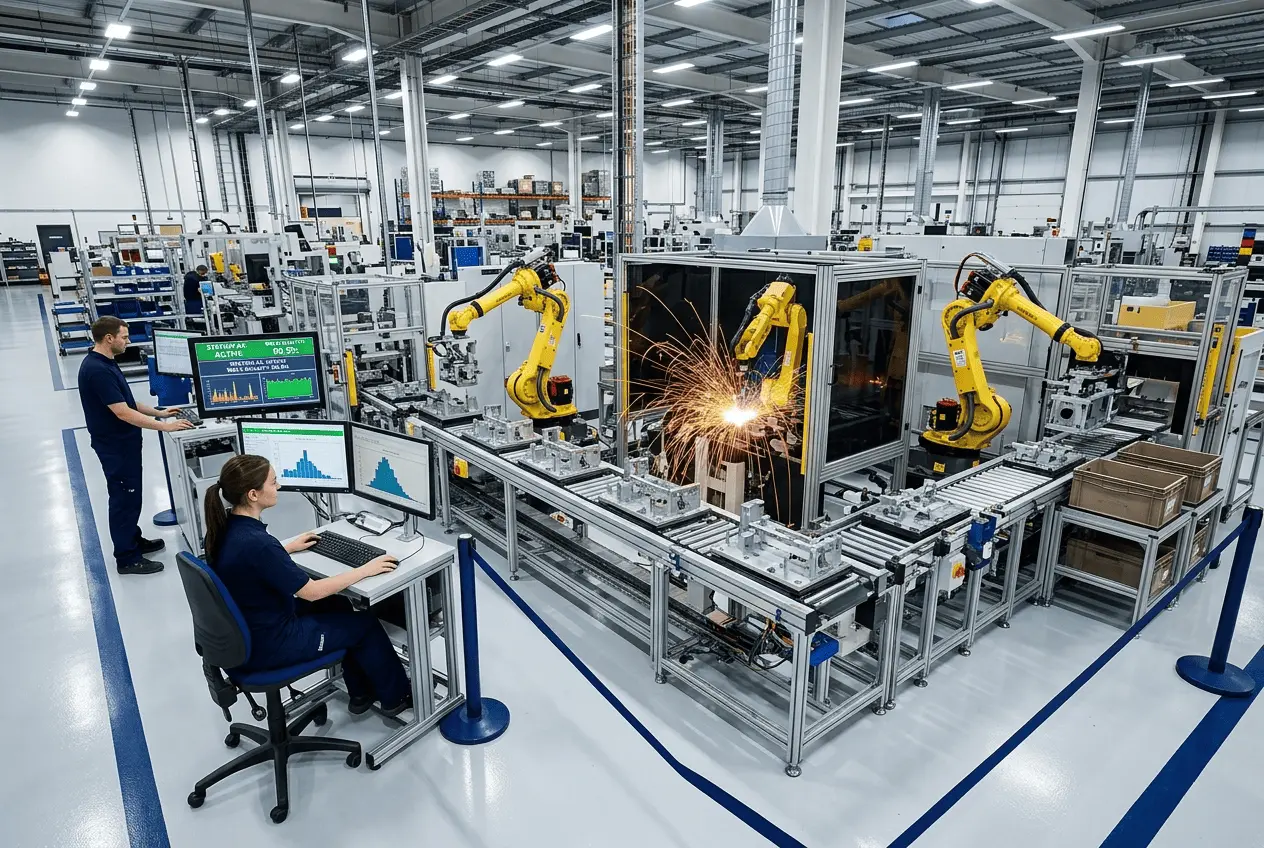
The primary benefits of contract manufacturing are reduced capital expenditure, access to specialized expertise, faster time-to-market, scalability, and the freedom to focus internal resources on core competencies like R&D, sales, and marketing.
Capital Efficiency
Building a manufacturing facility from scratch requires millions of dollars in equipment, real estate, and workforce investment. Contract manufacturing converts that massive fixed cost into a variable, per-unit cost. An OEM can bring a product to market without purchasing CNC machining centres ($150,000–$500,000+ each), die-casting machines ($200,000–$2,000,000+), or injection-molding presses. For context on machining capital costs, see our CNC machine costs guide.
Access to Specialized Expertise and Equipment
A vertically integrated contract manufacturer like Meco operates 40+ processes — die casting, gravity casting, investment casting, hot and cold forging, 5-axis CNC machining, progressive die stamping, metal injection molding (MIM), powder metallurgy, and full PCBA assembly — under one quality system. No single OEM could economically build and maintain this breadth in-house. The CM brings deep process knowledge, optimised tooling strategies, and material expertise across aluminum, steel, stainless steel, brass, bronze, copper, titanium, magnesium, zinc, and 15+ engineering plastics.
Scalability
Contract manufacturing enables production volumes that flex with demand. Meco scales from 10 prototype pieces to 10 million+ production units without requiring the OEM to invest in additional equipment or hire and train operators. This elasticity is critical for seasonal products, new product launches with uncertain demand, and companies experiencing rapid growth.
Faster Time-to-Market
Because the manufacturing infrastructure already exists, an OEM can move from approved prototype to volume production in weeks rather than the months or years it would take to build internal capability. Prototype parts in 1–2 weeks and tooling in 3–6 weeks means a new product can be in customers' hands in as little as 8 weeks from design freeze.
Quality and Consistency
Established contract manufacturers operate formal quality management systems. Meco's IATF 16949:2016 certification — the automotive industry's most rigorous quality standard, which incorporates all ISO 9001:2015 requirements — applies across all industries served. Quality processes include APQP, PPAP, SPC, PFMEA, and FAIR, supported by CMM inspection accurate to ±0.002 mm and NDT methods including ultrasonic, dye penetrant, and X-ray testing. The result: a 99.99% quality rate and 99.8% on-time delivery across millions of parts produced annually.
Focus on Core Competencies
By offloading production to a CM, the OEM's engineering team can concentrate on product innovation, its sales team on market expansion, and its leadership on strategic growth — rather than managing factory operations, maintenance schedules, and production workforce logistics.
Looking for a contract manufacturing partner that covers 40+ processes under one roof?
Request a Quote from Meco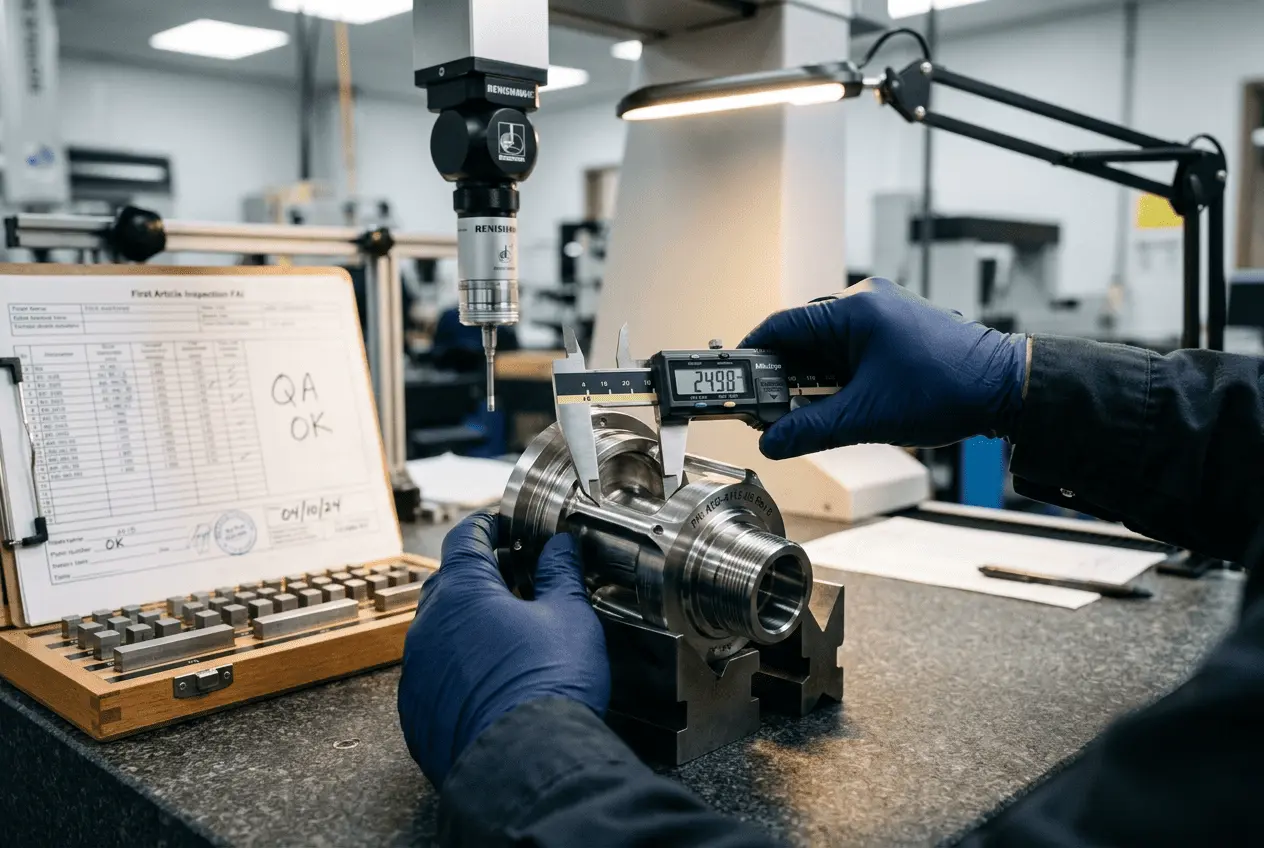
What Are the Risks of Contract Manufacturing (and How to Mitigate Them)?
The most common risks of contract manufacturing are reduced direct control over production, intellectual property exposure, quality inconsistency, communication barriers, supply-chain disruptions, and hidden costs. Each risk has a proven mitigation strategy — and the severity of each depends heavily on which contract manufacturer you choose.
Reduced Control Over Production
When production happens in someone else's facility, you can't walk the factory floor daily. Mitigation: choose a CM with a certified QMS (IATF 16949 is the gold standard), insist on real-time reporting and in-process inspection data, conduct periodic facility audits, and start with a pilot build to validate processes before committing to volume.
Intellectual Property Exposure
Sharing product designs and proprietary processes with a third party creates IP risk. Mitigation: execute comprehensive NDAs before sharing any technical data, ensure the MSA explicitly assigns tooling and design ownership to the OEM, and work with contract manufacturers in jurisdictions with enforceable IP protections. Meco's MSAs include standard IP ownership, tooling ownership, and confidentiality provisions as baseline terms.
Quality Inconsistency
If the CM lacks robust quality processes, batch-to-batch variation can erode product reliability. Mitigation: require PPAP submission before first production, mandate FAI on every new tool or process change, establish statistical process control (SPC) charts for critical dimensions, and request CMM inspection data with every shipment. A CM with IATF 16949 certification has these processes built into its operating system.
Communication and Cultural Barriers
Offshore contract manufacturers may introduce language differences, time-zone misalignment, and cultural communication styles that lead to misunderstandings. Mitigation: choose a CM with local project management support. Meco, for example, is headquartered in Richmond Hill, Ontario, with U.S. engineering resources — meaning North American OEMs communicate with a local team that coordinates with production facilities in Thailand and China.
Supply-Chain Disruption
Over-reliance on a single manufacturing region creates vulnerability to natural disasters, geopolitical tensions, tariff changes, and logistics disruptions. Mitigation: work with a CM that maintains diversified sourcing, safety stock programs, and multi-region warehousing. Meco's supply chain management includes distribution centres across the U.S., Canada, Japan, and Thailand, with JIT/VMI programs and forecast buffering.
Hidden Costs
Opaque pricing structures can conceal margin stacking in tooling, engineering changes, logistics, compliance, and first-article inspection fees. Mitigation: demand itemised quotes that break down every cost component. The next section provides a detailed breakdown of what a transparent contract manufacturing cost structure looks like.
Contract Manufacturing Cost Breakdown: What You're Actually Paying For
Contract manufacturing pricing is not a single number — it's a stack of cost components that together determine your landed unit cost. Understanding the structure helps you identify where the biggest savings opportunities lie and avoid surprises. Here is a representative breakdown for a hypothetical die-cast aluminum automotive housing produced at a volume of 50,000 units per year:
| Cost Component | Description | % of Unit Cost |
|---|---|---|
| Raw Material (BOM) | ADC12 aluminum alloy, per-unit material weight × market price. Subject to commodity price fluctuation clauses in the MSA. | 30–40% |
| Tooling Amortisation | Die-casting die cost ($15,000–$60,000 depending on complexity and cavitation) amortised over the expected tool life (typically 100,000–500,000 shots). | 5–15% |
| Direct Labour | Machine operators, assembly technicians, QC inspectors. Varies significantly by region (Thailand/China vs. U.S./EU). | 10–20% |
| CNC Machining (Secondary Ops) | Post-casting machining of critical features, holes, threads. See our CNC machining cost guide for detailed per-part pricing factors. | 10–15% |
| Surface Finishing | Powder coating, anodizing, plating, or painting — depending on corrosion, aesthetic, and functional requirements. | 5–10% |
| Quality & Compliance | FAI, PPAP documentation, CMM inspection, SPC reporting, traceability systems. Higher for automotive (IATF 16949) and aerospace programs. | 3–5% |
| Packaging & Labeling | Custom packaging, labeling, kitting, and palletisation per OEM specifications. | 2–4% |
| Logistics & Freight | Ocean/air freight, customs duties, brokerage, last-mile delivery. Landed cost invoicing simplifies this into a single line item. | 5–10% |
| CM Overhead & Margin | Factory overhead (utilities, maintenance, depreciation) plus the CM's operating margin. | 8–12% |
The single biggest lever OEMs have over this cost structure is DFM. A DFM review that reduces wall thickness by 0.5 mm, eliminates one secondary machining operation, or consolidates two parts into one can compound into 15–30% total cost reduction — and that saving recurs on every single unit produced. This is why experienced contract manufacturers invest heavily in front-end engineering and why choosing a CM that treats DFM as a checkbox rather than a value-add is a costly mistake.
Contract Manufacturing Examples by Industry
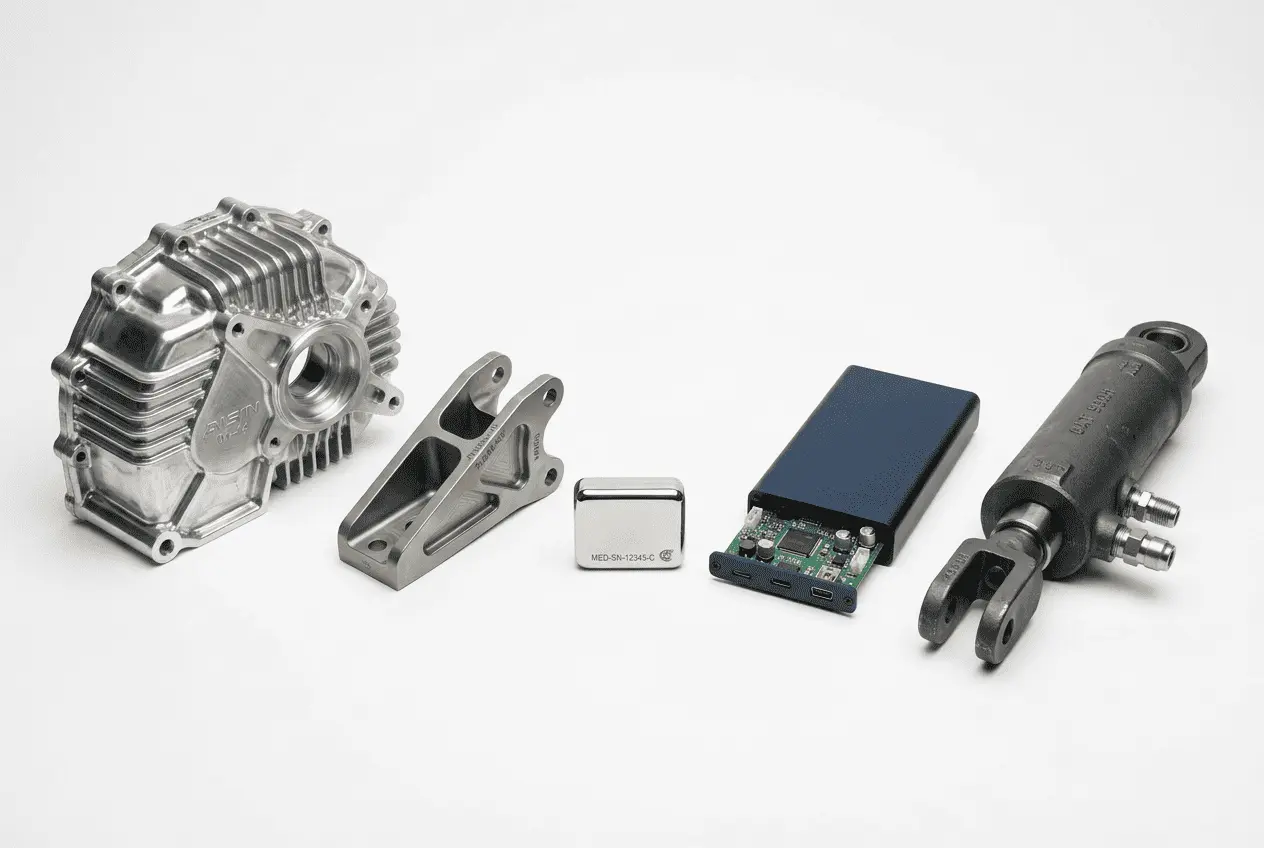
Contract manufacturing serves virtually every industry where production can be separated from design and distribution. Here are examples across the sectors where the model creates the most value — and where Meco delivers production programs every day.
Automotive
Contract manufacturing is foundational in automotive production. OEMs outsource die-cast powertrain housings, forged suspension components, stamped body-in-white panels, CNC-machined drivetrain parts, and fully assembled electromechanical modules. IATF 16949 certification is typically a non-negotiable requirement. Meco produces aluminum die-cast housings to tolerances of ±0.01 mm with Ra 0.4 μm surface finishes for Tier 1 automotive suppliers.
Aerospace
Aerospace contract manufacturing demands extreme precision, full material traceability, and rigorous inspection. Typical outsourced components include CNC-machined structural brackets in titanium and aluminum, investment-cast turbine components, and NDT-inspected safety-critical parts. Meco's aerospace programs leverage multi-axis CNC machining, CMM inspection, SPC, and ultrasonic/X-ray NDT to meet mission-critical quality requirements.
Medical Devices
Medical equipment manufacturing requires precision-machined surgical instruments, die-cast device housings, injection-molded enclosures, and clean-room sub-assemblies with complete lot traceability and documentation. Regulatory compliance (FDA, CE) and rigorous quality documentation are essential.
Consumer Electronics
Custom electronics manufacturing involves CNC-machined aluminum enclosures, die-cast thermal housings, injection-molded plastic components, PCBA, and full box-build assembly with functional testing. Speed and design iteration are critical — product lifecycles in consumer electronics can be as short as 12–18 months.
Heavy Equipment
Heavy equipment manufacturing relies on forged shafts and gears, welded structural frames, machined hydraulic manifolds, and large-scale fabricated assemblies for construction, agriculture, and energy applications. Tolerances to ±0.005 mm and materials including alloy steels (4140, 4340) and bronze bearings are typical requirements.
Meco serves 10+ industries with 40+ manufacturing processes. See how we can support your program.
Discuss Your Project with Meco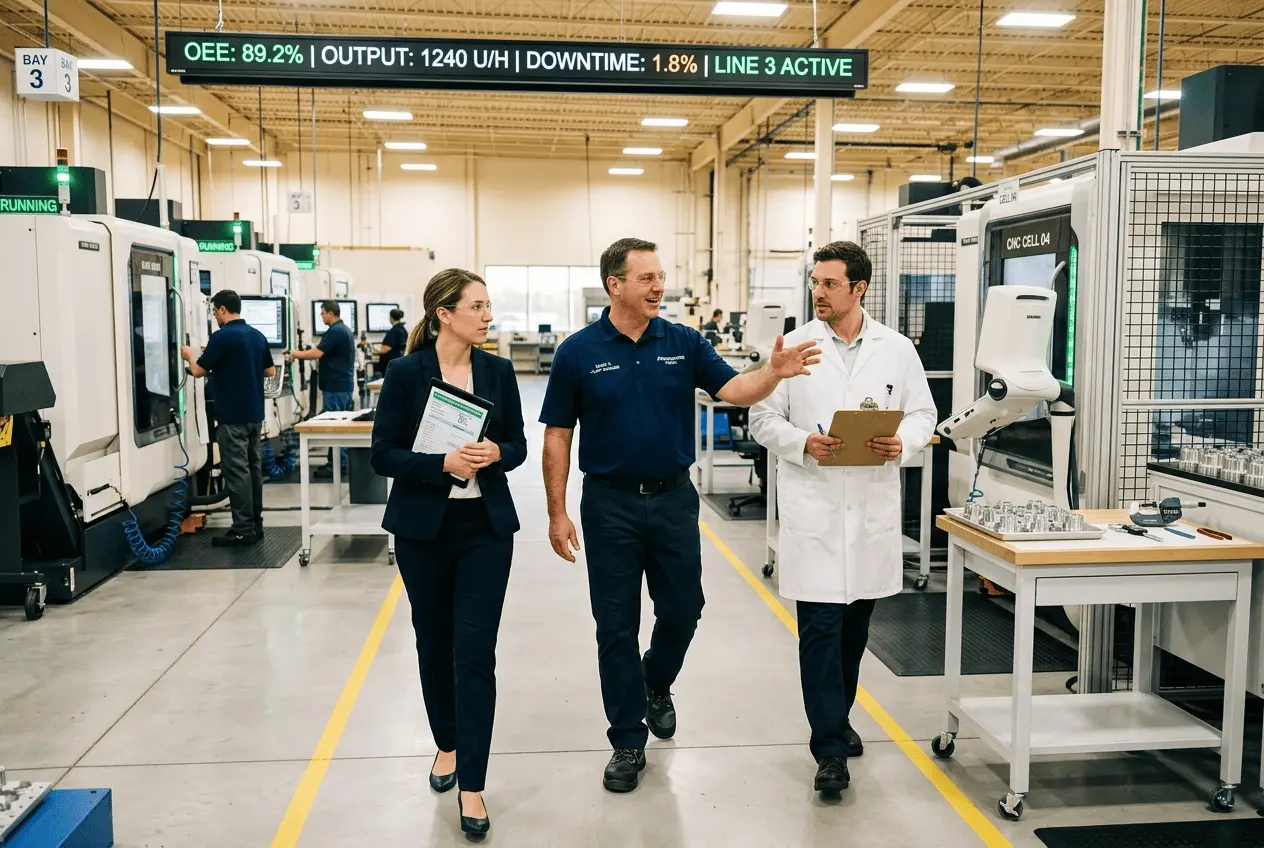
How to Choose the Right Contract Manufacturing Partner
Selecting a contract manufacturer is one of the most consequential sourcing decisions an OEM makes — it directly determines product quality, cost, lead time, and supply-chain resilience. Here is a practical evaluation framework based on what matters most in real production programs. For a deeper discussion, see our guide on how to find a manufacturer for your product.
Process Breadth and Technical Capability
Can the CM handle all the processes your product requires — or will you need to coordinate multiple vendors? A manufacturer with casting, machining, forging, stamping, molding, welding, finishing, assembly, and PCBA under one quality system eliminates finger-pointing, reduces lead times, and simplifies your supply chain. Meco's 40+ processes mean a multi-material, multi-process product can be sourced from a single partner.
Quality Certifications
Certifications are the objective verification of a CM's quality system. IATF 16949 (automotive), AS9100 (aerospace), ISO 13485 (medical), and ITAR (defence) each serve specific industry requirements. Ensure the CM holds the certification your industry demands — not just claims alignment. Ask to see the certificate, the registrar, and the most recent audit results.
Communication Responsiveness
The speed and quality of a CM's communication during the quoting phase is a reliable predictor of how they'll perform during production. If it takes a week to get a quote response or DFM feedback, expect similar delays when production issues arise. Meco's under-24-hour quote response is a deliberate operational commitment, not a marketing claim.
Supply-Chain Strength and Scalability
Can the CM scale from prototype quantities to mass production without changing partners? Do they have raw-material sourcing relationships, warehousing infrastructure, and logistics capabilities to deliver consistently? Ask about safety stock programs, multi-region sourcing, and demand-buffering strategies.
Start with a Pilot Build
Never commit to full production volume with a new contract manufacturer without first running a pilot build. A 50–500 unit pilot validates the CM's process capability, quality systems, communication cadence, and delivery reliability. It's a small investment that prevents expensive mistakes at scale.
Reshoring vs. Offshoring: A 2026 Decision Framework
The reshoring wave is real — over $3 trillion in reshoring-related investments have been announced since early 2025 — but offshoring still makes economic sense for many products and volumes. The right answer depends on your specific variables. This framework helps structure the decision.
| Factor | Favours Reshoring (Domestic) | Favours Nearshoring (Mexico, etc.) | Favours Offshoring (Asia) |
|---|---|---|---|
| Unit Volume | Low-to-mid volume; high mix | Mid volume; moderate mix | High volume; low mix |
| Labour Intensity | Low (automated processes) | Moderate | High (manual assembly, finishing) |
| Lead Time Sensitivity | Critical (days–weeks) | Important (2–4 weeks) | Flexible (6–12 weeks acceptable) |
| Tariff Exposure | High tariff product categories | USMCA-eligible products | Low-tariff categories; stable trade agreements |
| IP Sensitivity | Highest (defence, proprietary tech) | Moderate | Standard (with proper NDAs and contracts) |
| Process Complexity | Simple; few processes | Moderate integration | Complex; multi-process; vertically integrated CMs available |
| Total Landed Cost | Competitive for low-labour products | Balances cost and proximity | Lowest for labour-intensive, high-volume runs |
The key insight for 2026 is that this is not a binary decision. Many OEMs are adopting dual-sourcing strategies — maintaining production relationships in Asia for high-volume, cost-sensitive products while developing nearshore or domestic capacity for quick-turn, high-mix, or tariff-sensitive programs. Meco's facilities in Thailand and China, combined with its North American headquarters and U.S./Canadian distribution centres, are designed precisely for this hybrid approach.
According to Deloitte's 2026 Manufacturing Industry Outlook, manufacturers are continuing to invest in smart manufacturing technologies to boost competitiveness, agility, and resilience — and contract manufacturing partners that combine global production with local support are best positioned to serve this evolving need.
Contract Manufacturing Trends Reshaping the Industry in 2026
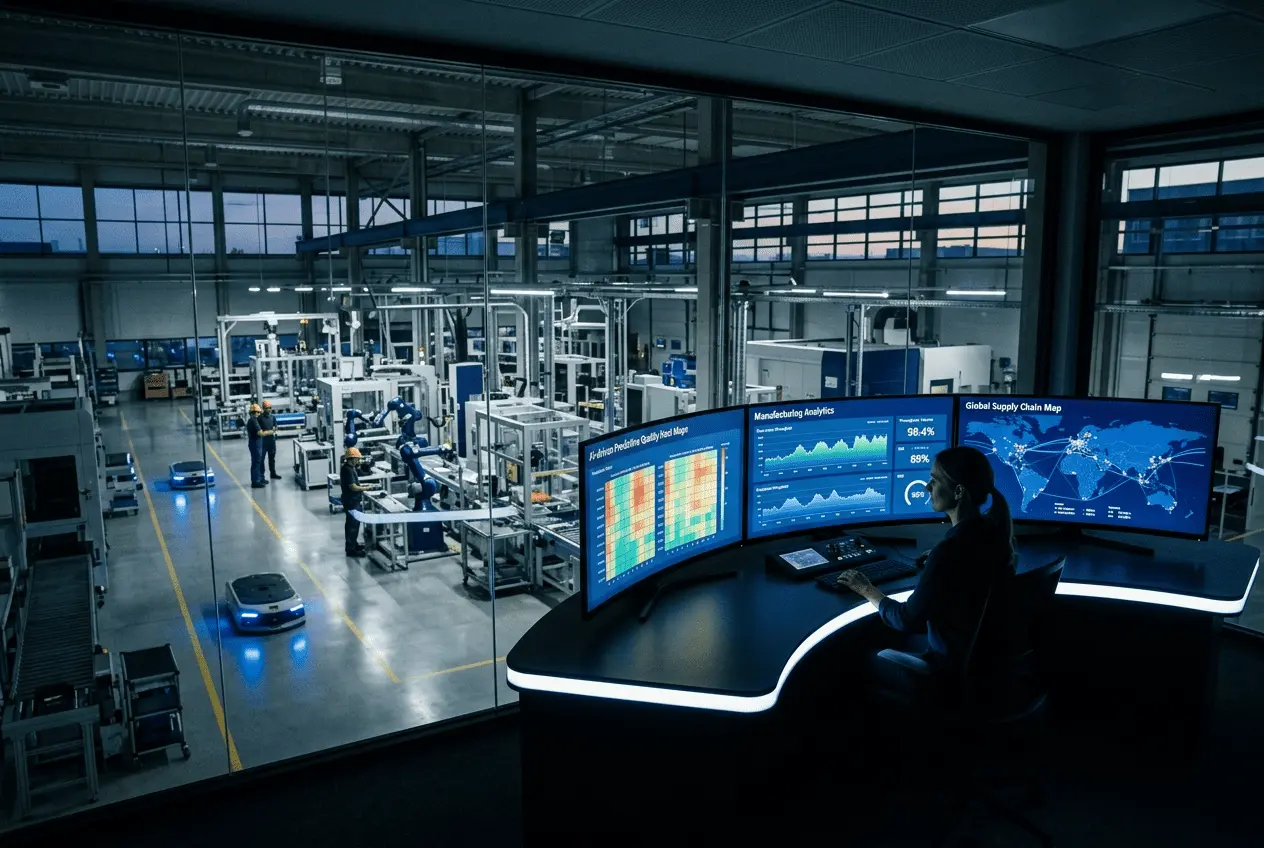
Four major trends are reshaping how contract manufacturing operates in 2026, and each creates both opportunities and risks for OEMs making sourcing decisions.
Tariff-Driven Reshoring and Supply-Chain Diversification
The 2026 tariff environment is accelerating the shift toward regionalized production. However, as analysis from CUNY's journalism programme notes, mass reshoring remains a distant reality for many categories. The practical response for most OEMs is not full reshoring but supply-chain diversification — maintaining production in cost-effective regions while adding nearshore or domestic alternatives for flexibility. The U.S. contract manufacturing services market, valued at $265.78 billion in 2026, is growing at 7.12% CAGR.
AI-Powered Quality Inspection and Predictive Maintenance
Contract manufacturers are deploying computer vision systems for inline defect detection that catch quality issues in real-time, before they propagate through a production run. Simultaneously, AI-driven predictive maintenance systems monitor machine vibration, temperature, and tool wear to schedule maintenance before failures cause unplanned downtime. The predictive maintenance market in manufacturing is projected to grow from $15.5 billion in 2026 to $66.5 billion by 2035. For OEMs, asking "how does your facility use AI for quality and maintenance?" is becoming a standard part of CM evaluation.
The Rise of Vertically Integrated Turnkey Partners
The pandemic exposed the fragility of distributed supply chains — where an OEM coordinates a casting supplier, a machining vendor, a finisher, an assembler, and a logistics provider as separate entities. The 2026 trend is toward vertically integrated contract manufacturers that own the entire process chain under one quality system. This reduces coordination overhead, eliminates inter-vendor finger-pointing, and provides a single point of accountability. It's the operating model Meco was built on over 30 years ago, and it's now being validated by the market at scale.
Digital Twin and Industry 4.0 Integration
Advanced contract manufacturers are using digital twin technology — virtual replicas of physical production systems — to simulate manufacturing processes before committing to production. Meco's R&D engineering team uses moldflow simulation, finite element analysis (FEA), and digital twin modeling to optimise tooling designs, predict potential defects, and reduce prototype iterations. This front-end digital investment compresses development timelines and reduces the cost of getting a product right the first time.
The Market in Numbers
The global contract manufacturing market was estimated at $780 billion in 2025 and is projected to reach $1.26 trillion by 2032 at a CAGR of 7.05% (360iResearch). The U.S. market alone is worth $265.78 billion in 2026, growing at 7.12% CAGR (Mordor Intelligence). North America is projected to grow at a 14.3% CAGR through 2033. The pharmaceutical CM segment is valued at $209.90 billion (2025), reaching $311.95 billion by 2030 (MarketsandMarkets).
The Bottom Line
Contract manufacturing is not simply "outsourcing production." It is a strategic partnership that, when executed well, transforms how companies bring products to market — faster, at lower cost, with higher quality, and with the flexibility to scale as demand evolves. The model is growing across every industry because it aligns manufacturing capability with business reality: most companies are better at designing and selling products than they are at running factories.
The key word in that sentence is "when executed well." The benefits of contract manufacturing are real, but they are not automatic. They depend on choosing the right partner — one with the process breadth, quality systems, engineering depth, communication discipline, and supply-chain infrastructure to deliver consistently. A contract manufacturer that treats your product as their own, that invests in DFM before quoting, and that provides full traceability and accountability from first sketch to final delivery — that's the partner that turns contract manufacturing from a cost-saving exercise into a competitive advantage.
If you're evaluating contract manufacturing for the first time, start small. Run a pilot build. Validate quality, communication, and delivery before committing to volume. And if you want to understand the full scope of what occurs in contract manufacturing at an operational level, we've covered that in depth separately.
Frequently Asked Questions About Contract Manufacturing
What is contract manufacturing?
Contract manufacturing is a business arrangement in which a company (the OEM) outsources the production of parts, components, or complete products to a third-party manufacturer. The hiring company retains ownership of the design and intellectual property while the contract manufacturer provides the facilities, labour, equipment, and processes needed to produce the goods. The relationship is governed by a Manufacturing Services Agreement (MSA) that defines quality standards, pricing, delivery, and IP protections.
What is the difference between a contract manufacturer and an OEM?
An OEM (Original Equipment Manufacturer) designs, brands, and sells the product but may outsource production. A contract manufacturer (CM) is the third-party company that physically produces the product according to the OEM's specifications. The OEM owns the intellectual property and brand; the CM owns the production capability. An ODM (Original Design Manufacturer) is a third model where the manufacturer also designs the product for the client to rebrand.
What industries use contract manufacturing?
Contract manufacturing is used across automotive, aerospace, medical devices, consumer electronics, heavy equipment, telecommunications, pharmaceuticals, food and beverage, personal care, home appliances, lighting, office furniture, and defence. Any industry where production can be separated from design and sales benefits from the model. The automotive and electronics sectors are the largest users by volume.
What should be included in a contract manufacturing agreement?
A contract manufacturing agreement (MSA) should include product specifications and quality standards, intellectual property ownership and confidentiality provisions, itemised pricing and payment terms, delivery schedules and lead-time commitments, tooling ownership, termination triggers and notice periods, force majeure clauses, indemnification and liability caps, and quality documentation requirements (FAI, PPAP, COA). The agreement should be reviewed by legal counsel experienced in manufacturing contracts.
What are the main benefits of contract manufacturing?
Key benefits include reduced capital expenditure (no need to build or equip a factory), access to specialised manufacturing expertise and advanced equipment, scalability from prototype to mass production, faster time-to-market, economies of scale that lower per-unit costs, and the freedom to concentrate internal resources on core competencies such as R&D, sales, and marketing. A DFM review alone can cut production costs by 15–30%.
What are the risks of contract manufacturing?
Common risks include reduced direct control over production, potential intellectual-property exposure, quality inconsistency if the CM lacks a certified QMS, communication barriers (especially offshore), supply-chain disruptions, capacity constraints, and hidden costs in logistics, compliance, or engineering changes. Each risk can be mitigated through proper partner selection, strong contracts, certified quality systems, and starting with a pilot build.
How much does contract manufacturing cost?
Contract manufacturing costs depend on material (BOM), tooling amortisation, direct labour, secondary operations (machining, finishing), quality and compliance requirements, packaging, and logistics. Raw material typically represents 30–40% of unit cost, with tooling at 5–15%, labour at 10–20%, and logistics at 5–10%. Request itemised quotes that break down each component, and leverage DFM to reduce total landed cost.
What is the difference between contract manufacturing and private label manufacturing?
In contract manufacturing, the hiring company provides its own product design and specifications, and the CM builds to those exact requirements. In private label manufacturing, the manufacturer produces a standard product that the hiring company sells under its own brand — the manufacturer owns the design. Contract manufacturing offers full design control; private label offers speed to market with less upfront product development.
How do I choose the right contract manufacturing partner?
Evaluate process breadth and technical capabilities, quality certifications (IATF 16949, ISO 9001, AS9100, ISO 13485 depending on your industry), communication responsiveness, supply-chain strength, scalability range, financial stability, and cultural fit. Request facility audits, review FAI reports, and always begin with a pilot build to validate performance before committing to full production. A CM that provides DFM feedback during the quoting phase demonstrates engineering depth.
What is turnkey manufacturing?
Turnkey manufacturing is the most comprehensive form of contract manufacturing. The manufacturer manages the entire product lifecycle — from R&D and design-for-manufacturability (DFM) through material sourcing, multi-process production, quality inspection, assembly, surface finishing, packaging, and global logistics. The OEM receives a finished, tested, packaged product ready for sale. The term "turnkey" means the client simply "turns the key" and the product is ready.
Partner with Meco — Your Turnkey Manufacturing Partner
At Meco, we don't just make parts — we deliver complete products. With over 30 years of experience, IATF 16949:2016 certification, and vertically integrated facilities in Thailand and China, we provide true end-to-end manufacturing from concept to global delivery.
- 40+ manufacturing processes under one quality system: die casting, CNC machining, forging, stamping, injection molding, electromechanical assembly, and more
- 99.8% on-time delivery and 99.99% quality rate across millions of parts annually
- Scalability from 10 pieces to 10 million+ — no prohibitive minimum order quantities
- DFM engineering that cuts production costs 15–30% before tooling begins
- North American headquarters (Richmond Hill, Ontario) with U.S. engineering support — local communication, global production
- Global supply chain management with JIT/VMI programs and warehousing across North America and Asia
Whether you need a single precision component or a fully assembled, packaged product shipped directly to your customer, Meco provides one point of accountability — from first sketch to final delivery. Send us your 2D/3D files and requirements, and get a quote in under 24 hours.
Get a Free Quote from Meco