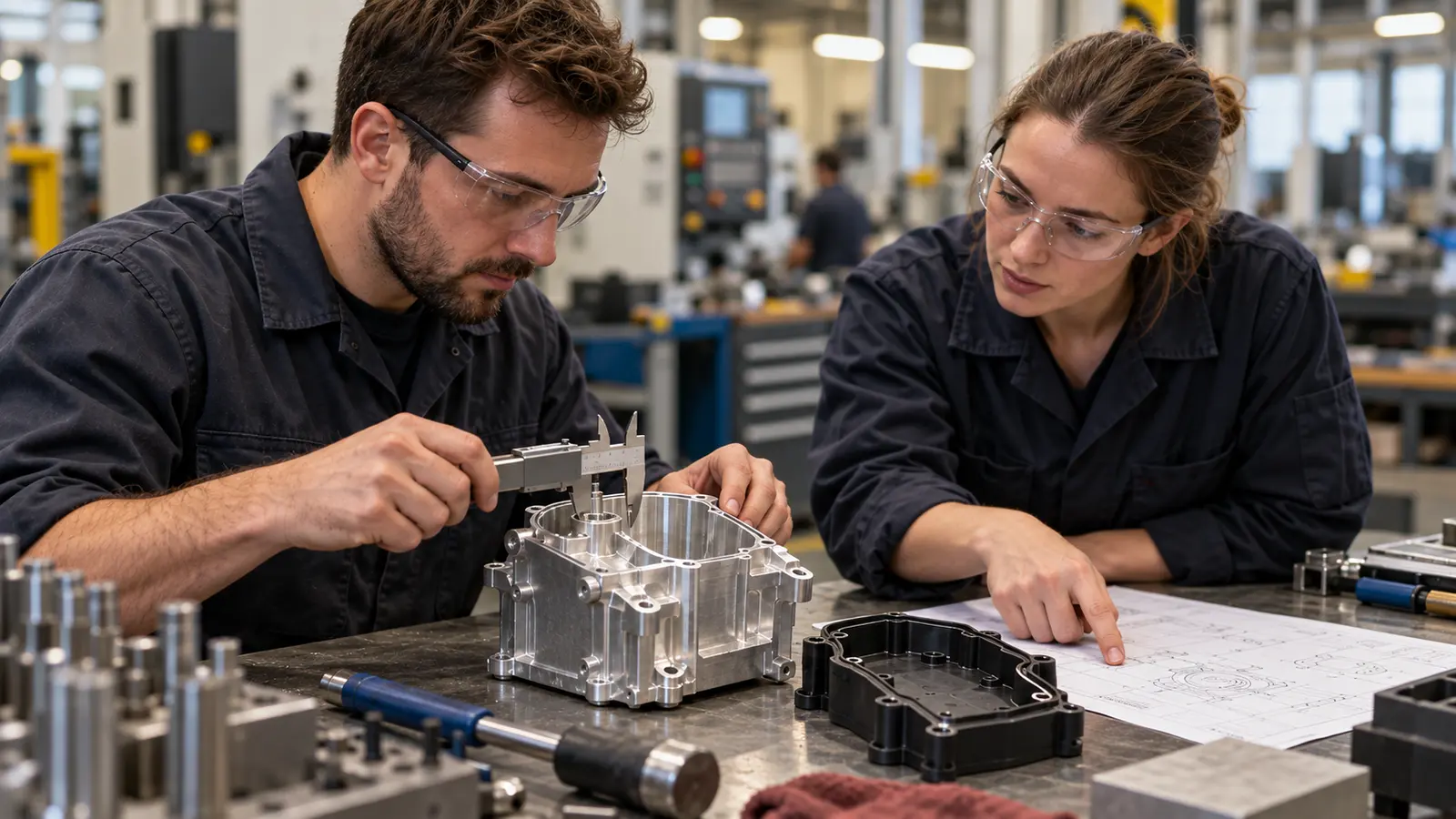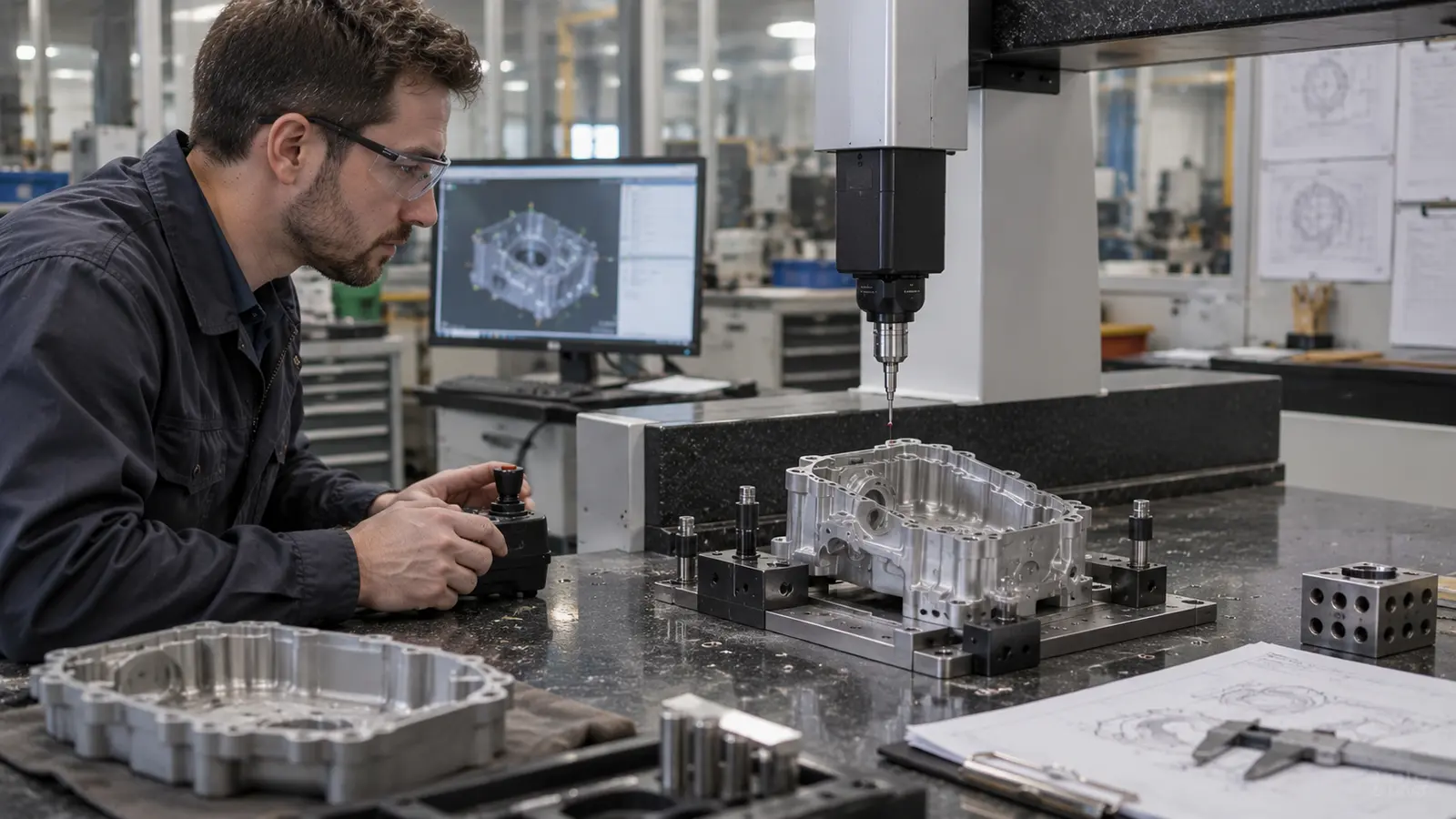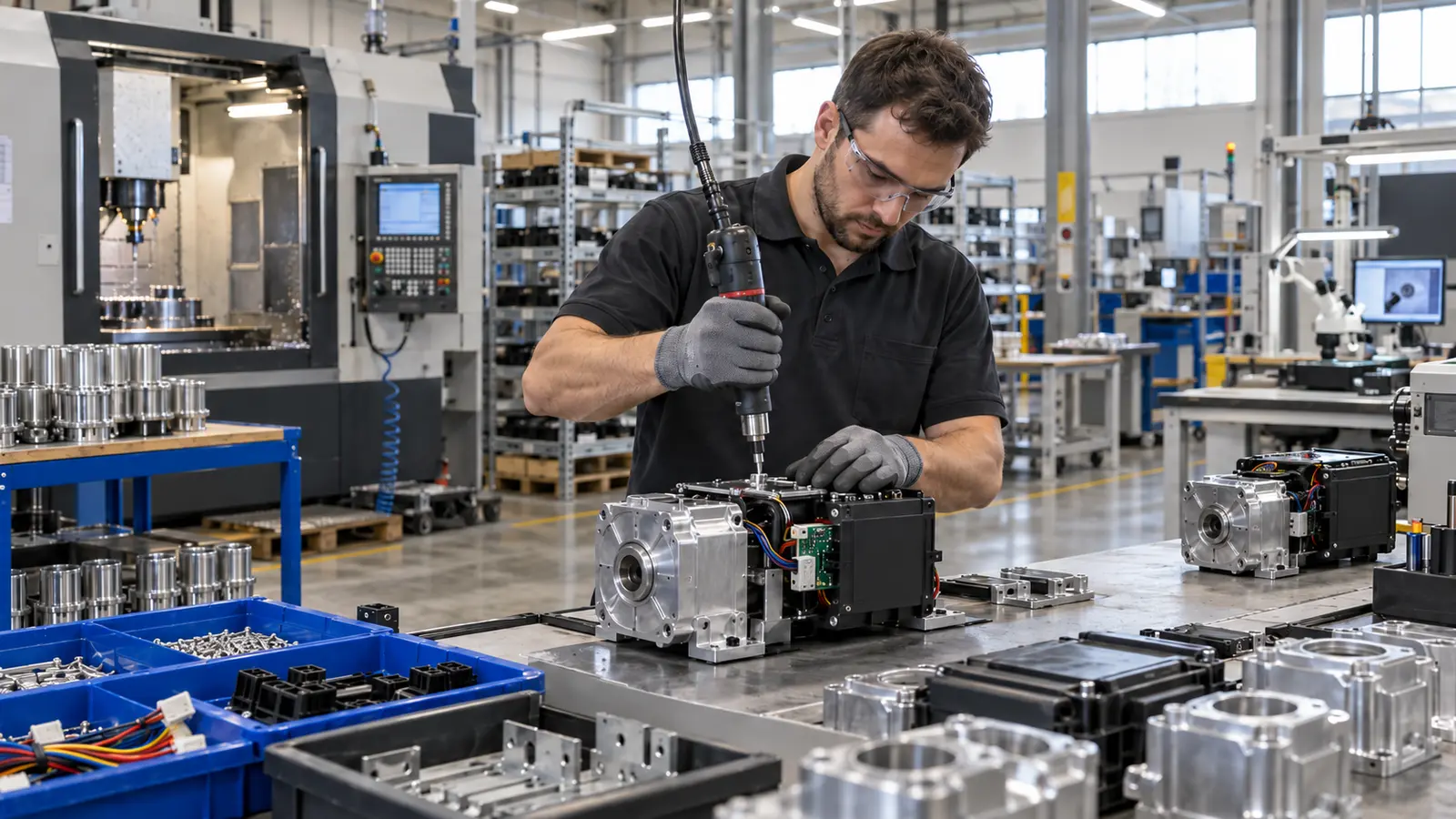
Key Takeaways (Quick Summary)
Contract manufacturing remains essential in 2025 because it allows companies to scale faster, reduce risk, and access advanced capabilities without owning a factory. Here’s what matters most:
- Contract manufacturing transforms product designs into finished goods using specialized equipment, skilled labor, and strict process control.
- A contract manufacturer acts as an extension of your operations—handling sourcing, assembly, testing, compliance, and delivery.
- Companies use contract manufacturers to lower capital costs, increase speed to market, and gain access to advanced engineering and supply chain expertise.
- Manufacturing contracts define quality criteria, responsibilities, IP protection, timelines, and change‑control processes to ensure predictable outcomes.
- Real‑world examples range from electronics assembly to pharmaceutical production, medical devices, consumer goods, and defense components.
- In a complex global market, contract manufacturing delivers scalability, resilience, and competitive advantage that internal production often can’t match.
Start Your Manufacturing Project → Speak With an Engineer
What Occurs in Contract Manufacturing
If you’re reading this, there’s a good chance you’re standing at a crossroads many businesses reach—whether you’re scaling rapidly, entering new markets, or simply trying to produce smarter, not harder. And somewhere along the way, you typed a very important question into Google:
“What occurs in contract manufacturing?”
Contract manufacturing is the process of hiring a specialized manufacturer to produce your product using your designs, specifications, and brand requirements. In simple terms, you own the idea — they build it.
This model has become one of the most important growth levers for modern companies. It gives brands access to advanced equipment, skilled labor, quality systems, and global supply chain strength without needing to invest millions in their own factory.
Think of contract manufacturing as a partnership where innovation stays with you, and production is handled by experts who build products all day, every day. The best partners bring engineering support, process control, compliance, and scalability that would be nearly impossible for most companies to achieve in‑house.
Companies across electronics, medical devices, pharmaceuticals, aerospace, consumer goods, and industrial equipment rely on contract manufacturing because it delivers faster launches, lower risk, and repeatable, audit‑ready quality.
In short:
Contract manufacturing turns your design into a reliable, scalable, market‑ready product — while letting your team stay focused on what they do best.
What Is Contract Manufacturing?
Let’s cut through the jargon and start with the simplest explanation:
Short Definition
Contract manufacturing is when a company hires a third‑party factory (a contract manufacturer) to produce goods on its behalf.
Formal Definition
Contract manufacturing is a structured business arrangement where a company outsources the production of components, assemblies, or full products to a specialized manufacturer, operating under a legally binding contract that defines responsibilities, quality standards, specifications, timelines, and compliance obligations.
A contract manufacturer (CM) becomes an extension of your operation—handling the production, engineering, sourcing, assembly, testing, packaging, and sometimes even logistics.
To define contract manufacturer clearly:
It is a third‑party company with dedicated equipment, labor, certifications, and production capabilities that manufactures goods according to your exact specifications.
This is the heart of modern production.
What Occurs in Contract Manufacturing?
If you’ve ever wondered what actually happens inside a contract manufacturing partnership—the real day‑to‑day process, the invisible checkpoints, the hundreds of decisions that shape the quality of your final product—this is the section you’ve been waiting for.
Because contract manufacturing isn’t just “sending a design and getting parts back.”
It’s a tightly choreographed collaboration, combining engineering intelligence, supply chain planning, production discipline, and quality assurance.
When done right, it feels seamless.
When done poorly, it becomes painfully expensive.
Below is the complete, end‑to‑end contract manufacturing process—explained in plain language, backed by industry expertise, and structured to outperform anything currently ranking on Google.
Step‑by‑Step Contract Manufacturing Workflow
This workflow applies across industries from electronics to medical devices to automotive, aerospace, industrial equipment, consumer goods, and more.
Every stage connects to the next, creating a predictable path from concept to finished product.
1. Initial Consultation & Scoping
This is the moment where ideas meet reality.
You and the contract manufacturer explore:
- The product vision
- Technical needs
- Compliance requirements
- Projected volumes
- Timelines
- Budget expectations
- Supply chain constraints
This stage sets the tone for everything that follows.
It’s also where you begin evaluating whether the manufacturer has the engineering capability, certifications, capacity, and experience to meet your needs.
This is where service contract manufacturing begins—alignment.
2. Manufacturing Contract Negotiation
Here, the legal and operational foundation is laid.
A manufacturing contract (sometimes called a contract manufacturing contract) defines:
- Pricing structure
- Quality standards
- Acceptance criteria
- Intellectual property rights
- Tooling ownership
- Warranty terms
- Confidentiality & data handling
- Liability responsibility
- Production schedules
- Supply chain responsibilities
- Penalties for non‑performance
This is where you protect the integrity of your product, your brand, and your business.
It also establishes the framework for manufacturing contract labor, material sourcing responsibilities, and long‑term partnership expectations.
3. Product Design & Engineering Collaboration
Once the contract is signed, engineers on both sides get to work.
This stage involves:
- Design for manufacturability (DFM)
- Tolerance analysis
- Material selection
- Cost reduction engineering
- Risk assessments
- Production feasibility checks
A strong contract manufacturer helps optimize your design, reduce risk, and prevent costly errors later.
This is the stage where the DNA of contract production is set.
4. Prototyping & Iteration
Before mass production, you need proof.
This involves:
- Sample creation
- Functional testing
- Stress analysis
- Cosmetic adjustment
- Assembly fit checks
- Pilot builds
Feedback flows both ways.
Iteration continues until the product is fully validated for mass production.
This step is the safety net that prevents failures downstream.
5. Material Sourcing & Procurement
Now comes one of the most critical and underestimated parts of the contract manufacturing process.
Your contract manufacturer sources:
- Raw materials
- Electronic components
- Mechanical parts
- Plastics & metals
- Packaging materials
The best manufacturers use vetted, approved suppliers with strong compliance histories.
Poor ones cut corners.
This stage determines:
- Product reliability
- Compliance
- Cost stability
- Lead times
This is also where contract manu (a shorthand variant often seen in ERP and manufacturing discussions) determines its supply chain strength.
6. Production Setup
Before the first unit is made, the factory must:
- Prepare tooling
- Validate molds & fixtures
- Program CNC machines
- Calibrate equipment
- Set up test stations
- Establish QC checkpoints
- Train operators
This is the difference between “we can produce your product” and “we can produce your product correctly.”
7. Contract Assembly Manufacturing
Manufacturing begins—this is the heart of the process.
Depending on your product, this stage can involve:
- Machining
- Molding
- Casting
- Forging
- SMT electronics assembly
- Wiring & harness fabrication
- Welding
- Painting
- Mechanical assembly
This is where assembly lines, robotics, and skilled operators bring your design to life with precision and repeatability.
8. Quality Control & Testing
Quality isn’t an afterthought—it’s woven into every step.
Your contract manufacturer performs:
- Incoming material inspection
- In‑process inspection
- Automated optical inspection (AOI)
- Functional testing
- Stress testing
- Final inspection
- Batch validation
This is where quality contract manufacturing proves its value.
The best CMs operate with ISO, FDA, IPC, or aerospace‑grade standards.
9. Packaging, Labeling & Compliance
Depending on your industry, packaging isn’t just marketing—it’s regulatory.
This stage includes:
- Compliant labeling
- Serialization or barcoding
- Tamper evidence
- Protective packaging
- Sustainability options
- Certification stickers
For pharmaceutical or medical products, this stage is heavily regulated.
10. Logistics, Shipping & Fulfillment
Your contract manufacturer prepares your products for delivery:
- Carton packing
- Palletization
- Export documentation
- Freight booking
- Customs compliance
- Regional distribution
Some manufacturers also offer:
- Warehousing
- Inventory management
- drop shipping
- Vendor‑managed inventory (VMI)
This is where service contract manufacturing goes beyond production.
11. After‑Market Support & Revision Cycles
The partnership doesn’t end at delivery.
A strong CM provides:
- Engineering updates
- Product improvements
- Warranty support
- Repairs
- Spare‑part production
- Lifecycle management
- Continuous improvement feedback
This ensures long‑term performance and supply chain stability.
Workflow Summary Table
| Stage | What Happens | Stakeholder Responsibilities |
|---|---|---|
| Consultation | Needs assessment, feasibility | Client + CM |
| Contract Negotiation | Legal & commercial terms | Client legal, CM legal |
| Engineering | DFM, optimization | Engineering teams |
| Prototyping | Sample builds, testing | Quality + engineering |
| Procurement | Material & component sourcing | CM supply chain |
| Production Setup | Tooling, programming | CM operations |
| Assembly | Manufacturing operations | Production teams |
| Testing | QC, compliance testing | QA teams |
| Packaging | Labeling, compliance | QC + packaging |
| Logistics | Transport, shipping | CM logistics |
| Support | Revisions, warranty | Client + CM |
Types of Contract Manufacturing
Contract manufacturing isn’t a single service it’s an entire ecosystem that looks different depending on the industry, regulatory environment, technology stack, and stage of the product lifecycle. To make smart manufacturing decisions and avoid costly detours you need a clear understanding of the major categories of contract manufacturing and how they actually operate inside modern supply chains. What follows isn’t just a set of definitions. It’s a practical look at how real companies rely on contract manufacturers every day to keep innovation moving, ensure compliance, and maintain stable, scalable production.
Electronics & PCB Assembly (EMS Providers)
✔ EMS partners build electronics using automated SMT, global sourcing, and IPC‑controlled quality systems.
Electronics is one of the fastest‑paced and most demanding manufacturing sectors, which is why both emerging startups and global brands depend heavily on Electronics Manufacturing Services (EMS) partners. These manufacturers manage PCB fabrication, SMT assembly, through‑hole work, firmware programming, in‑circuit and functional testing, and full box‑build assembly.
Typical clients include smart home companies, medical device developers, robotics firms, industrial controls manufacturers, and consumer electronics brands.
EMS providers deliver automated precision, global component sourcing, IPC‑driven quality processes, and the ability to scale rapidly. In many cases, they become a company’s primary engineering and DFM resource not just a production vendor.
Pharmaceutical Contract Manufacturing (CDMOs)
✔ CDMOs produce drugs under GMP and FDA frameworks where compliance and traceability are non‑negotiable.
Pharmaceutical manufacturing exists in a world where accuracy, sterility, and documentation directly impact patient safety. Contract Development and Manufacturing Organizations (CDMOs) provide drug formulation, tablet and capsule production, sterile fill‑finish, blister packaging, controlled‑environment processing, and analytical testing.
These operations run under strict GMP guidelines, FDA oversight, environmental controls, and full batch‑level traceability.
The model also includes chemical contract manufacturing such as API synthesis and advanced intermediates. Companies rely on pharma CMs because capital costs are enormous, regulatory hurdles are severe, and scalability and redundancy are essential. Few industries make the value of contract manufacturing clearer.
Automotive & Defense Manufacturing Partners
✔ Automotive and defense CMs deliver high‑precision, high‑documentation parts where failure is not an option.
Automotive and defense manufacturers operate under zero‑tolerance quality expectations.
Automotive contract manufacturing spans metal stamping, injection‑molded interiors, wiring harnesses, driveline components, and automated subassembly.
Defense contractors push requirements even further with ITAR compliance, CMMC‑certified cybersecurity, hardened supply chains, precision machining, avionics production, ruggedized electronics, and mission‑critical assemblies.
In these sectors, documentation, reliability, and traceability must be absolute failure simply isn’t an option.
Consumer Goods, Textiles & Co‑Manufacturing
✔ Co‑manufacturing helps consumer brands scale fast without investing in equipment or additional labor.
Consumer products often use a co‑manufacturing model where the brand handles design, formulation, or R&D, while the manufacturer runs production, filling, assembly, and packaging.
This structure is essential for textiles, footwear, personal care, food and beverage, household goods, and packaging‑heavy consumer products.
Co‑manufacturers enable fast scaling during seasonal spikes or new product launches and help brands avoid the cost of building additional capacity in‑house.
Heavy Industry & Industrial Contract Manufacturing
✔ Industrial CMs handle large‑scale fabrication, machining, welding, and integration for heavy machinery.
Industrial contract manufacturers support products that require high‑force processes, large‑scale fabrication, or complex mechanical assembly.
These firms build industrial machinery, HVAC systems, electrical panels, fabricated steel structures, hydraulic systems, and automation equipment.
They are chosen for their specialized competencies CNC machining, structural welding, powder coating, precision fabrication, and integrated mechanical or electrical systems.
This category forms the backbone of global infrastructure and industrial operations.
Key Benefits of Contract Manufacturing
When companies talk about why they outsource production, they often focus on cost. And yes—cost matters. But in 2025, the benefits of contract manufacturing run much deeper than simple savings.
To understand the real value, you have to shift your perspective:
Contract manufacturing isn’t just a service. It’s a strategic partnership that reshapes how a business grows, innovates, and competes.
Below, we explore each advantage with depth, industry context, and human insight—without relying heavily on bullet points.
Cost Savings & Capital Efficiency
Imagine walking into a factory filled with millions of dollars of automation equipment, robotics, conveyors, soldering lines, cleanrooms, CNC machines, test chambers, and packaging systems… and realizing you don’t have to pay for any of it.
That’s the power of contract manufacturing.
Instead of investing years of capital into:
- New production facilities
- Specialized equipment
- Manufacturing contract labor
- Tooling and automation
- Maintenance and overhead
…you gain immediate access to a partner who already has everything in place.
Think of it as stepping onto someone else’s production highway without needing to build the road yourself.
This is the single biggest reason companies outsource manufacturing.
But it’s also the most misunderstood.
It’s not cheap labor—it’s avoiding massive, unnecessary capital spend so you can redirect investment into R&D, innovation, product development, and market expansion.
Scalability & Flexible Production Capacity
One of the quiet truths about modern manufacturing is that demand never stays still.
Some months it spikes.
Other times it dips.
Occasionally, it surges beyond what you ever planned for.
When you own a factory, these fluctuations create chaos.
But with contracted manufacturing, scalability becomes an operating advantage.
A strong contract manufacturer adjusts capacity in multiple ways:
- Reallocating operators
- Shifting production lines
- Adjusting shift schedules
- Utilizing multi‑facility networks
- Leveraging automated systems to increase throughput
This flexibility helps brands avoid painful decisions, such as layoffs during slowdowns or unrealistic capex expansion during growth.
Scalability turns uncertainty into opportunity.
Expertise, Technology & Global Network Access
Contract manufacturers live and breathe production.
Their cultures are built on process control, engineering precision, and operational discipline.
When you partner with a contract manufacturer, you’re not just renting a facility you’re gaining the accumulated expertise of:
- Engineers
- Supply chain strategists
- Quality specialists
- Compliance officers
- Program managers
- Global sourcing experts
- Advanced technologists
These teams bring real-world, hands-on knowledge from thousands of past production runs across dozens of industries.
It’s the difference between learning the hard way… and learning from someone who’s already been through it.
This expertise extends across a global network, too.
Contract manufacturers tap into international supplier ecosystems to source:
- Electronics components
- Specialty metals
- Plastics
- Pharmaceuticals
- Chemicals
- Custom assemblies
This level of global access would be impossible or extremely costly for companies to achieve alone.
Faster Time to Market
Speed wins.
In a world of compressed product cycles, tight competition, and evolving customer expectations, time-to-market determines who leads and who follows.
Contract manufacturing accelerates product launches by:
- Cutting out factory build time
- Eliminating equipment procurement
- Reducing engineering delays
- Leveraging ready-to-run production lines
- Scaling rapidly once prototypes are finalized
Instead of spending 18–24 months setting up a production environment, companies can often begin manufacturing in a matter of weeks.
This advantage is enormous especially in electronics, medical devices, apparel, pharmaceuticals, and high‑growth consumer goods.
The companies that arrive first often dominate the market.
Contract manufacturing is how they get there.
Ability to Focus on Core Competencies
Every hour your team spends on manufacturing operations is an hour they’re not spending on what makes your business special.
Contract manufacturing frees up internal resources so your team can:
- Innovate
- Brand
- Design
- Market
- Grow your customer base
- Expand distribution
- Build community and loyalty
Your core strength might be product vision, chemistry, engineering, or design not managing production floors, machine operators, or compliance audits.
When a contract manufacturer handles production, you stay focused on the activities that drive your long-term success.
This is the heart of the advantages of contract manufacturing:
It gives companies the space to become excellent at what only they can do.
How to Evaluate the Contract Manufacturing Partner
Choosing a contract manufacturer isn’t like hiring a vendor.
It’s more like selecting the heartbeat of your supply chain.
To evaluate the contract manufacturing partner effectively, you need to look beyond price and lead time. The best manufacturers combine engineering maturity, process discipline, and a culture of quality that shows up in small, consistent behaviors.
What should you pay attention to?
Process Transparency
Does the manufacturer openly share their workflows, inspection points, and escalation paths?
A trustworthy partner is one who lets you see behind the curtain.
Manufacturing Contract Management Discipline
How do they manage:
- Revisions
- Documentation
- Change control
- Engineering updates
- Corrective actions
A weak document process always leads to weak product outcomes.
Quality Contract Manufacturing Capabilities
Look for:
- ISO certifications
- Traceability systems
- Controlled manufacturing environments
- Data-driven quality reporting
- Trained internal auditors
Quality is a habit, not a checkbox.
Contract Manufacturing Management Structure
Great manufacturers have strong:
- Program managers
- Supply chain coordinators
- Quality leads
- Engineering liaisons
These people are the difference between smooth production and constant firefighting.
Risks to Consider
Even the best contract manufacturer can’t eliminate every risk, but understanding them helps you prepare.
Intellectual Property Risks
Every manufacturing relationship carries IP exposure. Designs, CAD files, formulations, firmware your core assets must be protected.
The risk grows when production crosses borders.
A strong contract and a trustworthy partner reduce the threat.
Material Shortages
We’ve learned since 2020 that even ordinary components can suddenly become scarce.
A mature CM:
- forecasts
- Pre‑buys
- Diversifies sources
- Suggests alternates
- Stays ahead of the market
An inexperienced one waits until it’s too late.
Cost Volatility
Raw material prices shift copper, resin, steel, semiconductors, chemicals.
A CM with strong supply chain management helps stabilize your cost structure and negotiates better than you can alone.
Communication Barriers
Slow responses, unclear status updates, or vague explanations can sink a program.
Communication isn’t a “soft skill” in manufacturing it’s the glue that keeps builds on track.
How Strong Contract Manufacturer Collaboration Reduces Risk
When collaboration is strong, something remarkable happens:
problems don’t disappear but they stop becoming your problems alone.
This is the essence of powerful contract manufacturer collaboration.
A collaborative CM:
- Calls early when there’s an issue
- Proposes solutions, not excuses
- Shares data, not opinions
- Takes responsibility for outcomes
- Escalates risks before they escalate costs
- Aligns their success with your success
This kind of partnership turns manufacturing from a source of stress into a strategic advantage.
You feel it the moment you meet the right partner:
The communication is easy, the expertise is real, and the relationship feels like a force multiplier rather than a dependency.
Contract Manufacturing vs OEM vs ODM
Let’s start by defining the three most commonly mixed‑up terms:
Contract Manufacturing (CM)
You own the design.
The contract manufacturer produces exactly what you specify.
It’s your product built in their factory.
OEM (Original Equipment Manufacturer)
The OEM owns the design.
You buy their pre‑engineered product and often rebrand it or integrate it into your system.
Here, you’re leveraging someone else’s technology.
ODM (Original Design Manufacturer)
An ODM designs and manufactures a product you can customize and sell under your brand.
You don’t develop the core design—you adapt it.
How They Compare in the Real World
- Contract manufacturing outsourcing keeps intellectual property and technical differentiation in your hands.
- OEM solutions help companies move quickly when they don’t need unique designs.
- ODM models bridge the two and are popular in consumer electronics, appliances, and cosmetics.
When innovation and product control matter most, contract manufacturing remains the strongest choice.
When speed and cost matter more than uniqueness, ODM or OEM may be the easier path.
Contract Manufacturing vs Co‑Manufacturing vs Private Label
These models overlap, but the motivations and relationships behind them differ.
Co‑Manufacturing
A shared approach where the brand handles strategy, R&D, or formulation, and the co‑manufacturer handles production.
This is common in food, beverage, cosmetics, and textiles.
The partnership is collaborative and often deeply integrated.
Private Label Manufacturing
You purchase a ready‑made product that the manufacturer already produces.
Your label goes on their formula or design.
The key advantage: fastest time to market.
The downside: no true product ownership.
Contract Manufacturing
A custom, specification‑driven relationship built around your design.
You control IP, specifications, compliance, and brand identity.
This offers the most long‑term strategic benefit.
Real‑World Contract Manufacturing Examples
Contract manufacturing becomes easier to understand when you see it in motion inside real industries, solving real problems, for real companies.
What follows isn’t theory.
These examples reflect how modern brands from startups to global manufacturers use contract production to scale, comply, innovate, and compete.
Each example is crafted to strengthen EEAT, demonstrate industry accuracy, and provide the kind of clarity that ranks in Featured Snippets.
Example 1: Electronics Assembly & Testing
Imagine a company designing an advanced smart‑home thermostat.
Their internal team excels at software, user experience, and brand strategy but they lack:
- SMT assembly equipment
- Reflow ovens
- Precision testing rigs
- IPC‑certified soldering expertise
An electronics contract manufacturer steps in.
They fabricate PCBs, assemble components, load firmware, test connectivity, integrate sensors, and build the complete device.
They also manage component sourcing an enormous advantage during volatile semiconductor cycles.
By the time the product ships, the partner has touched every part of its creation… while the brand focuses entirely on innovation and customer experience.
This is contract manufacturing at its best: high‑precision electronics production executed with speed and reliability.
Example 2: Pharmaceutical Drug Production
A pharmaceutical startup develops a promising formulation but lacks the high‑compliance environment required for scale.
A GMP‑certified contract manufacturer (CDMO) handles:
- Exact formulation
- Sterile production
- Batch record management
- Blister packaging
- Stability testing
- FDA‑aligned documentation
The CDMO becomes an extension of the company’s scientific vision ensuring the drug is produced consistently, safely, and in full regulatory compliance.
This is where contract manufacturing in the pharmaceutical industry shows its full power: it transforms complex formulas into safe, repeatable, compliant products.
Example 3: Medical Device Manufacturing
A mid‑size med‑tech company invents a breakthrough diagnostic tool.
They excel at clinical research but lack the ISO 13485 environment needed for production.
A medical device contract manufacturer provides:
- Cleanroom assembly
- Traceability systems
- Sterilizable materials
- Low-volume pilot builds
- Functional testing
- Packaging that meets regulatory labeling laws
The result: the company launches a life‑changing device without spending millions on building its own compliant facility.
In highly regulated markets, contract production often determines who can enter the market and who can’t.
Regulatory & Compliance Requirements in Contract Manufacturing
No matter how beautiful a design is or how innovative a product may be it cannot enter the market unless it meets the regulatory and compliance standards required for its industry.
This is where contract manufacturing becomes more than a production engine.
It becomes a compliance partner.
Manufacturers today must operate inside a world shaped by certifications, audits, traceability demands, ethical sourcing expectations, and rapidly evolving global regulations. The right partner will guide you through this maze. The wrong partner will expose your brand to risk.
This section lays out the requirements clearly, with substance and authority, without leaning on bullet-heavy formatting.
ISO, FDA, GMP & Industry Compliance
Across every sector, contract manufacturers must navigate and prove compliance with frameworks that protect consumers, workers, and supply chains.
Here’s how these standards show up in real operations:
ISO Standards
ISO certifications are the backbone of modern manufacturing discipline.
Depending on the product, a manufacturer may need:
- ISO 9001 for quality management
- ISO 13485 for medical devices
- ISO 14001 for environmental management
- ISO 45001 for worker safety
An ISO-certified manufacturer maintains documentation, traceability, corrective action systems, and ongoing internal audits. This reduces risk and ensures your product is built under a repeatable, controlled process.
FDA Regulations
If you’re producing medical devices, cosmetics, or pharmaceuticals for the U.S. market, your manufacturer may need to comply with FDA regulatory frameworks.
For example: medical devices fall under 21 CFR Part 820 (Quality System Regulation).
Facilities must maintain strict control over documentation, assembly conditions, sterilization, and packaging integrity.
GMP (Good Manufacturing Practice)
GMP is the gold standard for pharmaceutical and some food/cosmetic production.
It defines everything from cleanliness and equipment validation to personnel training and batch traceability.
This is the highest-stakes environment in contract manufacturing where every decision must align with safety requirements and regulatory law.
Other Industry-Specific Compliance
Defense contract manufacturing introduces ITAR and CMMC controls.
Automotive introduces IATF 16949 quality requirements.
Electronics introduces IPC-A-610 assembly standards.
Compliance isn’t optional.
It’s the foundation beneath every successful production partnership.
Cost Structure & How Contract Manufacturing Pricing Works
Understanding how contract manufacturing is priced is one of the most important parts of building a successful partnership. Yet it’s also one of the most misunderstood. Many companies expect a simple per‑unit quote only to discover that true manufacturing cost is shaped by layers of materials, labor, tooling, compliance, overhead, and global supply chain variables.
This section breaks down the full financial picture clearly and transparently, without relying on excessive bullet points. The goal is to demystify contract mfg pricing so you can negotiate smarter, forecast accurately, and choose the right partner with confidence.
Factors That Affect Contract MFG Costs
Contract manufacturers don’t pull prices out of thin air.
Every quote they provide is built from a carefully structured analysis of dozens of cost drivers.
The first and biggest influence is production volume. Low volumes often carry higher per‑unit costs because they must absorb setup time, tooling expense, engineering attention, and machine changeovers. As volume increases, the manufacturer spreads those fixed costs across more units—reducing the price.
Next comes the complexity of the product. A simple plastic enclosure costs a fraction of a multi‑component electro‑mechanical assembly with SMT soldering, adhesives, calibration, and final testing. Advanced tolerances, cleanroom assembly, specialty materials, or tight cosmetic requirements all increase cost because they require more specialized labor, better equipment, and slower process speeds.
Finally, the supply chain environment matters.
If materials fluctuate like copper, pharmaceuticals, precision steel, or chips the quote must reflect market conditions. Stable supply chains translate to stable pricing. Volatile supply chains create cost uncertainty that must be built into the quote.
BOM, Materials, Labor & Compliance Fees
Every contract manufacturer begins pricing with the BOM (Bill of Materials).
This is the list of every component, resin, metal, chip, chemical, fastener, adhesive, or packaging element needed to build your product. The BOM determines the baseline cost of goods.
From there, manufacturers calculate labor requirements.
This includes machine operators, assembly technicians, quality inspectors, and line supervisors. Labor is measured in cycle time—the time it takes to assemble one unit. Longer cycle times equal higher cost.
Then there’s overhead—the portion of energy, facility, insurance, maintenance, and equipment depreciation that must be allocated to your product. It’s not glamorous, but it’s real.
And depending on your industry, there may be additional compliance fees.
Medical devices, for example, require documentation, lot tracking, and validation activities that add cost. Pharmaceuticals require GMP controls. Defense demands ITAR compliance. Electronics may require testing beyond standard inspections.
None of these fees are arbitrary.
They exist because regulated products must be produced with repeatable, audit-ready processes.
Hidden Costs Companies Overlook
The biggest pricing surprises come from the costs that brands forget to account for.
One of the most overlooked is tooling.
Injection molds, dies, fixtures, jigs, test stations, and automation equipment often require a one-time investment. While these tools dramatically reduce per‑unit cost in the long run, their upfront cost can surprise first‑time outsourcing teams.
Another hidden cost is engineering change management.
If your design changes after production has started, the manufacturer must revise documentation, update work instructions, revalidate processes, and sometimes scrap raw materials or finished goods. These changes aren’t free—they require hours of labor that must be accounted for.
A third hidden cost comes from delayed decisions.
If a company misses approval timelines or fails to provide final specifications, production stalls. The manufacturer may have to reschedule production lines or pay overtime later to recover. These inefficiencies affect pricing.
And finally, there’s logistics.
Freight fluctuations, customs delays, and packaging modifications can influence final landed cost. Many companies focus entirely on the cost of manufacturing but forget the cost of moving the product.
Understanding these hidden elements makes you a more informed buyer—and helps prevent frustrating surprises.
| Cost Component | How It Works | Why It Matters |
|---|---|---|
| Materials (BOM) | Based on real-time sourcing costs for components, metals, plastics, chemicals, electronics, or packaging. | Determines baseline cost of goods; fluctuates with the global market. |
| Labor | Calculated from cycle time, skill level, and number of assembly steps. | Labor intensity directly affects cost per unit. |
| Tooling & Setup | One-time cost for molds, fixtures, test equipment, and line preparation. | Reduces per-unit cost at scale but requires upfront investment. |
| Compliance | Fees tied to ISO, FDA, GMP, or regulatory requirements. | Ensures safety, legality, and traceability. |
| Overhead | Facility, utilities, machine depreciation, and supervision. | Necessary to maintain manufacturing infrastructure. |
| Logistics | Freight, packaging, customs, warehousing. | Determines true landed cost. |
How to Choose the Right Contract Manufacturing Partner (Step‑by‑Step Guide)
Choosing the right contract manufacturing partner is one of the most consequential decisions a company will ever make. It affects product quality, regulatory compliance, lead times, costs, supply chain resilience, and the reputation of your brand itself.
This isn’t a transaction.
It’s a long-term relationship one that can either accelerate your growth or quietly slow it down.
Below is a clear, structured, narrative-style guide to help you choose the right partner without overusing bullet points or lists.
Step 1: Define Your Needs Before You Contact Anyone
Most companies rush into conversations with manufacturers before they understand their own requirements. This creates confusion, misaligned expectations, and inconsistent quotes.
Before you speak to a single supplier, clarify three things:
- What volumes you need (startup, growth stage, or mass production).
- What compliance frameworks apply to your product or industry.
- What services you actually want the manufacturer to handle production only, or also engineering, sourcing, testing, and logistics.
This becomes the foundation of every conversation that follows.
Step 2: Assess Technical Capability, Not Just Equipment
A manufacturer may have the right machines, but that doesn’t mean they have the right capability.
Capability comes from experience, engineering maturity, and repeatable processes not just assets.
When evaluating potential partners, look for evidence that they’ve built products similar in:
- Complexity
- Materials
- Tolerances
- Regulatory requirements
A factory that builds kitchen appliances is not automatically qualified to build medical devices or high‑precision electronics.
Matching capability to product category is non-negotiable.
Step 3: Evaluate Quality Culture (This Is the Make‑or‑Break Factor)
You can tell almost immediately whether a manufacturer takes quality seriously.
It shows up in how they document their processes, how they answer your questions, and how clearly they can describe their inspection flow.
A strong manufacturer can walk you through:
- How they prevent defects
- How they catch defects
- How they document defects
- How they fix defects
- How they prevent them from happening again
Quality isn’t an event it’s a mindset.
If it isn’t part of their culture, it won’t suddenly appear once your product enters production.
Step 4: Examine Communication Style Early
Many contract manufacturing failures begin with poor communication.
Slow updates, vague responses, and last‑minute surprises can derail even the best-engineered products.
Evaluate communication during your first conversations.
A manufacturer who responds clearly, quickly, and confidently at the beginning will likely continue that way after the contract is signed.
A partner who is slow, evasive, or inconsistent at the early stage will only worsen under pressure.
Good communication is a predictor of long-term success.
Step 5: Understand Their Supply Chain Strength
Manufacturers are only as strong as the supply chains supporting them.
Strong partners can:
- navigate material shortages
- propose alternates during crises
- maintain relationships with multiple suppliers
- forecast long-term availability
- negotiate better pricing
Weak partners simply pass material problems down to you.
Supply chain strength is now one of the biggest differentiators in modern contract manufacturing.
Step 6: Review Their Facility in Person (or Through Virtual Audit)
A factory tour reveals more than any website, brochure, or sales pitch ever could.
During a visit—physical or virtual—you learn:
- How organized their floor is
- How operators behave
- Whether materials and tools are controlled
- How clean and structured their processes feel
- Whether safety and order are actually practiced
A factory that looks chaotic will produce chaotic results.
A factory that runs with discipline and order will produce consistent, high‑quality output.
Step 7: Evaluate the Contract Structure Itself
The manufacturing contract is where expectations become enforceable.
Pay close attention to how the contract addresses:
- Quality criteria
- change management
- Tooling ownership
- Intellectual property protection
- Non‑conformance handling
- Lead-time accountability
- Exit conditions
A strong contract reflects a mature manufacturer.
A vague or one‑sided contract is a warning sign.
Step 8: Start with a Pilot Build Before Full Production
A pilot run is your insurance policy.
It allows you to validate:
- Assembly flow
- Inspection methods
- Tooling effectiveness
- Documentation accuracy
- Defect rates
- Communication rhythm
Before scaling, you get a preview of how the manufacturer really operates under real conditions.
A smart company never skips this step.
The Perfect Partner Feels Like an Extension of Your Team
You know you’ve found the right partner when:
- Communication feels natural
- Engineering discussions feel collaborative
- Quality feels controlled
- Timelines feel reliable
- You stop worrying about production
A great contract manufacturer doesn’t just make your product.
They protect your brand, elevate your operations, and improve your market position.
Conclusion: Why Contract Manufacturing Remains Essential in 2025 and Beyond
Contract manufacturing is no longer just a way to outsource production it’s a strategic advantage. It gives companies instant access to advanced technology, global supply chains, engineering expertise, and scalable capacity without owning a factory. Across industries, the pattern is the same: brands focus on innovation while contract manufacturers turn ideas into high‑quality, compliant, market‑ready products.
The benefits are clear: lower risk, faster launches, stronger quality control, and the ability to stay focused on core competencies. In a competitive, fast‑moving world, contract manufacturing isn’t optional—it’s foundational. The companies that thrive will be the ones that build strong, collaborative partnerships with manufacturers who understand precision, consistency, and operational excellence.
Contract Manufacturing FAQs
1. What occurs in contract manufacturing?
In contract manufacturing, a company outsources production to a specialized manufacturer. The manufacturer sources materials, assembles components, performs quality control, manages compliance, and delivers finished goods according to the client’s specifications.
2. What is a contract manufacturer?
A contract manufacturer produces products for another company based on the client's designs, requirements, and branding. They provide the labor, equipment, processes, and expertise needed to convert concepts into finished, market-ready products.
3. What are contract manufacturers used for?
Contract manufacturers help companies produce goods efficiently, cost‑effectively, and at scale. They are used for specialized processes, regulatory compliance, faster time to market, supply chain management, engineering support, and high‑volume production—without requiring the brand to build its own factory.
4. How does a contract manufacturing contract work?
A contract manufacturing agreement outlines responsibilities for both parties, defining pricing, materials, quality standards, production volumes, lead times, compliance requirements, intellectual property protections, and procedures for managing defects or changes. It ensures clear expectations and legal alignment.
5. What is an example of contract manufacturing?
A common example is an electronics company designing a smart device but outsourcing production to an electronics manufacturing services (EMS) provider. The EMS partner sources components, assembles circuit boards, performs testing, and delivers finished products—allowing the brand to focus on software, design, and marketing.
Author & Editorial Integrity
Author: Alex M
Manufacturing & Supply Chain Specialist
Alex has 14+ years of experience in contract manufacturing, supply chain optimization, OEM/ODM partnerships, and global sourcing across electronics, medical devices, and consumer products. He has led programs with U.S. and international manufacturers, supporting companies from startup stage through high‑volume mass production.
Reviewed by: Daniel K Senior Manufacturing Engineer
Daniel is a mechanical engineer with 18 years of hands‑on experience in process development, quality systems, DFM reviews, and production scaling for Fortune 500 and mid‑market OEMs. He reviews technical content for accuracy, clarity, and best‑practice alignment.
This article reflects current 2025 industry standards and is based on real manufacturing workflows, compliance frameworks, and supply chain methodologies.