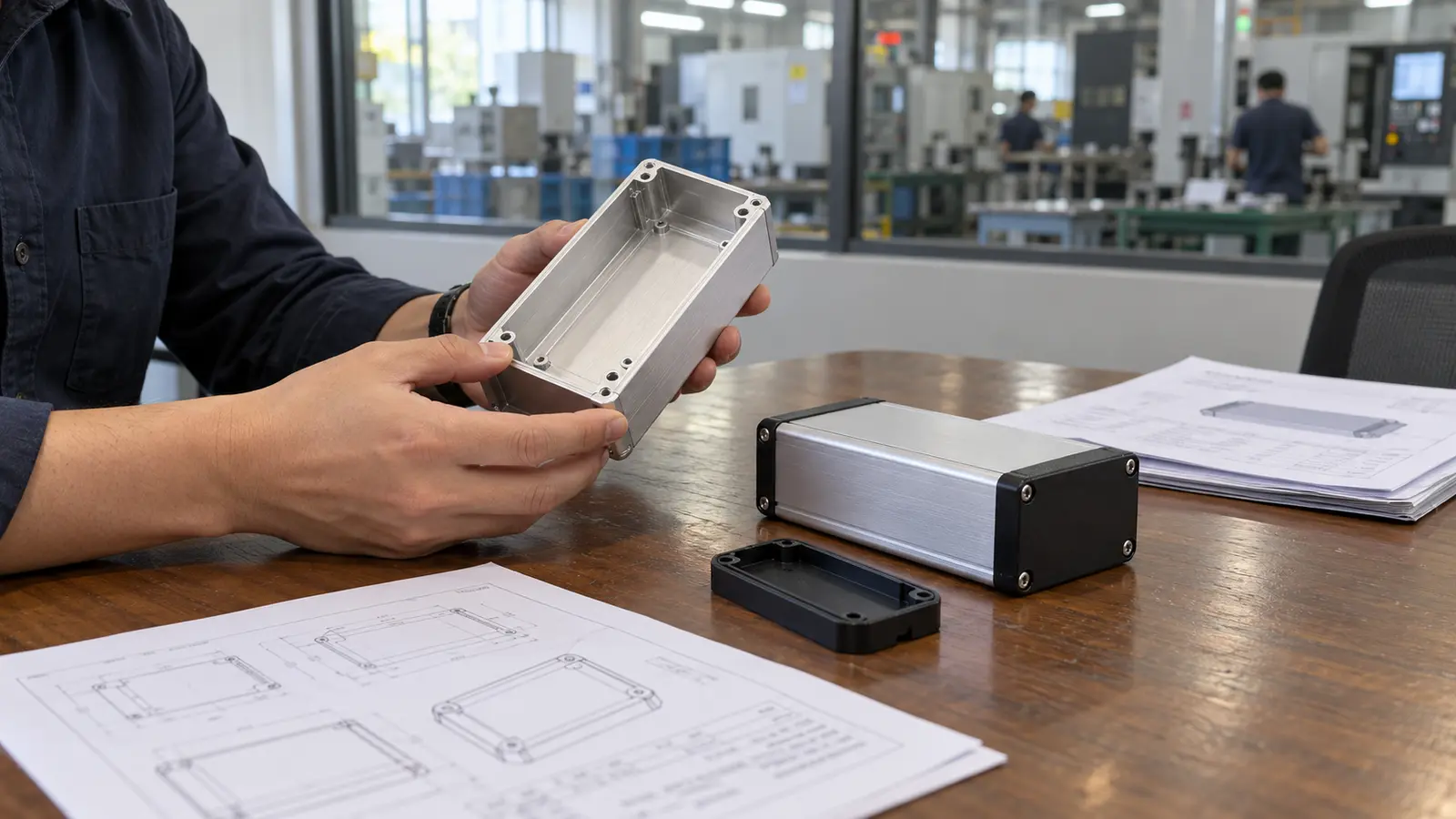
Choose a turnkey manufacturing company by checking production scope, tooling ownership, quality records and intellectual property (IP) protection before comparing quotes.
Start with five direct questions about a non-disclosure agreement (NDA), the production site, certification, tooling and delivery communication. Then ask shortlisted suppliers for a process map and sample inspection records.
Most buyers approach supplier vetting by building a list of things a good turnkey manufacturer should have. That works, but it is slow, and it tends to end with a supplier that scored well on paper and still went sideways six months into production.
A faster filter is to flip the exercise around: instead of asking what a good supplier looks like, ask what a bad one cannot hide during a single first call.
Five questions do most of that work, and this post walks through them in the order they tend to expose a problem, not the order a sales deck would present them in.
This assumes you already know what turnkey manufacturing covers. If you need that grounding first, What Is Turnkey Manufacturing lays out the six-stage process before you start comparing suppliers against it.
Key takeaways
- Screen first. Use five direct questions before investing time in detailed quotes.
- Verify scope. Ask which steps are in-house and which are subcontracted for your actual product.
- Protect ownership. Record design rights, tooling terms and transfer arrangements before paying a deposit.
- Check evidence. Verify certificates and request sample inspection records.
- Compare consistently. Use the same scope, documentation and commercial questions for every shortlisted supplier.
The Five-Minute Disqualifier Call
Before scoring anything, try to eliminate. A short call with five direct questions will surface most of the suppliers you should not spend more time on, and it costs you almost nothing to run.
Ask who will not sign an NDA before reviewing your design.
This is the fastest tell in the entire process. A company with real IP discipline has a standard NDA ready before the call ends.
A company that hesitates, wants to "discuss it later," or treats it as an unusual request is telling you design protection is not a built-in practice, and that is not something you can fix with a stronger contract later.
Ask which specific facility will build your part.
Not a company name, not a country, the actual site. Suppliers that broker work to a third party they do not control often answer this question with a pause, a vague regional reference, or a promise to "confirm and get back to you." A company running its own floor answers immediately, because there is only one honest answer to give.
Ask for a certificate number, not a certification claim.
Certification logos are free to put on a website. A real IATF 16949:2016 or ISO 9001:2015 certificate has a number and an issuing body you can check independently.
Phrases like "quality-focused" or "ISO-aligned processes" without a number attached usually mean the certification does not exist, at least not for the facility that would build your part.
For context, ISO explains how IATF 16949 supplements ISO 9001:2015 with automotive quality requirements. Match the certificate to the site and work you are evaluating.
Ask what happens to the tooling if the program ends early.
This is covered in more depth further down, but the short version for this call is: does the company have an answer at all, or does the question visibly catch them off guard? A supplier that has never had to think about this has probably never formalized tooling terms in writing, which becomes your problem the day a relationship sours.
Ask how a missed delivery date gets communicated.
Every supplier misses a date eventually. The question is not whether it happens, it is whether the company has a defined process for telling you before the deadline passes or only after.
An answer built around "it hasn't happened much" is not actually an answer.
Two or more hesitant answers out of these five is a reasonable point to stop the call politely and move to the next candidate. It is a far better use of an afternoon than three weeks of quoting back and forth with a supplier that was never going to make it past due diligence anyway.
What are red flags when vetting a turnkey manufacturer?
Watch for:
- Reluctance to sign an NDA.
- Refusal to name the actual production facility.
- No defined tooling ownership terms, including what happens if a program ends early.
- Certification claims that cannot be verified with an issuing body.
- No design-for-manufacturability feedback with a quote.
Once a Supplier Clears the Call, Go Deeper on Scope
A company that passes the five-minute filter still needs a real look at how much of your build it actually performs itself. This is where "turnkey" starts to mean different things at different companies.
Some run the full process chain in-house. Others own one step, usually assembly or final finishing, and quietly route everything upstream of it to subcontractors they do not manage day to day.
Subcontracting by itself is not disqualifying. Almost every manufacturer buys in some raw material, plating, or specialty coating.
The risk shows up specifically when a supplier will not name which steps are subcontracted, because that gap is exactly where a quality escape becomes untraceable. If a part fails and three different companies touched it before it reached you, figuring out which one is responsible can take longer than fixing the actual defect.
The most direct way to check this is to ask for a process map tied to your actual bill of materials (BOM), not a general capabilities list. A supplier running CNC machining, die casting, molding, and assembly under one roof can walk you through your specific part step by step.
A supplier leaning heavily on subcontractors usually cannot do that without pulling in outside answers first, and that hesitation is itself useful information.
Tooling Ownership Deserves Its Own Conversation
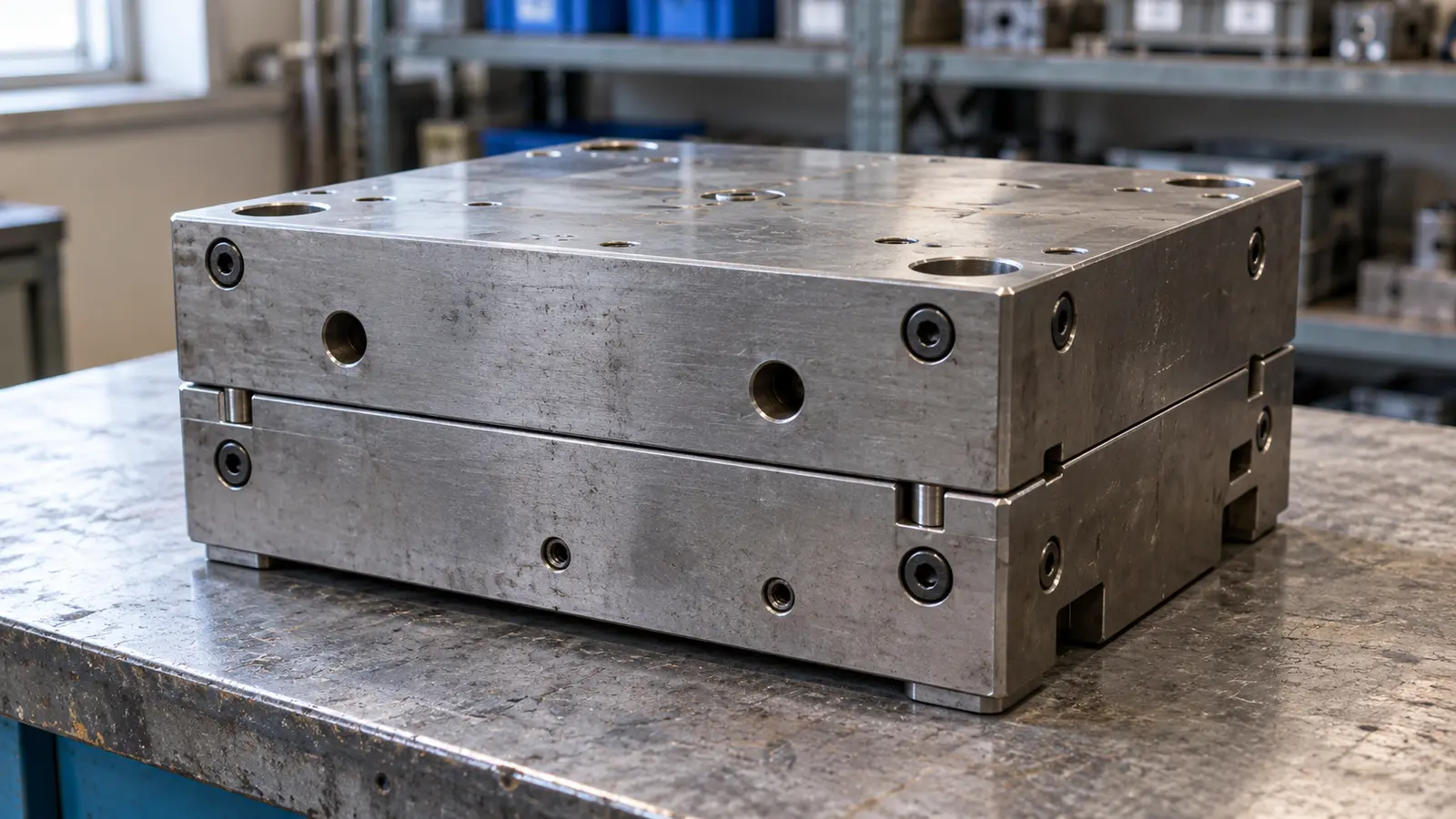
Get tooling ownership and transfer terms in writing before paying a deposit.
Why this gets skipped until it's too late
Tooling is often the single largest line item in a turnkey quote, yet it is the term most likely to be left undefined in the original contract. Not because suppliers are trying to hide something, but because the topic usually only comes up when a customer asks, and many customers do not ask until the relationship is already ending.
In a healthy arrangement, ownership transfers to the customer once the tooling is fully paid for, with no further conditions attached, and the customer can move that tooling to a different supplier if needed. Some companies do exactly that by default.
Others hold tooling against a minimum volume commitment, or treat continued access to it as leverage to retain business. Neither position is inherently improper, but only one of them tends to survive being written down clearly before production starts, and it is worth finding out which one you are dealing with while you still have leverage to negotiate it.
The practical move here is simple: get the tooling ownership clause in writing before a deposit changes hands, not after. If a supplier quotes a tooling cost without offering to define what happens to it afterward, ask directly.
A company with a real answer will not treat the question as unusual.
Documentation Tells You More Than a Facility Tour Does
A clean, well-lit factory photo is easy to produce for any company with a camera and a good angle. What is harder to fake is a stack of documentation a supplier is willing to hand over before you have placed a single order.
This is a more reliable signal than the tour itself, because it reflects a process that runs every day, not a version of the floor prepared for a visitor.
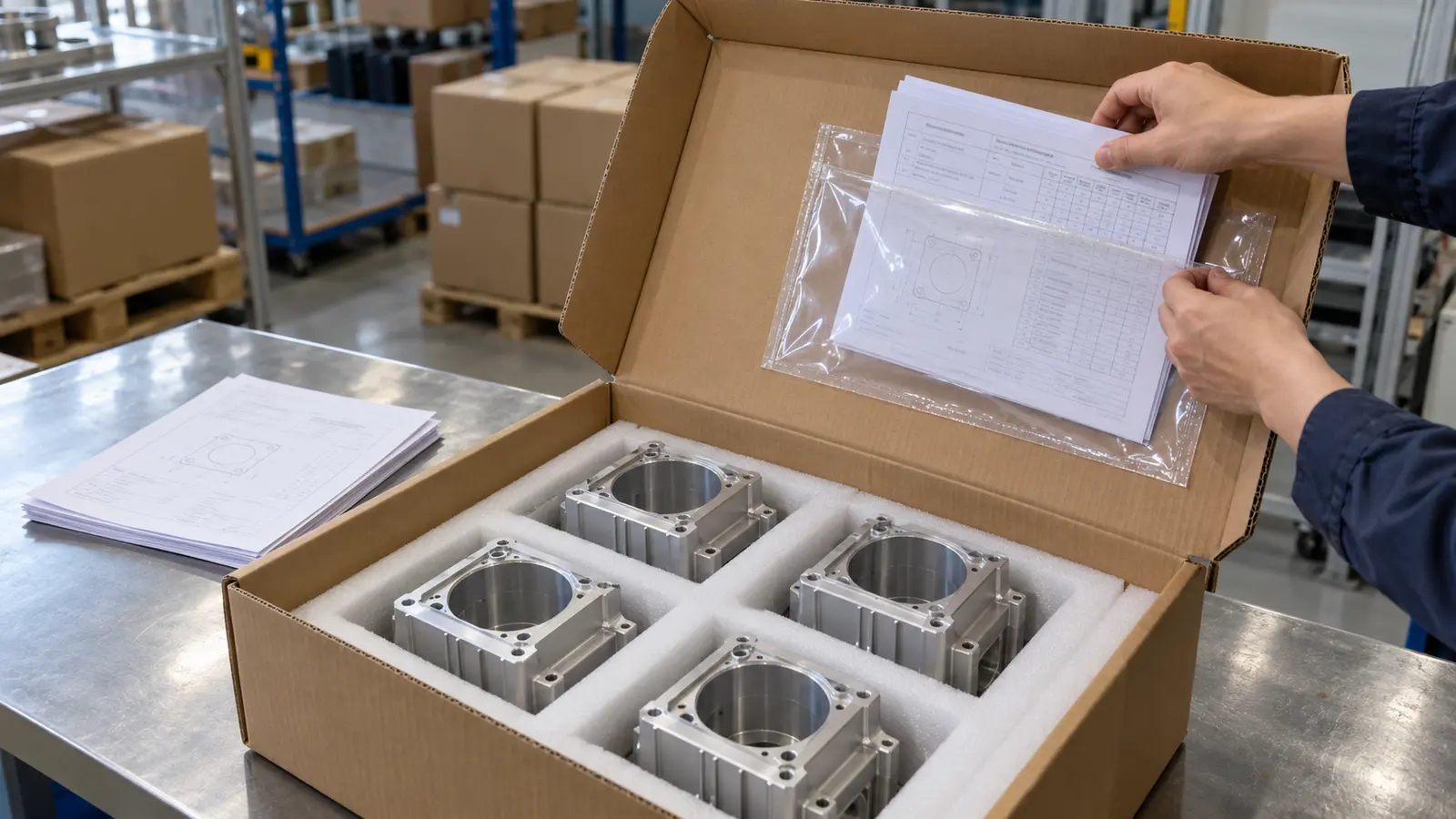
Ask for a sample first article inspection (FAI) report from a past project, ideally one similar in complexity to your own part. Ask what documentation ships with a standard production order, not a premium tier or a special request.
Material certifications, dimensional inspection records, and a defined corrective action process for nonconformances should already exist as routine practice at a mature supplier, not something assembled specifically because you asked.
If a company offers a live video walkthrough of the actual line that would build your part, that is a reasonable substitute for an in-person visit and often reveals more, since it forces a real-time answer rather than a curated slideshow. A supplier that offers neither a visit nor a video, and instead points you back toward marketing photos, is telling you something about how much of its floor it is comfortable showing.
Ready to compare supplier scope? Send your drawing, material and target volume. Meco will respond with a quote and design for manufacturability (DFM) feedback. An NDA is available before files are shared.
Get DFM Feedback on Your DesignHow Meco Handles Each of These
Meco combines 40+ in-house processes with customer ownership of design and tooling and an IATF 16949:2016 certified quality system.
Meco runs over 40 processes in-house across CNC machining, casting, forging, injection molding, and assembly, with dual-country production in Thailand and China backed by U.S. engineering support, so the scope question has a specific, checkable answer rather than a general capabilities claim. Your design and tooling stay yours.
Meco does not produce your product for anyone else, and an NDA can be signed on request before you share any drawings or files. You may move your design and tooling to another supplier at your own expense and arrangement.
Meco’s quality system is IATF 16949:2016 certified, with no minimum order quantity and production from 10 pieces to 10 million or more.
Design for manufacturability (DFM) feedback returns with every quote, with a quote response under 24 hours, which doubles as its own transparency signal: a company reviewing your drawing that quickly is showing you an engineer actually looked at it, rather than running it through a generic pricing template. Meco's turnkey manufacturing services program is built around the in-house breadth this post asks you to verify elsewhere, and the 2026 metal part pricing guide covers what to expect on cost once your supplier list is narrowed down.
How fast should a turnkey manufacturing company respond to a quote request?
A response within 24 hours that includes design-for-manufacturability feedback is a reasonable benchmark and a sign the drawing was actually reviewed by an engineer rather than run through a generic pricing template. A company should be able to state a specific turnaround time rather than saying "soon."
The Scorecard: Run This Once You Have a Shortlist
Once a supplier has cleared the disqualifier call and a scope conversation, this table is the one place worth consolidating everything into a single side-by-side comparison. Score each cell as clear, vague, or absent, and treat two or more absent scores from the same supplier as a strong signal to keep looking.
| Category | What to Ask | Clear Answer Looks Like |
|---|---|---|
| IP Protection | Will you sign an NDA before design review | Standard NDA ready without hesitation |
| Facility | Which specific site builds my part | Named facility, answered immediately |
| Certification | What is your certificate number and issuing body | Verifiable number, checked independently |
| Tooling | Who owns tooling once paid, and what happens if the program ends early | Customer ownership, defined in writing upfront |
| Communication | How do you handle a missed delivery date | Defined escalation process, not "rarely happens" |
| Scope | Which processes on my BOM are in-house vs subcontracted | Specific named list, tied to your actual part |
| Documentation | Can you share a sample FAI report | Provided without a special request |
| Commercial | How fast is a quote with DFM feedback | A specific number of hours, not "soon" |
Where to Go Next
Build a shortlist first, then apply the same questions to every supplier.
If you have not yet built a shortlist to run through this process, How to Find a Manufacturer for Your Product covers sourcing candidates before you start vetting them. If your product needs only one process rather than a full turnkey build, How to Choose a CNC Machining Partner applies many of the same questions at a smaller scale, since tooling terms and documentation matter just as much for a single-process vendor as they do for a full program.
The pattern holds regardless of which path fits your product: a supplier willing to answer specifically, in writing, and without hesitation on a first call is telling you more about how it will behave mid-project than any facility tour or capabilities deck ever will.
How do I choose the right turnkey manufacturing company?
Start by eliminating candidates that hesitate on NDA signing, facility disclosure, or certification verification, then evaluate the remaining suppliers on in-house scope, tooling ownership terms, and documentation practices. A supplier that answers clearly and in writing across all of these is a stronger candidate than one relying on a polished sales pitch.
Vetting Turnkey Manufacturing Companies?
Meco runs 40+ processes in-house with clear tooling terms and quality documentation available for your project.
- IATF 16949:2016. Certified quality system
- 40+ in-house processes. Integrated production scope
- IP protection. NDA available before files are shared
- Tooling ownership. Your design and tooling stay yours
Explore Meco’s manufacturing capabilities when comparing the processes your product needs.
Get DFM Feedback on Your DesignReferences and sources
- International Organization for Standardization. A new evolution for quality management in the automotive industry. 9 August 2016.
This article is general information, not legal or customs advice. Confirm contract and tooling terms with qualified legal counsel. If a tooling transfer involves customs, confirm the requirements with a licensed customs broker.
