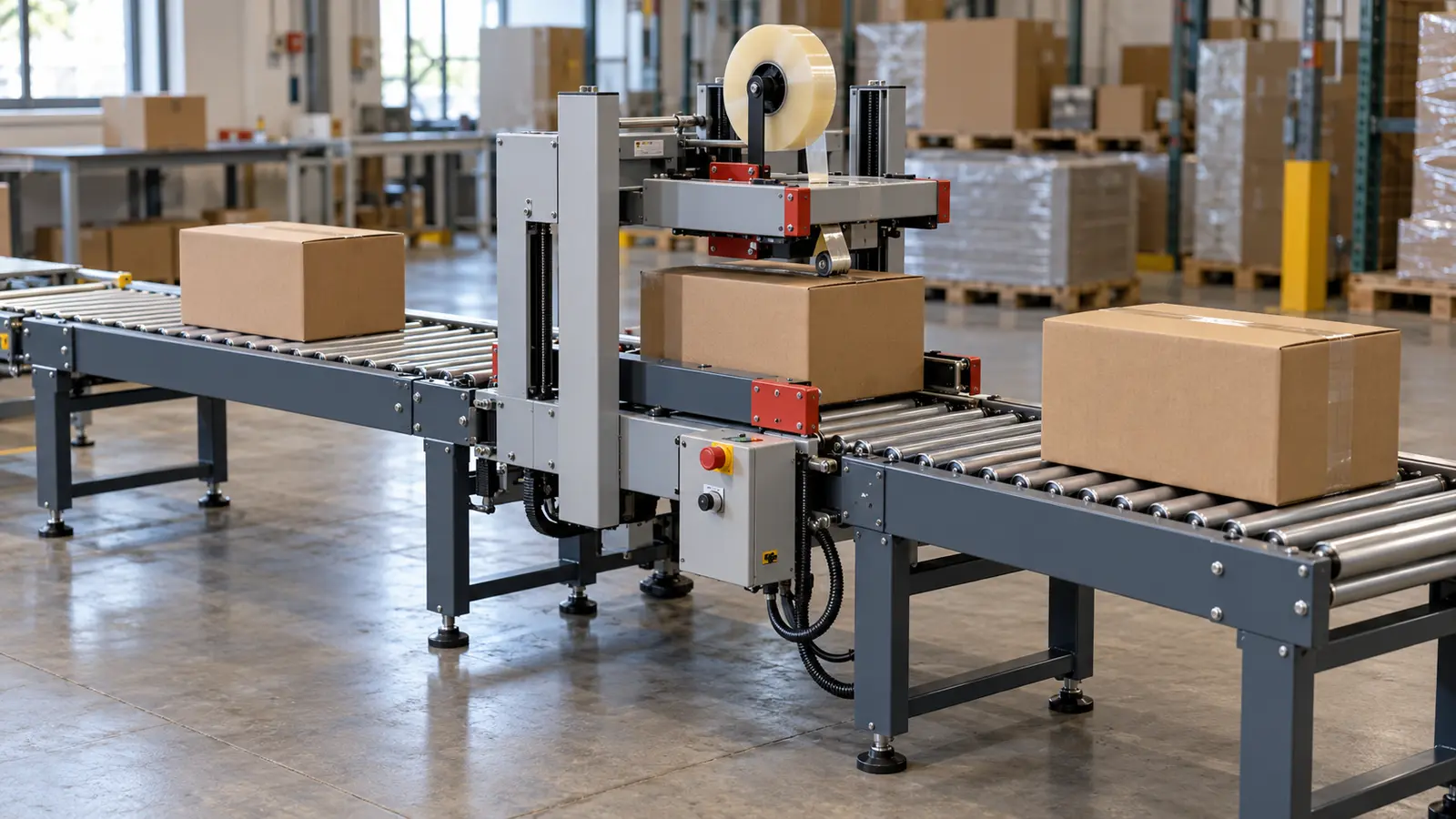
A turnkey solution is a product, service or system delivered ready for its agreed use, with the supplier completing the required build and integration.
Turnkey describes the delivery responsibility, not whether the design is standard or custom. Confirm the handover state, included work, ownership and support before comparing offers.
The idea behind the phrase is simple. Someone hands you a key, and everything on the other side of the door already works. You are buying a completed outcome rather than components or a project you still need to finish yourself.
In manufacturing, that usually means a finished, assembled and tested product rather than a raw part or subassembly. The agreed handoff may still require installation at your site.
This article stays one level broader. It explains what “turnkey” means across the fields that use it, with concrete examples and the trade-offs to weigh before buying a solution.
Key takeaways
- Readiness has a boundary. State whether delivery means ready to install or installed and ready to operate.
- Custom can be turnkey. A unique design and a complete supplier-managed handover can belong to the same project.
- Compare equal scope. One tooling charge is not the price of a complete assembled product.
- Check ownership. Design, tooling, code access and exit rights need clear terms.
- Verify accountability. Check which processes the supplier performs and how it controls outside work.
What Is a Turnkey Solution?
A turnkey solution is a product, service or system delivered ready for its agreed use. The supplier completes the building, configuration or assembly included in that scope. The term applies beyond factories, including real estate, software, franchising and construction.
Turnkey Solution Definition and Meaning
The turnkey solution definition centers on readiness at the agreed handover point. The seller completes the promised build, configuration or integration before you receive it. If essential work within that scope remains unfinished, the offer has not delivered its turnkey commitment.
Ready to use does not automatically mean no installation, utility connection, staff training or daily operation. State who handles those tasks before signing. A complete product ready to install and an installed system ready to operate are different deliverables.
The practical meaning of turnkey is about the coordination work it removes. The supplier sources, builds and integrates the agreed pieces. You do not have to arrange each step through a separate supplier.
Cambridge Dictionary defines turnkey around readiness for use. In a business agreement, that meaning needs a clear scope: what works at handover, what the seller has completed and what remains your responsibility.
What Does Turnkey Mean in Business?
In business, turnkey means receiving a complete package for the agreed purpose. Each field uses the term slightly differently. The common thread is that you receive the completed outcome instead of a kit or partial build you must finish.
Real estate
A turnkey property is presented as ready for its intended use, such as occupancy or rental. An investment offer may also include renovation and tenant placement. Confirm whether the property is actually tenanted and which services are included, rather than treating “turnkey” as a guarantee of income.
Software
A turnkey software solution can arrive configured and connected to your data. The supplier completes the promised setup and integration. That differs from a toolkit your team must code around before it becomes useful.
Franchising
A turnkey franchise package can combine the store layout, equipment, supplier relationships and operating manual. The owner can use that package instead of designing a store from scratch. Staffing, training and opening requirements still need a defined scope.
Across these fields, the seller takes on the agreed integration work that would otherwise sit with the buyer. The price includes that work. Risk transfer, support and remaining obligations still depend on the agreement.
Turnkey Solution Examples Across Industries
Turnkey examples share one pattern: the supplier combines the agreed pieces before handover. The examples below show how that pattern can apply across industries. They illustrate possible packages, not services that every turnkey seller automatically provides.
| Industry | What Turnkey Covers | Example |
|---|---|---|
| Real estate | Renovation and tenant placement if included in the agreed offer | A rental property offered already renovated and leased |
| Software | Configuration, hosting and data migration included in the agreed handover | A point-of-sale platform delivered pre-loaded with a client's inventory |
| Franchising | Site design, equipment, and supplier contracts bundled into one package | A quick-service restaurant location prepared from a standard build-out package |
| Construction | Design, agreed permitting work and construction under one contract | A commercial building ready for the agreed tenant installation work |
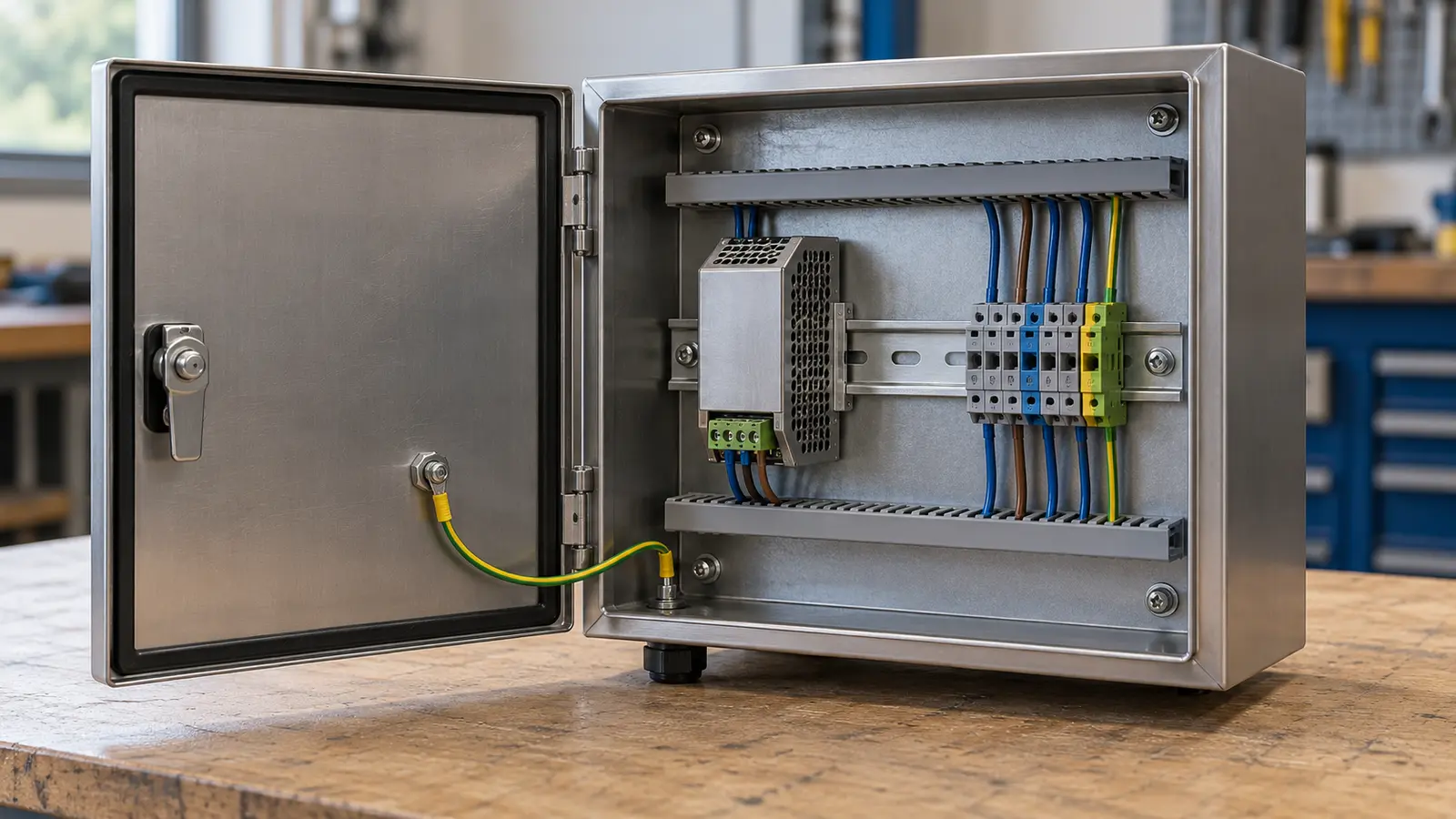
| Manufacturing | Design review, tooling, production, assembly, and delivery under one supplier | A finished electromechanical enclosure shipped ready to install |
The manufacturing row is where Meco operates. A program can take a design file through tooling, production, assembly, testing and packaging under one contract. What is turnkey manufacturing explains that narrower production workflow stage by stage.

Turnkey Solution vs Custom-Built Solution
A custom-built solution can also be turnkey. “Custom” describes how closely the design is tailored to your needs. “Turnkey” describes who completes and integrates the agreed work before handover. These are separate choices.
A bespoke project starts from your exact requirements and can involve more decisions from your own team. A standard supplier package may use a proven platform adapted to your needs. Either can be delivered turnkey if one supplier takes responsibility for the complete agreed outcome.
The comparison below preserves the practical buying choice: a standard package managed by the supplier versus a bespoke project that you coordinate. It is not a rule that all turnkey solutions are standard products.
| Factor | Supplier-Managed Standard Package | Buyer-Managed Bespoke Project |
|---|---|---|
| Time to first use | Often shorter if the platform and process already fit | May take longer when design and integration start from zero |
| Buyer's project management load | Lower when one supplier manages the complete handover | Higher when the buyer coordinates several parties |
| Fit to unusual requirements | Limited by the package’s available options | Can address unusual requirements through a tailored design |
| Flexibility to change scope mid-project | Changes may be constrained by configured software or completed tooling | More scope to tailor the design before commitments are locked in |
| Upfront cost predictability | Clearer when the whole package has a defined fixed scope | Harder to predict when requirements and supplier interfaces are still changing |
The Trade-offs of Choosing a Turnkey Solution
A standard turnkey package can reduce coordination and startup work, while limiting some design choices. The value depends on how closely the package fits your requirements. For a custom turnkey build, agree the same issues without assuming the design must be standard.
- Speed to operation. A proven package may be ready sooner because less work starts from scratch. This matters when time to market or revenue is the main constraint. Custom tooling and approval still take time.
- Lower coordination burden. One supplier answers for the agreed outcome. You manage fewer separate vendors, contracts and handoffs.
- Design flexibility. A standard platform may offer fewer choices for unusual requirements. A custom turnkey program can use your own design. Confirm the available options and change process.
- Supplier standards. Check the quality system, materials and platform architecture behind the offer. They can be strengths when verified, or risks when they do not meet your specification.
- Upfront cost. A turnkey quote may bundle design, tooling and integration into one number. It can look larger than a quote for one component even when the complete project costs less. Compare the same scope before deciding.
In manufacturing, tooling makes the cost comparison concrete. A simple sand casting pattern may fall in a $500 to $5,000 planning band. A larger or more complex die-casting die may cost $20,000 to $150,000 or more.
Meco’s broader reference ranges are $500 to $7,500 for sand casting tooling and $5,000 to $150,000+ for die-casting tooling. Tool size, part geometry and production requirements determine where a quote sits. These are planning ranges, not quotations.
A complete turnkey quote may include tooling, production, finishing and assembly. Those charges may be bundled or itemized. A bare tooling quote covers less work, so its lower total is not a direct price comparison for a finished product.
Define the finished-product scope. Share your intended use and target quantity so Meco can review the manufacturing route. An NDA is available before drawings or files are shared.
Talk to an EngineerTurnkey Solutions in Manufacturing: What to Expect
A turnkey manufacturing solution assigns one supplier the agreed path from design review to a finished product.
The quoted scope can connect these stages under one quality system:
- Engineering and sourcing. Design review and material sourcing.
- Tooling and production. Tool build and part manufacturing.
- Integration and release. Assembly and the agreed tests.
- Delivery. Packaging and shipment to the agreed handover point.
The supplier manages the build, but that does not make it the owner of your design. Product ownership, tooling ownership and transfer rights should be explicit in the agreement.
Market context
HTF Market Intelligence reports a 2024 market value of US$88.2 billion and forecasts US$166.4 billion by 2033. Its public summary also reports an 8.10% compound annual growth rate (CAGR).
These are the publisher’s market estimates, not Meco sales figures or guaranteed growth. The summary uses different forecast-period labels. Treat the numbers as reported market context rather than a fully reconciled growth calculation.
The report covers sourcing, assembly, testing and packaging as well as design-to-manufacture work. For a buyer, the useful question remains which of those activities a particular supplier actually includes.
A contract manufacturer can make one part or take on a complete product. Turnkey manufacturing is the full-scope form of that relationship. Turnkey vs contract manufacturing compares the quoted scope, cost and accountability.
The same choice appears in assembly. In consignment work, you supply components and retain sourcing responsibility. In turnkey assembly, the supplier sources the agreed components and manages integration. Meco’s contract assembly services explains both routes.
How to Evaluate a Turnkey Solution Before You Buy
Evaluate the written scope, ownership, quality evidence, change process and support terms before buying. These questions distinguish a complete offer from one that leaves important work for your team. Ask them before committing to tooling or configuration.
- What exactly is included? Get a written list of the stages the supplier manages, from design through delivery. Identify exclusions and work you must arrange.
- Who owns the tooling, code and intellectual property (IP)? Confirm ownership, access and transfer rights before work begins. This matters if you change suppliers or scale beyond the original agreement.
- What quality system backs delivery? Check the applicable certification and records. In manufacturing, IATF 16949:2016 supports a documented quality system rather than only a one-time inspection.
- How are changes handled? Agree who approves design or scope changes, their cost and their effect on the schedule. Tooling or configuration already completed can make a small request expensive.
- What happens after a failure? Define support and corrective-action responsibility. A single accountable supplier should not leave you to resolve an agreed deliverable’s problem with its subcontractor.
Check the manufacturing route
In-house process coverage helps you assess a turnkey manufacturing claim. A supplier running CNC machining, die casting, molding and assembly can keep more of the build within its own operations.
Ask which steps use outside suppliers and how those steps are controlled. Subcontracting does not by itself rule out turnkey delivery, but it makes supplier visibility, acceptance checks and accountability important.
Meco’s whole product manufacturing connects design review, tooling, production and assembly across 40+ in-house processes under an IATF 16949:2016 certified quality system. Its metal part pricing guide helps separate tooling and per-part cost inputs.
On request, Meco signs a non-disclosure agreement (NDA) before you share drawings or files. Your design and tooling stay yours. Meco does not produce your product for anyone else.
You may move your design and tooling to another supplier at your own expense and arrangement, without additional Meco-imposed transfer conditions.
Plan Your Complete Manufacturing Build
Meco can connect your custom product design with the tooling, production, assembly and delivery work it needs.
- Engineering. Design for manufacturability (DFM) feedback with every quote
- Process coverage. 40+ in-house manufacturing processes
- Quality. IATF 16949:2016 certified
- Production. Owned facilities in Thailand and China
- Scale. No minimum order quantity
References and sources
Definition and the cited public market summary checked on 8 October 2026.
- Cambridge Dictionary. Turnkey. Cambridge University Press, accessed 8 October 2026.
- HTF Market Intelligence. Global Turnkey Manufacturing Solutions Market Roadmap to 2033. Report 4396209, last updated 18 November 2025. Figures are publisher estimates.
Tooling costs are representative planning ranges, not quotations. This article is general information, not legal, financial or customs advice. Have contract terms reviewed by qualified legal counsel, and confirm any cross-border tooling-transfer requirements with a licensed customs broker.
