Custom Sand Casting Services
Meco pours aluminum, steel, stainless, brass and bronze into bonded sand moulds at ISO 8062 CT9 to CT10, on runs of 50 to 5,000 parts a year with the lowest tooling cost of any casting process we run.

Why Choose Meco for Sand Casting
Low tooling cost, five metal families in one process, and machining, treatment and finishing under the same roof.
Patterns From 500 USD
Sand patterns cost 500 to 5,000 USD against 20,000 to 150,000 USD for a die casting die. That is what makes a 50 piece run viable at all.
Widest Alloy Range
Aluminum, steel, stainless, brass and bronze all run in sand. No other casting process on our floor covers that spread from one tooling type.
Large and Complex Parts
Disposable sand cores form internal passages, undercuts and cavities that a permanent die cannot release, at part weights up to 100 kg.
Turnkey After Casting
Sand castings almost always need machining. In-house CNC machining, heat treatment and surface finishing mean one supplier and one PO.
Certified Quality System
Every casting cell runs under IATF 16949:2016, which incorporates all ISO 9001:2015 requirements. PPAP, FAI and full lot traceability are standard.
DFM Before the Pattern
Every quote comes back with DFM notes inside 24 hours. Design changes agreed before the pattern is cut typically remove 15 to 30 percent of part cost.
Sand Casting Capabilities
What the moulds hold, what the cores allow, and how far the process scales.
Clay-bonded green sand is the cheaper route and suits most structural parts. Chemically bonded resin sand holds a crisper edge and a smoother wall, so it is the default where the casting has to reach the tighter end of CT9 to CT10 before machining.
- Green sand for cost
- Resin sand for accuracy
Because the mould is destroyed to release the part, cores do not have to withdraw. Multi-part core packages produce internal channels, undercuts and closed cavities that no permanent die can eject. Core count is the main driver of both cost and CT grade, so we set it at DFM stage.
- Internal passages and undercuts
- No draft-driven redesign
There is no minimum order quantity. Production runs 4 to 8 weeks, and the process is at its most economical between 50 and 5,000 parts a year. Casting runs from 20,000 m2 in Thailand and 16,000 m2 in China, with warehousing in North America and Asia.
- No MOQ, 50 to 5,000 per year
- Dual-country production
Sand Casting Alloys and Specifications
Meco sand casts aluminum, steel, stainless, brass and bronze, then machines, treats and finishes in house.
Sand casting carries the widest alloy range of any process on our floor, because the mould is consumable and does not have to survive repeated contact with high pour temperatures. That is what puts steel and stainless on the same page as aluminum. Every grade below is supplied with EN 10204 3.1 material certificates on request, and certificates are explained in our EN 10204 3.1 guide.

Alloys and Specifications
| Material | Grades | Why it is used | Typical sand cast parts |
|---|---|---|---|
| Aluminum | A356, ZL101 | Light, corrosion resistant, heat treatable to T5 and T6, machines cleanly | Housings, manifolds, brackets, lighting bodies, equipment frames |
| Steel | Carbon and alloy steel | High strength and impact resistance for load-bearing structure | Gearbox housings, torque arms, counterweights, machine bases |
| Stainless steel | Stainless grades | Corrosion resistance in wet, chemical and washdown environments | Valve bodies, pump housings, fittings, process hardware |
| Brass and bronze | Brass, bronze | Bearing properties, wear resistance and good castability | Bushings, impellers, marine fittings, decorative hardware |
| Standards | Applied throughout | ASTM B179 ingot and molten metal, ASTM B26 aluminum sand castings, GB/T 6414 general specifications | ISO 8062-3, ISO 286 and ANSI B4.1 for dimensional tolerance |
Scroll inside the table to see all rows and columns
Sand Casting Tolerances and Process Data
| Parameter | Sand casting | Notes |
|---|---|---|
| As-cast tolerance | ISO 8062 CT9 to CT10 | Grade depends on part size, wall section and core count |
| Machined features | 0.01 mm, ISO 2768 | Cut on our own CNC machining cells |
| Inspection | CMM to 0.002 mm | Plus X-ray, ultrasonic and dye penetrant NDT |
| Part weight | 1 g to 100 kg | Range across the Meco casting hub |
| Ideal volume | 50 to 5,000 parts per year | No MOQ. Prototypes and single pieces supported |
| Production lead time | 4 to 8 weeks | From approved pattern and released PO |
| Pattern tooling | 500 to 5,000 USD | Lowest tooling cost of the five casting processes |
| Heat treatment | T5 and T6 on aluminum | In-house metal heat treatment |
| Finishing | Blast, powder coat, anodize, paint | See surface finishing services |
| Documentation | PPAP, FAI, CoA, EN 10204 3.1 | Full lot and serial traceability under IATF 16949:2016 |
Scroll inside the table to see all rows and columns
Working out what a casting will cost before the pattern is committed? Our metal part pricing guide breaks the numbers down by process.
Industries Served by Sand Casting
Sand casting is specified where the part is large, the run is short, or the alloy rules out a permanent die. These are the sectors Meco casts for most often.
Aerospace Parts Manufacturing
Aerospace programs rarely need 50,000 of anything, which is exactly where sand casting fits. Meco supplies large housings, ground support hardware and structural brackets with FAIR and PPAP documentation, X-ray and dye penetrant NDT, and serial traceability.
Learn more about aerospaceAutomotive Parts Manufacturing
Sand casting carries the prototype and validation phase, plus the heavy vehicle and off-road parts that never reach die casting volumes. Production runs under IATF 16949:2016 with PPAP submission as standard.
Learn more about automotiveHeavy Equipment Manufacturing
The natural home of the process. Gearbox housings, counterweights, torque arms and machine bases in steel and ductile alloys, at weights and annual volumes that make any permanent die uneconomic.
Learn more about heavy equipmentHome Appliances Manufacturing
Compressor housings, mounting frames and structural components for industrial-grade appliances. Sand keeps tooling cost low across a wide model range, which matters when each variant runs only a few hundred units.
Learn more about appliancesIndustrial Manufacturing
Valve bodies, pump housings, impellers and fittings in stainless and bronze. Sealing faces and bores are machined in house, so fluid-handling parts arrive finished rather than as raw castings.
Learn more about industrialLight Manufacturing
Street lighting bases, column feet and architectural luminaire bodies. Thick-walled aluminum castings give the mass and corrosion resistance an outdoor fitting needs, and powder coat over a blasted surface hides the as-cast texture.
Learn more about lightingMedical Equipment Manufacturing
Heavy structural bases and frames for imaging and sterilisation equipment, where mass and rigidity matter more than a fine as-cast finish. Castings are supplied with full lot traceability and material certificates.
Learn more about medicalTelecommunications Manufacturing
Cabinet bases, pole mounts and channel brackets for outdoor network hardware. Aluminum handles the weather, and machined gasket faces keep the enclosure sealed after the casting is finished.
Learn more about telecomOffice Furniture Manufacturer
Table bases, column feet and decorative architectural elements in aluminum and iron. Sand allows organic shapes and textured surfaces that a die cannot release, on the short runs a contract furniture range actually needs.
Learn more about furnitureCustom Electronics Manufacturing
Large industrial enclosures and equipment chassis, then populated and boxed through our PCB design and assembly line. Aluminum shields the electronics and carries the heat out.
Learn more about electronicsSand Casting vs Other Casting Methods
Where sand casting beats gravity, investment and high pressure die casting on tooling cost, part size and short-run economics, using Meco's own process reference figures.
| Feature | Sand casting | Gravity casting | Investment casting | High pressure die casting |
|---|---|---|---|---|
| Typical tolerance | ISO 8062 CT9 to CT10 | ISO 8062 CT7 to CT8 | Near net shape per ICI | NADCA standard 0.010 in |
| Tooling cost | Patterns 500 to 5,000 USD | Dies 10,000 to 30,000 USD | Wax tooling 3,000 to 15,000 USD | Dies 20,000 to 150,000+ USD |
| Ideal volume | 50 to 5,000 per year | 500 to 50,000 per year | 500 to 50,000 per year | 5,000 to 1,000,000+ |
| Lead time | 4 to 8 weeks | 4 to 10 weeks | 6 to 12 weeks | 6 to 14 weeks |
| Metals available | Aluminum, steel, stainless, brass, bronze | Aluminum only A356, ZL101, 319 | Steel, stainless, brass, bronze, titanium | Aluminum, zinc, magnesium |
| Part size | Largest up to 100 kg | Small to medium | Small and intricate | Small to medium |
| Machining stock | Highest plan for machined features | Moderate | Low | Low |
| Best application | Large, low volume, prototypes housings, bases, valve bodies | General structural parts | Fine detail in hard alloys | Thin-wall housings at volume |
Scroll inside the table to see all rows and columns
Above roughly 5,000 parts a year in aluminum, gravity casting and low pressure casting pay back their die cost in reduced machining. Above 5,000 thin-wall parts a year, die casting services usually win on unit cost. For the pouring methods in plain English read what is sand casting, and for tolerance grades see casting tolerances explained.
Sand Casting FAQ
What is sand casting used for?
Sand casting suits parts that are large, produced in small numbers, or made in an alloy a permanent die cannot handle. Bonded sand forms a single-use mould around a reusable pattern, so tooling costs 500 to 5,000 USD instead of tens of thousands. Meco holds ISO 8062 CT9 to CT10 as cast. There is a full walkthrough in our what is sand casting guide.
What metals can Meco sand cast?
Aluminum in A356 and ZL101, plus carbon and alloy steel, stainless steel, brass and bronze. That is the widest alloy range of any casting process we run, because the mould is consumed rather than reused. Our engineers will confirm the grade against your loads, corrosion environment and finish before the pattern is cut.
What tolerances can sand casting hold?
ISO 8062 CT9 to CT10 as cast, depending on part size, wall section and core count. That is two to three grades looser than gravity or low pressure casting, so plan machining stock on any feature that has to fit something. Machined features are cut in house to ISO 2768 and 0.01 mm, and verified on a CMM resolving to 0.002 mm.
Sand casting or gravity casting: which should I use?
Volume decides it. Below roughly 500 parts a year, sand wins because a 500 to 5,000 USD pattern beats a 10,000 to 30,000 USD die. Above that, gravity casting holds CT7 to CT8 and cuts enough machining per part to pay the die back. Sand also stays the answer at any volume if the part is steel, stainless, brass or bronze.
Can sand castings be heat treated?
Yes. A356 and ZL101 both take T5 and T6 tempers on our own metal heat treatment lines. Steel and stainless castings are treated to the specification called out on your drawing. Nominate the temper at quotation, because it affects both the machining sequence and the lead time.
What are the key design rules for a sand casting?
Keep wall thickness consistent, allow generous draft so the pattern draws cleanly from the sand, and use radii rather than sharp internal corners. Add machining stock to every mating face and bore. Core count is the biggest single cost driver, so we review it and the parting line during DFM, before the pattern is made.
What drives sand casting cost and lead time?
Pattern and core complexity, alloy, part weight, annual volume and the amount of machining and finishing required. Patterns run 500 to 5,000 USD and production runs 4 to 8 weeks once tooling is approved. DFM changes agreed before the pattern is cut typically take 15 to 30 percent out of part cost, so send drawings early. There is no minimum order quantity.
How to Get Started
Send a STEP or IGES file with alloy, annual volume, tolerances and finish. Send it to our engineers and you get a response inside 24 hours.
You receive a cost breakdown plus DFM notes on wall sections, draft, parting line and core count, with pattern and sample timing.
We build the pattern and core boxes, then deliver first article castings with dimensional and NDT reports.
After PPAP approval we run production, machining, heat treatment and finishing, then ship from warehousing in North America or Asia.
Sand Casting Resources

What Is Sand Casting?
Pattern making, green versus resin sand, core assemblies and where the process stops making commercial sense.
Read the guide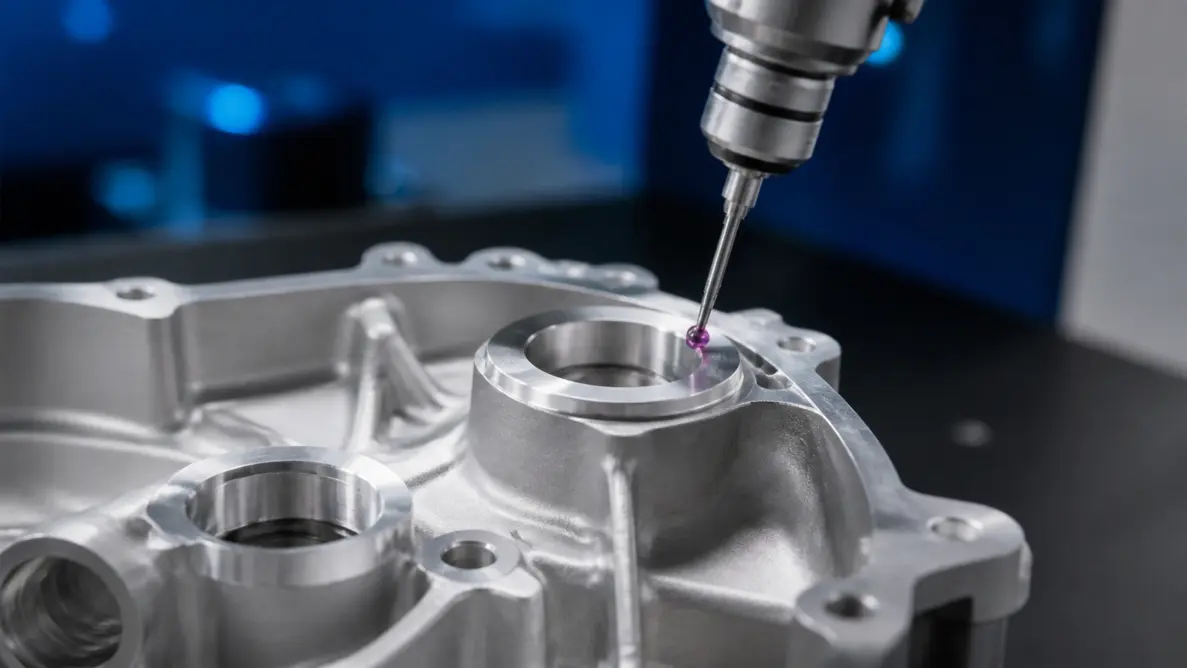
Casting Tolerances Explained
How ISO 8062 CT grades and NADCA standards actually work, so you know which features to nominate for machining.
Read the guide
What Does a Metal Part Cost?
Tooling, alloy, volume and post-processing broken down by process, with the numbers behind a casting quote.
Read the guideSwipe for all three guides
