
For most parts, aluminum is the best die casting metal because it balances strength, light weight, cost, and corrosion resistance better than any other option. But it isn't always the right answer. Zinc wins on fine detail and tool life, and magnesium wins when every gram counts. The right die cast metal depends on five things: weight, strength, cost, finish, and volume.
The three metals that dominate die casting are aluminum, zinc, and magnesium. Each one behaves differently in the mold, costs a different amount, and shines in different products. Pick wrong and you pay for it in weight, price, or failed parts. Pick right and you get a part that performs and costs less to make.
This guide compares all three die casting metals side by side across the factors that actually drive the decision. You'll get real mechanical data, five comparison tables, and a simple five-question framework to land on the right alloy for your part. The die casting market is huge and growing, worth about USD 85.49 billion for aluminum alone in 2025 and projected to reach USD 146.75 billion by 2035, according to Precedence Research. Choosing the right metal is where good products start.
What Is Die Cast Metal?
Die cast metal is any metal that gets shaped by forcing it, in molten form, into a steel mold under high pressure. The metal cools, hardens into the shape of the mold, and gets ejected as a finished or near-finished part. It's fast, repeatable, and great for making the same part thousands of times.
Almost all die casting uses non-ferrous metals, meaning metals that don't contain much iron. That's why you'll see aluminum, zinc, and magnesium named again and again. These metals melt at temperatures the steel molds can handle without wearing out too fast.
So what is die cast metal not? It's not steel or iron. Those melt far too hot and would destroy the mold in a hurry, which is why steel parts are forged, stamped, or sand cast instead. If you want the full walkthrough of the process itself, Meco's guide to the die casting process step by step covers every stage from shot to ejection.
What Are the 3 Main Die Casting Metals at a Glance?
The three main die casting metals are aluminum, zinc, and magnesium. Aluminum is the all-rounder that suits most parts. Zinc is the choice for small, detailed, high-tolerance parts and the longest tool life. Magnesium is the pick when low weight matters most.
Here's how the three die casting alloys stack up across the factors that decide most projects. Use this master table as your quick reference, then read the sections below for the detail behind each metal.
| Factor | Aluminum | Zinc | Magnesium |
|---|---|---|---|
| Relative weight (density) | Light (about 2.7 g/cm³) | Heavy (about 6.6 g/cm³) | Lightest structural metal (about 1.8 g/cm³) |
| Strength | High | High, plus best impact strength | Good (best strength per unit weight) |
| Alloy cost per part | Lowest per volume | Higher (heavier metal) | Moderate to higher |
| Tool life | Shortest (hot, hard on dies) | Longest (gentle on dies) | Medium |
| Detail and thin walls | Good | Best (walls down to about 0.3 mm) | Very good |
| Corrosion resistance | Good (natural oxide layer) | Good with finishing | Needs coating for harsh use |
| Common alloys | A380, ADC12, A360, AlSi10Mg | Zamak 2, 3, 5, ZA-27 | AZ91D, AM50, AS41 |
| Best for | Housings, brackets, engine parts | Connectors, gears, zippers, small precise parts | Laptop frames, drone parts, weight-critical housings |
Meco casts all three of these metals in house, so a single partner can help you weigh the trade-offs and even prototype in more than one alloy before you commit. See the full die casting services overview for capabilities and specs.
Die Casting Metals Compared: The Hard Numbers
Labels like "high" and "moderate" only get you so far. When you're specifying a part, you need real mechanical values. The table below pulls the standard published properties for the most common alloy in each metal family, so you can compare them like for like.
| Property | Aluminum A380 | Zinc Zamak 3 | Zinc Zamak 5 | Magnesium AZ91D |
|---|---|---|---|---|
| Density (g/cm³) | 2.7 | 6.6 | 6.7 | 1.81 |
| Ultimate tensile strength (MPa) | 324 | 283 | 328 | 240 to 250 |
| Yield strength (MPa) | 159 | 221 | 269 | 160 |
| Elongation at break (%) | 3.5 | 10 | 7 | 3 to 7 |
| Hardness (Brinell) | 80 | 82 | 91 | 63 |
A few things jump out. Zamak 5 actually posts the highest tensile strength of the group, and zinc alloys are the most ductile (higher elongation means they bend before they break). Aluminum sits in the strong-but-light sweet spot. Magnesium has the lowest raw numbers here, but remember it's doing that at one third the weight of zinc, which is the whole point of the next section. Values are typical published figures from alloy datasheets, the International Zinc Association, and the AZ91D datasheet. Always confirm against a supplier certificate for design-critical work.
Aluminum Die Casting Alloys
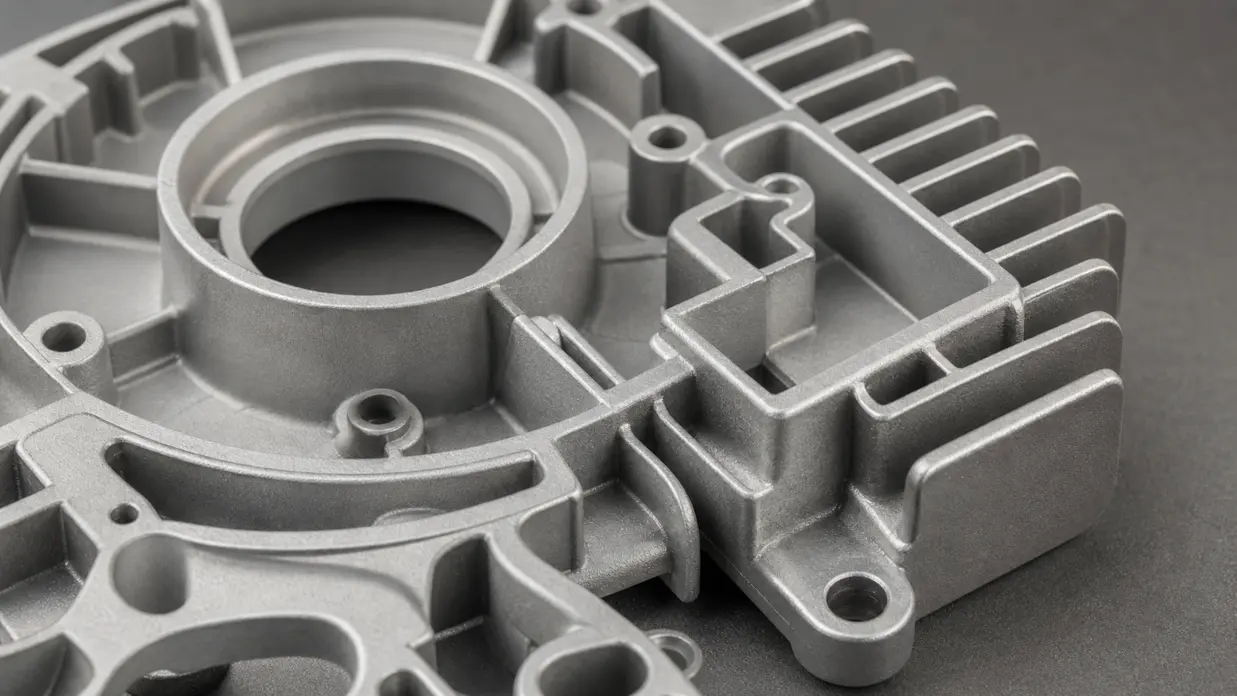
Aluminum is the most used metal in die casting, and for good reason. It's light, strong, cheap by volume, and resists corrosion without much help. If you don't have a special reason to pick something else, aluminum is usually the smart default die cast material.
Key Properties of Aluminum
Aluminum weighs about one-third as much as steel, so it cuts part weight without giving up much strength. It also forms a thin natural oxide layer that protects it from moisture and many chemicals, which makes it a solid choice for parts that live outdoors or under the hood.
It handles heat well too. Aluminum moves heat away quickly, which is why you see it in heat sinks, LED housings, and engine components. It machines cleanly, so any features that need tight tolerances can be finished with CNC work after casting.
Common Aluminum Die Casting Alloys
Meco casts the workhorse aluminum grades that most industries rely on:
- A380: The most popular all-round alloy. Best mix of strength, castability, and cost. Used for engine brackets, housings, and gearboxes.
- ADC12: The common Asian equivalent of A380, great fluidity and machinability for detailed parts.
- A360: Better corrosion resistance and pressure tightness, good for parts that must seal against fluid or gas.
- AlSi10Mg: Strong and heat-treatable, popular in structural and automotive parts.
Best Applications for Aluminum
Automotive is the biggest user of aluminum die casting alloys, from transmission cases to structural brackets. You'll also find aluminum in electronics enclosures, lighting, telecom housings, and industrial equipment. It's the go-to whenever you need a light, strong part in medium to large sizes. For a deeper look at how aluminum compares with other metals on hardness, this guide on whether aluminum is softer than brass is a useful companion read. You can also dig into grades and tooling on the dedicated aluminum die casting guide.
Zinc Die Casting Alloys
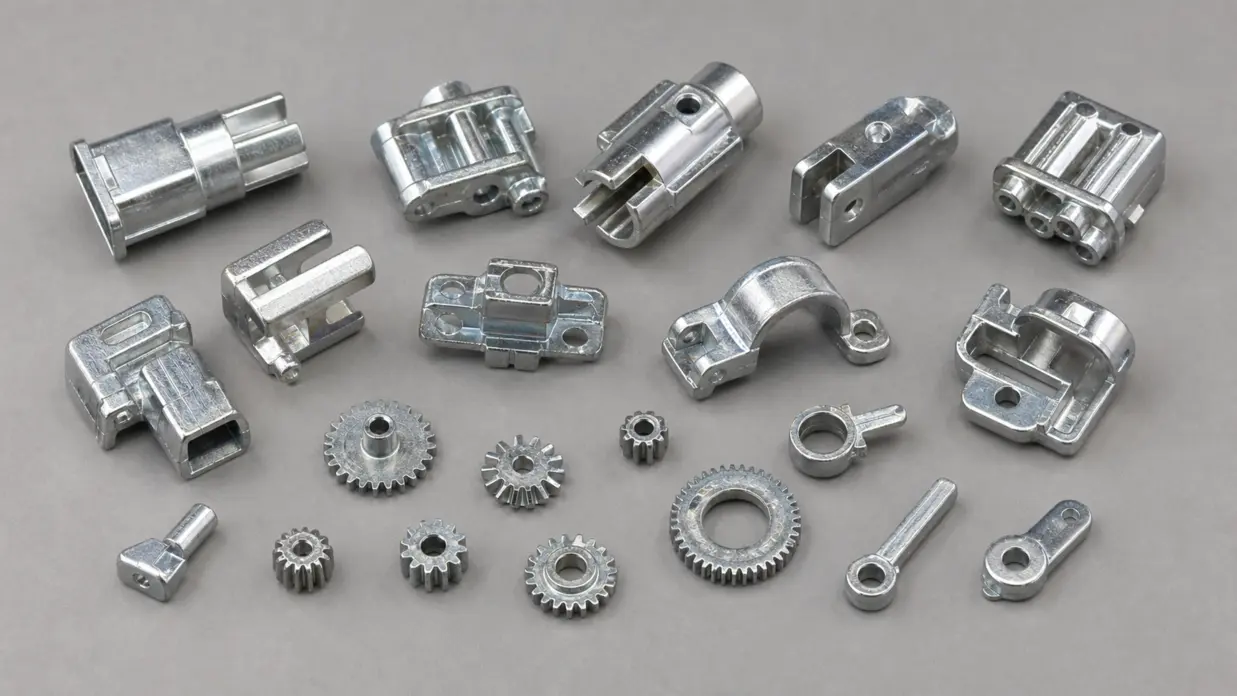
Zinc is the quiet overachiever of die casting. It's heavier than aluminum, which scares some people off, but it makes up for that with unbeatable detail, the longest tool life of any die cast metal, and the highest impact strength of the three.
Why Zinc Wins on Detail and Tool Life
Zinc melts at a low temperature, around 380 to 420 degrees Celsius. That low heat is gentle on the steel mold, so a zinc tool can run far longer before it wears out. In practice that means lower tooling cost spread across the life of the part.
That low melting point also lets zinc flow into very thin, complex shapes. Zinc can fill walls as thin as about 0.3 mm and hold tight tolerances, so it's the top choice for small, intricate parts. It also has the best impact strength of the three metals, meaning it resists sudden knocks and drops well.
Common Zinc Alloys (Zamak and ZA)
Most zinc die casting uses the Zamak family, plus the higher-strength ZA alloys:
- Zamak 3: The default zinc alloy and the most used in North America. Excellent castability and dimensional stability.
- Zamak 5: Stronger and harder than Zamak 3 thanks to 1 percent copper, with slightly less ductility.
- Zamak 2: The strongest and hardest standard Zamak, and a good bearing material.
- ZA-27: A high-aluminum zinc alloy with very high strength (yield around 380 MPa), good for bearings and structural parts.
Best Applications for Zinc
Zinc shines in small, detailed, high-volume parts: electrical connectors, gears, zippers, locks, door handles, and decorative hardware that needs a smooth plated finish. When a part is tiny, complex, and made by the million, zinc is often the cheapest and most reliable die cast metal to run. For alloy-by-alloy detail, see the dedicated zinc die casting guide.
Magnesium Die Casting Alloys
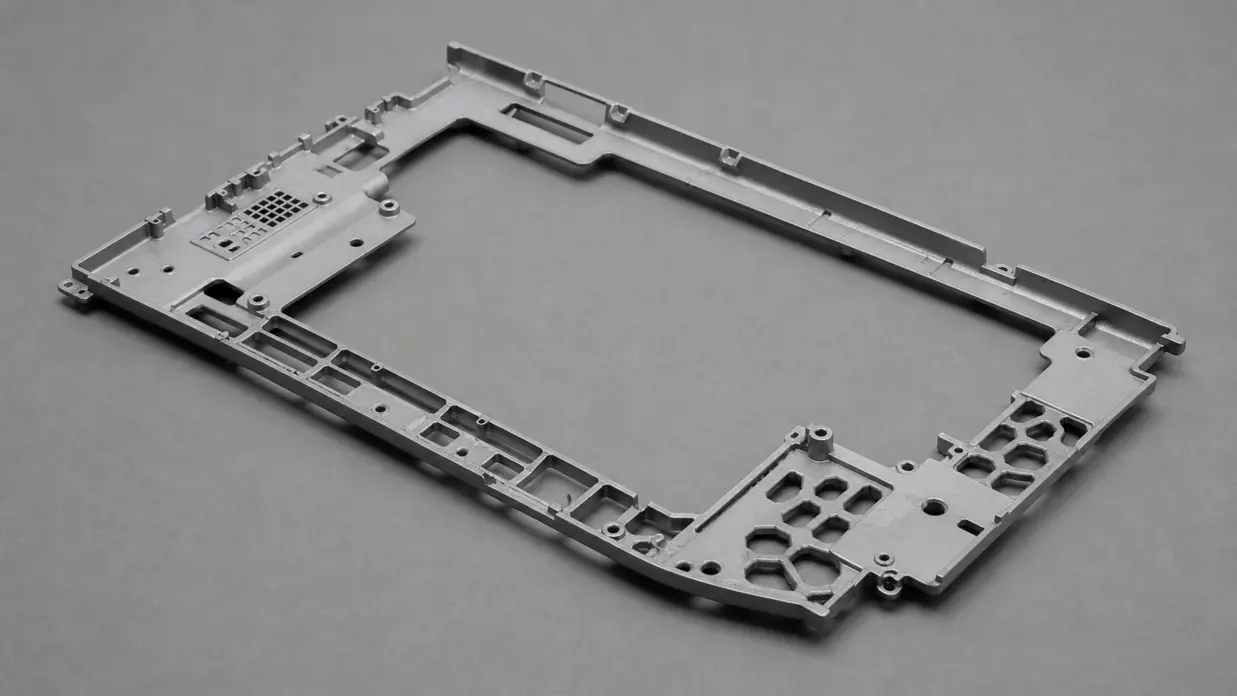
Magnesium is the lightweight champion. It's the lightest structural metal there is, and when saving weight is the whole point of your design, nothing else in the die casting world competes.
The Lightweight Leader
Magnesium is about 33 percent lighter than aluminum and roughly 75 percent lighter than steel, according to the International Magnesium Association. Despite being so light, it offers the best strength for its weight of any die casting metal, which is exactly what designers want in portable products and moving parts.
It also machines beautifully, faster and with less tool wear than almost any other metal. The one thing to watch is corrosion. Magnesium usually needs a protective coating for harsh or outdoor environments, which adds a finishing step.
Common Magnesium Alloys
Meco casts the standard magnesium die casting alloys:
- AZ91D: The most common and most castable magnesium alloy, with good strength and corrosion resistance for its class.
- AM50: More ductile, better at absorbing impact, used where the part needs to flex or take a hit.
- AS41: Better performance at higher temperatures, used in powertrain-adjacent parts.
Best Applications for Magnesium
Magnesium is everywhere weight matters: laptop and camera frames, power tool housings, drone components, and automotive parts like steering brackets and seat frames where cutting grams improves fuel economy. If your product is handheld, portable, or moving fast, magnesium earns a serious look. The dedicated magnesium die casting guide covers alloys and coating options in more depth.
What About Other Die Casting Metals?
Aluminum, zinc, and magnesium cover the vast majority of die casting, but they aren't the only options. A few other metals get die cast in specialized cases.
Copper alloys (including brass and bronze) can be die cast when you need high electrical conductivity, strength, and wear resistance, such as in electrical contacts or plumbing components. The catch is copper's very high melting point, which wears out molds quickly and drives up cost, so it's reserved for jobs where nothing else will do.
Lead and tin alloys are die cast for niche uses like radiation shielding, weights, and some decorative parts. Their low melting points are easy on tooling, but health and environmental regulations rule them out of anything that contacts food, water, or consumers. Pewter, a tin-based alloy, still shows up in figurines and ornamental hardware.
And to answer a question that comes up a lot: no, steel cannot be die cast. Steel and iron melt far hotter than the steel molds themselves can survive, so ferrous parts are made by sand casting, investment casting, forging, or stamping instead. If your part really needs steel, Meco's custom casting hub covers those processes too.
Strength, Weight, and the Property That Actually Decides
Here's the thing most comparison articles miss. Raw strength isn't usually what decides the metal. Strength-to-weight ratio is. A part that's strong but heavy can be worse than a part that's slightly less strong but far lighter, especially in vehicles, electronics, and anything you hold in your hand.
That's why magnesium punches above its weight, literally. It isn't the strongest metal on the list, but because it's so light, it gives you the most strength per gram. This table shows how the three metals rank on the properties buyers care about most.
| Property | Aluminum | Zinc | Magnesium |
|---|---|---|---|
| Density (g/cm³) | About 2.7 | About 6.6 | About 1.8 |
| Tensile strength (typical) | About 324 MPa (A380) | About 283 to 328 MPa (Zamak) | About 240 MPa (AZ91D) |
| Strength-to-weight | High | Lower (heavy metal) | Highest |
| Impact strength | Moderate | Highest of the three | Moderate (AM alloys better) |
| Best weight-driven use | General lightweighting | When weight is not a concern | Maximum weight savings |
A quick way to read it: if weight is the top priority, start with magnesium. If you want strong and light at a lower cost, aluminum. If the part is small, takes impact, and weight doesn't matter, zinc.
What Do Die Casting Metals Cost?
Cost is rarely just the price of the metal. Three separate costs stack up, and the cheapest metal by the pound isn't always the cheapest finished part. The industry standards body NADCA breaks alloy selection into cost factors like these, which we've translated into plain language below.
| Cost Factor | Aluminum | Zinc | Magnesium |
|---|---|---|---|
| Alloy cost (per part volume) | Lowest | Higher (dense, heavy metal) | Moderate to higher |
| Process and tooling cost | Higher (hot, wears tools faster) | Lowest (gentle on tools, fast cycle) | Moderate |
| Finishing and machining cost | Moderate (often needs machining) | Low (near-net, easy to plate) | Higher (usually needs coating) |
| Overall for small parts | Competitive | Often cheapest | Higher |
| Overall for large parts | Usually cheapest | Expensive (weight adds up) | Cost premium for weight savings |
The takeaway: aluminum usually wins on total cost for medium and large parts because it's cheap by volume. Zinc often wins for tiny parts because its long tool life and near-net shape cut finishing work. Magnesium carries a price premium you pay for one reason, weight savings. To see how casting cost fits into a full quote, Meco's custom casting hub shows the range of processes and public tooling figures.
How Does the Casting Process Affect Metal Choice?
The metal you pick also decides which casting machine runs your part, and that affects speed and cost. There are two main types: hot chamber and cold chamber die casting.
Hot chamber machines keep the melting pot built into the machine, so metal is injected fast. This only works for metals that melt at low temperatures, which means zinc and some magnesium alloys. Faster cycles, lower cost per shot.
Cold chamber machines require the molten metal to be ladled in for each shot, which is a bit slower. This is necessary for aluminum, because aluminum melts hot enough to damage a hot chamber system. So when you choose aluminum, you're also choosing the slightly slower, cold chamber route. It's still fast, just not quite as fast as zinc.
Quick Takeaway: Process by Metal
Zinc and some magnesium alloys run on hot chamber machines, giving faster cycles, longer tool life, and lower cost per part. Aluminum runs on cold chamber machines, which are still efficient, but the higher heat means more tool wear and slightly slower cycles. This is one reason zinc is so cost-effective for small, high-volume parts.
How Do You Choose the Right Die Casting Metal?
You don't need a materials science degree to make a good call. You need to answer five questions about your part. We call it the WSCFV screen, and it walks you straight to the right die cast metal.
The WSCFV Screen: 5 Questions to Pick Your Metal
W is for Weight. Is low weight the single most important thing? If yes, lean magnesium. If it matters but isn't everything, aluminum.
S is for Strength. Does the part take impact or sudden loads? Zinc has the best impact strength. Need strong and light? Aluminum or magnesium.
C is for Cost. On a tight budget for a medium or large part? Aluminum is usually cheapest. Tiny part in high volume? Zinc often wins on total cost.
F is for Finish and detail. Do you need fine detail, thin walls, or a smooth plated surface? Zinc holds the finest detail and plates beautifully.
V is for Volume. Running millions of small parts? Zinc's long tool life pays off. Medium volume general parts? Aluminum. Weight-critical niche runs? Magnesium.
Score Your Part and Tally the Winner
Turn the five questions into a quick score. For each factor, give each metal a 1, 2, or 3, where 3 is the best fit for your part's priority. Add up the columns and the highest total points to your metal. Here's a worked example for a part where weight and finish matter most.
| Factor (weighted by your priority) | Aluminum | Zinc | Magnesium |
|---|---|---|---|
| Weight (high priority) | 2 | 1 | 3 |
| Strength | 3 | 3 | 2 |
| Cost | 3 | 2 | 1 |
| Finish and detail (high priority) | 2 | 3 | 2 |
| Volume | 3 | 2 | 1 |
| Total | 13 | 11 | 9 |
In this example aluminum wins. Change your priorities and the numbers shift. If weight were the only thing that mattered, magnesium's 3 would carry far more weight and it would win instead. The point is to make the trade-off visible instead of guessing.
A Real-World Example: Choosing for an LED Housing
Say a lighting client comes to Meco with an LED fixture housing that ships in the tens of thousands. Run the screen. Weight matters because it's a ceiling fixture, so lighter is safer to mount. Strength needs are moderate, no big impacts. Cost is important at that volume. Finish needs to look clean and shed heat. Volume is medium-high.
Aluminum wins here. It's light enough, sheds heat better than the others (a real advantage for LEDs, which fail early when they run hot), costs less than magnesium at that volume, and anodizes to a clean finish. Magnesium would save maybe 30 percent on weight but add cost the project doesn't need, and it would need an extra corrosion coating. Zinc would be far too heavy for an overhead fixture. That's the framework doing its job. For programs that combine casting with machining and finishing, Meco pairs die casting with in-house custom CNC machining so the whole part is finished under one roof.
What Finishing and Surface Options Work With Each Metal?
Your metal choice also shapes what finishes you can apply. Some metals plate easily, some anodize, some need a protective coat before they'll survive outdoors. Here's how the three compare on finishing.
| Finish | Aluminum | Zinc | Magnesium |
|---|---|---|---|
| Anodizing | Excellent | Not typical | Possible (special process) |
| Powder coating | Excellent | Good | Good (often needed for corrosion) |
| Chrome or bright plating | Good | Excellent (industry favorite) | Limited |
| Painting | Good | Good | Good |
| As-cast surface quality | Good | Best (smoothest) | Very good |
Zinc's smooth as-cast surface and easy plating are a big part of why it dominates decorative hardware. Aluminum's love of anodizing suits electronics and architectural parts. Magnesium usually needs a coating for corrosion, so build that into your plan. Explore the full range on Meco's surface finishing services page.
To sum it up: for most parts in 2026, aluminum is the safest first choice among die casting metals because it balances weight, strength, cost, and finish. Reach for zinc when the part is small, detailed, and made in huge numbers, or when impact strength and a plated finish matter. Reach for magnesium when shaving weight is the whole point. Run the WSCFV screen, and when the answer isn't obvious, get a second opinion before you cut a tool.
Frequently Asked Questions About Die Casting Metals
What is the best metal for die casting?
For most parts, aluminum is the best die casting metal because it balances light weight, strength, low cost, and corrosion resistance. Zinc is better for small, detailed, high-volume parts and offers the longest tool life. Magnesium is best when saving weight is the top priority. The right choice depends on your part's weight, strength, cost, finish, and volume needs.
What metals can be die cast?
The three main die casting metals are aluminum, zinc, and magnesium. Copper, lead, tin, and pewter alloys can also be die cast in specialized cases. Almost all die casting uses non-ferrous metals, meaning metals without much iron, because they melt at temperatures the steel molds can handle. Steel and iron are not die cast because they melt too hot and would destroy the mold.
What is die cast metal made of?
Die cast metal is made of non-ferrous alloys, most often aluminum, zinc, or magnesium mixed with small amounts of other elements to improve strength and castability. For example, common aluminum alloys like A380 add silicon and copper, while zinc alloys in the Zamak family add aluminum and copper. These blends are chosen to flow well into the mold and harden into strong, accurate parts.
Is die cast metal strong?
Yes. Die cast metals are strong and durable. Aluminum A380 has an ultimate tensile strength around 324 MPa, zinc Zamak 5 reaches about 328 MPa, and magnesium AZ91D sits near 240 MPa. High-pressure die casting also produces dense parts with good structural integrity, which is why die castings are used in automotive, aerospace, and industrial applications.
Which is stronger, zinc or aluminum die casting?
Zinc alloys like Zamak 5 often match or slightly beat aluminum on raw tensile strength and have the best impact strength of the common die casting metals. However, aluminum has a much better strength-to-weight ratio because it is far lighter. So zinc is stronger by raw numbers and better at absorbing impact, while aluminum is stronger for its weight, which is what usually matters in vehicles and portable products.
What is the cheapest metal for die casting?
Aluminum is usually the cheapest die casting metal for medium and large parts because it costs the least per unit of volume. Zinc can be the cheapest for very small, high-volume parts because its long tool life and near-net-shape casting cut finishing and machining costs. The cheapest finished part depends on part size, volume, and how much secondary work is needed.
What is the lightest die casting metal?
Magnesium is the lightest die casting metal and the lightest structural metal available, with a density near 1.81 g/cm³. It is about 33 percent lighter than aluminum and roughly 75 percent lighter than steel. Despite being so light, it offers the best strength-to-weight ratio of the common die casting metals, which is why it is used in laptop frames, power tools, drones, and weight-sensitive automotive parts.
What is Zamak?
Zamak is a family of zinc die casting alloys made of zinc combined with aluminum, magnesium, and copper. The name comes from the German words for those elements. Common grades include Zamak 3, the most widely used in North America, and Zamak 5, which is a bit stronger. Zamak alloys are prized for excellent castability, fine detail, dimensional stability, and easy plating.
Can steel be die cast?
No, steel cannot be die cast. Steel and iron melt at far higher temperatures than the hardened steel molds themselves can survive, so casting them would quickly destroy the tooling. Ferrous parts are made by sand casting, investment casting, forging, or stamping instead. Die casting is reserved for non-ferrous metals like aluminum, zinc, and magnesium.
What is the difference between hot chamber and cold chamber die casting?
Hot chamber die casting keeps the molten metal inside the machine and injects it quickly, which suits low-melting metals like zinc and some magnesium. Cold chamber die casting requires molten metal to be ladled in for each shot and is used for higher-melting metals like aluminum. Hot chamber is faster and gentler on tools, while cold chamber handles the hotter metals that would damage a hot chamber system.
How do I choose a die casting alloy?
Answer five questions about your part: how important is low weight, how much strength or impact resistance it needs, your cost target, the finish and detail required, and your production volume. If low weight rules, choose magnesium. If you need strong, light, and affordable, choose aluminum. If the part is small, detailed, and high volume, choose zinc. When the answers are split, ask a manufacturing partner for DFM feedback before committing to tooling.
Not Sure Which Die Casting Metal Fits Your Part? Let's Figure It Out.
Choosing between aluminum, zinc, and magnesium is easier when the same team can cast all three, run the numbers on cost and weight, and even prototype in more than one alloy before you commit to tooling. Meco does exactly that. We own the tooling, casting, machining, and finishing steps under one roof, with U.S. engineering support and global warehousing.
With 30+ years of turnkey manufacturing experience and IATF 16949:2016 certified quality, Meco helps OEMs and product teams land on the right metal the first time.
- All Three Metals In House: Aluminum, zinc, and magnesium die casting from one partner, no juggling suppliers.
- 24-Hour Quote with DFM Feedback: Send your CAD and get material and design guidance fast.
- 40+ Processes Under One Roof: Die casting, CNC machining, heat treatment, surface finishing, and assembly with no handoff delays.
- IATF 16949:2016 Certified: Automotive-grade quality applied across every industry, with 99.8% on-time delivery.
- No Minimum Order Quantity: Scale from 10 pieces to 10 million and up as your program grows.
Send your drawings and let Meco's engineering team recommend the right die casting metal and alloy for your part.
Request a Die Casting Quote