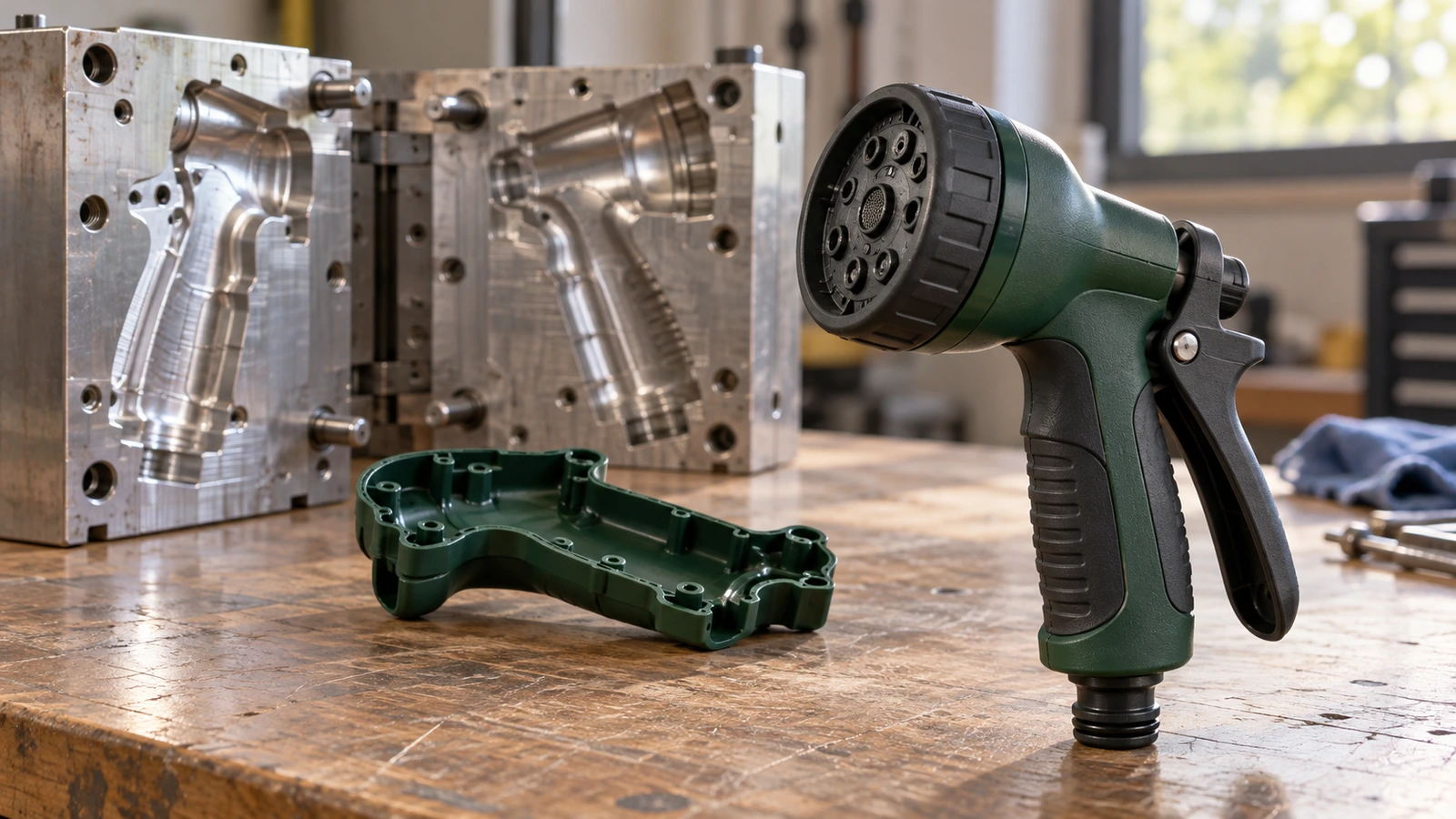
Turnkey injection molding is a manufacturing arrangement where one supplier manages mold design, tooling, molding, finishing, and final assembly under a single contract.
The buyer works with one point of contact from the first design review to the finished, packaged part, instead of coordinating a separate toolmaker, molder, and assembly shop.
Turnkey injection molding puts mold design, tooling, molding, finishing, and final assembly under one supplier. Instead of hiring a separate toolmaker, molder, and assembly shop, the buyer works with one point of contact from the first design review to the finished, packaged part.
The global injection molding market was valued at roughly $312.7 billion in 2025 and is projected to grow to $462.5 billion by 2033, according to Grand View Research. As more production moves through outsourced manufacturing, buyers need to know who owns the tooling, how design changes are handled, and whether one supplier can also make the metal bracket or enclosure the molded part must fit.
Key takeaways
- One accountable supplier. Turnkey scope can cover DFM, tooling, molding, finishing, assembly, and delivery.
- Tooling drives cost and timing. Aluminum is typically faster and lower cost; steel is suited to longer production runs.
- Fit must be reviewed across processes. Molded parts may need to mate with machined or fabricated metal parts.
- Tool ownership belongs in writing. Confirm who owns the mold after payment and how it can be released or moved.
- Plan for the target volume. The right process and tool depend on whether the program is a short bridge run or high-volume production.
What Is Turnkey Injection Molding?
Turnkey injection molding means one supplier manages the outcome across the production process, not only the molding machine.
That can include reviewing the part for moldability, sourcing resin, building the mold tool, running production, handling finishing operations, assembling the part into a larger subassembly, and shipping an inspected product.
This differs from “turnkey capital equipment,” which means buying a complete molding machine cell to install on your own factory floor. This article covers the other meaning: outsourcing production to a supplier that already owns the machines and manages mold design, tooling, and assembly, so the buyer does not need to build that capability in-house.
Turnkey vs. Contract Injection Molding: What's the Real Difference?
Contract molding may cover only machine time, while turnkey molding can start at design and tooling and continue through assembly and delivery.
“Contract” and “turnkey” injection molding are sometimes used interchangeably, but the scope of responsibility can differ. A contract molder may run the machine using a tool the buyer already owns. A turnkey program starts earlier, at design and tooling, and can finish later, at assembly and delivery.
| Factor | Turnkey Injection Molding | Contract or Multi-Vendor Molding |
|---|---|---|
| Mold design and DFM review | Included before tooling starts. | Usually the buyer's responsibility. |
| Tooling | Built by the same supplier that molds the part. | Often built by a separate toolmaker. |
| Points of contact | One supplier owns the timeline and quality record. | Multiple vendors, with the buyer managing handoffs. |
| Assembly and finishing | Can be bundled into the same program. | Typically a separate vendor and step. |
Meco structures its plastics work in the same way it structures assembly, as described on the contract assembly services page. When one supplier owns more of the process, there are fewer places for a project to stall between vendors.
Turnkey molding is not always more expensive than separate vendors once the time and cost of managing handoffs are considered. A single-supplier program can reduce delays and rework caused by miscommunication between the toolmaker, molder, and assembly shop.
What's Included in a Turnkey Injection Molding Program?
A turnkey quote should state which production stages are included and where the supplier's responsibility ends.
Use these stages to check the scope before approving tooling. The exact program depends on the part and the finished product it must become.
Design and DFM Review
Before steel or aluminum is cut, the design is reviewed for wall thickness, draft angle, and gate location. Design for manufacturability (DFM) catches problems on a drawing instead of in a finished mold.
Mold Design and Tooling
The supplier engineers and builds the mold, choosing aluminum or steel tooling based on expected volume. The tooling comparison below outlines typical lead times and cost ranges.
Molding, Finishing, and Secondary Operations
Production runs with in-process quality checks. Secondary operations such as pad printing, ultrasonic welding, or insert placement can be included in the same program instead of sent to another vendor.
Assembly and Delivery
If the molded part is one component of a larger product, the supplier can join it with fasteners, metal brackets, or cable assemblies, then pack and ship the finished build. See product assembly services for how a full build is sequenced.
Aluminum vs. Steel Tooling: Which One Do You Need?
Tooling choice is usually the biggest lever on cost and lead time in a turnkey injection molding quote.
Choose the tool based on expected volume, not only the upfront budget. Aluminum tooling is often used for prototypes and bridge production, while steel tooling is better suited to longer production runs and tighter tolerances.
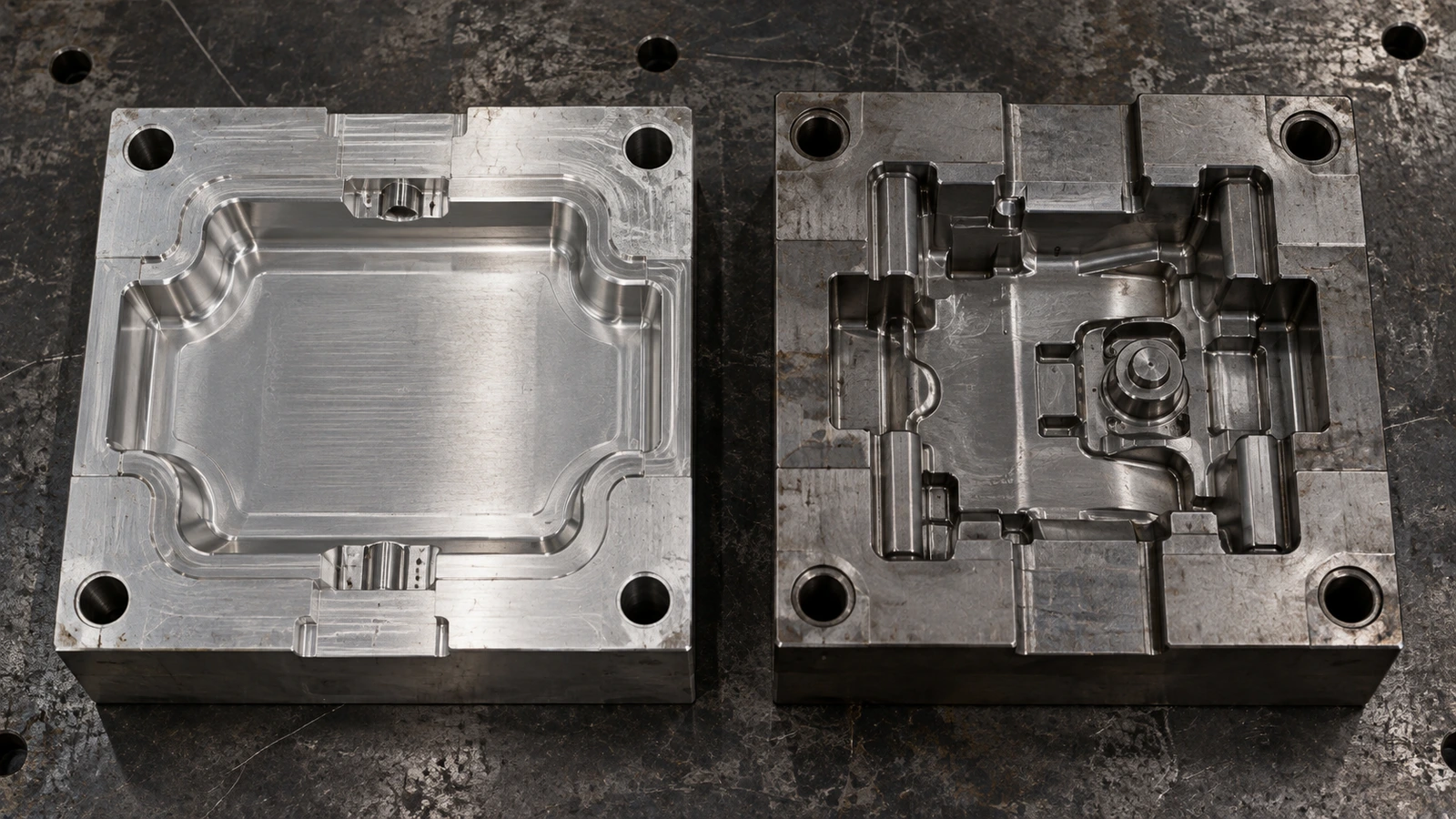
| Factor | Aluminum Tooling | Steel Tooling, Soft or Hard |
|---|---|---|
| Typical lead time | 2 to 3 weeks | 4 to 8 weeks |
| Typical cost range | $2,000 to $8,000 | Soft steel: $8,000 to $25,000. Hard steel: $20,000 to $80,000+ |
| Best fit for | Prototypes and bridge production | Long production runs and tight tolerances |
Standard achievable tolerance across most production tooling runs at ±0.05 mm. A program that scales from a 10-piece bridge run to a 10-million-piece run may start with an aluminum tool for validation and move to steel once the design is locked.
Meco's custom injection molding services support insert molding, overmolding, and two-shot molding across 50+ resins within this tooling framework. For a close variant, see what 2K injection molding is.
Where Molding and Metal Work Overlap
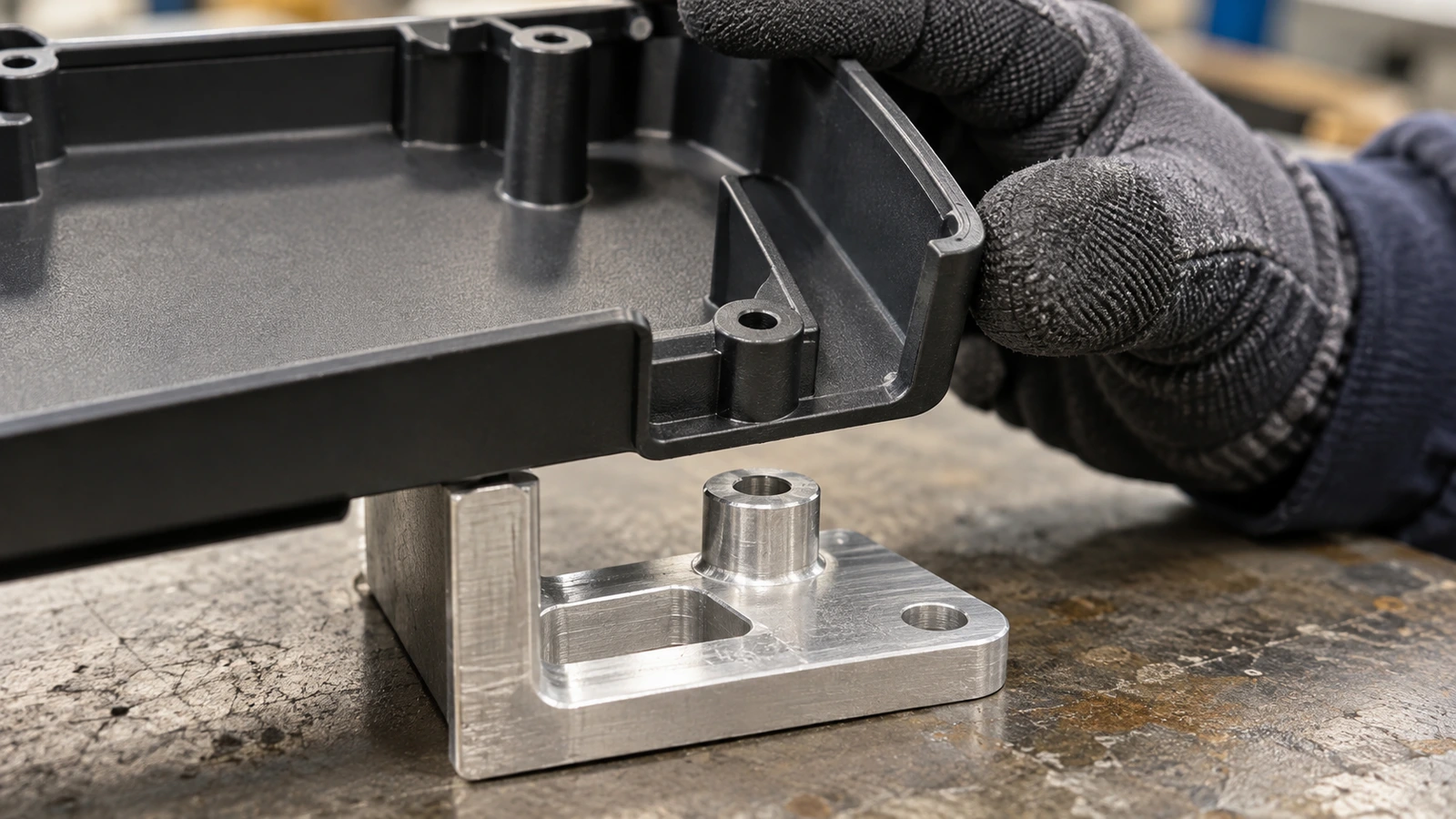
A molded enclosure rarely stands alone. It may mate with a metal bracket or a machined boss, and small tolerance mismatches between the processes can cause fit problems late in a build.
When mold design and metal fabrication are reviewed together, a rib that is 0.1 mm too tight against a machined mounting point can be caught on a drawing instead of on an assembly line.
Who Owns the Mold?
Put mold ownership and release terms in writing before the tool is cut.
In a properly structured agreement, the buyer owns the mold once it is paid for in full, and the supplier releases or ships the tooling on request. Do not assume this is the default in practice.
Quality Inspection Organisation has reported cases where supplier contract terms gave the supplier leverage over paid tooling and required additional release payments, sometimes 15% to 30% of the original cost. Confirm the ownership, access, maintenance, and transfer terms in the agreement before tooling begins.
What to Ask Before You Sign a Turnkey Injection Molding Quote
Use the quote to confirm who owns each stage, each cost, and the tooling itself.
These questions help compare supplier scope and make gaps visible before production starts:
- Design review. Does the quote include mold design and a DFM review, or only molding?
- Mold ownership. Who owns the tooling once it is paid for, and what does the contract say about releasing it?
- Tool material. Is the tooling aluminum or steel, and does that match the real production volume?
- Lead time. What is the quoted time from approved design to first shots?
- Secondary operations. Are finishing and secondary operations included or billed as extras?
- Assembly. Can the same supplier assemble the molded part into a larger product?
- Quality checks. What checks happen during the production run, not only at the end?
- Order quantity. Is there a minimum order quantity, and can the program scale down as well as up?
Need a DFM review? Send your part design and target volume to discuss moldability, tool choice, and the next manufacturing steps.
Get DFM Feedback on Your DesignHow Meco Runs a Turnkey Injection Molding Program
Meco uses a five-step process from quote and DFM review through tooling, sample verification, and production launch.
Design feedback typically returns within 24 hours. DFM adjustments at this stage often reduce final part cost by 15% to 30%.
- Request a quote. Share the part design, expected volume, and production requirements.
- Quote plus DFM. Review moldability and cost options before tooling starts.
- Tooling kickoff. Confirm the design and begin tool production.
- Sample verification. Review sample parts against the agreed requirements.
- Production launch. Move into production after samples are approved.
Because Meco also runs CNC machining, casting, and forging in-house, a molded enclosure or bracket can be reviewed against the metal component it must mate with before either tool is cut.
Programs have no fixed minimum order quantity and can scale from 10 pieces to 10 million or more. Meco is IATF 16949:2016 certified, with production in Thailand and China and engineering support based in the U.S.
Where to Go Next
Explore the related guides to connect injection molding with product manufacturing, plastics process selection, and assembly.
For the full picture of how injection molding fits alongside Meco's other processes, see whole product manufacturing.
For a comparison with a related plastics process, read injection molding vs. thermoforming or the foundational guide to what plastic injection molding is.
For how a molded part joins a larger build, see mechanical assembly services and the guide to what mechanical assembly is.
Plan Your Molding Program
Meco can review the design, tooling, finishing, and assembly requirements for your injection molding program.
- Quality system. IATF 16949:2016 certified.
- Program scale. 10 pieces to 10 million or more.
- Engineering support. DFM feedback typically within 24 hours.
Explore custom injection molding services or whole product manufacturing.
Request a QuoteReferences and sources
- Grand View Research. Injection Molding Market Size and Share Report, 2026-2033.
- Quality Inspection Organisation. Mold Tooling Ownership: The Shocking Term Chinese Suppliers Push For!.
