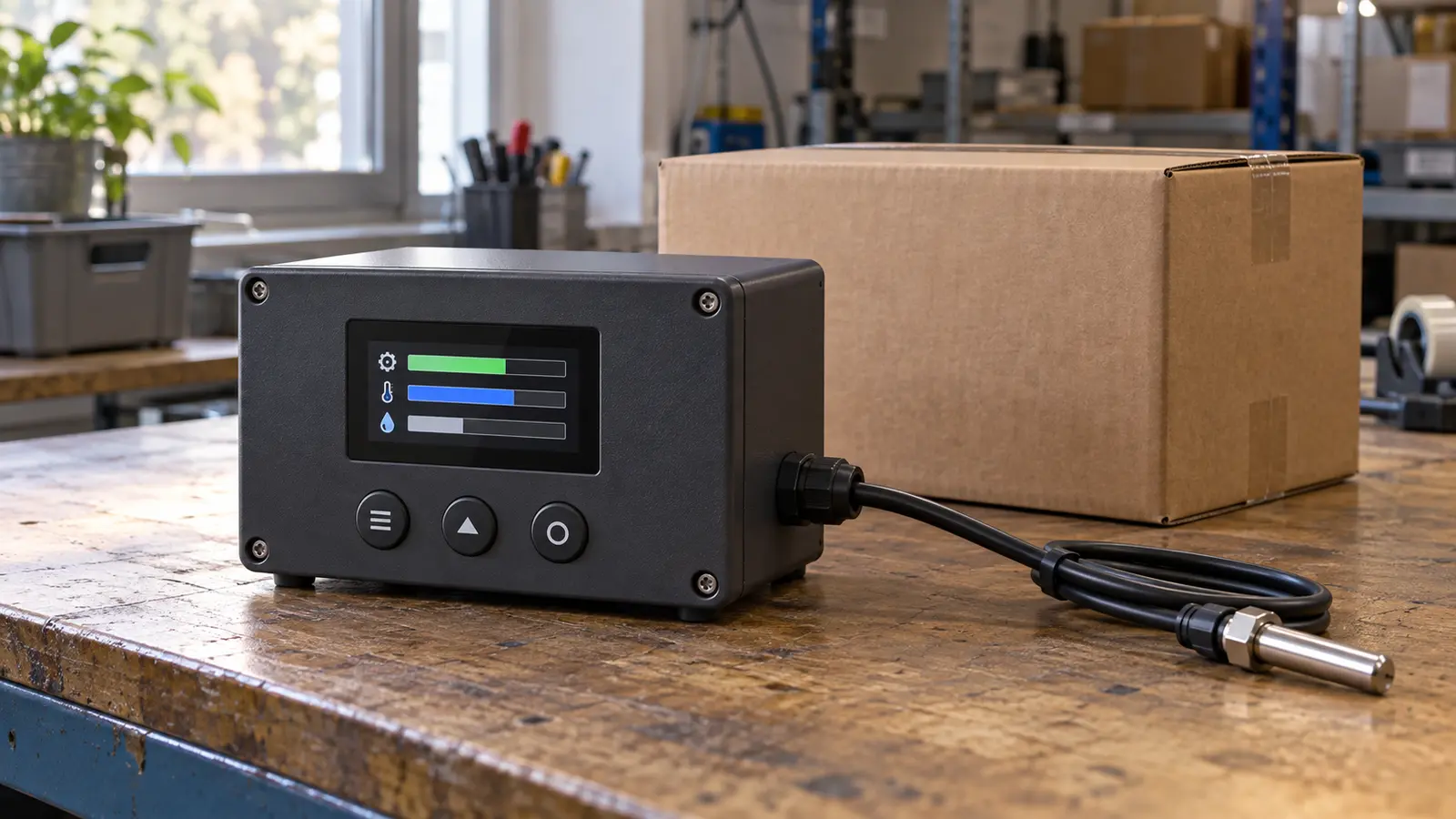
Turnkey electronics manufacturing puts component sourcing, PCB assembly, cable and wire harness integration, enclosure and box build, and final functional testing under one supplier.
You provide the design and receive a finished, tested product, with one manufacturer responsible for the components and the full build.
Turnkey electronics manufacturing combines sourcing, assembly, and testing through one supplier. You do not need to coordinate a board house, a parts distributor, and an assembly shop on your own.
The term comes from construction, where a contractor delivers a building ready for the owner to turn the key. In electronics, one manufacturer takes responsibility for the steps between your design files and a working product.
That product may include a populated circuit board, connected wiring, an enclosure, and installed controls. The exact scope depends on the design and the program.
A turnkey supplier manages the full bill of materials (BOM) and stands behind the parts it procures. The finished unit goes through functional test before packaging.
Key takeaways
- One accountable supplier. Turnkey combines component sourcing with assembly and final test.
- More than PCBA. The scope can extend from a bare board through wiring, enclosure integration, and a finished system.
- Consignment remains an option. Customers can supply some or all components when they need to retain sourcing control.
- Review fit early. Checking the board, enclosure, and harness together can catch alignment and routing issues before production.
- Define the quote scope. Confirm required files, sourcing rules, test coverage, and who handles each build stage.
What Is Turnkey Electronics Manufacturing?
It is a production model in which one manufacturer manages component sourcing and delivers a fully assembled, tested electronic product.
In a turnkey electronics program, the manufacturer takes responsibility for the full BOM, not just the labor of soldering parts onto a board. That means sourcing every component and standing behind the parts it procures.
Work can then move through PCB assembly (PCBA), cable and wire harness integration, enclosure and box build, and final functional test before packaging. A true turnkey program treats these stages as one accountable process rather than separate vendor handoffs.
Turnkey vs. Consignment Assembly for Electronics
Turnkey means the manufacturer sources the parts; consignment means the customer supplies some or all of them.
With consignment assembly, the manufacturer performs assembly and testing while the customer manages the supplied components. Turnkey is often a fit for new product introductions or teams with limited sourcing staff. Consignment can suit customers with proprietary or already-purchased parts.
| Factor | Turnkey Electronics Manufacturing | Consignment Assembly |
|---|---|---|
| Component sourcing | Manufacturer procures the full BOM and owns supply risk. | Customer supplies parts and manages shortages. |
| Accountability | One party is responsible for the finished unit. | Responsibility can be split between supplied parts and assembly labor. |
| Best fit | New product introductions and teams with limited sourcing staff. | Customers with proprietary or already-purchased parts. |
Meco's contract assembly services page explains this business-model choice. It also describes ESD-safe handling per IEC 61340 and torque control per ISO 5393 when boards move into mechanical assembly.
Many electronics customers choose turnkey to work with one accountable partner. Customers that already hold components or need to control their sourcing may choose consignment instead.
What a Turnkey Electronics Program Builds
Most programs combine board assembly, wiring, enclosure integration, and final testing.
The product determines which stages are needed. A simple unit may use one board in a housing, while a more complex product can combine several boards, displays, power supplies, and harnesses.
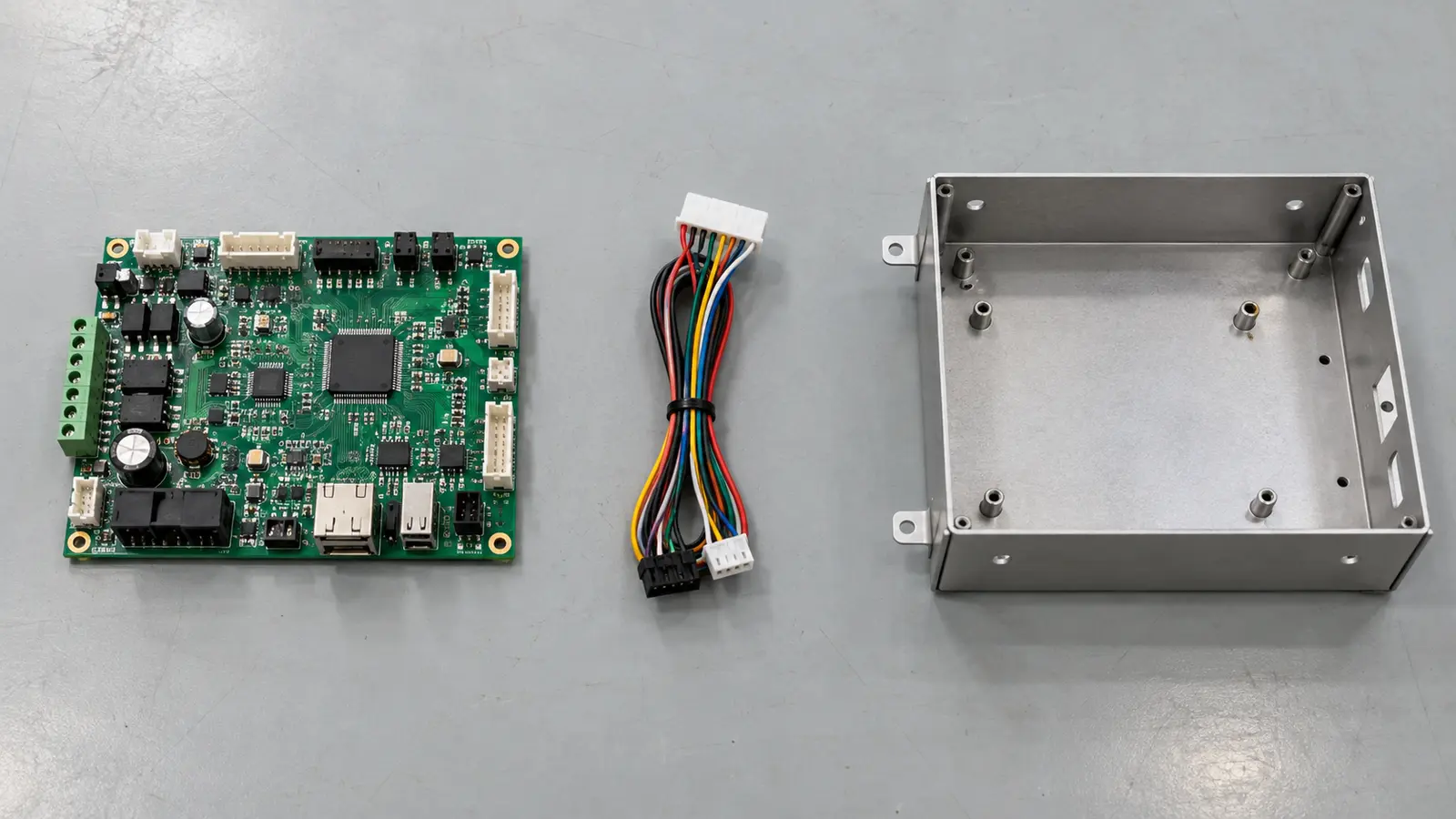
PCB Assembly (PCBA)
Surface-mount and through-hole components are placed and soldered onto the bare board, then inspected. Many assemblers use IPC-A-610 as a reference for electronic assembly acceptability and solder-joint inspection criteria.
Cable and Wire Harness Assembly
Most finished products need more than one board. A harness connects boards to switches, displays, or power supplies. If the harness is specified late in the design, it can force rework at the box-build stage.
Enclosure and Box Build
Box build installs boards, harnesses, and other subassemblies into an enclosure to produce a finished unit. See what box build assembly includes for a step-by-step breakdown.
Final Functional Test
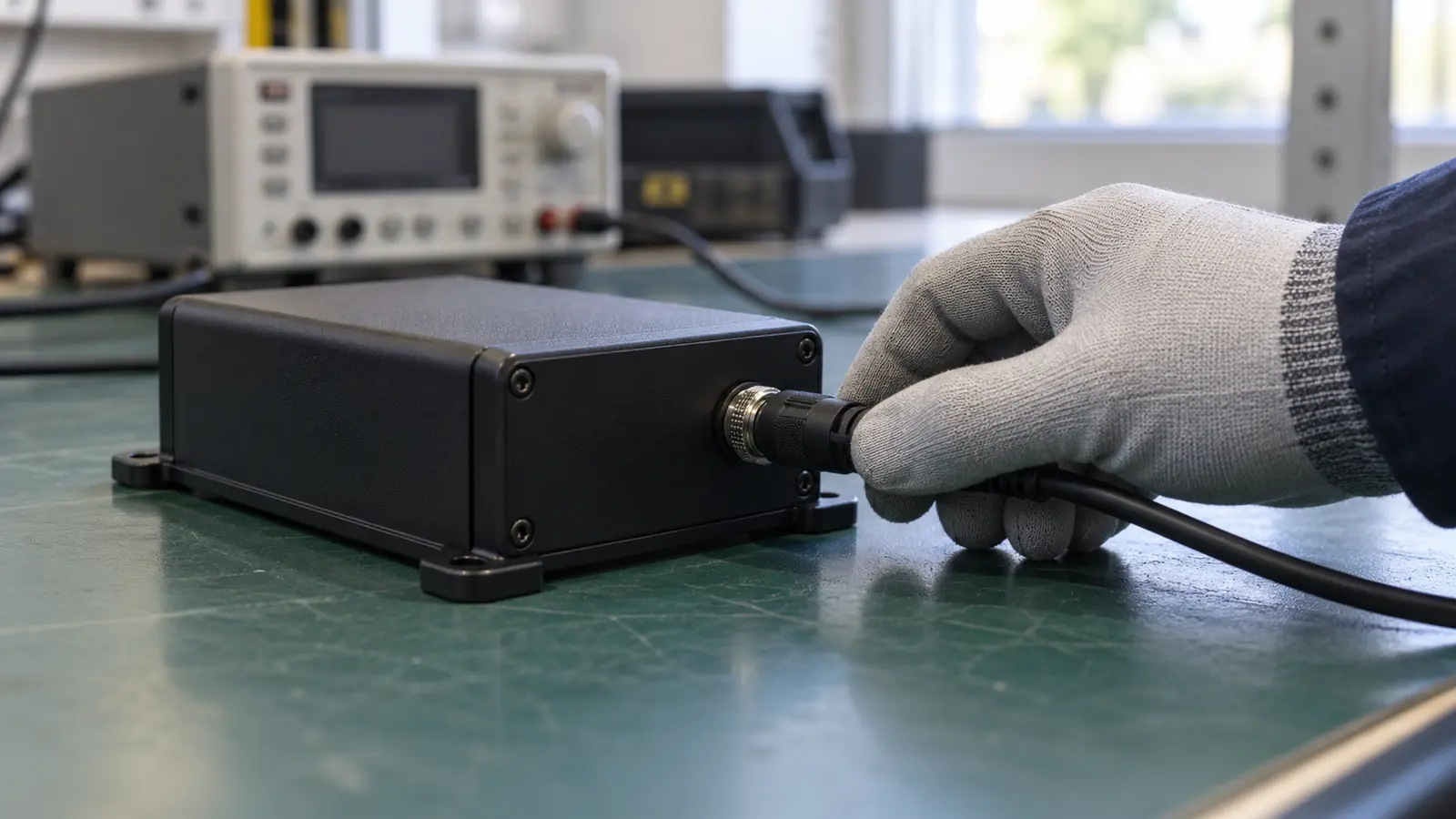
Before shipment, test the complete system, not only the bare board. Check power-up behavior, communication interfaces, and user-facing controls after the parts are installed in the housing.
Why Review the Enclosure and Board Together?
Reviewing the board and enclosure together helps catch fit and routing issues before the first production run.
A common failure point is the gap between a board and an enclosure from separate vendors that never review each other's drawings. The problems can be small on their own, but costly if they appear after production begins.
Common fit and routing issues
- Connector alignment. A cutout can sit slightly off from the connector's actual position on the board.
- Standoff clearance. A standoff may not clear a taller component added late in the design.
- Harness routing. A wire harness may not fit through a chassis designed before the final board layout was set.
If these issues are caught during the first production run instead of design review, they can mean scrapped enclosures and a missed launch date. A manufacturer with in-house CNC machining, casting, and injection molding alongside electronics assembly can review the board and enclosure before tooling is committed. Meco operates manufacturing facilities in Thailand and China.
For more on joining methods used at the enclosure stage, see the complete guide to mechanical assembly.
What to Ask Before You Sign a Turnkey Electronics Quote
Confirm the inputs, sourcing responsibilities, and test scope before accepting a quote.
A quote number alone will not tell you whether a program can run smoothly. These questions help clarify the work and reduce the risk of late surprises.
- Quote files. What do you need for an accurate quote: a BOM, Gerber files, a component placement list, or assembly drawings?
- DFM review. Is design for manufacturability (DFM) review included in the base quote, and will it happen before production starts?
- Shortages and obsolete parts. How are unavailable or discontinued components handled? Will you propose substitutes for approval instead of changing parts without notice?
- Build location. Does one facility handle both PCBA and the enclosure, or does the enclosure go to another vendor?
- Functional test. What does the test cover, and does it reflect how the product will be used?
Need a design review? Send your board files, parts list, and enclosure drawings so Meco can review the build and return DFM feedback.
Get DFM Feedback on Your DesignHow Meco Runs a Turnkey Electronics Program
Meco pairs board-level work with in-house mechanical processes so the enclosure and board can be reviewed together.
Meco's PCB design and assembly capability supports this combined review before tooling is committed. Design for manufacturability feedback typically returns within 24 hours of file submission.
Programs have no fixed minimum order quantity. They can start with prototype quantities of around 10 units and move into full production. Every finished unit goes through documented functional testing before packaging.
Meco can provide a standard non-disclosure agreement (NDA) before you share drawings or files. Your design and tooling remain yours, and you can arrange to move them to another supplier at your expense.
Build Your Electronics Program
Meco can review the board, harness, and enclosure scope together, then support assembly and functional testing from prototype through production.
- DFM feedback. Typically returned within 24 hours.
- Order size. Prototype quantities around 10 units and larger programs.
- Quality system. IATF 16949:2016 certified.
Explore contract assembly services or read the box build guide.
Request a QuoteReferences and sources
- IPC. Meet Your Standards: IPC-A-610.
- International Electrotechnical Commission. IEC 61340-5-1:2024, Protection of electronic devices from electrostatic phenomena.
- International Organization for Standardization. ISO 5393:2017, Rotary tools for threaded fasteners.
