How Much Does CNC Machining Cost In 2026: Pricing Breakdown

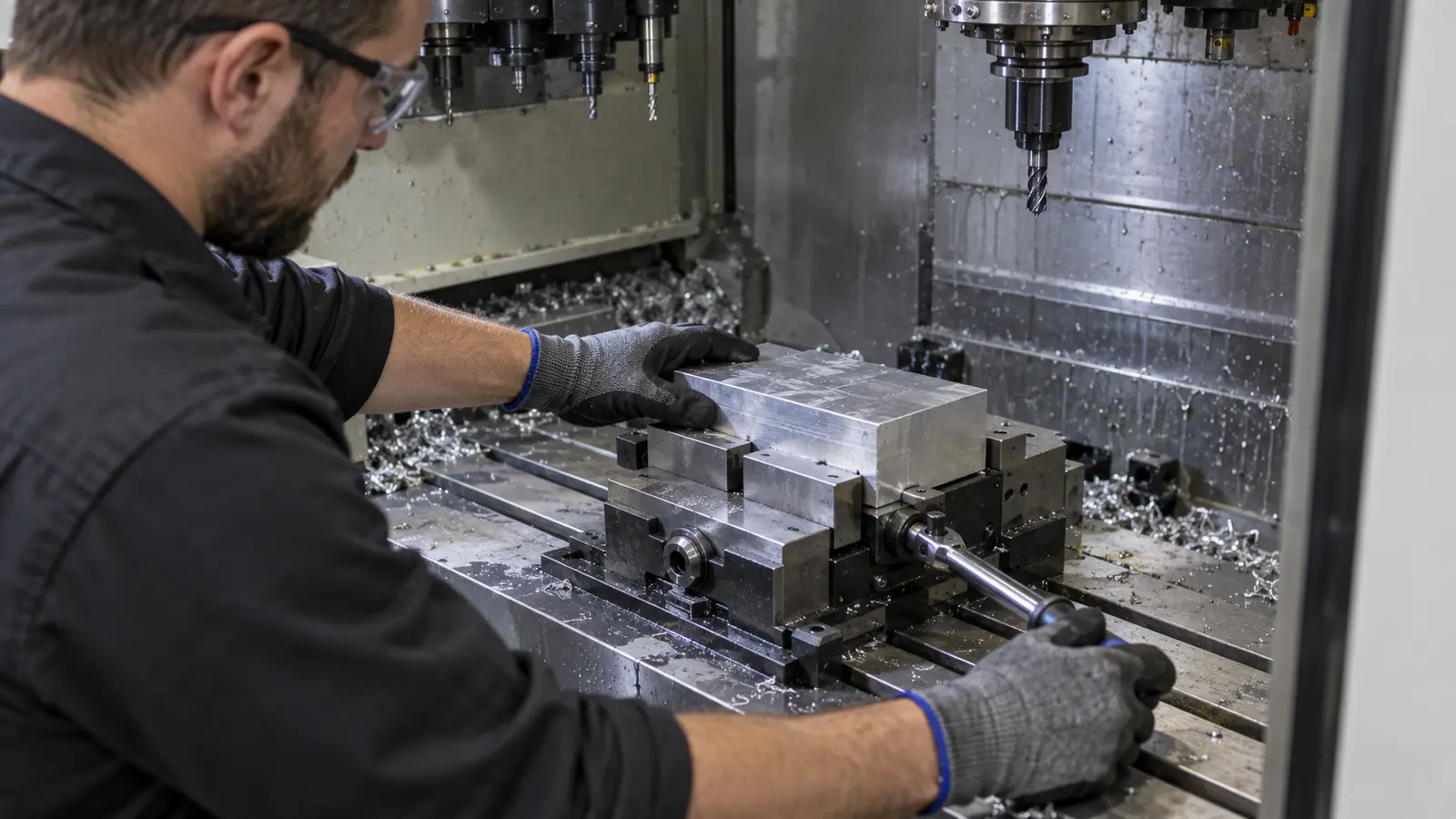
image of cnc machining for the blog how much does cnc machining cost

You have designed a part, your engineering team has signed off on the geometry, and now the finance department wants a number. How much will this cost to machine? It sounds like a straightforward question. It is not. CNC machining costs are shaped by an interconnected web of variables, from the type of machine that touches the metal to the country where that machine sits, and from the tolerances on your drawing to the tariffs applied at the border. Understanding those variables is what separates engineers and buyers who consistently stay on budget from those who get blindsided by every quote.

This guide breaks down every factor that drives CNC machining cost in 2026, provides worked pricing examples you can apply to your own projects, compares regional pricing across North America, Asia, and Europe, and identifies the specific design and sourcing strategies that deliver 15 to 50 percent cost reductions without compromising part quality. Whether you are quoting a single prototype or planning a 100,000 unit production run, the economics covered here will help you make better decisions at every stage.

This guide focuses specifically on per-part CNC machining cost. If you want the broader picture across every metal manufacturing process, including casting, forging, stamping, and MIM, see our complete guide on how much it costs to get a metal part made. If your question is about the capital cost of buying a CNC machine outright and its hourly ownership economics, see our CNC machine cost guide.

What Does CNC Machining Actually Cost The Numbers to Know

What Does CNC Machining Actually Cost? The Numbers to Know

CNC machining costs are expressed in two ways: an hourly machine rate and a per-part price. Both are useful, but they describe different things, and confusing the two is one of the most common mistakes buyers make when comparing quotes.

Hourly rates vary based on machine type and geographic region. In North America, a standard 3-axis CNC milling machine runs between $30 and $75 per hour. 4-axis and 5-axis CNC machining centres climb to $75 to $200 or more per hour, reflecting the higher capital cost of the equipment, the greater programming complexity, and the skill premium required to operate them. CNC turning centres for cylindrical components generally fall in the $50 to $110 per hour range. In China and Southeast Asia, the same machine types run at roughly 40 to 60 percent of North American rates, though that gap narrows significantly once you factor in shipping, duties, quality management overhead, and the tariff environment of 2026.

Per-part costs tell a more complete story and are typically what matters most to engineering and procurement teams building a production budget. Simple parts produced in moderate volumes can cost as little as $10 to $50 per piece. Mid-complexity components in low-to-medium volumes typically land in the $50 to $200 range. Highly complex, precision-engineered parts produced in small quantities, particularly those requiring tight tolerances, exotic materials, and multi-axis operations, can exceed $200 to $500 or more per part. Every dollar in those ranges traces back to specific, identifiable cost drivers, and this guide will walk through each one in detail.

The CNC Machining Market in 2026

The global CNC machine tools market is valued at approximately $116.6 billion in 2026, according to Mordor Intelligence, and is projected to reach over $160 billion by 2031, growing at a CAGR of roughly 6 percent. Meanwhile, the precision machining services market is expected to reach $124.4 billion in 2026, driven by accelerating demand from automotive, aerospace, medical, and industrial sectors. For anyone sourcing custom parts, understanding the cost mechanics inside this expanding market has never been more critical.

The Primary Cost Drivers in CNC Machining

The Six Primary Cost Drivers in CNC Machining

Every CNC machining quote is built from the same underlying variables. The shop may not itemise them on the document they send you, but they are all embedded in the final number. Understanding each one gives you the vocabulary to negotiate intelligently and the foresight to make cost-informed design decisions before a single chip of material is cut.

1. Machine Type and Axis Configuration

The single biggest structural driver of your hourly machining rate is which machine your part requires. A 3-axis CNC mill moves the cutting tool along the X, Y, and Z axes and is well suited to prismatic parts, flat surfaces, holes, and relatively straightforward geometries. Because these machines are less expensive to purchase, easier to program, and simpler to operate, they carry the lowest hourly rates in the shop.

The moment your part requires undercuts, compound angles, or complex curved surfaces that a 3-axis machine cannot reach in a single setup, you move into 4-axis or 5-axis territory, and the hourly rate follows accordingly. A 5-axis CNC machining centre can process intricate geometries that would otherwise require multiple setups and repositioning on a 3-axis machine, but you are paying for that simultaneous capability. The practical implication for designers is clear: every additional degree of rotational freedom your part demands has a direct cost attached to it.

Machine TypeHourly Rate (North America)Hourly Rate (Asia)Best For
3-Axis CNC Mill$30 to $75$15 to $40Prismatic parts, flat surfaces, simple pockets
4-Axis CNC Mill$75 to $130$30 to $60Parts needing rotation on one additional axis
5-Axis CNC Mill$100 to $200+$40 to $80Complex geometries, compound curves, aerospace parts
CNC Turning Centre$50 to $110$20 to $50Cylindrical parts, shafts, bushings
CNC Turn-Mill (Multi-tasking)$120 to $200+$50 to $90Complex rotational parts with milled features

2. Material Selection and Machinability

Material shapes CNC machining cost in two distinct ways: the raw material price and the machinability of that material, which directly affects cycle time and tooling wear. These two factors do not always move in the same direction, which is why material selection deserves more strategic thought than it typically receives.

Aluminum is the benchmark for cost-efficient CNC machining. It cuts quickly, causes minimal tool wear, and is available in a wide range of engineering grades at accessible prices. A carbide end mill might last through 50 parts in aluminum but only 10 to 15 in stainless steel before needing replacement. Steel and stainless steel increase cost on both fronts: the raw material is heavier and often pricier per kilogram for alloyed or stainless grades, and the harder material demands slower cutting speeds, more robust tooling, and more frequent tool changes. Titanium sits at the most demanding end of the common engineering metals spectrum. Its exceptional strength-to-weight ratio comes at a significant machining cost premium, with cutting forces, heat generation, and tool wear rates all conspiring to stretch cycle times and inflate per-part cost by a factor of three to five compared to aluminum.

For engineering plastics, materials like PTFE (Teflon) and PEEK introduce their own complications. Elasticity and thermal sensitivity can make them more expensive to machine accurately than their modest raw material cost might suggest. When you can select aluminum or a standard engineering plastic for your application without compromising functional requirements, you are making a direct cost reduction decision. For a deeper breakdown of which metals and plastics machine most economically, see Meco's guide to the best materials for CNC machining.

MaterialApprox. Raw Cost (USD/kg)Machinability RatingRelative Machining Cost
Aluminum 6061$3.50 to $4.50Excellent1.0x (baseline)
Carbon Steel 1018/1045$1.00 to $2.50Good1.3x to 1.5x
Stainless Steel 304$4.50 to $6.00Moderate1.8x to 2.2x
Stainless Steel 316$5.50 to $7.50Moderate to Difficult2.0x to 2.5x
Brass C360$6.00 to $8.00Excellent1.0x to 1.2x
Titanium Grade 5$25.00 to $35.00Difficult3.0x to 5.0x
PEEK$70.00 to $120.00Moderate2.0x to 3.0x (material-driven)
ABS / Nylon (PA)$2.00 to $5.00Good0.8x to 1.0x

3. Part Complexity, Tolerances, and Number of Setups

Part complexity is where many engineers inadvertently add cost without realising it. Every additional feature, every tight tolerance call-out, and every geometric requirement that forces the machinist to reposition the part in the machine adds time. A part that can be fully machined in a single setup is dramatically cheaper to produce than one requiring two, three, or four separate fixturings, even if the raw geometry looks similar on screen. Each repositioning step demands its own setup time, re-zeroing, and verification, and these costs accumulate quickly.

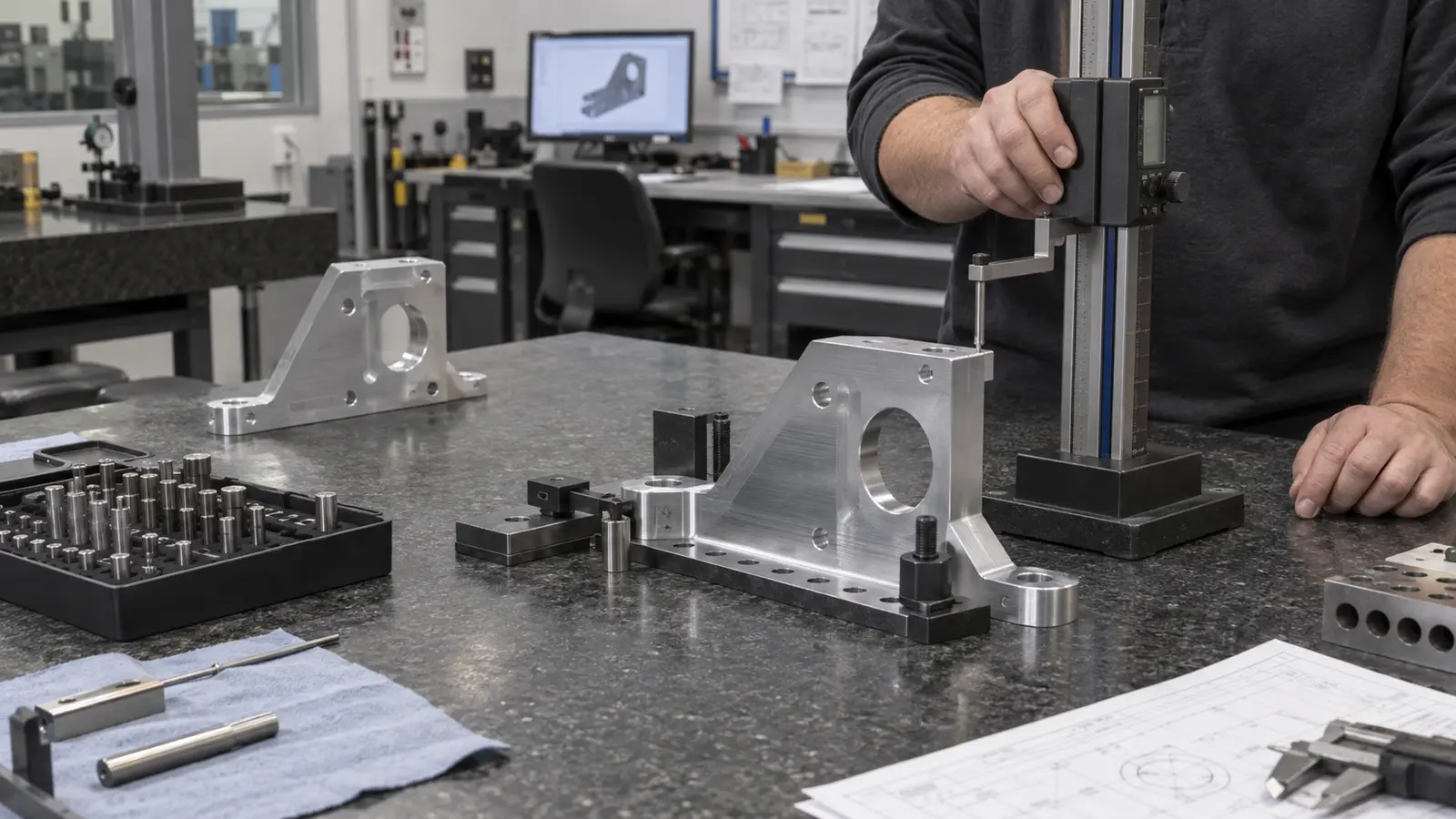
Tolerances deserve particular attention. Standard machining tolerances of plus or minus 0.005 inches (approximately 0.127 mm) are achievable on most machines with minimal additional effort. When your drawing calls for plus or minus 0.001 inches or tighter, the shop must slow the machine down, use more precise measurement equipment, run in-process inspections, and accept a higher scrap risk, all of which add to the quoted price. According to data from multiple machining studies, tightening a tolerance from standard to precision can increase the machining time for that feature by 5 to 20 times. Meco's custom CNC machining services hold accuracy to 0.01 mm as a standard specification, with surface roughness options from fine Ra 0.4 μm to coarse Ra 3.2 μm, giving engineering teams precise control over what they are paying for in any given application.

4. Setup Fees and Programming Costs

Setup fees are among the most misunderstood components of a CNC machining quote, and they are one of the primary reasons per-part costs drop so dramatically as order volume increases. Before a single part is cut, a machinist must program the CAD geometry into the machine's CAM software, create the toolpaths, select and load the tooling, design and fabricate any necessary fixtures, and run test cuts to verify the program. This work takes the same amount of time whether you are ordering one part or one thousand.

For simple parts, setup might represent $50 to $200 of upfront investment. For complex multi-operation components requiring custom fixturing and multi-axis programming, setup costs can exceed $500 to $1,000. CAM programming alone runs $50 to $120 per hour depending on part complexity and programmer experience, and a part with 3D surfacing, deep pockets, or multiple setups can take several hours to program. When that combined fixed cost is divided across 10 parts, the per-unit impact is enormous. Divided across 500 parts, it becomes negligible. This mathematical relationship is the single most important thing to understand about CNC machining pricing.

5. Surface Finishing and Post-Processing

The cost of a CNC machined part does not end when the last cut is made. Many applications require post-processing steps such as anodizing, powder coating, nickel plating, heat treatment, or painting, and each adds both time and cost. Based on industry data, post-processing typically adds $3 to $50 or more per part depending on the process and part size: heat treatment runs $5 to $15, anodizing or bead blasting $3 to $10, CMM dimensional inspection $5 to $20, and manual deburring $2 to $5.

What makes this particularly costly from a total procurement perspective is that post-processing steps are often managed by separate specialist vendors, introducing coordination overhead, lead time extensions, and quality risk at every handoff. A finishing step that costs $5 per part in process time can cost far more when you factor in the logistics of shipping parts to a sub-supplier, waiting for turnaround, inspecting them, and moving them to assembly. This is one of the most underappreciated hidden costs in the traditional multi-vendor manufacturing model, and it is precisely why vertically integrated partners that consolidate machining, finishing, and assembly under one roof deliver more total value than their hourly rates alone might suggest.

6. The 2026 Factor: Tariffs, Labor, and Material Volatility

In 2026, CNC machining costs are shaped by forces that did not appear in pricing guides even two years ago. The current tariff environment is significant: as of June 2025, Section 232 tariffs on imported steel and aluminum stand at 50 percent, and as of April 2026 derivative products containing steel, aluminum, or copper face an additional 25 percent tariff on the full product value. These directly increase raw material costs for parts sourced domestically from imported stock and dramatically affect the landed cost calculation for parts machined overseas. Effective U.S. tariff rates have reached levels not seen since 1946, according to industry analysis from Wiss & Company, and the downstream effects on CNC per-part pricing are measurable. For a full breakdown of how tariffs flow into total landed cost, see Meco's guide on the cost of getting a metal part made.

Simultaneously, the skilled machinist shortage continues to tighten. CNC programmers command $35 to $50 or more per hour, setup machinists earn $30 to $40 per hour, and even entry-level CNC operators now start at $20 to $28 per hour, according to 2026 workforce data from CloudNC. The average age of a machinist in the U.S. is 45, and retirements are outpacing new entrants. These labour costs flow directly into the hourly shop rates embedded in every quote you receive. Understanding that material tariffs and labour economics are structural, not temporary, cost factors in 2026 is essential for building realistic project budgets.

How to Calculate CNC Machining Cost A Worked Example

How to Calculate CNC Machining Cost: A Worked Example

Most pricing articles list the factors that affect CNC machining cost without showing how they combine into an actual number. The formula most shops use, whether explicitly or implicitly, is:

CNC Machining Cost Formula

Total Part Cost = Material Cost + (Machining Time × Hourly Rate) + (Setup Cost ÷ Batch Size) + Finishing Cost + Inspection/Documentation Cost

Here is that formula applied to a real-world example. Consider a moderately complex aluminum 6061 bracket, approximately 120 × 80 × 30 mm, with two threaded holes, a pocket, and a standard tolerance of plus or minus 0.05 mm. It requires anodizing and is ordered in quantities of 1, 10, 100, and 500 units.

Cost ComponentValueNotes
Raw material per part$3.506061 aluminum billet, including waste
Machining time per part18 minutes3-axis mill, including tool changes
Machine hourly rate$65/hrNorth American 3-axis rate
Machining cost per part$19.5018 min × $65/hr
Setup + programming (one-time)$220CAM: $120, fixturing: $60, verification: $40
Anodizing per part$6.00Type II clear anodize
Deburring per part$2.50Manual edge break
Inspection per part$3.00Standard dimensional check

Now watch what happens to the total per-part cost as volume changes:

QuantitySetup per PartMaterialMachiningFinishingInspectionTotal per Part
1 unit$220.00$3.50$19.50$8.50$3.00$254.50
10 units$22.00$3.50$19.50$8.50$3.00$56.50
100 units$2.20$3.20$18.50$7.50$2.50$33.90
500 units$0.44$2.80$17.50$6.50$2.00$29.24

The per-part price drops by 78 percent from a single prototype to a 10 unit batch, and continues falling as volumes increase through material bulk pricing, cycle time optimisation from repetition, and volume discounts on finishing services. This is not a theoretical illustration. It is the actual cost curve that procurement teams encounter on every CNC machining project, and understanding it is essential to building accurate budgets.

CNC Machining Costs by Region North America vs Asia vs Europe

CNC Machining Costs by Region: North America vs. Asia vs. Europe

One of the most consequential sourcing decisions in CNC machining is where the parts are made. Hourly machine rates vary by a factor of two to four depending on geography, but the cheapest hourly rate does not always produce the lowest total cost. Tariffs, shipping, quality management overhead, communication friction, and lead time all factor into the true landed cost of a machined component.

Cost FactorNorth America (USA/Canada)Asia (China/Thailand)Europe (Germany/UK)
3-Axis Hourly Rate$30 to $75$15 to $40$50 to $90
5-Axis Hourly Rate$100 to $200+$40 to $80$75 to $150
Skilled Labour Rate$20 to $50/hr$5 to $15/hr$25 to $60/hr
Typical Lead Time2 to 6 weeks3 to 8 weeks (incl. shipping)3 to 7 weeks
Shipping & LogisticsDomestic groundOcean freight + customs (3 to 6 weeks)Air or ocean to NA
Tariff Exposure (to U.S.)None (domestic) or USMCA25 to 50%+ depending on material/originVaries by trade agreement
Communication/Time ZoneSame zone8 to 12 hour offset5 to 8 hour offset

The key insight is that a part quoted at $25 in Asia may actually cost $32 to $38 once you add ocean freight, customs duties, tariffs, the cost of managing a remote vendor, incoming quality inspection, and the inventory buffer required to absorb a six-week lead time. For high-volume, stable-demand programmes where those logistics costs can be optimised, offshore machining often makes economic sense. For low-to-medium volumes, prototype iterations, or quality-critical applications where speed and accountability matter, nearshore or domestic sourcing frequently delivers a lower total cost of ownership.

This is one of the structural reasons turnkey manufacturers with production facilities in multiple regions provide a genuine cost advantage. Meco operates factories in both Thailand and China with U.S. engineering support and warehousing across North America and Asia, allowing customers to source from the most cost-effective region while maintaining a single point of accountability for quality, logistics, and documentation. That dual-region model eliminates the "hidden surcharges" that fragment a multi-vendor offshore supply chain.

Prototype Costs vs Production Run Costs Why They Are So Different

Prototype Costs vs. Production Run Costs: Why They Are So Different

One of the most consistent sources of budget surprise in product development is the cost gap between prototype machining and production machining. Engineers who receive a prototype quote and mentally multiply it by their expected production volume are almost always wrong, and almost always wrong in the pessimistic direction.

Prototype machining is characterised by small quantities, often a single part or a handful of pieces, where all of the fixed costs of setup and programming are borne entirely by those few units. The per-part price for a prototype reflects not just the machining time but the engineering consultation, the custom fixturing, the careful first-article inspection, and the reality that there is minimal tolerance for error on a low-quantity run.

As the worked example above demonstrates, moving from a single prototype to a batch of just 10 units can cut per-part cost by more than 75 percent. Moving into the hundreds, further gains come from bulk material purchasing, cycle time improvements as the machinist dials in the process, and volume discounts on finishing operations. The practical implication is that consolidating prototype iterations into a slightly larger batch wherever possible, ordering five or ten units instead of one or two, delivers meaningful per-unit savings without waiting for full production volumes.

Design for Manufacturability The Most Powerful Cost Reduction Tool

Design for Manufacturability: The Most Powerful Cost Reduction Tool

If there is one concept in this entire guide that deserves more emphasis than it typically gets, it is Design for Manufacturability (DFM). While most discussions of CNC machining cost control focus on choosing cheaper materials or ordering larger quantities, both of which are valid, the most leverage in the cost equation sits in the design itself. Research from Modus Advanced shows that effective DFM implementation reduces manufacturing costs by 15 to 40 percent and cuts lead times by up to 25 percent. In some documented cases, design optimisation alone has cut CNC machining costs by 50 percent. And according to aPriori's engineering case studies, more than 70 percent of a part's manufacturing cost is locked in during the early design phase, before a machinist ever sees the file.

DFM is not about making your part simpler for simplicity's sake. It is about ensuring that every feature in your design has a purpose and that the way those features are specified does not inadvertently force the machinist into expensive, time-consuming operations. Here are the specific design decisions that drive the biggest cost impacts:

Corner radii. Deep pockets with small internal corner radii look unremarkable on a drawing but require specialised tooling and slow feed rates to machine correctly. A minor dimension change that opens up the corner radius to match standard tool sizes can reduce cycle time with zero impact on the part's function.

Thread depth. Threads specified deeper than necessary for the required pull-out force add secondary machining operations for no structural gain. Standard thread depths of 1.5 to 2 times the nominal diameter are sufficient for most applications.

Tolerance distribution. Tight tolerances applied uniformly across a drawing, when only two or three surfaces actually require precision fitting, force the machinist to treat every dimension as critical. This multiplies inspection time and slows the entire production cycle. Specify tight tolerances only on mating surfaces and functional interfaces, and leave everything else at standard machined tolerances.

Thin walls. Walls thinner than 0.8 mm in metals or 1.5 mm in plastics require slower feeds, lighter cuts, and sometimes custom fixturing to prevent deflection and chatter. Unless thin walls are functionally required, designing with adequate wall thickness simplifies machining and reduces scrap.

Standard hole sizes. Specifying holes that match standard drill bit sizes (measured in 1/64-inch increments or standard metric sizes) allows machinists to use readily available tooling. Non-standard hole sizes require specialised tooling or additional boring operations.

At Meco, DFM feedback is a standard part of the quoting process. When customers submit CAD files for a quote through R&D engineering and prototyping, the engineering team reviews the geometry and identifies specific design changes that can reduce cost, often by 15 to 30 percent, before production begins. This applies to every project, because a part that is expensive to machine is expensive to machine regardless of the order volume. To understand the full range of what this design layer involves, from tolerance and GD&T review to fixture design and tooling, see our guide on how CNC engineering cuts machining cost.

The Hidden Costs Most Buyers Overlook

The Hidden Costs Most Buyers Overlook

The hourly machine rate and the per-part price are the visible costs of CNC machining. But for any organisation managing its own supply chain, there is a substantial layer of costs that never appear on a machining invoice and yet represent very real expenditure of time, money, and management bandwidth.

Supplier Coordination and Multi-Vendor Overhead

The traditional approach to sourcing CNC machined parts involves a cascade of vendor relationships: a machine shop for the raw machining, a finishing supplier for anodizing or plating, a heat treatment facility, and potentially a separate assembly house. Each of these relationships requires its own purchase orders, quality approvals, shipping arrangements, incoming inspections, and non-conformance management. When a quality issue arises in a multi-vendor chain, the first challenge is often simply identifying which step introduced the defect, a process that can consume weeks and thousands of dollars before corrective action begins.

Quality Documentation and Compliance Costs

For companies operating in regulated industries such as automotive, aerospace, or medical, quality documentation requirements add significant cost that is often overlooked in basic per-part pricing comparisons. First Article Inspection (FAI) reports, material certifications, Certificate of Conformance (COC) documents, and dimensional inspection reports represent real work that takes real time. Suppliers who are not equipped to produce this documentation reliably create compliance risks that can be far more expensive than any savings achieved on the machine rate. Meco's IATF 16949:2016 certified quality management system produces full FAI reports, dimensional checks, COA documentation, and lot traceability as standard outputs of the production process.

Lead Time and Inventory Carrying Costs

A supplier that quotes a low per-part price but delivers in twelve weeks instead of four is not actually cheaper when you account for the capital tied up in inventory buffers. Inventory carrying costs are typically estimated at 20 to 30 percent of inventory value per year, and recent 2024 to 2026 data suggests the upper end of that range is becoming the norm. Reducing supplier lead time is not just a convenience; it is a balance sheet improvement. Meco's integrated warehousing and logistics services, which include JIT and VMI programmes across distribution centres in the U.S., Canada, Japan, and Thailand, are designed to compress the effective lead time and reduce the inventory buffer requirement along with its carrying cost.

Scrap, Rework, and Quality Failure Costs

A batch of out-of-tolerance parts discovered at incoming inspection generates scrap cost, expedite fees for replacements, potential production line downtime, and the engineering overhead of investigating the non-conformance. A supplier whose quoted price is 10 percent lower but whose defect rate is meaningfully higher will almost always deliver a worse total cost outcome. Meco's 99.99% quality rate is a performance metric that directly represents avoided non-conformance cost across millions of parts produced annually under an IATF 16949:2016 certified quality system.

Proven Strategies to Reduce CNC Machining Cost Without Sacrificing Quality

Proven Strategies to Reduce CNC Machining Cost Without Sacrificing Quality

With a clear picture of what drives CNC machining prices, the strategies for controlling them become actionable. These are not theoretical suggestions. They are the specific practices that experienced engineering and procurement professionals use to consistently reduce their machining spend while maintaining dimensional and performance requirements.

Specify Tolerances Only Where They Are Functionally Required

Review every tolerance call-out on your drawing and ask: what happens if this dimension is off by an additional 0.005 inches? If the honest answer is "nothing functionally significant," the tight tolerance is adding cost for no return. Apply precision tolerancing only to surfaces and features that interface with mating components, perform sealing functions, or have specific mechanical requirements. Leave the rest at standard machined tolerances. This single practice, applied consistently across a parts library, can reduce machining costs meaningfully without any change to material or geometry.

Design for the Simplest Possible Machine

Every feature should be examined through the lens of what machine it requires. Undercuts and compound angles that necessitate 5-axis machining are sometimes genuinely unavoidable. But when they exist simply because of how the CAD model was built rather than because of a deliberate functional requirement, they are costing money unnecessarily. Design reviews that explicitly ask "could a 3-axis machine produce this if we modified this feature?" consistently identify cost reduction opportunities that are invisible without that specific question being asked.

Use Standard Material Grades and Sizes

Standard, widely stocked material grades such as 6061 aluminum, 304 stainless steel, and low carbon steel are available at lower cost and shorter lead times than specialty alloys. Beyond the price difference, a shop that has 6061 bar stock on the shelf can start your job the day the order is placed. A shop waiting on specialty material from a mill supplier introduces lead time risk and a premium that will appear somewhere in your quote.

Increase Order Volume Strategically

Because setup costs are fixed, the per-unit cost improvement from increasing batch size is most dramatic at low volumes. Moving from one part to ten can cut per-unit costs by 30 to 50 percent through setup amortisation alone. Moving from 100 to 1,000 produces a smaller but still meaningful improvement. Understanding this curve allows procurement teams to make intelligent decisions about batch sizing relative to their inventory carrying cost tolerance and demand forecast confidence.

Consolidate Machining, Finishing, and Assembly with One Partner

This is the cost reduction strategy that most pricing guides omit, yet it often delivers the largest savings of all. Every vendor handoff in a multi-supplier chain adds coordination cost, transit time, and quality risk. Consolidating machining, surface finishing, heat treatment, and assembly under a single turnkey partner eliminates those handoffs entirely. According to Meco's documented supply chain performance data, customers who transition to integrated turnkey manufacturing typically achieve 30 to 50 percent lead time reductions, which translates directly into lower inventory requirements and the carrying costs attached to them.

Engage Your Manufacturing Partner Early

The most cost-effective CNC machining decisions are made during the design phase, not after engineering sign-off. A DFM conversation that identifies a design change saving $8 per part on a 5,000 unit run represents $40,000 in realised savings from a conversation that might have taken thirty minutes. According to Modus Advanced's manufacturing research, effective DFM implementation typically reduces manufacturing costs by 15 to 30 percent. Choosing a supplier who actively participates in that process rather than passively processing your drawings is a sourcing decision that pays dividends across every production run.

When CNC Machining Is Not the Most Cost-Effective Option

Part of understanding CNC machining cost is recognising when a different manufacturing process would be more economical. CNC machining excels at low-to-medium volumes, tight tolerances, and hard-to-mould geometries. But for certain applications, alternative processes offer significantly lower per-part costs at volume.

If your part volume exceeds 5,000 to 10,000 units and the geometry allows for it, plastic injection moulding will almost certainly deliver a lower per-part cost despite the higher upfront tooling investment ($3,000 to $50,000+ for moulds). The crossover point depends on part size, complexity, and material, but the per-part cost advantage of moulding at high volumes is substantial.

For metal parts with complex internal geometries that would require extensive machining time, die casting or investment casting followed by secondary CNC machining of critical surfaces often produces a lower total cost than machining from solid billet. Meco's integration of die casting, sand casting, forging, and CNC machining under one operational umbrella means the engineering team can recommend the most cost-effective process combination for each project rather than defaulting to the one process the shop happens to specialise in. For a side-by-side comparison of all these processes, see Meco's guide on how much it costs to get a metal part made.

For rapid prototyping where tolerances are less critical and speed is paramount, metal 3D printing or plastic 3D printing eliminates setup costs entirely and can deliver functional parts in days rather than weeks. The per-part cost is higher than volume CNC machining, but when you need three iterations of a concept in a week, the total project cost of printing often beats the total project cost of machining prototypes.

How to Get an Accurate CNC Machining Quote

The quality of the quote you receive is directly related to the quality of the information you provide. A supplier quoting from a rough sketch will produce a rough estimate. A supplier quoting from a well-prepared package will produce an accurate, defensible price you can build a budget around.

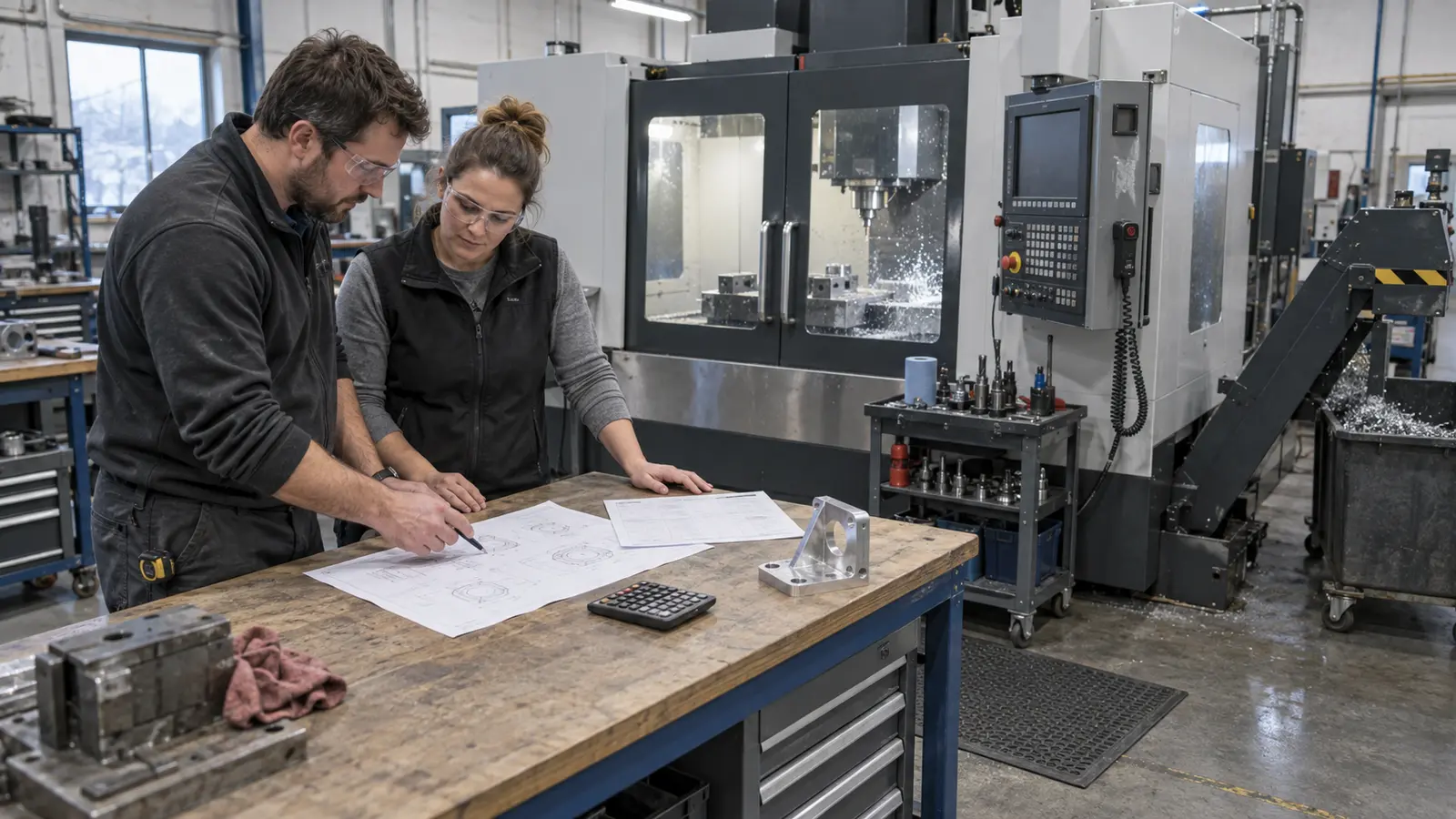
The most useful quote request package includes a CAD file in a neutral format such as STEP or IGES, a 2D drawing with all required tolerances, surface finish specifications and material call-outs clearly annotated, the required quantity and ideally the projected annual volume, any quality documentation requirements such as FAI reports or material certifications, and the target delivery date. Providing this information upfront eliminates back-and-forth correspondence that extends the quote cycle and gives the machinist everything needed to identify DFM concerns in the initial response.

At Meco, a complete quote package receives a response within 24 hours, including DFM feedback that can identify design changes saving 15 to 30 percent in production cost before any commitment is made. That turnaround speed matters because in a market where competitors like Fictiv and Protolabs offer instant online quoting, responsiveness has become a baseline expectation rather than a differentiator.

Red Flags in a CNC Machining Quote

Be cautious if a quote seems unusually low without explanation, contains no breakdown of setup, machining time, and material, does not mention tolerances or ask about critical features, or comes without any DFM feedback. A strong quote from a capable shop will typically break out key cost elements and proactively flag areas where design changes could reduce cost or improve manufacturability.

Total Cost of Ownership: The Number That Actually Matters

The discussion of how much CNC machining costs is incomplete without placing the per-part price within the broader picture of total cost of ownership (TCO). For organisations sourcing precision components, the machining cost is the most visible line item, but it is rarely the largest contributor to total procurement cost when all factors are properly accounted for.

A supplier delivering at 95 percent on-time forces their customers to carry safety stock to buffer against delivery variability. A supplier delivering at 99.8 percent on-time, as Meco does, allows customers to operate leaner inventory positions, reducing working capital requirements and storage costs in a way that more than compensates for any small price premium at the per-part level. The same logic applies to quality performance: a 99.99% quality rate means fewer rejected batches, fewer production line stoppages, and fewer emergency procurement scrambles.

When you combine quality performance, delivery reliability, the elimination of multi-vendor coordination overhead, and the lead time compression that comes from vertical integration, the total cost advantage of a turnkey manufacturing partner often exceeds 20 to 30 percent compared to managing a fragmented supply chain, even when the per-part machining rate looks similar on paper. That is the difference between comparing quotes and comparing total cost of ownership, and it is what separates reactive purchasing from strategic sourcing.

How Much Does CNC Machining Cost? The Bottom Line

The answer to how much CNC machining costs is genuinely "it depends," but that is not a dodge. It is a precise description of a pricing model that responds to the specific requirements of each project. What this guide has shown is that the variables it depends on are knowable, manageable, and in many cases directly within the designer's and buyer's control.

Machine type, material selection, part complexity, tolerance specifications, batch size, finishing requirements, geographic sourcing, and the tariff and labour environment of 2026 all have quantifiable effects on the final price. The engineers and procurement professionals who consistently achieve the best cost outcomes are not the ones who negotiate the hardest on hourly rates. They are the ones who invest in DFM early, choose materials strategically, specify tolerances precisely, order in sensible volumes, work with manufacturing partners who provide transparent feedback, and look beyond the unit price to total cost of ownership.

When you examine the full picture, the lowest per-part price and the lowest total procurement cost are often not the same thing. Knowing the difference is what separates cost management from cost control, and cost control is what keeps programmes on budget and products competitive.

Frequently Asked Questions about CNC Machining Cost

How much does CNC machining cost per hour?

CNC machining hourly rates in North America typically range from $30 to $75 per hour for standard 3-axis milling machines, $50 to $110 per hour for CNC turning centres, and $75 to $200 or more per hour for 4-axis and 5-axis machining centres. In Asia (China and Southeast Asia), rates run approximately 40 to 60 percent lower, while European rates fall between North American and Asian levels. The rate reflects machine capital cost, operator skill level, facility overhead, and geographic labour costs. High-precision or specialised work can exceed $200 per hour when tight tolerances and complex programming are required.

How much does a CNC machined part cost?

Per-part costs vary widely based on complexity, material, tolerances, and volume. Simple parts in reasonable production volumes can cost $10 to $50 each. Mid-complexity components in low-to-medium volumes typically fall in the $50 to $200 range. Highly complex precision parts in small quantities, especially those machined from titanium or stainless steel on 5-axis machines, can cost $200 to $500 or more per piece. Prototype parts are significantly more expensive per unit because fixed setup and programming costs are divided across fewer pieces.

What is the cheapest material for CNC machining?

Aluminum, particularly 6061-T6, is generally the most cost-effective metal for CNC machining. It machines quickly with minimal tool wear, is widely stocked (reducing lead times and procurement costs), and costs approximately $3.50 to $4.50 per kilogram in raw material. For plastic applications, ABS and nylon (PA) offer low raw material cost and easy machinability. Carbon steel (1018 or A36) is the cheapest metal by raw material price at $1.00 to $2.50 per kilogram, though it machines somewhat slower than aluminum.

How is CNC machining cost calculated?

The standard formula is: Total Part Cost = Material Cost + (Machining Time × Hourly Rate) + (Setup Cost ÷ Batch Size) + Finishing Cost + Inspection Cost. Material cost depends on the raw stock price and the amount of waste. Machining time is determined by part geometry, material hardness, and tolerances. Setup cost includes CAM programming ($50 to $120 per hour), fixturing, tool loading, and verification. Finishing and inspection are per-part costs that vary by process requirements.

Why are CNC machining setup fees charged?

Setup fees cover the time required to prepare the CNC machine for your specific job before any cutting begins. This includes programming toolpaths in CAM software, loading and qualifying cutting tools, designing and fabricating custom fixtures, and running verification test cuts. These activities take the same amount of time whether you order one part or one thousand, which is why setup is a fixed cost amortised across the batch size. Simple setups may cost $50 to $200, while complex multi-operation jobs can exceed $500 to $1,000.

How can I reduce the cost of my CNC machining project?

The most effective strategies are: applying tight tolerances only where functionally required rather than across the entire drawing, designing parts that can be machined on a 3-axis mill instead of requiring 5-axis operations, selecting standard material grades (6061 aluminum, 304 stainless) that are widely stocked and easy to machine, increasing batch size to distribute fixed setup costs, engaging your machining supplier early for DFM feedback, and consolidating machining, finishing, and assembly with a single vertically integrated partner to eliminate multi-vendor coordination costs. DFM-driven design changes alone can reduce manufacturing costs by 15 to 40 percent.

How do tariffs affect CNC machining costs in 2026?

As of June 2025, Section 232 tariffs on imported steel and aluminum stand at 50 percent, and as of April 2026 derivative products containing steel, aluminum, or copper face an additional 25 percent tariff on the full product value. These directly increase raw material costs for domestically machined parts using imported stock, and significantly affect the landed cost of parts machined overseas. The effective U.S. tariff rate in 2026 is the highest since 1946. For buyers sourcing from Asia, these tariffs can add 25 to 50 percent or more to the total landed cost, narrowing the gap between offshore and domestic machining and making nearshore sourcing from USMCA-compliant partners more economically competitive.

How long does it take to get a CNC machining quote?

Instant quoting platforms like Fictiv and Protolabs can generate automated quotes in minutes for standard parts. Traditional machine shops typically respond within 24 to 72 hours. Meco provides quotes within 24 hours and includes DFM feedback as a standard part of the quoting process, so customers receive not just a price but specific design recommendations that can reduce the final production cost by 15 to 30 percent before any commitment is made.

Get a Precise CNC Machining Quote from Meco

If you are budgeting for a CNC machining project and want a quote that is accurate, transparent, and comes with genuine DFM feedback, Meco is ready to help. With over 30 years of global manufacturing experience, IATF 16949:2016 certified quality processes, and production facilities in Thailand and China backed by U.S. engineering support, Meco delivers precision-machined components across a full range of materials and axis configurations.

  • 3-axis, 4-axis, and 5-axis CNC machining across aluminum, steel, stainless steel, brass, bronze, copper, and titanium, with accuracy to 0.01 mm and surface roughness from Ra 0.4 μm
  • CNC turning up to ∅360 × 1000 mm and CNC milling envelopes up to 1016 × 508 × 635 mm for a wide range of part sizes
  • DFM analysis included with every quote, identifying design changes that typically cut 15 to 30 percent in production cost before any commitment is made
  • Integrated surface finishing including anodizing, nickel plating, powder coating, chrome plating, and more, eliminating multi-vendor coordination costs
  • Quote response within 24 hours with CMM inspection (±0.002 mm precision), FAI reports, and full quality documentation as standard outputs
  • 40+ manufacturing processes under one roof, including die casting, forging, stamping, and assembly, so you get the most cost-effective process recommendation for every part

Submit your STEP or IGES files, 2D drawings, material requirements, and target volumes and Meco's engineering team will respond with a detailed quote and DFM feedback within one business day.

Request Your CNC Machining Quote Today