PCB Design and Assembly Services: One Partner, Start to Finish
Last Updated: July 2026
Meco designs, builds, and tests the circuit boards inside your product, then puts the whole thing in its case and ships it. One team, one quote, one delivery. No chasing five suppliers.

What Is PCB Design and Assembly?
PCB design and assembly is how a circuit board gets built. First, engineers draw a plan that shows where every chip and wire goes. Then a factory makes the empty board, places tiny parts on it, melts them in place with solder, and tests it to make sure it works. The finished board is what makes phones, cars, and almost every electronic product run.
At Meco, we handle the whole job: design, parts, building, testing, and even putting the board inside its case. We also make the metal parts, plastic cases, and final assembly for full box build programs. New to this? Read our complete guide to assembly.
Smallest Part
01005
About the size of a grain of sand.
Board Layers
1 to 20+
Simple single layer to complex stacks.
Order Size
10 to 1 M+
Prototypes to full production.
Three Ways to Put Parts on a Circuit Board
Every product is different. Some need to be tiny, some need to handle bumps and shocks, some need both. We do all three under one roof.
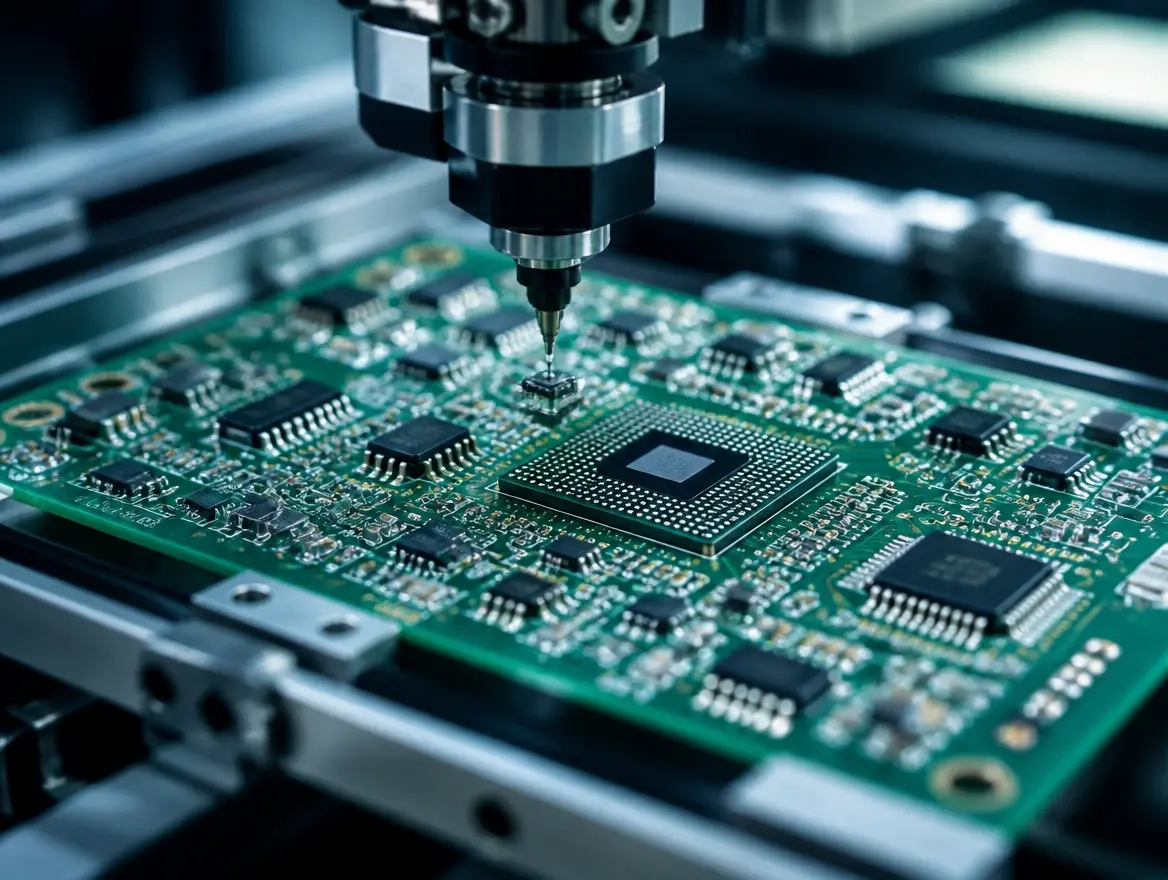
Surface Mount (SMT)
Machines place tiny parts right on top of the board. Think of it like sticking magnets on a fridge: fast and precise. This is how most phones, laptops, and gadgets are built today.
- Parts as small as a grain of sand
- Checked by cameras and X-ray
- Great for packed, modern designs
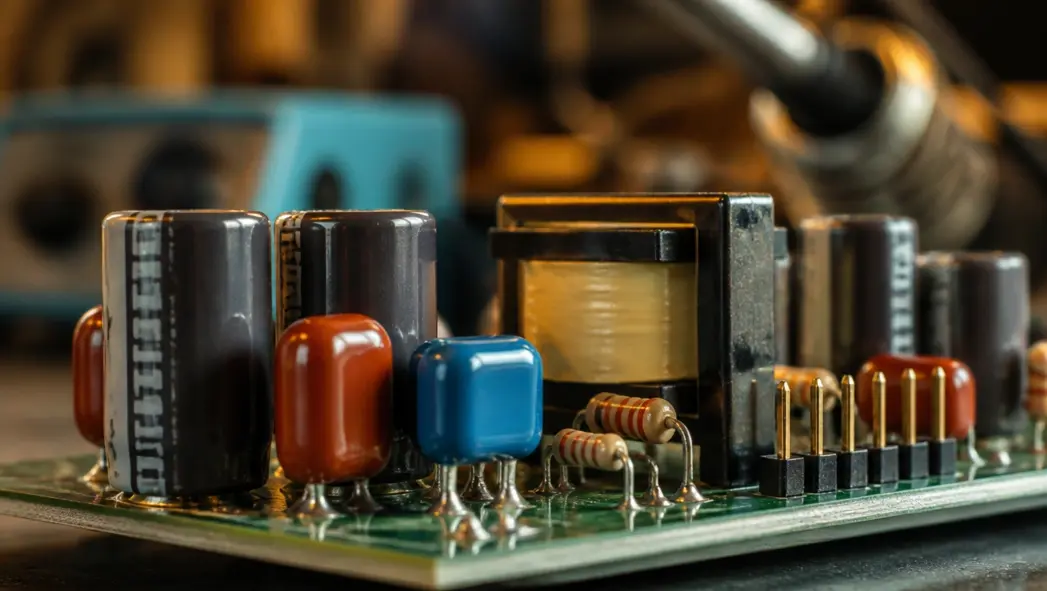
Through-Hole (THT)
Parts have legs that poke through holes in the board and get soldered on the other side. It is like sewing a button on tightly: the connection is really strong. Best for big parts and products that get bumped around a lot.
- Connectors, big capacitors, transformers
- Holds up to vibration and heat
- Used in cars and industrial gear
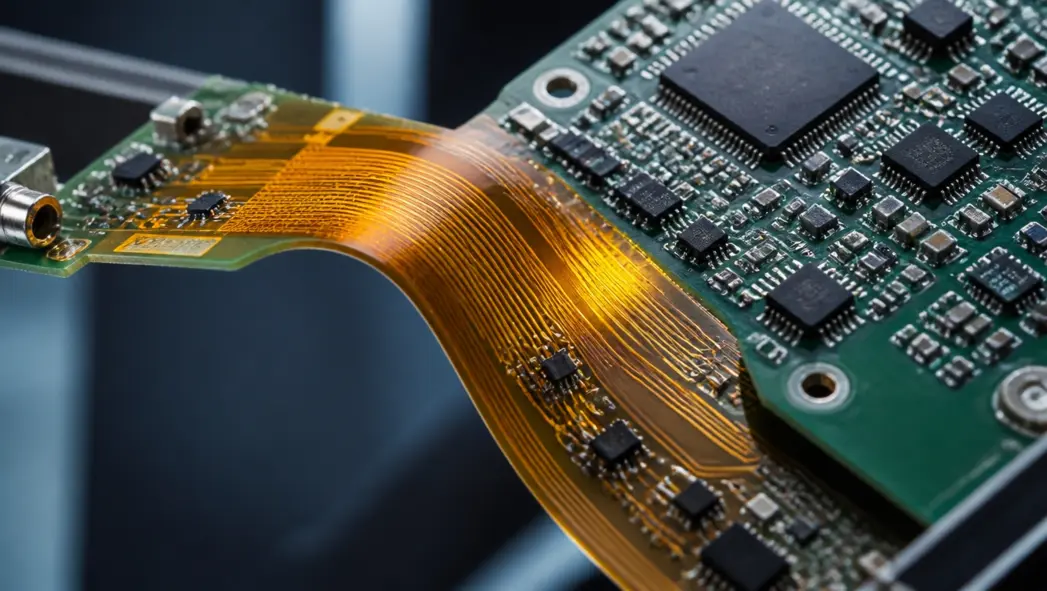
Mixed Tech and Rigid-Flex
Some products need both methods on one board. Others need a board that bends to fit a tight space (called rigid-flex). We do both, plus stacks up to 20 layers thick for things like 5G gear and medical devices.
- SMT and through-hole combined
- Bendable rigid-flex boards
- Multi-layer (up to 20+ layers)
Design, Parts, and Finished Product, All From Us
Most factories only do one piece of the job. We do all three, so you do not have to manage a pile of suppliers.

Board Design and DFM Check
Our engineering team looks at your design files first. We spot mistakes, suggest fixes, and warn you if a part is going out of stock, all before we build.
See R&D engineering →
We Buy the Parts
Our supply chain team only buys from official sellers: no fakes, no surprises. We also keep extra stock so your project does not stop if one part runs out.
See supply chain →
Full Box Build
We put your board inside a plastic case or metal housing, connect everything, and pack it ready to ship. One purchase order, one finished product.
See whole product manufacturing →Got your design files ready? Get a free quote back in 24 hours, with engineering feedback included.
Send Your FilesHow a Circuit Board Gets Made: Step by Step
Six steps from your idea to a finished, tested product at your door.
Design and Plan
We draw the board on a computer and check it for mistakes, like proofreading before printing.
Get the Parts
We buy all the chips, resistors, and connectors from trusted sellers. No fake parts.
Build a Sample First
We make a few test boards before the big run. You check them and approve.
Build the Full Order
Once you say go, we make all the boards on our automated lines: fast and consistent.
Test Every Board
Cameras, X-ray, and electrical tests catch any problems. We follow the IPC-A-610 rulebook.
Pack and Ship
Boards get wrapped and shipped from our warehouses in the U.S., Canada, Japan, or Thailand.
Which Method Fits Your Product?
A quick guide to picking the right way to build your circuit board, based on part size, durability, and where it will be used.
| Method | Part Size | Joint Strength | Build Speed | Best Volume | Best For |
|---|---|---|---|---|---|
| SMT (Surface Mount) | Tiny | Good | Very Fast | 1,000 to 1 M+ | Phones, laptops, IoT, wearables |
| Through-Hole (THT) | Medium to Large | Very Strong | Medium | 100 to 100 k | Cars, power supplies, connectors |
| Mixed Tech | Mixed | Strong | Medium to Fast | 500 to 500 k | Industrial gear, appliances |
| Rigid-Flex | Small | Good | Medium | 500 to 100 k | Tight spaces: medical, wearables, aerospace |
| Multi-Layer HDI | Tiny | Good | Slower | 1,000 to 1 M+ | 5G modules, smartphones, high-speed networks |
Why Companies Pick Meco for PCB Design and Assembly
One team. One quote. One delivery. No middlemen.
We Do More Than Just Boards
Need the case too? We make metal parts, plastic housings, and do final assembly. One purchase order covers the whole product.
We Own the Factory
Our factories in Thailand and China are ours, not someone we hired. So we control quality, speed, and price directly. Learn what a contract manufacturer does.
Your Design Stays Yours
Meco provides IP protection and signs NDAs as standard before we begin, plus a free design review with most quotes back in 24 hours.
Auto-Grade Quality
We are certified to IATF 16949:2016, the strict quality standard used by car makers. We apply that level of care to every product, every industry.
Industries We Build Circuit Boards For
From cars to medical devices to smart appliances, we make the boards that go inside the products you use every day.
Cars and Trucks
Boards for engines, safety sensors, EV battery controllers, and headlight modules. Built to handle heat, cold, bumps, and 10+ years on the road. Often paired with die-cast metal cases.
Aerospace and Defense
Boards for cockpit controls, GPS, and satellite radios. Built to the highest reliability class because failure is not an option at 30,000 feet. See our aerospace guide.
Medical Devices
Boards for patient monitors, scanners, and handheld diagnostic tools. We track every component back to where we bought it. (Note: we do not hold ISO 13485, but we follow the same careful process.) See our medical device assembly guide.
Heavy Equipment
Boards for tractors, bulldozers, and farm equipment. We seal them in protective resin so they survive mud, vibration, freezing winters, and hot summers.
Factory Automation
Boards that run factory robots, conveyor belts, and machine control panels. Built tough with thick copper layers to handle high power and dirty factory air. See what industrial manufacturing means.
Consumer Electronics
Boards for smartwatches, fitness trackers, smart speakers, and other gadgets. We pack lots of parts into tiny spaces and get prototypes to you fast, usually in a week or two.
5G and Telecom
High-speed boards for 5G cell towers, antennas, and network equipment. Signals move at very high frequencies, so the design has to be exactly right: even tiny errors cause data loss.
Home Appliances
Boards for smart fridges, washing machines, thermostats, and kitchen gadgets. Many include Wi-Fi or Bluetooth so people can control them with their phone.
LED Lighting
LED bulbs and panels get hot, so we build boards on aluminum (called MCPCB) that pulls heat away. Pairs with our aluminum heat sinks for cool-running lights that last years.
Smart Furniture
Boards for height-adjustable desks, conference tables with built-in USB charging, and hidden wireless charging pads. Thin enough to tuck inside the furniture itself.
What We Can Build: The Quick Specs
All the technical details in one place. Share with your engineer if needed.
| What | What We Can Do |
|---|---|
| Build Methods | Surface mount (SMT), through-hole (THT), mixed, rigid-flex |
| Smallest Part | 01005 (about 0.4 x 0.2 mm, smaller than a grain of rice) |
| BGA Chips | Down to 0.3 mm spacing, checked with X-ray |
| Board Layers | 1 layer (simple) to 20+ layers (complex) |
| Board Size | From 10 x 10 mm up to 500 x 500 mm |
| Solder Type | Lead-free or leaded, plus weatherproof coating |
| Quality Standard | IPC-A-610 Class 2 (regular) or Class 3 (high-reliability) |
| Testing | Camera inspection, X-ray, electrical test, full power-up test |
| Quality System | IATF 16949:2016 (car-industry grade quality) |
| Order Size | 10 prototypes up to 1 million+ per year |
PCB Design and Assembly: Common Questions
What is PCB design and assembly?
PCB design and assembly is how circuit boards get made. First, engineers draw the design on a computer. Then a factory makes the empty board, places the tiny chips and parts on it, melts solder to hold them, and tests every board to make sure it works. The finished board is what makes things like phones, TVs, and cars run. Meco does the whole job in one place, including box build assembly.
What is the difference between SMT and through-hole?
SMT places parts on top of the board, which is fast and good for tiny modern products. Through-hole pushes part legs through holes for a much stronger connection, better for big parts and rough spots like cars or factory gear. Many boards use both methods together, called mixed-technology assembly.
Can Meco buy all the parts for me?
Yes. This is called "turnkey" service. Our supply chain team buys every component from trusted, official sellers, not random sources where fakes come from. We also keep extra stock so your project does not stop if something runs low. If you would rather supply some parts yourself, that is fine too (called "consigned").
Can you help me design the board, not just build it?
Yes. Our engineering team can draw the schematic, lay out the PCB, run signal simulations, and review your design for problems before we build it. We make sure it is easy to manufacture and will not break the budget.
What is the difference between IPC Class 2 and Class 3 boards?
Class 2 is the standard level for computers, telecom gear, and most consumer products: they should last a long time but a tiny defect will not be dangerous. Class 3 is for products where failure could be life-threatening, like medical devices, airplanes, and military gear. Class 3 has stricter rules and more inspection. Meco builds to both, depending on what you need.
What files do I need to send to get a quote?
Three main things: Gerber files (the design of your board), BOM (a list of every part), and Pick & Place file (tells the machine where each part goes). If you also want us to build the case, send 3D CAD files too. Do not have them all? Send what you have and we will tell you what is missing. Quotes come back in 24 hours.
What is box build assembly?
Box build is when we take the finished circuit board, put it inside the case, connect the cables, add the buttons or screen, test the whole thing, and ship it ready for your customer. You get a finished product, not just a bare board. Meco combines PCBA with our plastic case and metal housing services. Read more about box build assembly.
What certifications does Meco have?
Meco is certified to IATF 16949:2016, the strict quality system used by the auto industry. It covers everything the ISO 9001:2015 standard requires, plus more. We follow IPC-A-610 Class 2 and Class 3 for inspection, and we can supply PPAP documentation, full part tracking, and REACH and RoHS compliance papers.
Is there a minimum order amount?
No. We build prototype runs as small as 10 boards all the way up to 1 million+ boards a year on the same equipment. Prototypes usually take 1 to 2 weeks. Full production timing depends on order size and how easy the parts are to find.
How to Start Your Project
Upload your Gerber files, BOM, and Pick & Place file through our quote form. We reply in under 24 hours.
Our engineers check your design for problems and we line up all the components from trusted sellers.
Boards go through our SMT and through-hole lines, then get inspected by camera, X-ray, and full power-on testing.
Optional: we put the board in the case for box build. Ships from our warehouses in the U.S., Canada, Japan, or Thailand.
Learn More: Guides and Resources

What Is Box Build Assembly?
How it all comes together: circuit board, case, cables, screen, and final testing into one finished product.
Read the guide →
What Is Mechanical Assembly?
The complete guide to putting products together: screws, rivets, welds, and how PCBA fits in.
Read the guide →What Is Contract Manufacturing?
Why companies outsource production instead of building their own factory, and how to pick the right partner.
Read the guide →