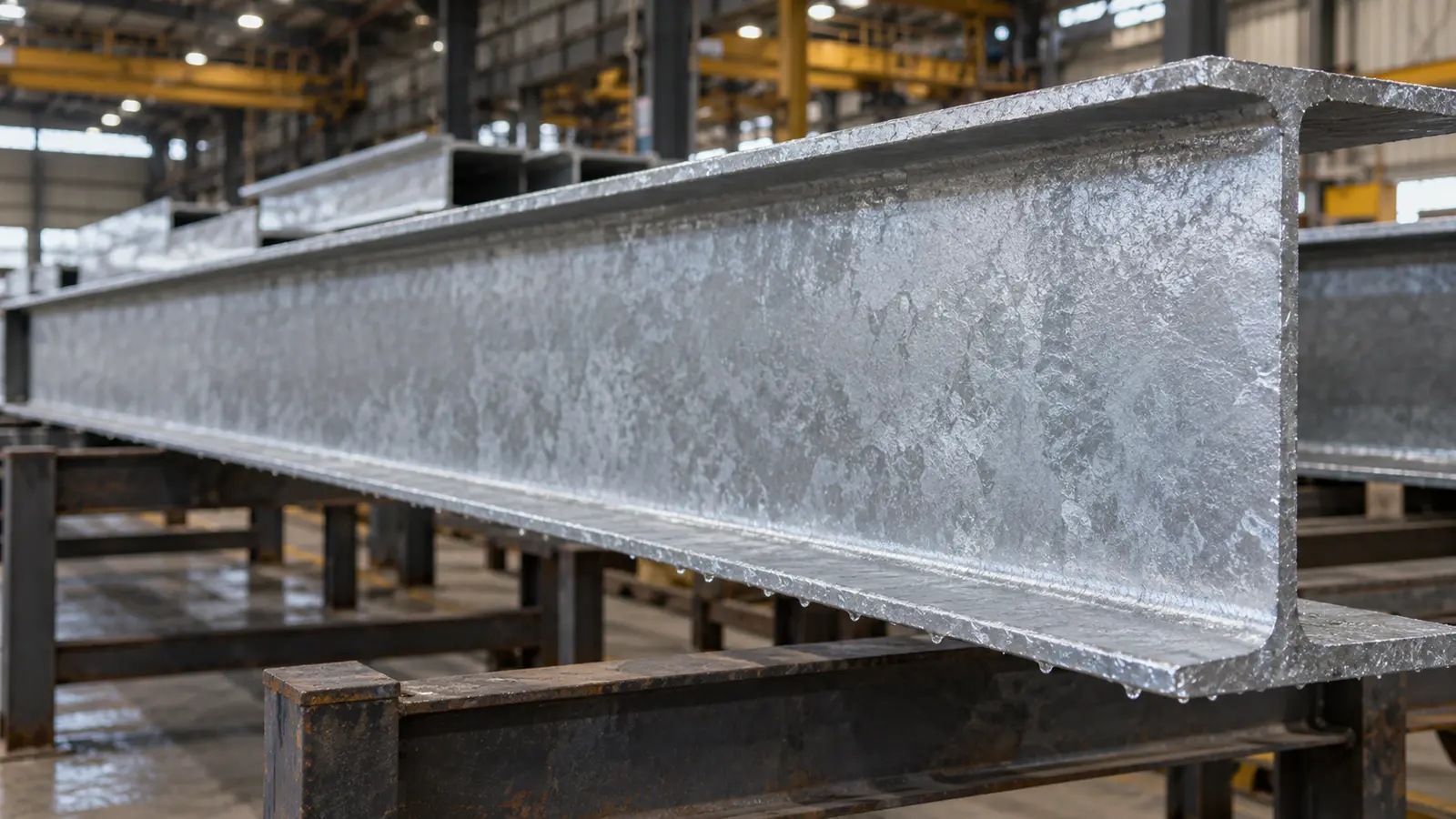
To tell if steel is galvanized, check the material record and inspect the surface, then measure the coating and verify that it contains zinc when the result matters. A magnet, gray color, spangle, or one gauge reading cannot confirm galvanizing by itself.
For a purchasing or welding decision, document the coating process and specification before treating the part as confirmed.
An unlabeled steel bracket may look like a galvanized part. A gray sheet may instead have paint, a thin electroplated coating, or a weathered finish. The distinction affects coating acceptance, fabrication, and how the part is specified to a supplier.
Start with the least invasive evidence. Read the purchase order or mill and coating records, look for useful surface clues, and use a calibrated gauge for measured thickness. When you need to prove that the coating is zinc or identify the process used, request the relevant inspection records or laboratory analysis.
Key takeaways
- Appearance offers clues, but hot-dip galvanized steel does not always show a visible spangle.
- A magnet checks whether a part is attracted to a magnet. It does not identify the coating.
- A magnetic coating gauge measures nonmagnetic coating thickness over suitable ferrous steel. It does not identify zinc.
- Documented specifications and suitable testing carry more weight than an informal field test.
- Identify coatings before welding, coating, or accepting parts to a specification.
What galvanized steel means
Galvanized steel has a zinc coating that protects the underlying steel. The application route matters because different zinc finishes can look similar but follow different specifications.
In hot-dip galvanizing, fabricated steel is immersed in molten zinc. Zinc-iron alloy layers form at the surface, with an outer zinc-rich region. The coating protects the steel as a barrier and offers sacrificial protection where small areas of steel are exposed.
A steel sheet may be galvanized in a continuous line before it becomes a part. Finished fasteners and fabricated assemblies may follow other routes and standards. Electrogalvanizing deposits zinc by an electrical process. Zinc-rich paint contains zinc particles in a coating binder. These are not interchangeable descriptions on a purchase order.
For a fabricated article, ASTM A123/A123M covers hot-dip zinc coatings on the iron and steel products within its scope. The applicable coating grade depends on material category and thickness. Do not apply a single universal minimum to every steel part. ASTM describes the scope of A123/A123M.
Before inspecting a part, ask what you need to know. “Is any zinc present?” is a different question from “Does this fabricated article meet the specified hot-dip coating requirements?” The second question needs the correct standard, sampling, and records.
What can you see on the surface?
Color, texture, drainage marks, and corrosion patterns can suggest a zinc finish. None of them alone establishes the coating method or compliance.
Spangle is a clue, not a requirement
A crystalline pattern may be visible on some galvanized sheet. It may be faint or absent on other hot-dip galvanized products. The American Galvanizers Association notes that newly galvanized fabricated articles do not necessarily show the spangle often associated with continuously galvanized sheet.
A uniform silver finish can also come from plating. Paint can imitate a matte gray zinc surface. Judge the whole part, including edges, recesses, threads, and any cut surfaces, rather than trusting the color of one flat area.
Look at edges and weathering
Drainage marks, local thickening, or a coating that follows the contours of a welded assembly can support a hot-dip explanation. The amount and look of zinc can vary with steel chemistry, surface preparation, and the way a part drains from the bath.
Weathered zinc often becomes dull gray. Orange rust on an exposed edge may indicate local coating loss, but rust elsewhere does not prove that the whole article was never galvanized. Conversely, a rust-free surface could simply be painted, stored indoors, or recently made.
White surface deposits can occur on zinc stored under damp, poorly ventilated conditions. Their presence deserves closer inspection. They do not automatically mean the steel substrate has failed, and they do not establish coating thickness.
Use appearance to choose the next check, not to close an acceptance report. If the part will be welded, exposed outdoors, or delivered against a coating requirement, keep the material identity traceable to the supplier documentation.
Does a magnet prove it?
No. A magnet can show attraction to a ferrous substrate, but it cannot distinguish galvanized steel from bare or painted steel.
A magnet may help rule out some nonferrous lookalikes, such as aluminum. It is not a zinc detector. Carbon steel commonly attracts a magnet whether it has zinc, paint, oil, or no coating at all.
Magnetism can also mislead when the base metal is unknown. Some stainless steels are magnetic, and the magnetic response of a stainless part depends on grade and processing. Therefore, “magnetic” does not automatically mean carbon steel, and “not magnetic” is not a complete material certificate.
If you cannot identify the substrate from a part number or record, use an appropriate material identification method before selecting a coating test. A magnetic thickness gauge also needs a suitable substrate and calibration for a meaningful result.
What can a coating gauge tell you?
A suitable magnetic gauge can measure coating thickness over ferrous steel. It measures distance to the substrate, so a reading alone does not reveal whether the layer is zinc, paint, or another nonmagnetic material.
Take readings on clean, accessible areas and follow the gauge maker’s instructions for calibration and substrate effects. Curvature, roughness, edges, and a very small part can affect readings. A single value on a convenient flat spot is not a survey of the whole piece.
For hot-dip galvanized work covered by ASTM A123/A123M, the applicable material category, thickness, specimen selection, and averaging rules matter. The American Galvanizers Association explains that coating thickness is assessed with multiple measurements and that the required grade changes by category. Compare a documented set of readings with the correct specification, rather than a generic “2 to 3 mils means galvanized” rule.
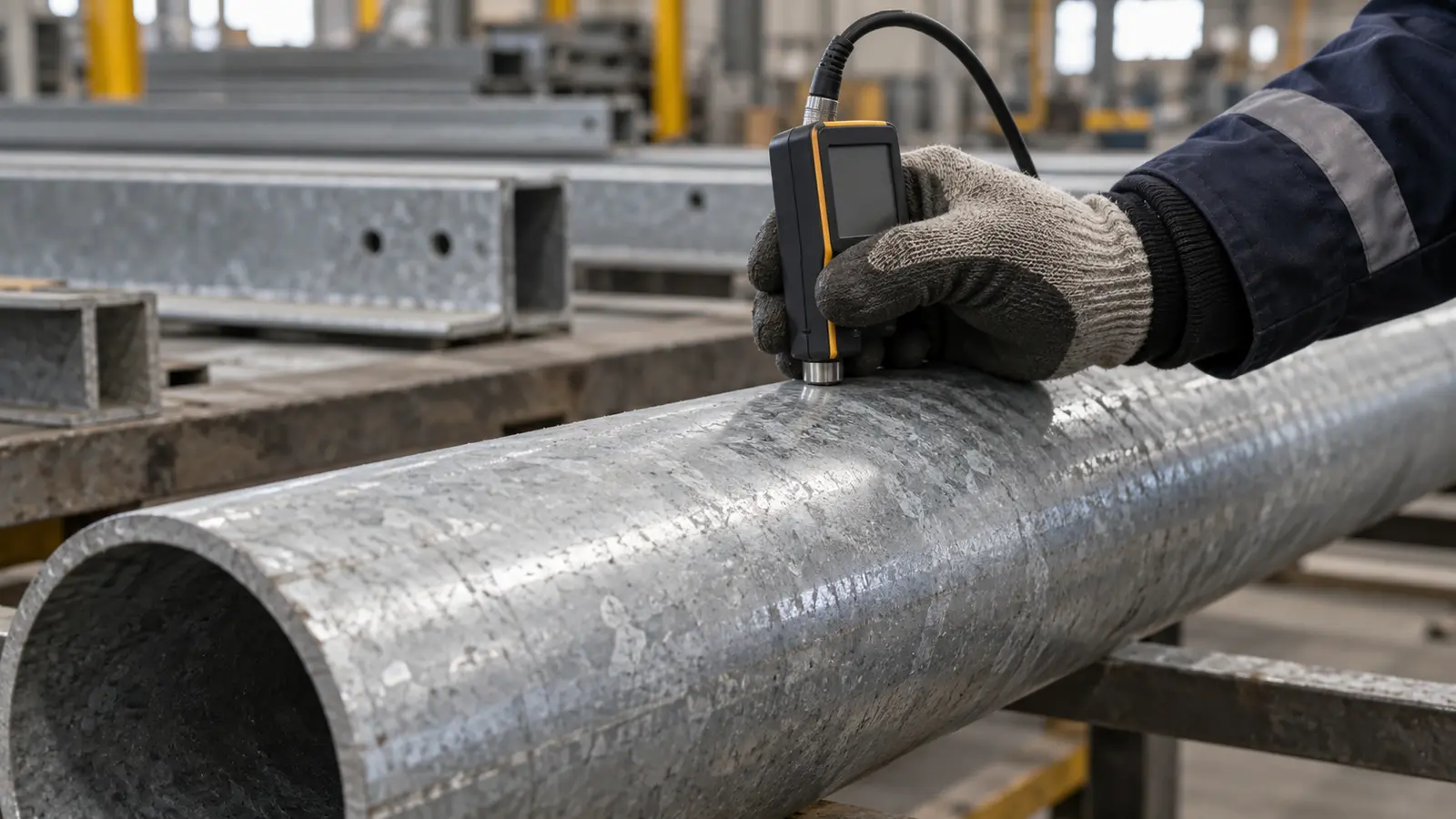
If the part has a paint system over zinc, a basic gauge can read the combined nonmagnetic layers. The result must be interpreted with the coating stack in mind. Ask the supplier for process and inspection records if the purchase order calls for a particular finish.
For production, agree on the standard and inspection plan before parts arrive. This is simpler than trying to infer the process from a few field readings after fabrication or shipment.
Can a scratch or chemical spot test help?
A scratch or spot reaction may indicate that a coating is present, but both can damage a usable part and neither replaces documented identification.
A scratch through a finish can expose a different layer beneath. That observation may separate paint from an underlying metal finish, yet the color contrast is subjective, especially on thin or weathered coatings. It also creates a local break in the protection that may need repair under the applicable specification.
Vinegar or another acid can react with zinc, but a visible reaction is not a reliable process identification method. Surface contamination, protective films, paint, and exposed steel can change what you see. A weak or absent reaction cannot safely establish that zinc is absent.
Do not put acid on a customer part, structural component, or inspected surface without an approved procedure. Household acid tests have poor control over concentration, dwell time, and sample condition. Strong acids also bring chemical and hydrogen hazards. Use an approved lab method when a coating chemistry result is required.
The original draft treated fizzing and a white residue as confirmation. That overstates the test. For a purchasing decision, a coating certificate tied to the part and a suitable measurement or analytical test are more defensible.
Uncertain about a coating? Send the part drawing, finish requirement, and available supplier records. Meco can review the manufacturing and inspection steps with you.
Talk to an EngineerHow do you confirm the coating?
Confirm the requirement first, then match the test to the question. Documentation establishes what was ordered and applied, while testing checks selected properties of the actual part.
Start with traceable records
Request the purchase order, drawing note, material identification, galvanizer or coating certificate, applicable specification, and lot or batch reference. Check that the records refer to the exact parts in hand, not merely to a similar product or another shipment.
The record should identify whether the article was galvanized after fabrication, coated as sheet stock, electroplated, or painted. If a third party performed the finish, ask how the finished lot is linked back to the fabrication batch. A broad statement that something is “zinc coated” may not answer the specified process.
Measure thickness with the right sampling plan
A calibrated magnetic gauge is a common method for measuring hot-dip coating thickness on steel. Plan locations across representative surfaces and record the results. Then compare them with the applicable standard and the purchase order, including any extra requirements for appearance or finish.
If a coating is layered, or a finish specification uses a different measurement method, choose equipment and sampling accordingly. Measurements near an edge, weld, hole, or bend can be informative, but they may require different interpretation from broad flat surfaces.
Use analysis when chemistry or coating structure matters
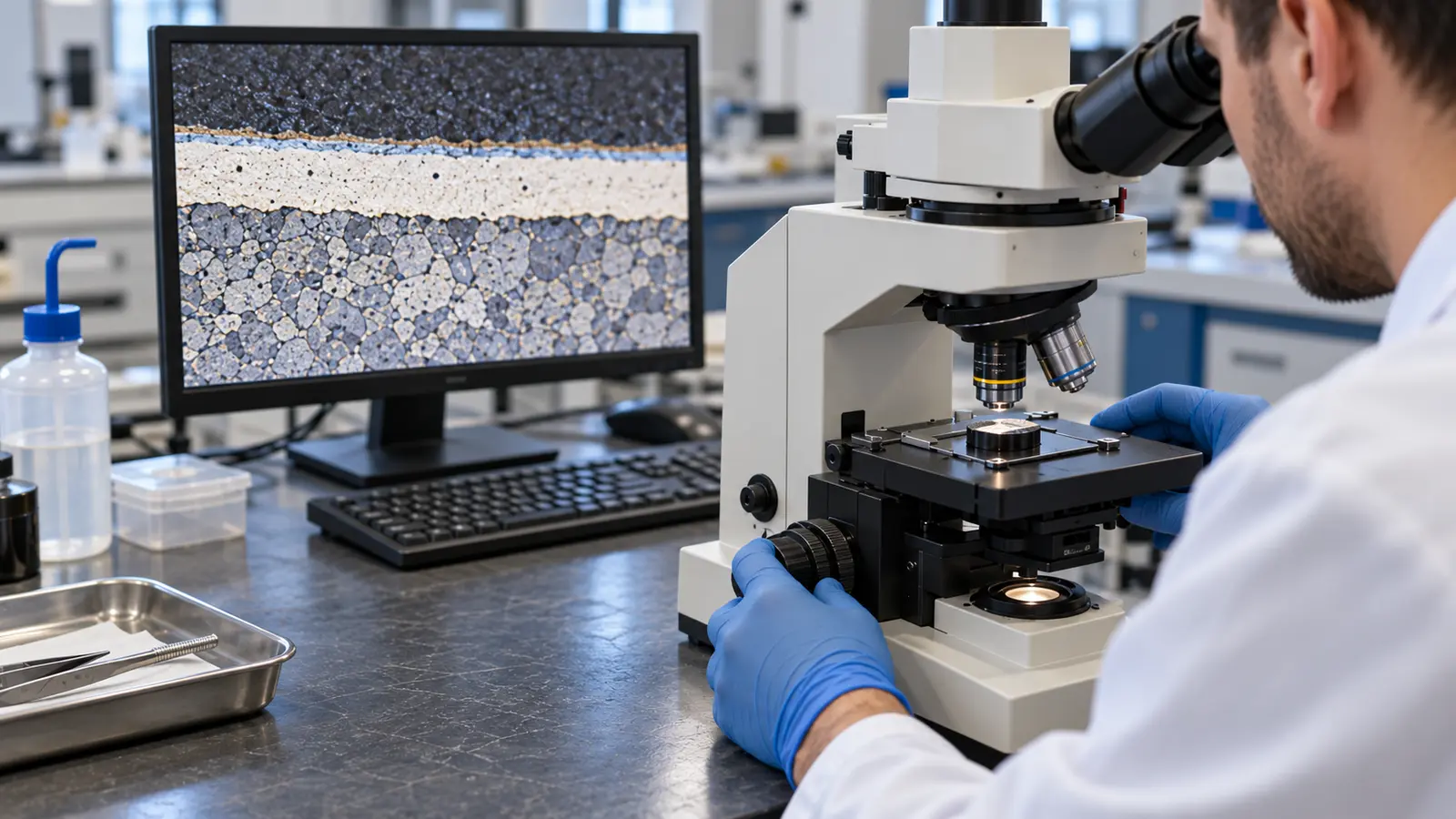
X-ray fluorescence can identify zinc on an accessible surface when performed with a suitable method and instrument. A polished cross-section viewed under an optical or scanning electron microscope can show layer structure and local thickness. The choice depends on the part geometry, coating stack, and whether destructive sampling is permitted.
A cross-section of a hot-dip galvanized article may reveal zinc-iron alloy layers that support process identification. It is a sampled location, not automatic proof that every surface on a shipment meets a specification. Chemical analysis also needs controls for overpaint, contamination, and instrument limits.
Electron paramagnetic resonance, named in the old draft, is not a routine method for this identification. Do not request it as the default lab test. Ask the testing laboratory to recommend a method for the specific coating and acceptance question.
Galvanized steel versus other finishes
Similar-looking finishes can serve different specifications. This table shows what each check can and cannot reasonably tell you.
| Finish | Possible appearance | What confirms it |
|---|---|---|
| Hot-dip galvanized fabricated steel | Silver to matte gray; possible drainage or local variation | Traceable galvanizer record, correct specification, thickness sampling, or cross-section |
| Continuously galvanized sheet | Often uniform; spangle may or may not show | Sheet specification and mill records linked to the material |
| Electrogalvanized steel | Often smooth and even | Plating specification, supplier record, and appropriate coating measurement |
| Zinc-rich paint or duplex finish | May be gray or painted in another color | Coating system records and suitable layer or chemistry analysis |
| Bare or painted carbon steel | Variable color and texture | Material and coating records; analysis if records are missing |
| Stainless steel | Variable finish and magnetic response | Material grade records or positive material identification |
Do not use the magnet row as a shortcut to distinguish stainless from galvanized steel. Many stainless grades are magnetic or become more magnetic after processing. A material grade check answers the substrate question more directly.
The appearance of hot-dip galvanized fabricated steel may differ from sheet made on a continuous line. That is why a comparison of two photos is often weaker evidence than a correct coating callout and the supplier’s inspection record.
A practical inspection sequence
Move from records and non-destructive checks to specialized testing only as needed. Keep a written record of which question each step answers.
- Identify the item. Record the part number, lot, supplier, and intended use. Photograph representative areas and any damaged locations.
- Read the requirement. Check the drawing and purchase order for the process, standard, coating grade, and any appearance or repair requirements.
- Review the records. Match the material and coating paperwork to the physical lot. Resolve missing or mismatched references before acceptance.
- Inspect the part. Look at broad surfaces, edges, welds, recesses, and cut areas. Treat the visible features as clues.
- Measure where appropriate. Use a calibrated coating gauge on the correct substrate, with representative locations and the right sampling rules.
- Escalate a disputed result. Have a qualified laboratory identify the material or coating, or examine a cross-section if the process must be distinguished.
- Make the disposition. Accept, request more evidence, rework, or reject against the actual purchase requirement. Keep the records with the lot.
For a single informal question, steps one through four may be enough to decide what to investigate next. For a production order, the relevant specification and acceptance record govern the decision. A field observation should never silently replace them.
This sequence is useful for a product that combines fabrication, finishing, and assembly. An unidentified coating can affect later joining or paint adhesion. Clarifying it early gives the team a chance to revise the drawing or process route before a full batch is made.
When identification changes the next step
Coating identity affects welding controls, corrosion expectations, paint preparation, and incoming quality decisions. Treat uncertainty as an engineering question before work starts.
Before welding or thermal cutting
Heating galvanized steel can generate zinc oxide fume. OSHA’s welding guidance describes health effects from metal fumes, including metal fume fever, and the importance of controlling exposure. Have the responsible safety team assess the coating, ventilation, work method, and applicable controls before welding. A visual guess is not an exposure assessment.
A part can have other coatings or residues as well. Identify them before choosing a hot-work procedure. Where the drawing allows a coating to be removed locally, the team also needs a plan to restore corrosion protection afterward.
Before buying or accepting parts
A buyer specifying an outdoor bracket should write the finish and applicable standard on the drawing or purchase order. Specify any relevant appearance, repair, masking, threading, or post-fabrication requirements. “Galvanized” alone leaves questions about process and inspection.
If an incoming lot has missing records, keep it separate until the supplier clarifies the finish. A later surface measurement may help, but it cannot reconstruct every aspect of the original process or establish a complete lot history.
Before painting or assembling
Paint adhesion depends on the surface condition and preparation. A zinc-rich coating, weathered galvanizing, and bare steel call for different preparation choices. Confirm the coating system before selecting a pretreatment or overcoat.
Meco’s surface finishing services and whole-product manufacturing work bring finishing into the broader process plan. A drawing review can connect material, fabrication, coating, inspection, and assembly requirements before the first production lot.
For more background on how a galvanized surface changes with exposure, read why hot-dip galvanized steel turns dark. For sourcing a multi-process part, see how to find a manufacturer for your product.
Specify the Finish Clearly
Send Meco your part drawing, material callout, and coating requirements. Our team can review how fabrication, finishing, and inspection fit together.
- DFM feedback. Review before production.
- Quality records. FAI, PPAP, and CMM reports available.
- Process coordination. Fabrication through finishing and assembly.
References and sources
- ASTM International. ASTM A123/A123M Standard Specification.
- American Galvanizers Association. Appearance of hot-dip galvanized steel.
- American Galvanizers Association. Coating thickness and weight.
- OSHA. Controlling hazardous fume and gases during welding.
