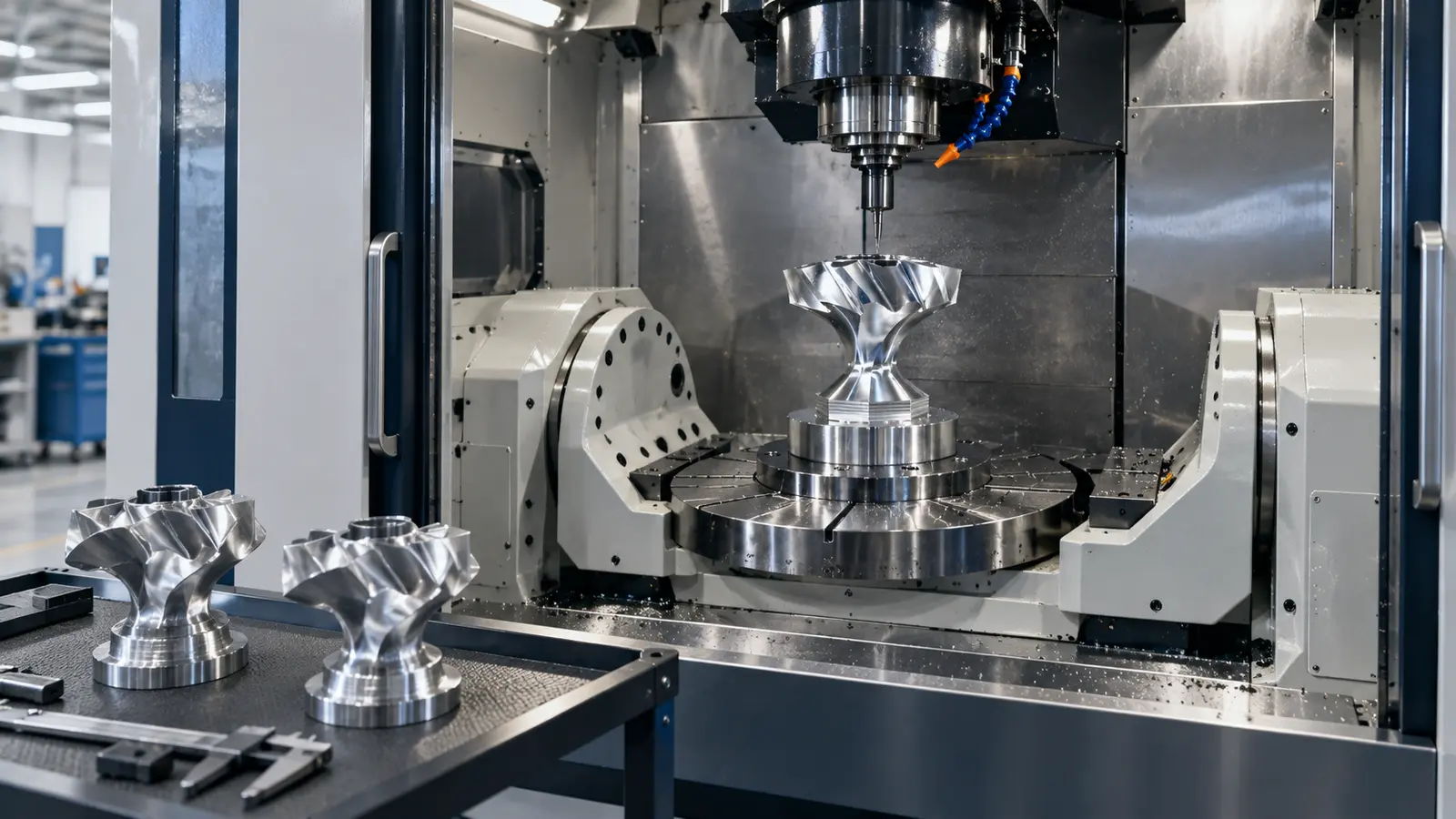
A CNC machine can cost from about $2,000 for a small desktop router to more than $500,000 for an automated 5-axis machining center. A production 3-axis vertical machining center often falls in the broad $50,000 to $150,000 range before tooling, installation and training.
The right comparison is total cost of ownership, not purchase price alone. Utilization, labor, tooling, maintenance, inspection and software can change the result of a buy-versus-outsource calculation.
All figures in this guide are planning ranges, not supplier quotations.
"CNC machine" covers a wide range of equipment. A compact router used for wood and plastics is not comparable with a rigid 5-axis machining center cutting aerospace alloys. The work envelope, spindle, control, accuracy and automation package all affect the price.
This guide focuses on the cost of buying and operating the equipment. If you need the price of having components produced by a machine shop, read Meco's CNC machining cost per part guide.
A purchase decision should start with the parts you expect to make. Define material, tolerances, annual volume, cycle time, inspection needs and the number of setups. Only then can you compare a machine quote with an outsourced per-part price.
This distinction matters for multi-process products. A CNC machine covers machining, but it does not automatically cover heat treatment, surface finishing, assembly, inspection or logistics. Those steps need their own capacity or outside suppliers.
Key takeaways
- Purchase range. Desktop machines may begin near $2,000, while automated 5-axis systems can exceed $500,000.
- Installed cost. Budget for tooling, fixturing, freight, rigging, training, software and facility preparation.
- Hourly cost. Labor, tooling and productive utilization often matter more than electricity.
- Used equipment. A lower price can be offset by inspection, calibration, repair and downtime risk.
- Tax treatment. U.S. Section 179 limits changed for 2026. Confirm eligibility with a qualified tax adviser.
- Make or buy. In-house ownership works best when demand is stable enough to keep the machine productive.
- Outsourcing. It can be more practical when volumes vary or the product needs several manufacturing processes.
CNC machine prices at a glance
New CNC equipment spans several price bands because each category solves a different production problem. The figures below are broad planning ranges. Configuration, region, freight, options and supplier discounts can move the final quote.
| Machine type | Planning range USD | Typical use |
|---|---|---|
| Desktop CNC router | $2,000 to $8,000 | Wood, plastics and light prototyping |
| Benchtop CNC mill | $8,000 to $25,000 | Small parts, training and development |
| 3-axis vertical machining center | $50,000 to $150,000 | General prismatic metal parts |
| 4-axis machining center | $80,000 to $250,000 | Multi-face parts and indexed features |
| 5-axis machining center | $200,000 to $500,000+ | Complex geometry and fewer setups |
| 2-axis CNC lathe | $40,000 to $120,000 | Shafts, pins, bushings and turned parts |
| Mill-turn center | $120,000 to $350,000+ | Complex rotational parts in fewer setups |
| Wire electrical discharge machine | $80,000 to $300,000 | Hardened materials and intricate profiles |
What does CNC machine cost include
The machine price is only the first part of the investment. A realistic budget also covers the equipment and services needed to install, program, operate and verify the process.
Capital and installation cost
Start with the base machine and selected options. Then add freight, rigging, power, compressed air, foundation work if required, coolant management and safety provisions. A probe, rotary table, pallet system or larger tool magazine can materially change the delivered price.
Tooling, fixturing and software
A machine cannot make a production part without workholding, cutting tools and a verified program. Initial tooling may include vises, chucks, collets, holders, cutters, gauges and custom fixtures. Computer-aided manufacturing software, post-processors and simulation may be separate purchases or subscriptions.
People and quality systems
Ownership also requires operators, programmers, maintenance support and inspection capacity. Tighter tolerances may require a controlled inspection environment, calibrated gauges, a coordinate measuring machine and documented quality procedures.
Use a full-cost comparison
Do not compare a machine's sticker price directly with a supplier's hourly rate. Model depreciation or financing, labor, tooling, maintenance, software, scrap, inspection, floor space and realistic productive hours.
How machine type changes the price
More capability usually means a higher purchase price, but it can reduce setups and labor per part. The best machine is the one that meets the part requirements without paying for unused capacity.
3-axis vertical machining centers
A 3-axis vertical machining center moves along the X, Y and Z axes. It is a practical choice for plates, housings, brackets, pockets and drilled patterns that can be reached from a limited number of orientations. For suitable geometry, 3-axis CNC machining usually offers a lower equipment and programming burden than multi-axis work.
4-axis machining centers
A rotary axis lets the machine index or rotate the workpiece. This can reduce manual repositioning and improve alignment between features on several faces. The added rotary hardware, control functions, fixturing and calibration raise cost.
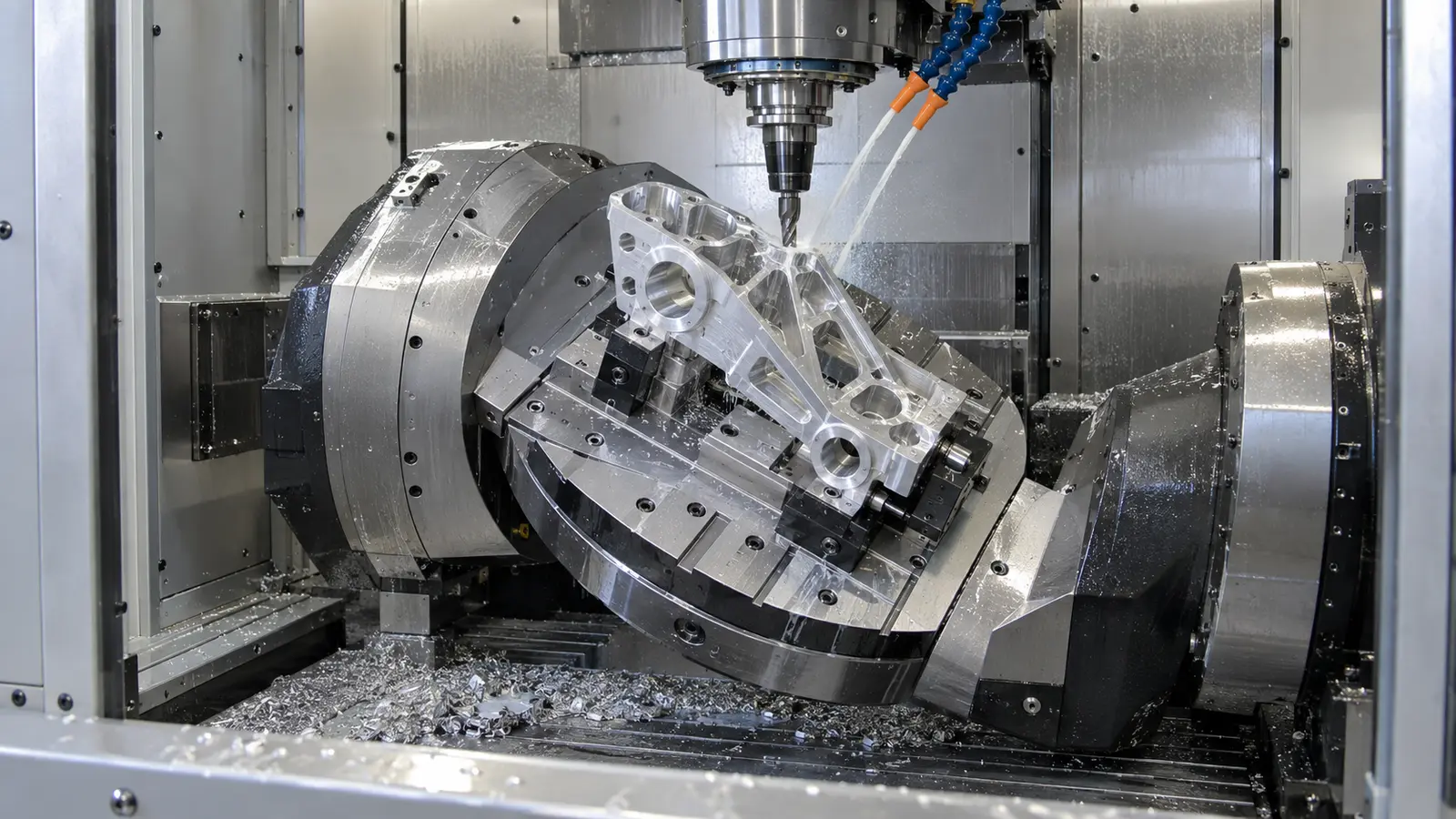
5-axis machining centers
A 5-axis system can orient the tool and workpiece through five axes. It supports complex contours, compound angles and fewer setups. The machine, software, programming skill and verification needs are usually more demanding. Learn more about 5-axis CNC machining.
CNC lathes and mill-turn centers
CNC lathes rotate the workpiece to produce cylindrical features. Live tooling, a sub-spindle or a second turret can combine turning and milling in one cycle, but each addition increases purchase price and programming complexity. Meco's CNC turning capability supports turned parts up to 360 mm in diameter by 1,000 mm long, with typical machining accuracy to 0.01 mm.
How much does a CNC machine cost per hour
For planning outsourced work in North America, Meco uses approved machine-rate bands of $30 to $75 per hour for 3-axis milling, $50 to $110 per hour for turning and $75 to $200 or more per hour for 5-axis machining. These are service-rate ranges, not a universal cost for operating every machine.
| Process | Rate range USD per hour | Common cost drivers |
|---|---|---|
| 3-axis milling | $30 to $75 | Material, cycle time, tooling and setup |
| CNC turning | $50 to $110 | Bar size, tooling, part handling and inspection |
| 5-axis machining | $75 to $200+ | Programming, tooling, complexity and verification |
Hourly cost formula
Use this formula for an internal estimate:
CNC hourly cost
Hourly cost = annual depreciation or financing + maintenance + tooling + direct labor + energy + software + allocated overhead, divided by annual productive machine hours.
Use productive hours, not scheduled hours. Setup, maintenance, waiting time and breakdowns reduce the number of hours that generate parts.
What factors influence CNC machine pricing
Machine price rises when the specification adds motion, rigidity, speed, precision or automation. Options should be tied to measurable part and production requirements.
| Factor | Why it changes cost | What to define first |
|---|---|---|
| Axis count | More drives, encoders, calibration and control functions | Reach, part orientations and setup plan |
| Work envelope | Larger travels need a larger and stiffer structure | Maximum part and fixture size |
| Spindle | Power, torque, speed, cooling and bearings vary | Material, cutter diameter and removal rate |
| Accuracy | Thermal control, feedback and calibration become more demanding | Critical tolerances and inspection method |
| Automation | Pallets, robots and controls add equipment and integration | Volume, staffing and unattended hours |
| Tool capacity | Larger magazines and tool-management systems add hardware | Operations and tool-change frequency |
Which lifecycle costs are easy to miss
Recurring costs can exceed the initial purchase price over the machine's working life. A practical model includes planned expenses and an allowance for uncertainty.
Maintenance and calibration
Precision changes as components wear and the machine experiences thermal cycles or collisions. Budget for preventive maintenance, coolant service, filters, lubrication, calibration and unplanned repairs. Lost production time also has a cost.
Cutting tools and consumables
Inserts, end mills, drills, holders, collets, workholding components and coolant are recurring expenses. Hard materials, interrupted cuts and demanding finishes can increase tool consumption.
Programming, setup and inspection
Automation does not remove every labor requirement. A production cell still needs process planning, programming, setup, first-article inspection, tool management and monitoring. Complex parts can shift cost from machine time into engineering and verification.
Comparing ownership with outsourcing? Send Meco your STEP or IGES file, material, finish and annual volume. Our team provides DFM feedback with the quote.
Request a QuoteShould you buy new used or refurbished
New equipment offers the clearest support path, while used equipment reduces capital cost but adds condition risk. Refurbished equipment sits between them when the rebuild scope and warranty are documented.
New machines
A new machine gives you a known configuration, current control platform, warranty and builder support. It may also offer better access to training, financing and automation options. The tradeoff is the highest purchase price and a possible delivery lead time.
Used machines
Inspect a used machine before purchase. Review spindle hours, alarm history, service records, backlash, guideways, tool changer, coolant system and control support. Ask for a current ball-bar or laser calibration report when accuracy matters. Include rigging, repair and recommissioning in the budget.
Refurbished machines
Ask exactly what "refurbished" means. A cosmetic clean-up is not the same as a documented rebuild. The quotation should list replaced components, measured accuracy, control work, warranty and the tests completed before shipment.
What is the 2026 Section 179 limit
For tax years beginning in 2026, the IRS states a Section 179 maximum of $2,560,000, reduced when qualifying property placed in service exceeds $4,090,000. These are statutory limits, not an assurance that a specific CNC purchase qualifies or that a business can use the full deduction.
Eligibility depends on the property, placed-in-service date, taxable income and the taxpayer's circumstances. Confirm the treatment of the machine, tooling, software and installation costs with a qualified U.S. tax professional before relying on a deduction in a purchase model.
Should you buy a CNC machine or outsource
Buy when demand is stable, the work fits a defined machine and your team can keep it productive. Outsource when volume varies, the part needs specialized equipment or the wider process chain would require several investments.
| Decision factor | Ownership may fit when | Outsourcing may fit when |
|---|---|---|
| Demand | Volume is stable and forecastable | Volume is variable or uncertain |
| Utilization | The machine stays productively loaded | Capacity would sit idle |
| Process scope | Most work fits one cell | Parts need machining, finishing, heat treatment and assembly |
| People | Programming, setup and quality skills are in place | Specialist skills would need to be hired |
| Capital | Investment supports the business plan | Capital is needed for product development or sales |
| Lead time | Immediate control is critical | Qualified external capacity is available |
For products that need machining plus surface finishing, heat treatment or mechanical assembly, compare the whole supply chain. Meco combines more than 40 manufacturing processes with production in Thailand and China and warehousing in North America and Asia.
How can you reduce CNC machining cost
Cost falls when the design, process and order plan remove unnecessary work. Start before the first production run, when changes are easiest to make.
Apply design for manufacturability
Use generous internal radii, avoid deep narrow pockets, limit thin walls and apply tight tolerances only to functional features. Design for manufacturability (DFM) can reduce tool reach, setups, inspection and scrap risk.
Select material by function
Material affects raw-stock price, cutting speed, tool wear and finishing. Choose a grade that meets the mechanical, corrosion, thermal and regulatory requirements without adding performance the product does not need. See Meco's materials guide for process and material options.
Separate setup cost from unit cost
Programming, fixturing and first-article inspection are usually front-loaded. Compare realistic order quantities and annual demand rather than one unit price. A supplier may recommend a batch size that balances inventory with setup efficiency.
Consolidate connected processes
Multiple suppliers create transport, scheduling, inspection and accountability handoffs. A whole-product manufacturing partner can manage machining, secondary processes, assembly, packaging and delivery within one program.
Compare Your CNC Options
Meco can review your part requirements and help you compare an outsourced manufacturing plan with the cost and complexity of building internal capacity.
- Fast response. Quotes returned in under 24 hours.
- DFM review. Engineering feedback with every quote.
- Flexible volume. No minimum order quantity, from 10 to 10 million+ units.
- Process coverage. More than 40 in-house manufacturing processes.
- Quality system. IATF 16949:2016 certified.
Browse all 40+ processes, check the materials we run, or go straight to a quote.
Request a QuoteReferences and sources
The 2026 U.S. Section 179 limits were checked against IRS Revenue Procedure 2025-32.
- Internal Revenue Service. Revenue Procedure 2025-32. Section 4.24, published 9 October 2025.
Cost figures are representative planning ranges and are not quotations. Machine pricing, tax rules and eligibility can change. This article is general information, not tax, legal or financial advice. Confirm equipment pricing with the supplier and tax treatment with a qualified adviser.
