CNC Drilling Services
Precision CNC drilling for metal and plastic parts. Tight tolerances, deep holes, and one-stop service that includes tapping, reaming, and finishing — all under one IATF 16949:2016 certified roof.

What Is CNC Drilling?
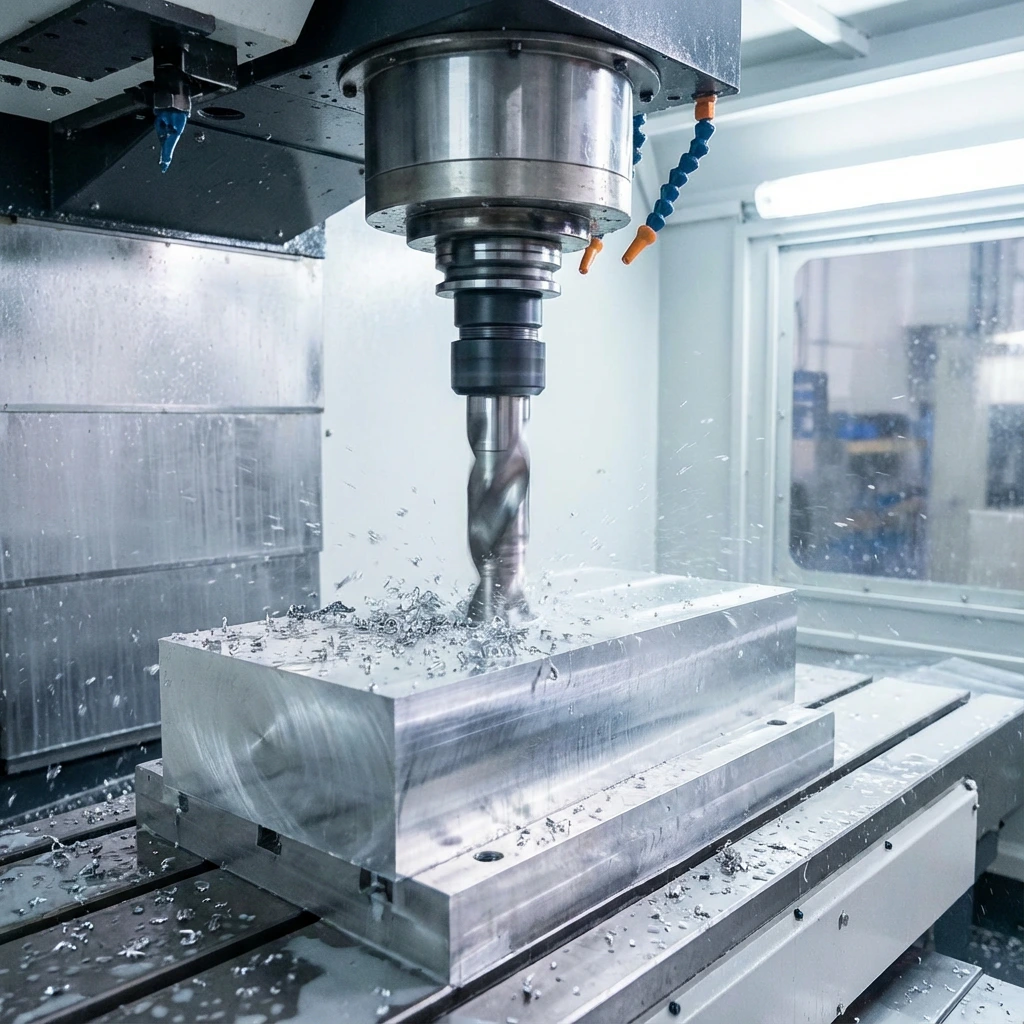
CNC drilling uses a computer-controlled drill bit to cut precise round holes into a part. The drill follows a path written in code that comes straight from your CAD file. That means every hole lands within ±0.005 mm of where it should be — and every part in the batch matches the first one.
It is not just for simple holes. CNC drilling covers twist drilling for everyday holes, gun drilling for deep holes up to 30 times the bit width, indexable drilling for fast cuts on bigger holes, multi-spindle drilling when you need many holes at once, and micro-drilling for holes smaller than 1 mm. Other steps like tapping, reaming, countersinking, and counterboring are done in the same setup so the holes stay lined up.
At Meco, we rarely run drilling on its own. It is part of a full turnkey manufacturing service that also covers CNC milling, CNC turning, surface finishing, and mechanical assembly, all under IATF 16949:2016 quality rules. One supplier. One PO. One team that owns the part from CAD to your loading dock.

Why CNC Drilling for Your Project
CNC drilling is the fastest and cheapest way to make precise hole patterns. There is no tooling cost, no drift between holes, and no surprise rework. It is a great fit for automotive, aerospace, and medical parts where hole quality is critical.
Why Choose Meco for CNC Drilling
Better holes, faster lead times, lower total cost.
Tight Tolerances
Hole position to ±0.005 mm. Surface finish from Ra 0.4 to 3.2 μm. CMM checks every part to ±0.002 mm. Built to ISO 2768 and ISO 286.
40+ Steps Under One Roof
Drilling plus milling, turning, tapping, reaming, finishing, heat treatment, and assembly. One PO. One team. One workflow.
Metals & Plastics
Aluminum, stainless, titanium, brass, copper, plus PA, POM, PTFE, and PMMA. Free DFM feedback usually saves 15–30%.
Certified Quality
IATF 16949:2016 certified. Full PPAP, FAIR, SPC, and lot tracking. 99.99% quality rate. 99.8% on-time delivery.
CNC Drilling Capabilities
Every type of hole, plus the secondary steps that finish the part — without sending it to a second supplier.
Twist Drilling
Standard solid-carbide drilling for everyday through-holes and blind holes in metals and plastics.
Ø 0.5–32 mmDepth ≤ 10×DDeep Hole / Gun Drilling
Single-flute gun drills for hydraulic blocks, manifolds, and aerospace shafts. Holes stay straight within 0.05% of length.
Ø 2–25 mmDepth up to 30×DMulti-Spindle Drilling
Drills many holes in one cycle. Up to 6× faster than a single spindle when the same hole pattern repeats.
High volumeSame pattern every timeMicro-Drilling
Tiny holes for medical implants, fluid nozzles, and small connectors. Clean edges, no burrs.
Ø 0.1–1.0 mm±0.005 mmIndexable Drilling
Fast cutting on larger holes using replaceable inserts. Drives down per-hole cost on production runs.
Ø 12–60 mmHigh removal rateCounterboring & Countersinking
Recessed and chamfered holes so screws and bolts sit flush. Done in the same setup as the through-hole.
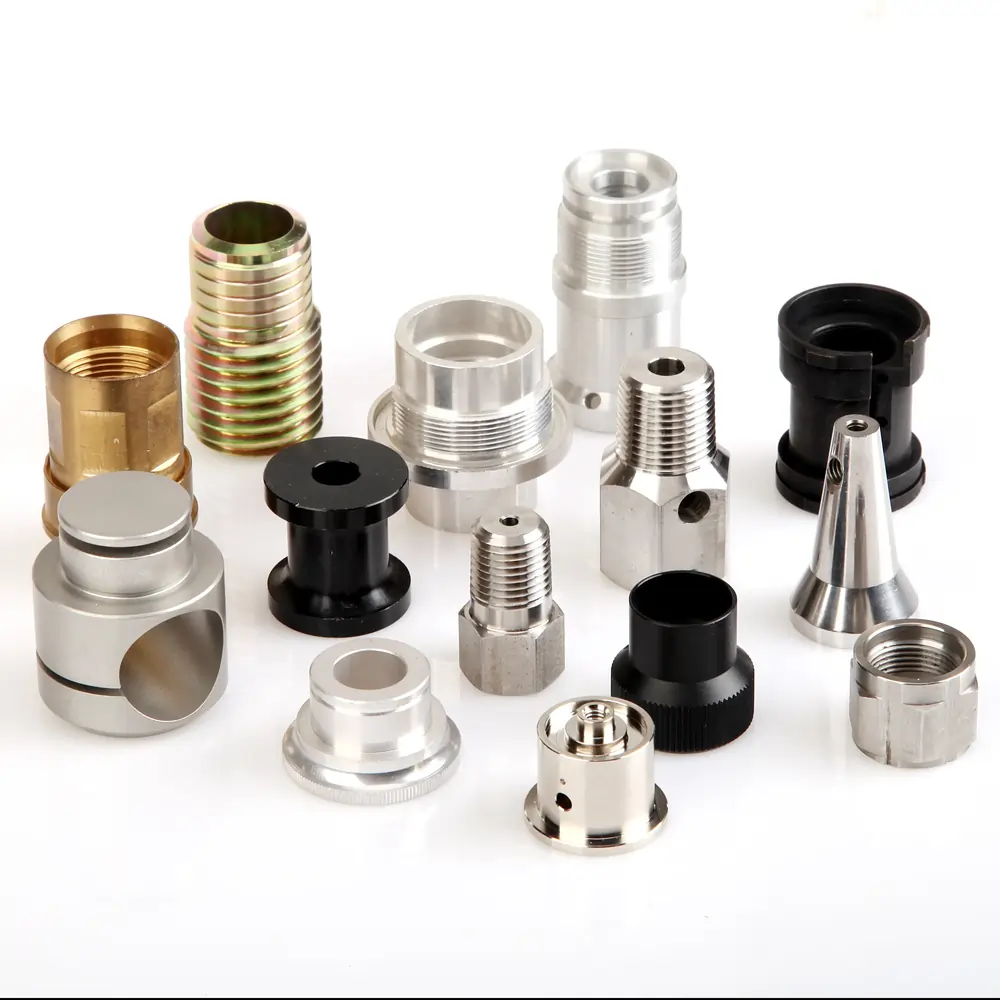
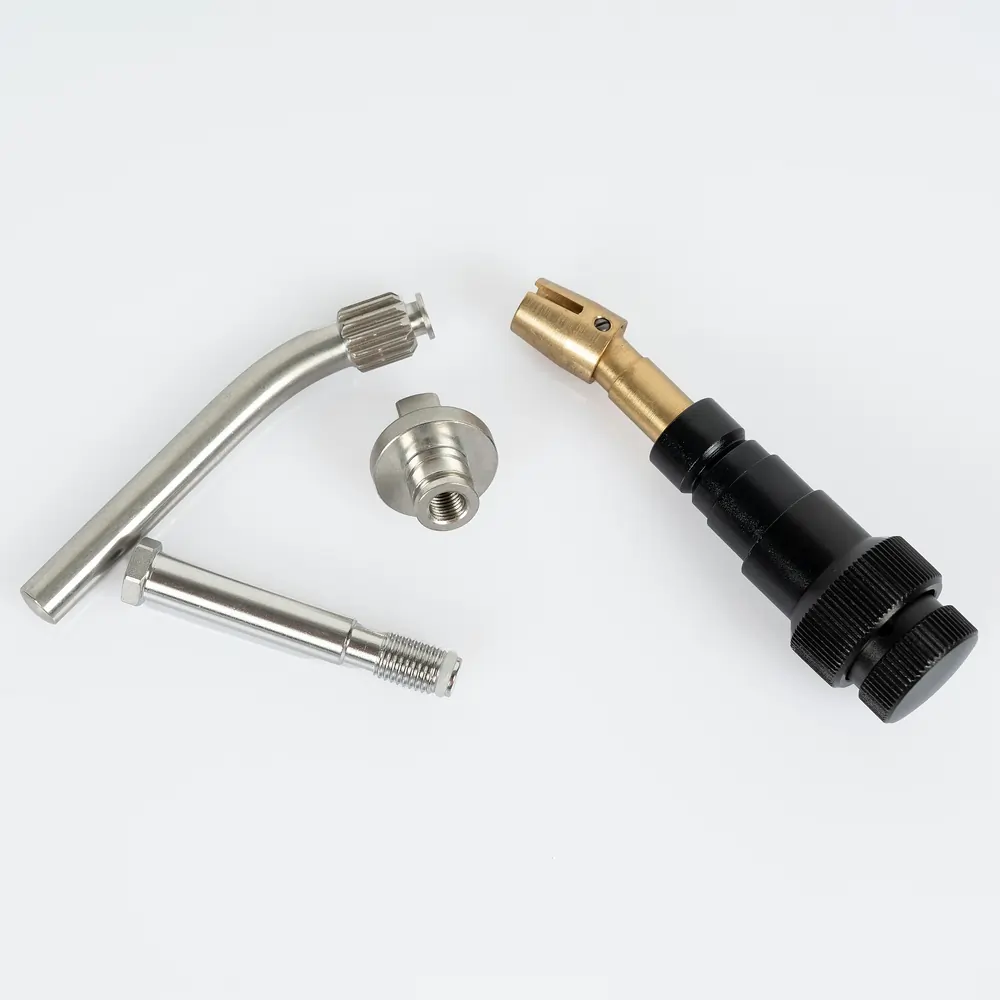
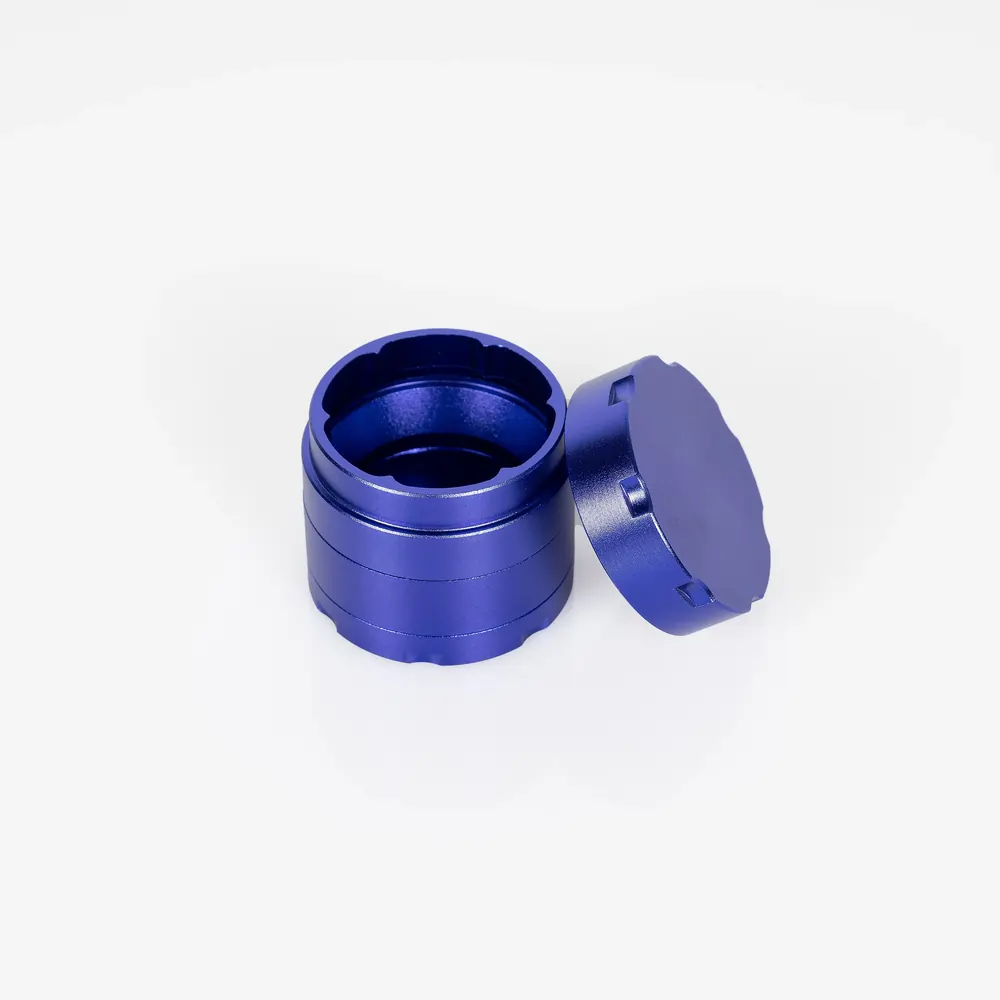
82°/90°/100°Single setupCNC Drilled Parts We Make
Real production parts in metals and plastics. Tight tolerances, clean holes, ready to assemble.
CNC Drilling Materials & Standards
7 metals and 4 plastics drilled in-house. All work follows known international standards.
Metals
| Aluminum | 6061, 7075, 5052, 2024 |
| Stainless Steel | 303, 304, 316, 17-4PH |
| Carbon Steel | 1045, 4140, 4340 |
| Brass | C360, C464 |
| Bronze | C932, C954 |
| Copper | C110, C145 |
| Titanium | Grade 2, Grade 5 |
Plastics
| PA (Nylon) | Tough and wear resistant |
| POM (Delrin) | Low friction, holds its shape |
| PTFE (Teflon) | Chemical resistant, low friction |
| PMMA (Acrylic) | Clear, holds up to UV |
Ready to Start Your CNC Drilling Project?
Send us your CAD files. Quotes back in under 24 hours with free DFM feedback.
Available Surface Finishes
Drilled parts move straight from the machine into our in-house finishing lines.
| Finish | Works With | Standards |
|---|---|---|
| Anodizing (Type I/II/III) | Aluminum, Titanium | MIL-A-8625, MIL-DTL-5541F |
| Chrome Plating | Aluminum, Steel, Brass, Bronze, Copper, Zinc | — |
| Zinc Plating | Steel | ASTM B633 |
| Nickel / Electroless Nickel | Al, Steel, SS, Brass, Bronze, Copper, Zinc | — |
| PVD | Al, Steel, SS, Brass, Bronze, Copper, Zinc | — |
| Painting | All metals | ISO 15184, ISO 2409 |
| Powder Coating | All metals | — |
| E-Coating | All metals | — |
| Galvanizing (Hot Dip) | Steel | ASTM A123, GB/T 13912 |
| Class | 0.5–3 | 3–6 | 6–30 | 30–120 | 120–400 | 400–1000 | 1000–2000 | 2000–4000 |
|---|---|---|---|---|---|---|---|---|
| Fine (f) | ±0.05 | ±0.05 | ±0.10 | ±0.15 | ±0.20 | ±0.30 | ±0.50 | — |
| Medium (m) | ±0.10 | ±0.10 | ±0.20 | ±0.30 | ±0.50 | ±0.80 | ±1.20 | ±2.00 |
| Coarse (c) | ±0.20 | ±0.30 | ±0.50 | ±0.80 | ±1.20 | ±2.00 | ±3.00 | ±4.00 |
| V. Coarse (v) | — | ±0.50 | ±1.00 | ±1.50 | ±2.50 | ±4.00 | ±6.00 | ±8.00 |
| Class | ≤10 | 10–50 | 50–120 | 120–400 | >400 |
|---|---|---|---|---|---|
| Fine (f) | ±1° | ±0°30′ | ±0°20′ | ±0°10′ | ±0°5′ |
| Medium (m) | ±1°30′ | ±1° | ±0°30′ | ±0°15′ | ±0°10′ |
| Coarse (c) | ±3° | ±2° | ±1° | ±0°30′ | ±0°20′ |
| Class | 0.5–3 | 3–6 | >6 |
|---|---|---|---|
| Fine (f) | ±0.20 | ±0.50 | ±1.00 |
| Medium (m) | ±0.40 | ±1.00 | ±2.00 |
| System | Description |
|---|---|
| Hole Basis | Hole size stays fixed (H), shaft size moves. The first choice for drilling because it uses standard drill and reamer sizes. |
| Shaft Basis | Shaft size stays fixed (h), hole size moves. Used when standard shafting is supplied. |
| Fit | Type | Application |
|---|---|---|
| H7/g6 | Clearance | Smooth sliding fit (dowels, pins) |
| H7/h6 | Trans/Clear | Accurate location |
| H7/p6 | Interference | Press fit (needs force to assemble) |
Precision CNC Drilling for Critical Industries
Tight-tolerance hole drilling for 10 sectors — from tiny holes in medical implants to deep gun-drilled bores in heavy equipment.
Aerospace Parts Manufacturing
Flight-critical holes for turbine cooling channels, rivet patterns, and hydraulic fittings. We drill titanium, Inconel, and stainless with the hole position and full part history that aerospace OEMs expect.
Automotive Parts Manufacturing
High-volume drilling for engine blocks, fuel rails, valve bodies, and EV battery housings. Multi-spindle cells keep hole quality steady at automotive cycle times, with full PPAP paperwork for tier-1 supply.
Medical & Healthcare
Tiny holes for cannulated screws, surgical instruments, and bone plates in 316L stainless and titanium. Burr-free, body-safe finishes with full lot-level paperwork.
Heavy Equipment Manufacturing
Deep gun drilling for hydraulic cylinder rods, valve manifold blocks, and large pivot points. Single-flute gun drills hold straightness within 0.05% of length in 4140 and 4340 steel — heat-treated and chrome-plated in-house.
Industrial Manufacturing
Heat exchanger tube sheets, fluid manifolds, machine frames, and custom hardware. Multi-spindle cells handle thousands of holes per part with leak-tight position. Drill, ream, tap, and counterbore in one setup.
Consumer Electronics
Tiny holes for connector pins, speaker grilles, heat sink mounts, and PCB enclosures. Hole patterns stay tight and edges stay clean for press-fit and snap-fit assembly.
Telecommunication
Cavity filter cooling channels, antenna mount patterns, and waveguide ports for 5G and fibre-optic gear. Multi-axis drilling holds the roundness and finish that signals need.
Commercial Furniture
Drilled and tapped joinery hardware for office chairs, sit-stand desks, and modular storage. Hole patterns line up the first time with cam-locks, threaded inserts, and adjustment mechanisms.
Home Appliances
Burner port patterns, gas manifold holes, and assembly mounts for cooking, fridge, and laundry appliances. Multi-spindle drilling keeps flow and fit consistent at appliance volumes.
Lighting Manufacturing
Wire pass-throughs, mounting holes, and heat-sink hole arrays for LED, architectural, and commercial lighting. Burr-free drilling keeps the look that lighting brands need.
When to Choose CNC Drilling vs. Other Hole-Making Methods
Drilling is one of several ways to make a hole. Use this table to pick the right one — or let our engineers help.
| Factor | CNC Drilling | CNC Milling | Boring | Reaming |
|---|---|---|---|---|
| Best For | Round holes, fastener patterns, deep holes Fastest hole-making | Holes plus pockets or contours | Making an existing hole bigger and rounder | Finishing a drilled hole to a tight fit |
| Tolerance | ±0.005 mm position; ±0.05 mm diameter | ±0.01 mm position; ±0.02 mm diameter Best diameter | ±0.005 mm diameter | ±0.005 mm diameter Tightest fit |
| Surface Finish | Ra 1.6–3.2 μm | Ra 0.8–1.6 μm | Ra 0.4–1.6 μm | Ra 0.4 μm Smoothest |
| Hole Size | Ø 0.1–60 mm | Ø 1–100 mm+ | Ø 10–500 mm | Ø 1–50 mm |
| Speed | Very fast Fastest | Moderate | Slow | Slow (finishing pass) |
| Typical Use | On its own, or first step before tap or ream | When the hole is part of a bigger feature | Big holes that need tight roundness | After drilling for a press or slip fit |
| Meco Page | You are here | CNC Milling → | Included with drilling | Included with drilling |
Quality & Paperwork
Every drilled part ships with a full paper trail. Our IATF 16949:2016 quality system covers every step from raw material to final inspection — and we use the same rules for every industry, not just automotive.
PPAP Documents
Full PPAP packages — control plans, process flow, and dimensional results.
First Article Inspection
FAI reports that check every drilled feature against your drawing.
CMM Inspection
CMM checks to ±0.002 mm on hole position, diameter, and GD&T.
Full Tracking
Lot-level tracking from raw material through drilling, finishing, and assembly.
Material Certs & CoA
Mill test reports and Certificates of Analysis with every shipment.
REACH & RoHS
Full paperwork for EU REACH and RoHS rules.
SPC & CTQ Reports
Statistical Process Control with Cpk and Critical-to-Quality trend tracking.
Conflict Minerals
CMRT paperwork for SEC/Dodd-Frank rules on 3TG mineral sourcing.
CNC Drilling FAQ
What is CNC drilling?
CNC drilling is a machining process that uses a computer-controlled drill bit to cut precise round holes into a part. The machine reads code from a CAD file and controls the drill's position, depth, feed, and speed. The result is hole quality you can repeat over and over, with hole position held to ±0.005 mm — far better than drilling by hand.
What is the difference between CNC drilling and milling?
Drilling makes round holes. The tool spins and only moves up and down. Milling shapes flat surfaces, pockets, and 3D features. The tool spins and moves in many directions. Most parts use both: drilling for the holes, milling for everything around them. Meco runs both in the same setup so the holes line up with the rest of the part.
What materials can be CNC drilled?
Metals: aluminium (6061, 7075, 5052, 2024), stainless steel (303, 304, 316, 17-4PH), carbon steel (1045, 4140, 4340), brass, bronze, copper, and titanium. Plastics: PA (Nylon), POM (Delrin), PTFE (Teflon), and PMMA (Acrylic). Each one needs a different drill, feed, and coolant — and our process team picks the right one for you.
What tolerances can CNC drilling achieve?
What is deep hole drilling and what depth can you reach?
Deep hole drilling means holes that are more than 10 times their diameter deep. We use single-flute gun drills that can reach 30 times the bit width — for example, a 6 mm hole up to 180 mm deep — and stay straight to within 0.05% of length. Common parts include hydraulic blocks, valve manifolds, aerospace shafts, and heat-exchanger tubes.
What is the difference between drilling, reaming, and boring?
Drilling makes the first hole. Reaming is a finish pass that uses a multi-flute tool to hold tighter diameter (±0.005 mm) and smoother finish (Ra 0.4 μm) — used when bearings, dowels, or pins need to fit. Boring uses a single-point tool to make a hole bigger and rounder, usually on larger holes (Ø 10 mm and up). Most parts use drilling and reaming together.
Can you do drilling and other steps in one setup?
Yes. This is the heart of our drilling service. Drilling, tapping, reaming, countersinking, and counterboring all happen without re-clamping the part. That keeps every feature lined up and cuts cycle time by 30–50% versus running each step on its own. Then parts move straight to finishing and assembly in-house.
How do I get a quote for CNC drilling?
Send us a STEP or IGES file using the form below with your material, finish, and quantity. We come back within 24 hours with a quote and free DFM feedback that usually saves 15–30%. No minimum order — we run 10 pieces or 10 million.
How to Get Started
Upload STEP or IGES files with material, finish, and quantity using the quote form below.
Our engineers look at your hole geometry, tolerances, and operation order. You get a quote with DFM feedback in under 24 hours.
We make a First Article and send the FAI report. You approve before we run production.
Drilling, finishing, and assembly run in one workflow. Parts ship anywhere with full quality paperwork.
CNC Drilling Resources

How Much Does CNC Machining Cost?
The real things that drive your price — hourly rates, material, batch size — and how a one-stop partner cuts your total spend.
Read the guide →
CNC Machine Costs: Buy vs. Outsource
What it really costs to own a CNC versus to outsource. Equipment cost, hourly rates, and the break-even point.
Read the breakdown →
3-Axis CNC: The Workhorse of Modern Shops
How 3-axis CNC handles most of the drilling, milling, and prismatic part work in modern manufacturing.
Read the guide →