Cold Forging for Precision, Strength & High‑Volume Production
Achieve cost efficiency, superior strength, and flawless repeatability through precision cold forging.

Why Choose Meco for Cold Forging?
Cold forging shapes metal under extreme pressure at room temperature, producing components with outstanding dimensional precision, enhanced strength, and smooth finishes — all optimized for high‑volume production.
Exceptional Dimensional Accuracy
Cold forging delivers net‑shape or near‑net‑shape parts that minimize costly secondary machining and reduce material waste.
Enhanced Material Strength
The work‑hardening effect refines grain structure and improves hardness, yield strength, and durability.
Superior Surface Finish
Produces parts with a clean, smooth surface finish (as fine as 1.6–3.2 µm Ra), far superior to hot forging or casting.
High‑Volume Efficiency & Quality
Cold forging supports rapid, high‑volume output with part‑to‑part consistency under our IATF 16949‑certified quality system.
Cold Forged Parts Gallery

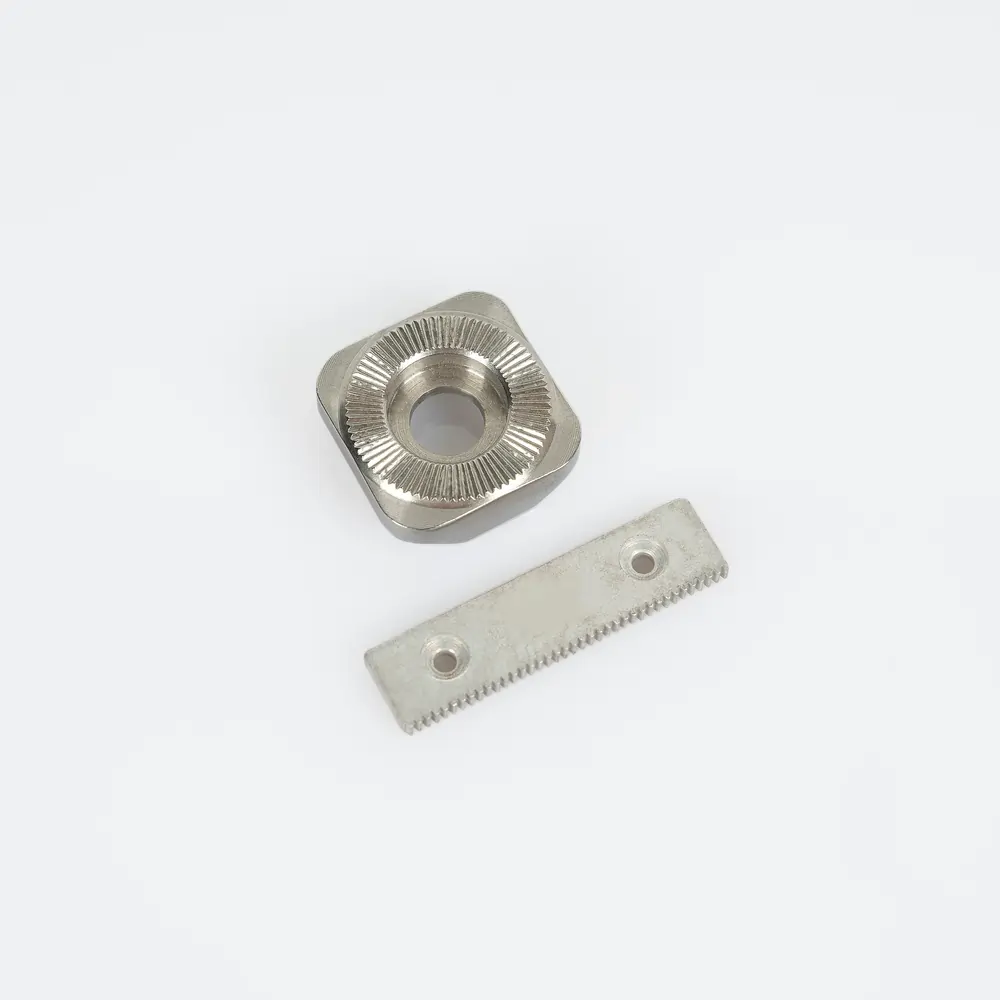


Meco Cold Forging Capabilities
Delivering high‑volume precision and superior mechanical strength through advanced cold forging processes.
Cold Heading
The primary process for manufacturing fasteners and small to complex parts. A wire or rod is cut to length, then shaped by dies and punches to form features with exceptional speed and efficiency — producing minimal material waste.
- High‑speed multi‑die forming
- Minimal material waste
Cold Extrusion
Metal slugs are forced through precision dies to create parts with a uniform cross‑section. Ideal for components such as shafts and housings, this process can produce both solid and hollow parts with excellent structural integrity.
- Solid & hollow geometry
- Consistent cross‑sections
Cold Forging Materials and Capabilities
Precision Cold Forging Solutions
Meco delivers advanced cold forging services engineered for superior strength and dimensional accuracy. By shaping metal at room temperature, we utilize strain hardening to increase tensile strength while minimizing material waste, offering a cost-effective solution for high-volume production.
Aerospace
Meco produces high-strength cold forged fasteners, rivets, and precision fittings. Our process enhances the grain structure of aerospace alloys, delivering superior fatigue resistance and mechanical integrity for critical flight components.
Aerospace CapabilitiesAutomotive
We manufacture near-net-shape cold forged shafts, gears, and sensor housings. Meco's high-speed cold heading process ensures tight tolerances and significant material savings for high-volume automotive OEM production.
Automotive CapabilitiesHeavy Equipment
High-load applications demand exceptional tensile strength. Meco supplies cold headed pins, bolts, and hydraulic couplings that endure continuous shock and impact in mining and construction machinery.
Heavy Equipment CapabilitiesAppliances
Cold forging enables efficient production of motor shafts, fasteners, and compressor inserts. Our process improves surface finish and hardness, extending the lifecycle of consumer appliances while reducing manufacturing costs.
Appliance CapabilitiesHardware
Forged nuts, bolts, and specialty fittings are produced with precision cold heading for repeatable accuracy. Cold working increases the yield strength of standard steels, creating reliable hardware for demanding industrial assemblies.
Hardware CapabilitiesLighting
Precision cold forging enables the production of complex aluminum heat sinks and threaded fittings for LED systems. This process creates dense, thermally conductive components essential for heat dissipation in industrial lighting.
Lighting CapabilitiesMedical
Meco produces cold forged surgical connectors and miniature fittings from biocompatible materials. The cold forming process results in smooth, burr-free surfaces and high dimensional precision required for medical devices.
Medical CapabilitiesTelecom
We manufacture cold forged copper and aluminum connectors that provide excellent electrical conductivity. Our process creates high-density components with superior corrosion resistance for outdoor telecom towers and RF modules.
Telecom CapabilitiesFurniture
High-precision cold forged support rods and threaded inserts provide structural integrity for ergonomic furniture. Cold forming ensures a superior surface finish ideal for visible components in office and retail environments.
Furniture CapabilitiesElectronics
Cold forging offers enhanced material flow for miniature contacts, housings, and terminals. Meco's precision forming optimizes conductivity and strength for compact components in smartphones and computing hardware.
Electronics CapabilitiesCold Forging vs Other Manufacturing Methods
Compare cold forging with hot forging and casting to identify which process best suits your production needs. Each technique offers distinct advantages based on strength, geometry, and cost efficiency.
| Feature | Cold Forging | Hot Forging | Casting |
|---|---|---|---|
| Geometric Complexity | Fair to Good | Excellent | Excellent |
| Part Size | Best for small, high‑volume components | Excellent for large and complex parts | Suitable for all sizes |
| Strength & Toughness | Good – high hardness but reduced ductility | Excellent – improved fatigue strength | Good to Fair – depends on casting quality |
| Dimensional Tolerance | Excellent | Good | Fair to Good |
| Surface Finish | Excellent – smooth, fine surface quality | Good – requires minimal machining | Fair to Good – often needs finishing |
| Best For | Small precision parts with tight tolerances | High‑strength, complex, or large components | Intricate internal shapes or low‑stress parts |
Cold Forging FAQ
What is work hardening?
Work hardening, or strain hardening, is the strengthening of a metal by plastic deformation. During cold forging, the intense pressure deforms the metal’s crystal structure, making it more resistant to further deformation. This results in a harder and stronger final part.
What are the best materials for cold forging?
The best materials are ductile metals that can be shaped without fracturing at room temperature. These include low-to-medium carbon steels, alloy steels, aluminum, brass, and copper.
Can cold forging eliminate the need for machining?
In many cases, yes. Cold forging is a net-shape process, meaning it can produce parts to their final dimensions, tolerances, and surface finish. For features requiring even tighter tolerances, we use the cold-forged blank for highly efficient secondary CNC machining.
Is cold forging expensive?
The initial tooling cost for cold forging can be higher than for other methods. However, for high-volume production runs, the high speed, low material waste, and elimination of secondary operations make the per-part cost extremely low, offering significant long-term savings.
How to Get Started
Upload your 3D CAD models (STEP/IGES) and specify material, quantity, tolerances, and any surface finish or inspection requirements.
Engineering reviews your design for manufacturability, optimizing orientation, forging approach, and cost efficiency before issuing a quote.
Custom dies and tooling are manufactured, and forging parameters such as pressure, stroke count, and finishing operations are programmed.
Forged parts are produced, inspected to IATF 16949 standards, and shipped with full traceability to ensure dimensionally precise, defect‑free components.
Need Precision‑Crafted, High‑Volume Metal Parts?
Upload your cold forging design or part drawing and get a fast, accurate quotation from MECO’s engineering team.
